

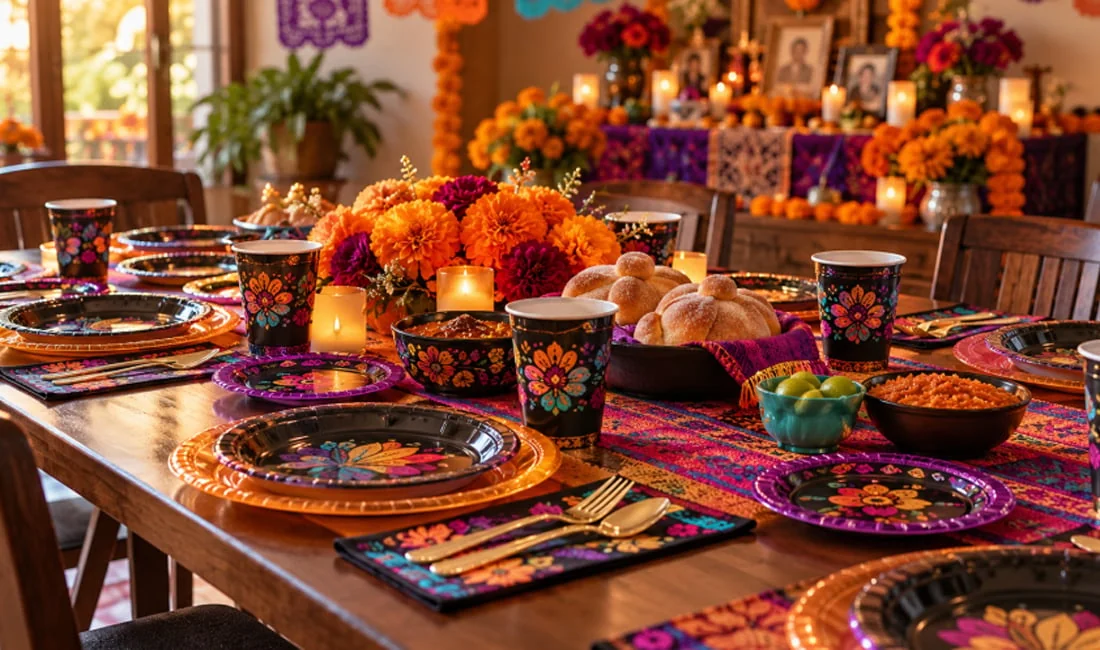
Día de los Muertos is usually observed on November 1 and 2. It brings families and communities together to remember loved ones through stories, photographs, flowers, food, and personal offerings. The mood can be bright and joyful, but the celebration still carries deep meaning.
For a shared meal, disposable tableware can make serving and cleanup easier. The right plates, bowls, cups, flatware, and napkins also help the table feel coordinated. The key is to build the service around the menu and use holiday colors and symbols with care. This guide focuses on practical Día de los Muertos party ideas for a respectful, colorful, and well-organized meal.
Día de los Muertos Party Ideas Start with Meaning and Respect
A successful table begins with the purpose of the gathering. Día de los Muertos is not simply a skull-themed party. It is a living Mexican tradition centered on remembrance, family, and connection with those who have died. Customs also vary by family, region, and community. Hosts should follow the traditions of the people taking part rather than treating one setup as a universal rule.
Center the Gathering on Family, Memory, and Shared Food
Food often plays two roles during the celebration. Favorite dishes, fruit, bread, water, and other items may appear on an ofrenda. Family members and guests may also share a separate meal while telling stories. That meal may include tamales, mole, rice, pozole, pan de muerto, atole, hot chocolate, or foods connected to the people being honored. Tableware planning should begin only after the menu is set.
Understand the Role of the Ofrenda
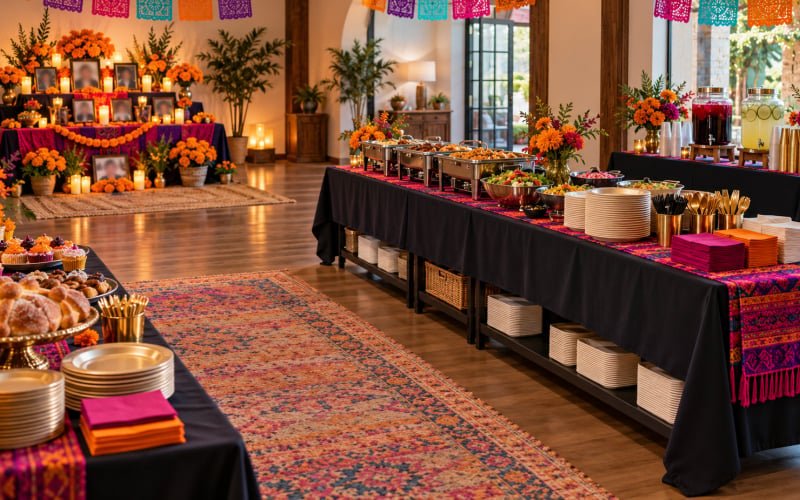
An ofrenda is a place of remembrance. It may include photographs, candles, cempasúchil flowers, papel picado, water, bread, favorite foods, and personal objects. When a gathering also includes a buffet, the two areas should be easy to distinguish. This helps prevent guests from moving offerings or crowding a meaningful space while serving a meal.
Use Traditional Symbols with Context, Not as Random Party Décor
Calaveras, marigolds, papel picado, candles, and vivid colors can guide the design, but they should remain connected to the celebration. Marigold-colored napkins, a papel picado-inspired runner, and a few calavera details can sit beside simple dinnerware. This creates visual energy without turning a remembrance tradition into generic Halloween décor.
Build the Día de los Muertos Disposable Tableware List Around the Menu
The menu determines which pieces are necessary. A complete matching set may be useful, but not every gathering needs every item. The most efficient order includes only the sizes and shapes that fit the planned food service.
Choose Dinner Plates for Tamales, Mole, Rice, and Side Dishes
A full-size dinner plate should hold a main item and several sides without forcing food onto the rim. Meals with mole, beans, rice, or other sauces also benefit from a defined edge. Hosts should check listed dimensions instead of relying on labels such as “large.” Plate depth matters when food may slide during buffet service.
Add Disposable Bowls for Pozole and Other Broth-Based Foods
Pozole, soups, stews, and other liquid-rich foods need bowls designed for that use. The bowl should match the serving size, and its product guidance should cover the planned food temperature. Spoons, napkins, and toppings can remain at the bowl station so guests do not carry an open bowl across the full buffet line.
Reserve Smaller Plates for Pan de Muerto and Sweets
Dessert plates keep bread, fruit, cookies, and other sweets separate from the main course. The size should reflect the portions: several small desserts need more space than one piece of pan de muerto. Keeping a plate stack beside the sweets also prevents guests from returning to the main buffet.
Match Cups to Hot and Cold Drink Service
Cold water, aguas frescas, soft drinks, and cocktails can share one station when the cups suit those beverages. Atole, coffee, and hot chocolate require drinkware labeled for the intended temperature. Hot- and cold-drink cups should remain at separate stations; different colors or shapes can help guests select the correct type.
Complete the Table with Flatware, Napkins, and Serving Trays
Flatware should follow the food. Pozole, desserts, or coffee can increase the spoon count, while knives are useful only when the menu requires them. Napkins can carry more pattern than the plates. Serving trays and large bowls are also needed when food moves from kitchen containers to the buffet, but their intended use must match the food’s weight and temperature.
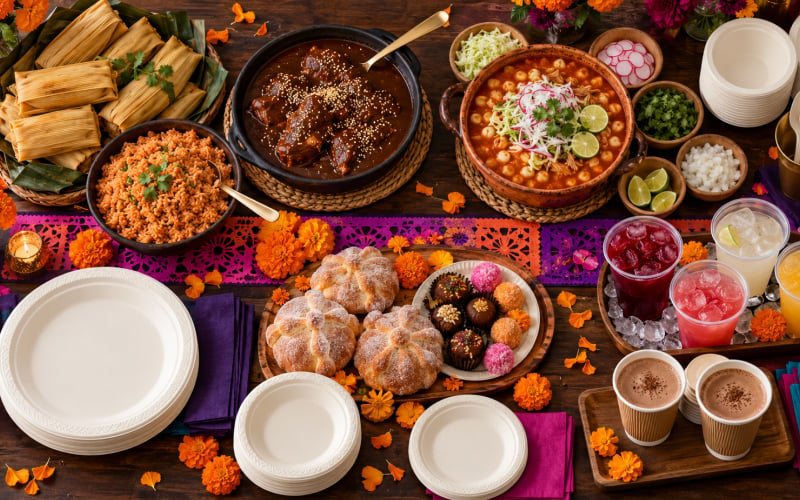
How to Choose Disposable Plates for a Día de los Muertos Party
Practical plates must suit the menu as well as the color scheme.
Select Plate Sizes for Each Course
A two-plate plan works for many gatherings: one dinner plate and one smaller plate for bread or dessert. A third size is useful only for a separate appetizer course or many small tastings. Planned portions should guide the choice, since undersized plates cause spills while oversized plates can increase food waste.
Check Product Guidance for Warm, Saucy, and Heavier Foods
No material should be judged by appearance alone. Hosts should review product and package directions for food-contact use, temperature limits, microwave restrictions, and disposal. For a large event, a sample can be tested with a meal of similar weight before the full order is opened. A plate that bends, cracks, warps, or becomes hard to carry is not suitable for that menu.
Decide Between Coordinated Dinnerware Sets and Separate Pieces
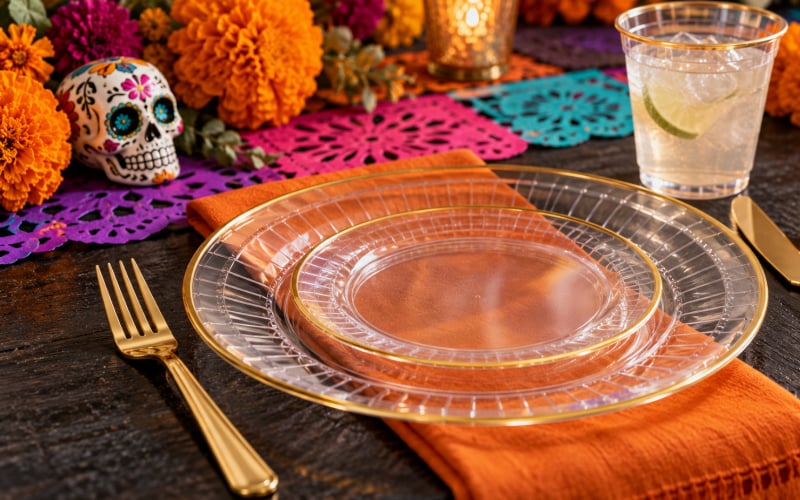
A coordinated set reduces the time spent matching plates, cups, and flatware. A clear and gold disposable dinnerware set creates a neutral base. Orange, pink, purple, or papel picado-inspired details can supply the color. Separate pieces offer more control when the menu needs extra bowls, spoons, or dessert plates.
Compare Pack Counts with the Guest List Before Ordering
The total piece count can be misleading. A 150-piece set does not serve 150 people when each place requires several pieces. Hosts should calculate how many complete settings a pack provides; the lowest item count sets its true capacity. Delivery timing and backup needs should also be checked before ordering.
Style Día de los Muertos Disposable Tableware with Color and Pattern
A small palette keeps a colorful table from becoming busy.
Build the Palette Around Marigold Orange and Rich Accent Colors
The yellow and orange tones of cempasúchil flowers provide a natural starting point. Purple, magenta, red, turquoise, green, black, or gold can serve as accents. Two or three main colors are usually enough. The strongest color can appear in napkins or flowers while the plates remain clear, black, white, or lightly trimmed.
Balance Calavera and Papel Picado Patterns with Solid Plates
Pattern works best when it has a clear role. Calavera dessert plates can sit over solid dinner plates, or patterned napkins can add detail beside plain settings. Papel picado-inspired designs may appear on napkins, a runner, or the dessert station. A quieter base lets that patterned item become the focal point.
Use Clear, Black, or Gold Tableware to Frame Brighter Colors
Clear plates allow colorful linens and food to remain visible. Black adds contrast, while gold connects with candlelight and warm flower tones. Clear and gold pieces can create a formal look. Solid plates with bright napkins may be easier to restock at a school or community buffet.
Repeat Key Colors Across Cups, Napkins, and Flatware
Repetition makes mixed pieces look intentional. A gold rim can match gold-colored flatware. Purple napkins can repeat a shade from papel picado, while orange cups can echo the marigolds. The same two or three colors should continue across all serving stations.
How Much Día de los Muertos Disposable Tableware Is Needed?
Quantity planning should count uses, not only guests. A person may need one dinner plate, one dessert plate, one bowl, two cold cups, one flatware set, and more than one napkin. The exact total depends on the menu and service format.
Count One Clean Plate for Each Course
Each course should have its own plate unless guests are expected to keep the same one. For most buffets, one dinner plate and one dessert plate per guest create a clear starting point. Extra sizes increase cost, storage, and cleanup, so they should be added only when the menu requires them.
Calculate Bowls and Cups from the Planned Menu
If pozole is the main course, one bowl per guest plus reserve is reasonable. The count may be lower when it is one option among several entrées. Cup use also changes by service style: self-service drinks often require more cups than a staffed station. Hot-drink vessels should be counted separately and matched to their instructions.
Add a Practical Reserve for Extra Guests and Accidents
A reserve of about 10 percent is a useful planning point for a controlled meal. Public events, children’s tables, long self-service periods, or uncertain attendance may need more. Pack sizes also affect the order, so totals normally need to be rounded up. Keeping backup packs closed protects clean extras for later use.
Compare Tableware Quantities for 25, 50, and 100 Guests
This example assumes one dinner course, one dessert course, optional pozole, two cold cups, one flatware set, and two napkins per guest. It includes a 10 percent reserve. Actual orders should be adjusted to the menu and pack sizes.
| Item | 25 Guests | 50 Guests | 100 Guests |
|---|---|---|---|
| Dinner plates | 28 | 55 | 110 |
| Dessert plates | 28 | 55 | 110 |
| Bowls, if needed | 28 | 55 | 110 |
| Cold cups | 55 | 110 | 220 |
| Complete flatware sets | 28 | 55 | 110 |
| Napkins | 55 | 110 | 220 |
Extra spoons are needed when soup and dessert both require them. Hot-drink cups, lids, stirrers, and serving utensils should be counted separately.
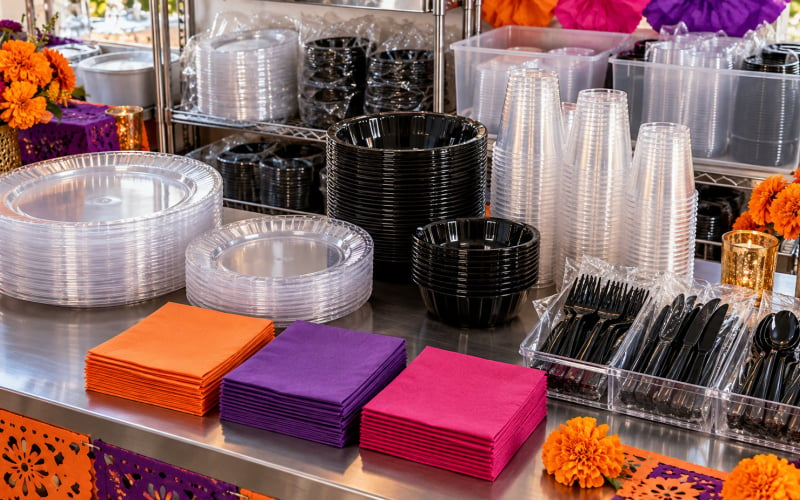
Set Up a Practical Día de los Muertos Serving Table
A clear layout protects meaningful items and keeps meal service moving.
Position the Meal Service Away from the Ofrenda
The dining or buffet table should not block the ofrenda or turn it into a serving station. Different tablecloth colors, heights, or signs can show which area is for remembrance. Candles and other open flames should remain away from paper products, serving traffic, and children according to venue rules.
Guide Guests from Plates to Food, Flatware, and Napkins
For a one-way buffet, plates come first. Main dishes and sides follow, with flatware and napkins near the end. Bowls and spoons can remain beside pozole. Each serving utensil should stay with its matching dish, while venue and food-handling rules guide any added controls.
Separate Drink and Dessert Stations to Reduce Crowding
Drinks slow a buffet because guests need time to pour and choose additions. A separate beverage table keeps spills away from the food, with hot and cold drinkware clearly divided. Dessert can also have its own station with smaller plates, utensils, and napkins.
Keep Backup Tableware Neat and Easy to Refill
Only part of the stock needs to appear at once. Backup packs can stay in clean bins under the table or in a nearby service area. Refilling short stacks keeps the display tidy, protects unused pieces, and makes the remaining inventory easier to count.
Simplify Cleanup After the Día de los Muertos Gathering
Cleanup works best when planned before the meal.
Place Clearly Marked Collection Bins Near the Serving Area
Collection points should be visible near the dining-area exit without blocking the buffet. Separate containers may be used for liquids, food scraps, general waste, or accepted recyclable items when local systems support that separation. Plain labels or simple images make sorting easier.
Sort Used Tableware According to Local Disposal Rules
Material type alone does not guarantee local recycling or composting acceptance. Food residue, coatings, mixed materials, and facility rules can change the correct method. Hosts should follow package labels, venue instructions, and local guidance. No disposal claim should be assumed for an entire tableware category.
Store Clean, Unopened Pieces for a Future Gathering
Unopened plates, cups, napkins, and flatware can be stored in a clean, dry place. Open packs need protection from dust, moisture, pests, and strong odors. Labeling remaining stock by item, color, and quantity makes future planning faster. Damaged pieces should not return to food service.
FAQs About Día de los Muertos Disposable Tableware
Can Disposable Tableware Be Used for a School or Community Celebration?
Yes, when the tableware suits the food and the event follows school, venue, and local rules. The program should present Día de los Muertos as a tradition of remembrance rather than a Halloween theme. Community members connected to the culture can help guide its language and symbols.
How Early Should Tableware Be Ordered for November 1–2?
The order should follow the menu and guest estimate, with time for delivery checks and replacements. Large events, bulk packs, custom items, or coordinated colors need a longer lead time than a small meal. The seller’s current estimate is more reliable than a fixed deadline.
Can Different Plate, Cup, and Napkin Designs Be Mixed?
Yes. Mixed pieces look coordinated when they repeat a small palette or finish. A plain plate can balance a patterned napkin, while gold flatware can connect several colors. Matching every item matters less than using suitable sizes, quantities, and product types.
How Should Unused Disposable Tableware Be Stored?
Unused pieces should stay in their original packaging when possible and in a clean, dry cabinet or sealed bin. Heat, sunlight, moisture, and pressure can damage some materials, so product-specific storage directions take priority.
Create a Thoughtful Día de los Muertos Table with Wonderful Party
A well-planned Día de los Muertos table supports the meal without competing with its meaning. The strongest setup begins with family traditions and the menu. Suitable plates, bowls, cups, flatware, and quantities follow. Marigold tones and papel picado-inspired details can add color while leaving space for photographs, stories, and remembrance.
Wonderful Party offers coordinated plates, drinkware, flatware, napkins, bowls, serving pieces, and dinnerware sets. Hosts can compare styles and pack contents, then choose pieces that fit the menu, guest count, and service plan.