

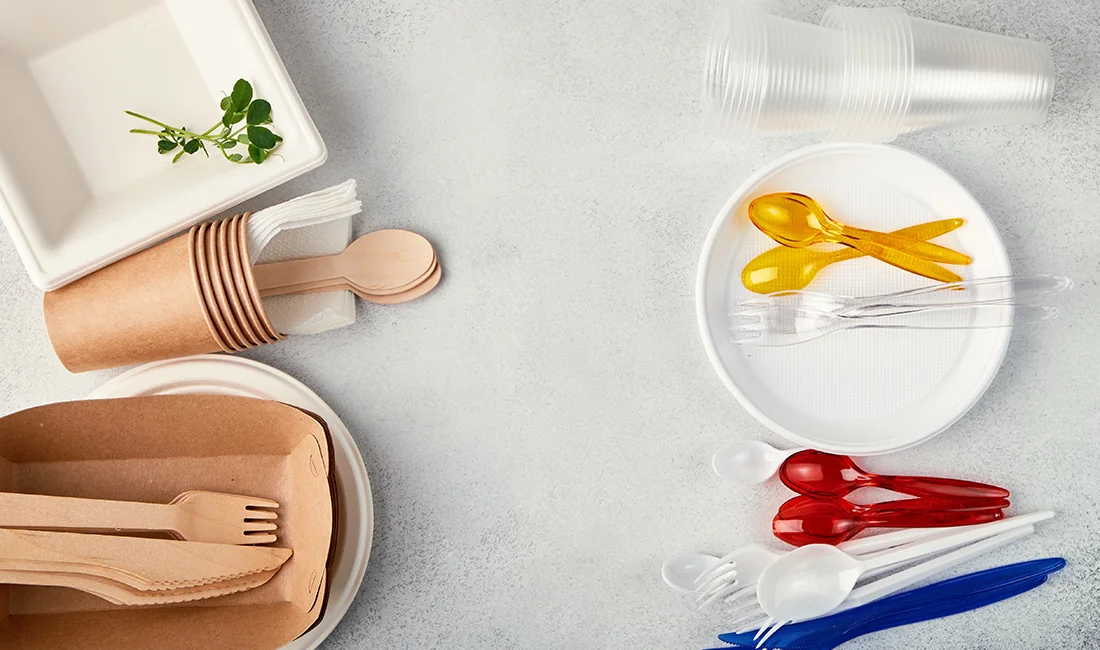
PLA vs plastic tableware comes down to source and end of life: PLA tableware uses plant-based polylactic acid that can compost in industrial facilities, while plastic tableware uses petroleum-based resins like polypropylene or polystyrene that persist in landfills. This difference shapes environmental impact, disposal rules, and daily use.
Plastic tableware uses fossil fuels and common resins such as polypropylene and polystyrene. These materials handle heat and liquids well and fit recycling systems in some regions, but many items still end up in landfill. You will learn how material choice, performance limits, cost, and local waste systems guide when PLA or plastic makes sense.
What are PLA Tablewares?
PLA tablewares are food service items made from polylactic acid, a plastic derived from fermented plant sugars such as corn or sugarcane. Manufacturers create PLA by converting plant sugar into lactic acid, then forming it into plates, cups, and cutlery. Because PLA comes from plants, it relies less on fossil fuels. It can break down in industrial composting settings with heat and moisture.
In practice, this means you need proper compost facilities for disposal, not a home compost pile.
PLA tablewares handle cold foods and warm meals well, but they soften near 50–60°C (122–140°F). For you, this means they work best for salads, drinks, and short-term use with warm foods.
What are the Applications of PLA Tablewares?
You most often use PLA tablewares in single-use food service settings where composting exists.
Common uses of PLA tablewares include:
-
Cold drink cups and lids
-
Salad bowls and deli containers
-
Disposable forks, spoons, and knives
-
Event and catering tableware
PLA fits schools, offices, and events that collect compost. Because PLA loses shape at high heat, you should avoid boiling liquids or microwaves.
What are Plastic Tablewares?
Plastic tablewares are food and drink items made from petroleum-based polymers such as polypropylene (PP), polystyrene (PS), and polyethylene (PE). You often see them as plates, cups, bowls, and cutlery used at home, events, and food service settings. These plastics shape easily under heat, which allows mass production at low cost.
Because these polymers come from fossil fuels, they do not break down quickly in natural settings. For you, this means plastic tableware can last for years after disposal unless recycling or controlled waste handling occurs.
What are the Applications of Plastic Tablewares?
You use plastic tablewares in many daily and commercial settings because they balance cost, weight, and function.
Common uses of plastic tablewares include:
-
Takeout and delivery containers: PP handles hot food up to about 100°C, so meals keep their shape during transport.
-
Cups and lids: PS and PET hold cold drinks well, which helps maintain clarity and rigidity.
-
Reusable household items: Melamine plates resist breaking because the resin structure stays rigid under impact.
In practice, this means you get lightweight items that resist cracking and stack easily, which supports fast service and easy storage.
What are the Differences Between PLA and Plastic Tableware?
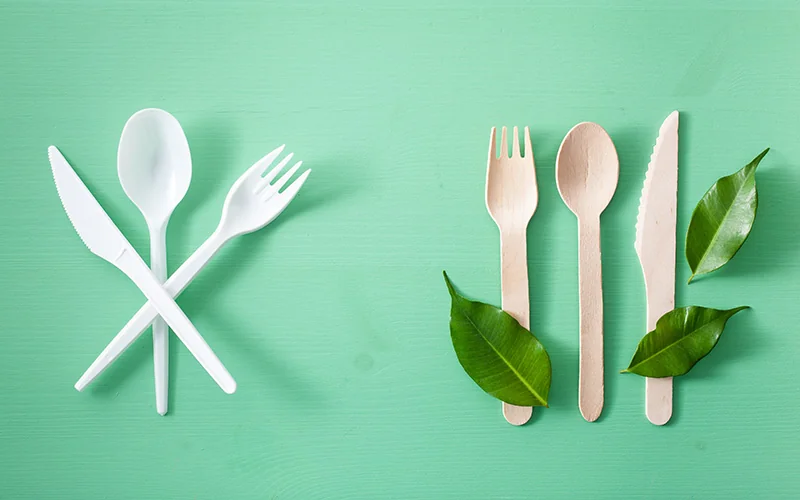
PLA and plastic tableware differ in where they come from, how they perform, and how they affect waste systems. These differences shape how you use them, how long they last, and what happens after disposal.
Differences between PLA and Plastic Tablewares include:
-
Material Sources: PLA is made from plant-based resources, while traditional plastic tableware uses petroleum and other fossil fuels.
-
Product Performance: PLA tableware works best for cold or warm foods, while plastic tableware handles higher heat.
-
Environmental Impact: PLA starts with crops that absorb carbon as they grow, while plastic tableware uses petroleum at every stage, and most plastic items persist for decades after disposal.
-
Compostability and Degradation method: PLA is compostable under industrial composting conditions, while traditional plastics do not compost at all.
-
Market Trends and Cost: PLA production volumes remain lower than traditional plastics, and PLA often costs more.
Material Sources and Production
PLA, or polylactic acid, is a bioplastic made from plant-based resources. Manufacturers produce it by fermenting sugars from corn, sugarcane, or cassava into lactic acid, then turning that acid into PLA resin. Because plants supply the raw starch or sugar, PLA relies on a renewable resource.
Traditional plastic tableware uses petroleum and other fossil fuels. Common materials include polypropylene, polystyrene, and polyethylene. These plastics come from crude oil through chemical refining. For you, this means plastic tableware depends on non-renewable inputs and ties directly to oil extraction and refining.
Product Performance
PLA tableware works best for cold or warm foods. It softens near 60°C, so it can warp with hot liquids or microwave use. In practice, this means PLA cups suit iced drinks but not boiling soup.
Plastic tableware handles higher heat. Polypropylene plates can hold hot meals because they resist warping at higher temperatures. Polystyrene stays rigid but can crack under stress. For you, plastic offers wider use cases, especially in food service where heat tolerance and long shelf life matter.
Environmental Impact
PLA starts with crops that absorb carbon as they grow. This lowers fossil fuel use during raw material sourcing. However, farming still requires water, fertilizer, and fuel-powered equipment. For you, this means PLA reduces oil use but still carries farming-related impacts.
Plastic tableware uses petroleum at every stage. Extraction, refining, and manufacturing all release emissions. Most plastic items persist for decades after disposal. Because recycling rates remain low, plastic often ends up in landfills or the environment.
Compostability and Degradation method
PLA is compostable under industrial composting conditions. Facilities use controlled heat, moisture, and microbes to break PLA into water and carbon dioxide within months. For you, this means PLA only breaks down when proper systems exist.
In home compost or landfills, PLA degrades very slowly. Traditional plastics do not compost at all. They fragment into smaller pieces over time. In other words, plastic tableware stays in the waste stream far longer and does not fully return to natural cycles.
Market Trends and Cost
PLA tableware has grown in food service, events, and packaging due to demand for bioplastics. Production volumes remain lower than traditional plastics. As a result, PLA often costs more per unit.
Plastic tableware benefits from mature supply chains and large-scale manufacturing. This keeps prices low and availability high. For you, the choice often depends on budget, local composting access, and whether plant-based materials align with your waste goals.
What Should We Consider When Choosing Tablewares?
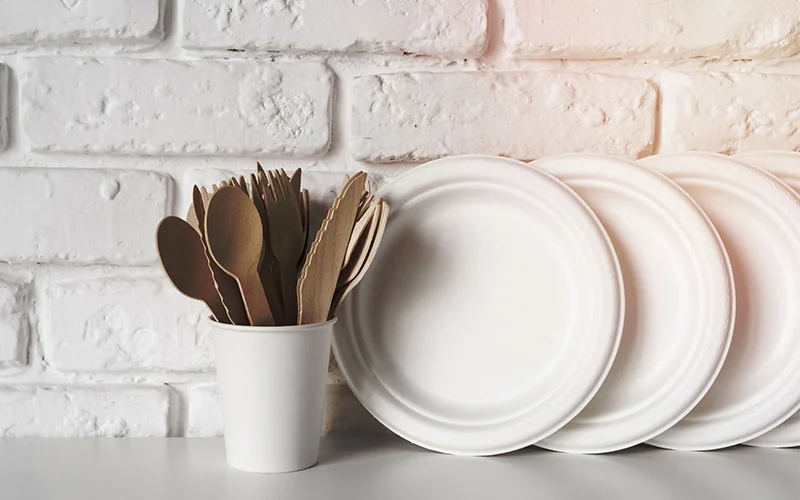
When you choose tableware, start with material type, which defines how the item performs and how you dispose of it. PLA tableware is made from polylactic acid derived from fermented plant starch, while plastic tableware often uses petroleum-based polymers like polypropylene. Because PLA comes from plants, it supports environmental awareness and the use of eco-friendly alternatives.
Think about heat tolerance and food use. Standard PLA softens around 60°C, so it works best for cold foods and room‑temperature meals. In practice, this means you should not use PLA for hot soups or microwaves, while plastic can handle higher heat depending on the resin.
Consider end-of-life options, which shape real environmental impact. PLA is industrially compostable under controlled heat and moisture, because microbes can break its polymer chains into water and carbon dioxide. For you, this means PLA only benefits waste reduction if your area has access to industrial composting.
Cost and supply also matter for daily use. Plastic tableware usually costs less per unit due to mature fossil-based supply chains. Eco-friendly tableware like PLA may cost more upfront, but it aligns with policies and customer expectations focused on sustainability.
Use this comparison to guide your choice:
|
Factor |
PLA Tableware |
Plastic Tableware |
|
Source |
Plant starch |
Fossil fuels |
|
Heat use |
Cold to warm foods |
Cold to hot foods |
|
Disposal |
Industrial compost |
Landfill or recycling |
|
Sustainability fit |
Eco-friendly alternatives |
Limited |
Match your choice to how you serve food, manage waste, and support eco-friendly tableware goals.
When to Choose PLA Tablewares?
PLA tableware is disposable foodware made from polylactic acid, a plant-based plastic derived from fermented starch or sugar. You should choose it when environmental awareness shapes your buying decisions and you want eco-friendly alternatives to petroleum plastic.
Choose PLA tableware when local rules limit single-use plastic. Many regions now require compostable materials that meet standards like EN 13432 or BPI certification. For you, this means PLA helps you meet legal rules because certified products break down in industrial composting instead of lasting for decades.
PLA works best for short-term food and drink use. It suits cold drinks, salads, and takeaway meals because manufacturers mold it to hold shape at normal serving temperatures. In practice, this means you can serve food cleanly without switching to reusable dishes.
Use PLA when you want eco-friendly tableware without complex handling. You use it like regular plastic, but you dispose of it through composting programs. For you, this reduces plastic waste as long as local composting facilities accept PLA.
PLA fits settings that value clear sustainability signals. Cafés, events, and offices often choose PLA because it comes from renewable plants rather than fossil fuels. In everyday use, this choice supports visible environmental awareness without changing how people eat or drink.
Avoid PLA when you need high heat resistance, such as boiling liquids or microwave use. In those cases, other materials perform better.
When to Choose Plastic Tablewares?
Plastic tableware refers to plates, cups, and cutlery made from petroleum-based polymers such as polypropylene (PP) or polystyrene (PS). You choose plastic when you need high heat tolerance, because PP keeps its shape up to about 100°C. For you, this means hot soups, oily foods, and heat lamps will not warp the item during use.
You may also choose plastic when reuse and cleaning matter more than environmental awareness. Many plastic tablewares are dishwasher-safe and resist cracking due to flexible polymer chains. In practice, this translates to fewer replacements in cafeterias, schools, or shared kitchens.
Plastic works well when cost control drives decisions. PP tableware often costs less per unit than eco-friendly tableware made from PLA. For you, this means lower upfront spending for large events or daily service with tight budgets.
You may prefer plastic when composting access is limited. PLA needs industrial composting conditions to break down, while plastic does not rely on special disposal systems. In other words, plastic avoids confusion in areas without compost programs, even when eco-friendly alternatives exist.
Common situations where plastic fits best:
|
Need |
Why plastic works |
|
Hot food service |
PP resists heat up to ~100°C |
|
Reuse cycles |
Dishwasher-safe materials |
|
Low unit cost |
Petroleum-based supply chains |
|
Limited composting |
No special disposal required |
If you value eco-friendly alternatives, plastic may still serve short-term needs. You balance performance, cost, and environmental awareness based on your setting.
Frequently Asked Questions
Can PLA Tableware Be Used in Microwaves and Dishwashers Safely?
PLA tableware is made from polylactic acid, a plant-based polymer that softens at lower temperatures than PP or PET plastic. Most PLA items begin to deform around 50–60°C (122–140°F).
In practice, this means you should not use PLA tableware in microwaves or dishwashers. Microwave heat and hot wash cycles can warp the shape, weaken the structure, or cause surface changes during use.
What is the Compostability of PLA Tableware, and How Does It Decompose?
PLA tableware is a bioplastic made from fermented plant sugars, commonly from corn or sugarcane. It is compostable under industrial composting conditions, not in typical home compost piles.
Industrial composting uses sustained heat above 55°C (131°F), controlled moisture, and active microbes. Under these conditions, PLA breaks down into water, carbon dioxide, and organic matter. For you, this means PLA needs access to a commercial compost facility to decompose as intended.
Does PLA Give off Microplastics?
PLA can fragment if it breaks down outside proper composting systems, similar to conventional plastics. This can happen in landfills or natural environments where heat and microbes are limited.
However, PLA fragments differ in origin because the polymer comes from plant-based sources rather than fossil fuels. For you, this means PLA reduces reliance on petroleum, but improper disposal can still contribute to small plastic particles in the environment.