

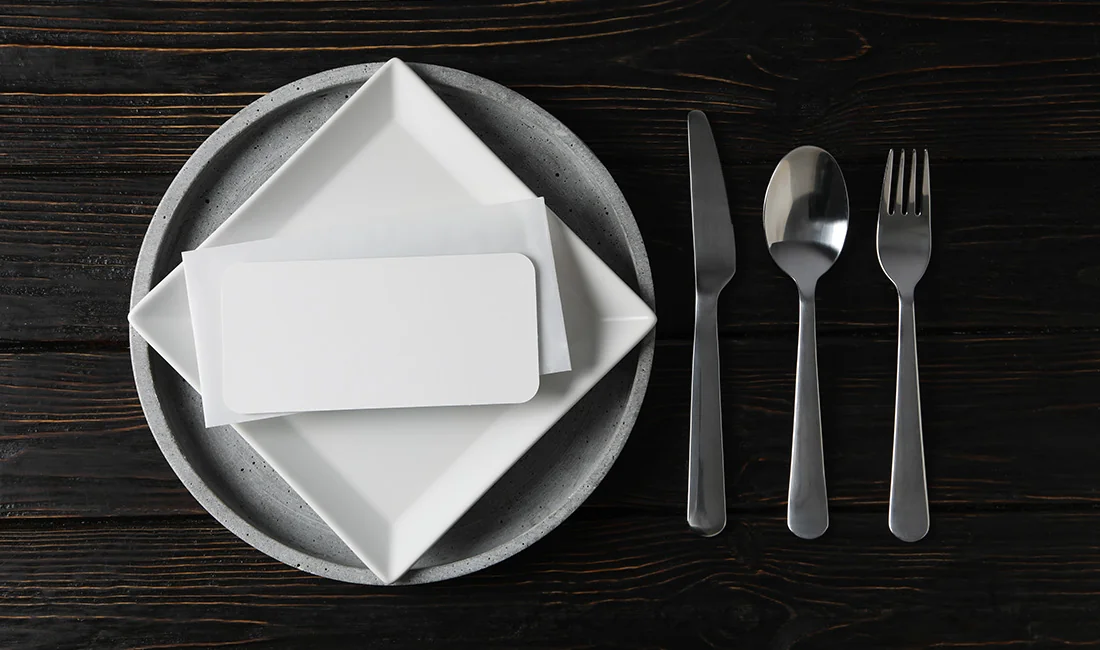
Disposable tableware for corporate catering means single-use plates, cups, cutlery, and serving trays designed for business events, meetings, and office meals. You use disposable tableware to serve food at scale while controlling cost, meeting food‑safety rules, and speeding up cleanup.
You will learn why disposable tableware matters in corporate catering, which types and materials fit different menus, and how to choose options that match your brand and venue rules. The guide also covers compostable choices, bulk buying, and common questions you face when serving offices, conferences, and company parties.
Why Disposable Tableware Matters in Corporate Catering?
Disposable tableware is single-use plates, cups, and cutlery designed for food service at scale. In corporate catering, it supports fast service, clear budgeting, and controlled hygiene.
Common benefits include:
-
Faster setup and breakdown
-
Predictable per-person costs
-
Improve food safety
-
Consistent presentation across locations
You reduce cleanup time because staff do not wash, dry, or store dishes. In practice, this cuts labor hours and speeds room turnover between meetings or sessions. Many planners choose this option when venues limit kitchen access or staff support.
You gain cost control because prices stay fixed per guest. Disposable sets avoid rental fees, breakage charges, and utility costs tied to washing. For you, this means easier budget planning and fewer surprise expenses.
You improve food safety by using unused items for each event. Many disposable plates meet FDA food-contact standards, which lowers the risk of cross-contact. In real use, this matters when serving large groups on tight schedules.
You also gain design flexibility. Disposable tableware comes in set sizes, colors, and finishes that align with brand themes. This allows you to match table settings to company events without storing inventory.
What are the Types and Materials of Disposable Tableware for Corporate Catering?
Disposable tableware includes single-use items used to serve food and drinks at meetings and events. You rely on it to control cleanup time, support food safety, and manage large guest counts.
Common types you will use include:
-
Plates: Flat or compartment styles for main meals and sides. Compartments separate foods because molded sections block sauce spread, which keeps meals neat during service.
-
Bowls: Deep containers for soups, salads, and grains. Taller sidewalls reduce spills when guests carry food.
-
Cups: Paper or bioplastic cups for hot and cold drinks. Heat-rated linings prevent leaks, which protects tables.
-
Serving utensils: Forks, spoons, and knives sized for single meals. Rigid shapes improve grip, so utensils do not bend during use.
-
Food trays: Multi-compartment trays for buffets and boxed lunches. Fixed sections control portions and speed up lines.
-
Napkins and disposable napkins: Paper-based sheets for wiping hands and surfaces. Higher ply counts absorb more liquid, which reduces waste.
Materials matter because they affect heat, moisture, and disposal.
Common materials for corporate catering include:
|
Material |
Used For |
Key Facts |
What This Means for You |
|
Bagasse (sugarcane fiber) |
Plates, bowls, trays |
Heat-resistant and grease-resistant |
You can serve hot meals without sagging |
|
Paperboard |
Plates, cups, napkins |
Lightweight with coated options |
You get lower cost and easy stacking |
|
PLA (plant-based plastic) |
Cold cups, cutlery |
Industrial compostable; low heat tolerance |
You avoid hot liquids but support compost programs |
|
Wood or bamboo |
Cutlery |
Rigid and compostable |
You reduce plastic use without bending issues |
You choose types and materials based on menu temperature, service speed, and local disposal rules.
How to Choose the Disposable Tableware for Corporate Catering?
You need tableware that handles full meals, meets food safety rules, and fits a professional setting. The right choices also control waste, support your brand, and keep costs predictable across events.
Assess Durability and Functionality
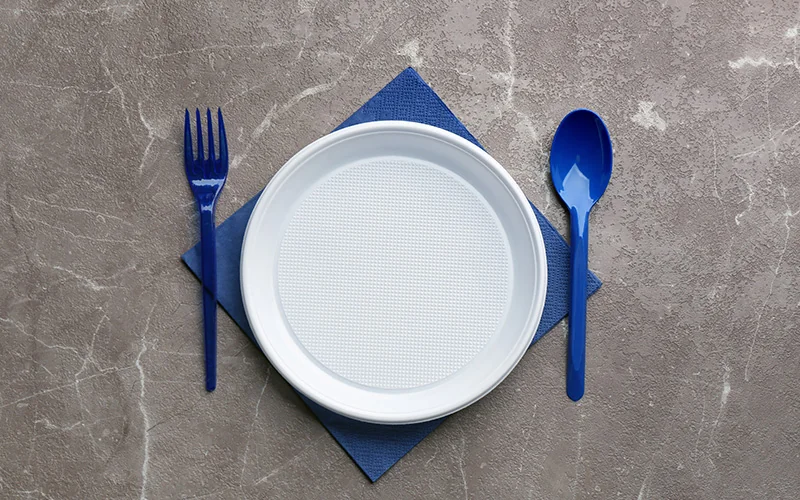
Disposable tableware includes single-use plates, bowls, cups, food trays, serving utensils, and napkins designed for short-term food service. Start with load capacity and heat tolerance.
Plates and bowls should list a weight rating or material thickness. For example, polystyrene plates at 2–3 mm thickness resist bending under hot entrées. In practice, this means sauces stay on the plate instead of spilling during buffet service.
Cups need clear volume marks, such as 9 oz for water or 12 oz for iced drinks. This helps bar staff pour consistent servings and control beverage costs.
Serving utensils and food trays should specify heat limits, often up to 180°F. For you, this means safe handling of hot foods without warping or cracking.
Verify Food Safety Compliance
Food-safe disposable tableware must meet regulatory standards for contact with food. Look for items labeled FDA food-contact compliant or certified under equivalent local rules.
Plates, bowls, and cups made from plastic should list resin codes, such as #5 polypropylene. This material resists heat and does not leach additives at serving temperatures. For you, this lowers the risk of off-flavors or safety complaints.
Paper napkins and disposable napkins should state chlorine-free or food-grade ink use. This matters because napkins often touch mouths and hands.
Serving utensils should come in sealed packaging. In real use, sealed packs reduce cross-contact risks during setup in shared kitchens or venues.
Match Your Brand and Presentation
Corporate catering often needs a neutral, consistent look. Disposable tableware affects how guests judge the meal before they taste it.
White or black plates with a defined rim frame food clearly. A 10-inch plate gives space for protein, sides, and garnish without crowding. For you, this improves presentation in client-facing meetings.
Bowls with smooth walls show soups and grains cleanly. Cups with straight sides stack evenly on beverage stations, which keeps layouts orderly.
Napkins support branding when you choose standard colors that match your linens. Even unprinted disposable napkins signal care when they match the table setting.
Compare Materials for Sustainability
Material choice shapes waste handling and client expectations.
Common options include plastic, molded fiber, and palm leaf:
|
Material |
Key Attribute |
What It Means for You |
|
Polypropylene |
Heat resistant to ~212°F |
Safe for hot foods and drinks |
|
Molded fiber |
Made from plant pulp |
Suitable for compost programs |
|
Palm leaf |
Pressed fallen leaves |
Rigid without additives |
Plates and bowls made from molded fiber work well for dry or moderately wet foods. Palm leaf food trays handle heavier items because the natural fibers form a stiff structure. Cups and utensils still perform best in plastic for liquids and precise handling.
Balance Cost with Environmental Goals
Cost control starts with unit pricing and waste planning. Disposable tableware prices vary by material, size, and finish.
Plastic plates often cost less per unit in bulk. This matters when you serve hundreds of guests and need stable margins. Compostable plates cost more but may meet client sustainability policies.
Napkins offer a low-cost place to reduce impact. Switching from two-ply to one-ply disposable napkins cuts paper use while still meeting basic needs.
For you, the balance comes from mixing materials. Use compostable plates and bowls where required, and standard cups and utensils where performance matters most.
FAQs
How can one choose eco-friendly disposable options for company gatherings?
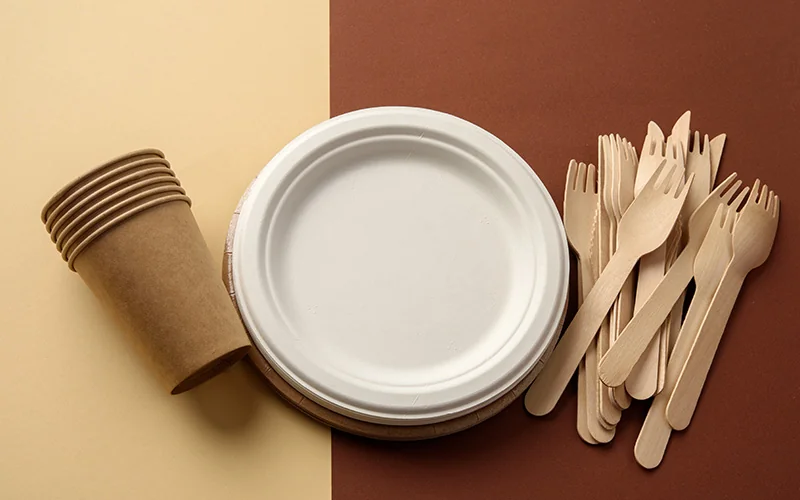
You can choose eco-friendly disposable tableware by selecting products made from verified materials such as PLA, molded plant fiber, or paper with food-safe coatings.
PLA tableware uses plant starch as its base material. Because manufacturers make it from renewable crops, it reduces reliance on petroleum plastics. In practice, this means you can meet many local restrictions on single-use plastics.
Look for third-party certifications for food contact safety and compostability. These labels confirm the material passed migration and heat tests. For you, this lowers compliance risk during inspections or large public events.
Are there customizable disposable tableware options for corporate events?
Yes, many disposable tableware products allow customization through printed logos, colors, or packaging.
Manufacturers print branding using food-safe inks designed for paper or PLA surfaces. Because the ink bonds during production, it resists smearing when exposed to moisture. For you, this keeps logos readable during service.
Customization usually requires minimum order quantities and longer lead times. In practical terms, you need to plan branding orders earlier than standard stock items.
What are the most cost-effective disposable tableware solutions for business functions?
Cost-effective solutions include bulk paper plates, molded fiber trays, and standard polypropylene cutlery where regulations allow.
Paper and fiber products cost less because they use widely available raw materials and simple manufacturing steps. For you, this lowers per-guest cost at large meetings or training.
Buying by the case instead of mixed packs reduces unit pricing. In real use, this approach works best when menus stay consistent across multiple events.