

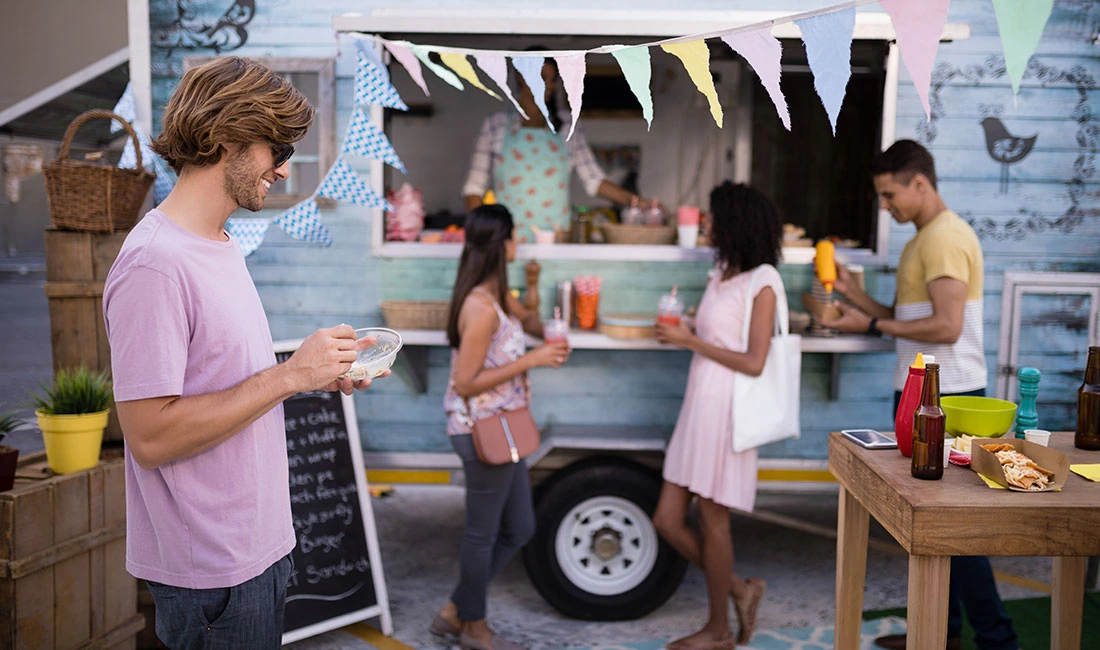
Food truck events move fast. You need service tools that can keep up.
Guests want quick meals they can hold, carry, and enjoy without hassle. The right disposable tableware helps you serve more orders and keeps lines short.
Strong grab-and-go plates, bowls, and utensils made for mobile food service boost speed and keep things cleaner. Smart packaging supports hot and cold foods, reduces spills, and fits how people eat at outdoor events.
Material choice matters, too. Paper, plastic, and compostable options help you match event rules and customer values.
Presentation still counts, even on wheels. Clean table covers, matched utensils, and well-sourced supplies make your setup look professional and organized.
Essential Disposable Tableware for Food Trucks
You need tableware that supports fast service, safe handling, and easy cleanup. The right plates, bowls, and utensils help you serve hot and cold foods without leaks or delays.
They also fit into standard restaurant supplies without adding extra steps for your staff.
Plates and Bowls for On-the-Go Meals
You rely on plates and bowls that hold food steady while customers walk and eat. Paper plates with reinforced rims work well for burgers, tacos, and fried foods.
They resist bending and reduce spills during handoff. For meals with sauces or mixed items, disposable bowls with fitted lids matter.
Kraft paper bowls and coated paper bowls handle heat and grease better than thin paper. Clear lids help customers see the food and lower order mix-ups.
Common options include:
● Round paper bowls for soups, rice, and pasta
● Square or rectangular plates for combo meals
● Compostable fiber bowls for eco-focused events
Choose sizes that match your menu to avoid wasted space and food movement.
Single-Use Utensils for Convenience
Single-use utensils keep service fast and sanitary. Stock forks, spoons, and knives that match your menu, not just generic sets.
A sturdy fork matters for salads and noodles. A strong knife helps with meats and sandwiches.
Many food trucks now pick wooden or plant-based utensils. These options reduce plastic use and still feel solid in hand.
Pre-wrapped utensil sets save time and limit contact during busy hours.
Key points to consider:
● Strength under pressure, not just appearance
● Heat resistance for hot foods
● Compact packaging for tight storage spaces
Specialty Serving Utensils
Some foods need more than basic forks and plates. Serving utensils like portion spoons, tongs, and ladles help you control servings and speed up prep.
They also keep hands away from food during service. Use boat trays for fries and snacks that customers eat right away.
Sushi or bento-style boxes work for items that need separation and clear presentation. These containers protect food shape during transport.
Specialty items to keep on hand:
● Sauce cups with lids for dips and dressings
● Paper wrap sheets for sandwiches and wraps
● Mini tasting spoons for samples and events
Grab-and-Go Packaging Options
You need food packaging that moves fast, protects food, and fits limited truck space. The right mix of take-out containers, to go boxes, and pizza boxes helps you serve more customers with less delay.
Take-Out Containers for Quick Service
Take-out containers work best when they seal tight and stack well. Choose shapes that match your menu, like round bowls for soups and salads or square boxes for hot meals.
Key features to prioritize:
● Leak resistance for sauces and soups
● Heat control to keep food warm without trapping steam
● Clear lids when food appearance matters
Common materials include paperboard, molded fiber, and plastic. Paper options suit hot foods and reduce grease leaks.
Clear plastic lids help customers see fresh items like salads or poke bowls.
| Food Type | Best Container Type |
| Soups | Round bowls with tight lids |
| Pasta | Vented paper boxes |
| Salads | Paper bowls with clear lids |
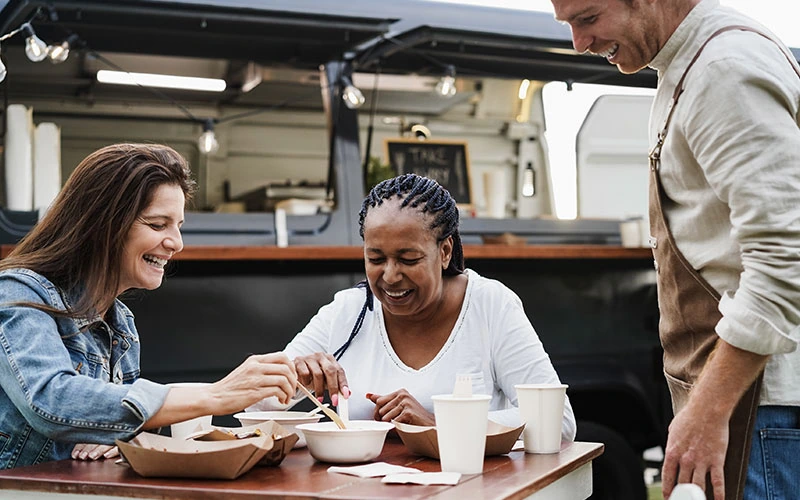
To Go Boxes for Diverse Menu Items
To go boxes give you flexibility when your menu changes often. You can use them for burgers, rice bowls, tacos, or combo meals.
Clamshell-style boxes make loading fast and limit spills. Divided boxes help you separate sides from main items, which keeps food texture intact.
What to look for in to go boxes:
● Strong hinges that do not crack
● Flat tops for easy stacking
● Sizes that match real portions
Paper and fiber boxes work well for hot foods. Some options resist grease without plastic coating, which helps with waste goals and local rules.
Pizza Boxes for Food Truck Pizzerias
Pizza boxes must protect shape, heat, and crust quality. Size boxes to your pizza exactly to stop sliding during transport.
Corrugated cardboard handles heat and adds strength. Vent holes help release steam, which keeps crusts from turning soft.
For slices, triangle boxes or flat slice trays speed service during rush hours.
Pizza box tips:
● Use white or kraft boxes for easy labeling
● Add liners to control grease
● Store boxes flat to save space
Choosing Materials: Paper, Plastic, and Eco-Friendly Alternatives
Your material choice affects food safety, customer experience, cleanup speed, and waste handling. For food truck events, you need packaging that works fast, holds up during service, and fits local waste rules.
Compostable and Recyclable Tableware
Compostable and recyclable options help you reduce waste while meeting event or city rules. Common compostable materials include bagasse (sugarcane fiber), paper pulp, and plant-based PLA.
These items come from renewable sources and work well for plates, bowls, cups, and cutlery. Recyclable paper products fit dry foods and short use times.
Coated paper can handle light moisture but often can’t go in standard recycling. Key points to check before buying:
● Local compost or recycling acceptance
● Food contact safety certifications
● Clear labeling for customers and staff
Using clearly marked food packaging bins helps avoid contamination and keeps cleanup fast.
Biodegradable Solutions for Food Trucks
Biodegradable tableware breaks down over time, but conditions matter. Bagasse plates and bowls decompose in compost systems and handle hot, greasy foods.
They work well for tacos, rice bowls, and fried items. PLA cups and lids look like plastic and suit cold drinks.
They need industrial composting, not home compost or landfill. If the event lacks compost service, PLA may not deliver real benefits.
Avoid vague claims. Look for certified standards such as ASTM D6400 or EN 13432 to confirm proper breakdown.
Choose materials that match the waste system on site, not just the label.
Durability and Functionality Considerations
Food truck service moves fast, so strength matters. Thin paper plates bend under weight and leak with sauces.
Bagasse and molded fiber hold their shape and resist oil and heat. Plastic still offers high durability and low cost.
It works for cutlery and lids when reuse or recycling exists. In many cities, single-use plastic faces restrictions, so check local rules.
Match materials to menu needs:
| Food Type | Best Material |
| Hot, saucy meals | Bagasse bowls |
| Dry snacks | Paper plates |
| Cold drinks | PLA or PET cups |
| Heavy meals | Molded fiber trays |
Table Covers and Event Presentation
Clean surfaces and clear food display help you serve faster and keep your setup organized. Disposable table covers and well-chosen tableware support food safety, speed, and visual order during busy food truck events.
Disposable Table Covers for Quick Cleanup
Disposable table covers protect your prep and service tables from spills, grease, and crumbs. You can remove and replace them in seconds, which helps during rush periods or menu changes.
This saves time and keeps your station clean without stopping service. You can choose paper, plastic, or biodegradable covers based on your needs.
Paper works well for light service and short events. Plastic handles moisture and heavy use better.
Many restaurant supplies vendors offer bulk options in standard table sizes. Key benefits include:
● Faster cleanup between service periods
● Lower laundry and water use
● Consistent surface for prep and service
Neutral colors reduce visual clutter. Brighter colors help define order areas or pickup zones.
The Role of Disposable Tableware in Food Display
Disposable tableware affects how customers see your food before they order. Plates, bowls, and trays shape portion size and guide how food looks on the table.
Clear lids on bowls and boxes help customers spot items quickly. Use sturdy grab-and-go plates and bowls that keep food stable while customers walk.
Flat trays work well for fries and snacks. Deep bowls hold sauced or mixed foods without spills.
Simple choices improve display:
● White or kraft tones highlight food color
● Matching plate and utensil styles keep your setup uniform
● Right-sized containers prevent overflow and waste
Sourcing and Customizing Disposable Products
You need disposable tableware that works fast, holds up under heat, and fits your brand. Smart sourcing controls costs and keeps service smooth, while customization helps customers recognize your food truck at busy events.
Restaurant Supply Vendors and Bulk Purchasing
You can source disposable plates, bowls, and utensils from restaurant supply vendors that focus on foodservice needs. These vendors stock items made for high-volume use, not home parties.
Look for products tested for heat, oil, and weight—especially for grab-and-go meals. Bulk purchasing lowers your per-unit cost and reduces restocking during events.
Many suppliers offer flexible minimum orders, which helps smaller food trucks manage cash flow. Key factors to check before ordering:
| Factor | Why It Matters |
| Material type | Bagasse handles heat; PLA works for cold items |
| Case pack size | Affects storage and transport |
| Certifications | FDA and compostable labels protect you |
| Lead times | Prevents last-minute shortagesAsk for samples and test them with real menu items. |
Custom Branding for Disposable Tableware
Custom branding turns basic restaurant supplies into marketing tools. Printed cups, logo plates, or wrapped utensils help customers remember your truck and share photos online.
Even a simple one-color logo can boost visibility. Focus on items customers hold the longest.
Cups, napkins, and cutlery sleeves give you the most exposure for the cost. Full custom molds cost more and really only make sense for big orders.
Surface printing works well for smaller batches. Here are some common customization options, in case you’re wondering:
● Logo printing on cups, bowls, or bags
● Embossed designs on bagasse plates
● Branded sleeves for utensils or wraps
Always confirm ink safety and food-contact compliance. Keep your designs clean and readable from a few feet away—tiny details usually get lost.

Best Practices for Efficient Food Truck Operations
Planning how you handle disposable items can really improve speed and consistency. Smart storage choices and clear sustainability steps help you serve more guests with less waste and fewer delays.
Organizing and Storing Disposable Supplies
You need fast access to plates, bowls, cups, and utensils during peak service. Store disposable tableware close to prep and service areas to limit extra movement.
Use stackable bins and clear labels so staff can restock without asking. Keep items in the order you use them, from plates to utensils to napkins.
A simple setup helps control space and cost:
● Plates and bowls: store by size to avoid mix-ups
● Utensils: pre-sort into grab bins or wrapped sets
● Food packaging: keep lids paired with containers
Track daily use and restock based on real demand. This approach helps you avoid shortages and cuts down on excess supplies that just take up space.
Sustainability in Grab-and-Go Food Service
When you pick better disposable options, you support faster service and more responsible operations. Compostable or recyclable packaging fits busy events, but only if you plan disposal ahead of time.
Try to choose items made from plant-based fiber, paper, or molded pulp. Make sure each item matches its purpose so you don’t end up with leaks or double packing.
Want to make disposal less of a headache for everyone?
| Item Type | Best Option | Disposal Method |
| Plates & bowls | Bagasse or paper |
Compost |
| Utensils | Wood or bamboo | Compost |
| Cups | Paper or PLA-lined | Recycle or compost |
Train staff to sort waste during breakdown. Put up clear signs and use labeled bins—these small steps really help cut contamination and keep your sustainability goals on track.