

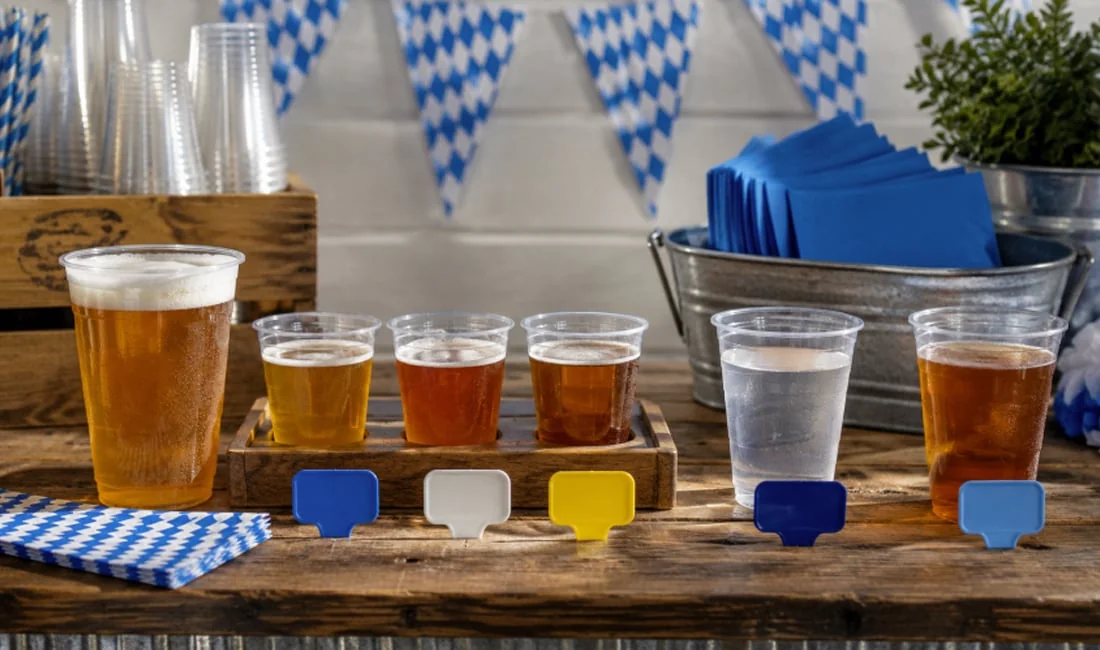
Oktoberfest is closely tied to Munich and Bavarian culture, but a party at home does not need a full beer tent to feel convincing. A clear drink station, sturdy plates, and a blue-and-white table can establish the theme without making service difficult.
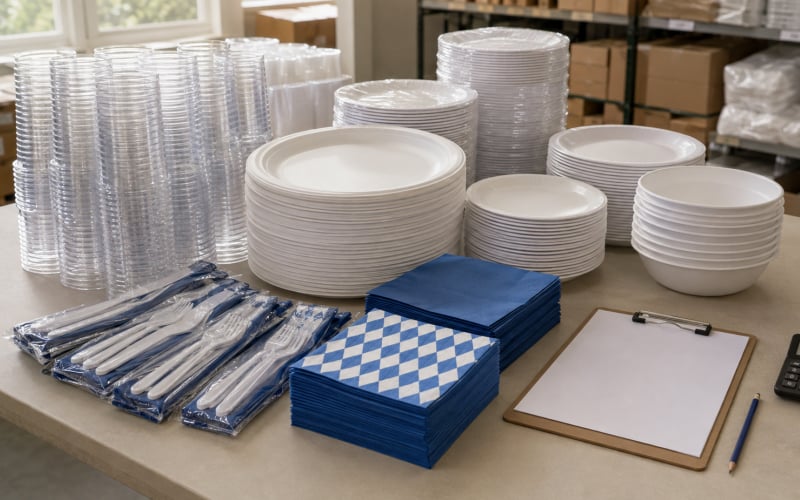
The tableware should also match the menu. Pretzels need small plates or liners. Bratwurst, schnitzel, and side dishes need stronger dinner plates. Beer, water, and alcohol-free drinks may need different cup sizes. From a manufacturer and supplier perspective, color is only one part of the choice. Cup capacity, plate rigidity, pack count, and use limits affect how the tableware performs during service.
This guide explains how hosts and event planners can choose each item, estimate quantities, and arrange an Oktoberfest party table that is easy to use.
What Disposable Tableware Does an Oktoberfest Party Need?
Most Oktoberfest parties need three groups of supplies: drinkware, individual dinnerware, and shared serving pieces. The exact mix depends on the menu and service style. A seated meal needs more complete place settings, while a casual pretzel-and-beer party may need only cups, small plates, napkins, and serving trays.
Disposable Beer Cups and Other Drinkware
The drink station usually needs more than one type of cup. Main beer service calls for a cup with enough room for the drink and its foam. A tasting flight needs smaller cups. Water, soda, apple spritzers, and alcohol-free beer may share a standard cold-drink cup, but clear labels help prevent mix-ups.
Cup strength matters as much as capacity. A firm rim makes a cup easier to hold and reduces flexing. A stable base is useful when guests carry food and drinks at the same time. Clear cups also let staff see the fill level, which can help limit spills at a self-serve station.
Disposable Party Plates and Bowls
An Oktoberfest menu often combines dry finger foods with heavier, wetter dishes. Pretzels, cheese cubes, and sausage bites fit on appetizer plates. Bratwurst, roast chicken, potato salad, and sauerkraut need a larger plate with better strength and edge control.
Bowls are useful when a side dish contains liquid or can slide across a flat plate. They also keep cold sides separate from hot main dishes. Small portion cups can hold mustard, cheese dip, or pickles without taking over the dinner plate.
Disposable Flatware, Napkins, and Servingware
Flatware should reflect the food rather than the theme alone. A finger-food menu may need forks and serving tongs but few knives. A plated meal with schnitzel or roast meat needs a full fork-and-knife setting. Spoons are useful for soups, desserts, or soft side dishes.
Napkins belong at the drink station, appetizer table, and main buffet. Serving trays, tongs, and spoons should stay with the foods they serve. This keeps guests from moving utensils between dishes and makes the buffet easier to restock.
Disposable Beer Cups for an Oktoberfest Drink Station
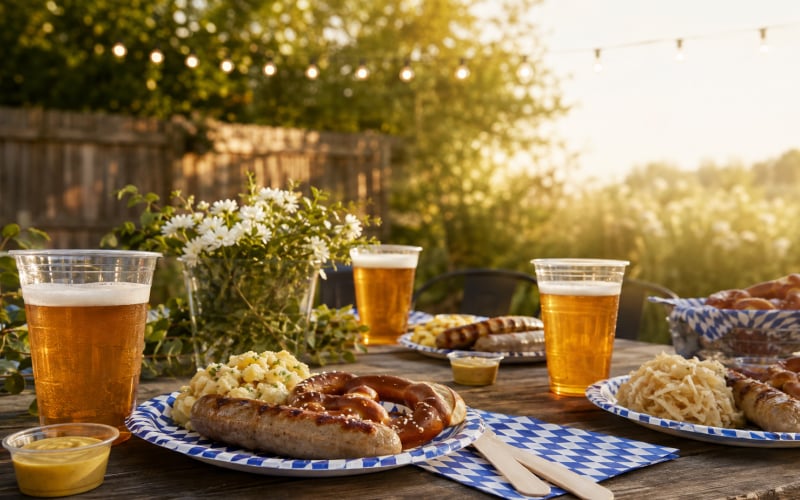
Disposable beer cups should match the planned pour, not the size of an authentic Munich beer mug. Beer at the Munich festival is commonly sold by the liter, but that serving size is not a practical rule for a home party, office event, or tasting table. Smaller portions are easier to manage and make it simpler to offer alcohol-free choices alongside beer.
Full-Size Cups for the Main Beer Service
A cup around 14 to 16 ounces gives a standard 12-ounce bottle or can some room for foam. For a 16-ounce pour, a larger cup is more practical. The cup should never be filled to the rim. Headspace improves handling and reduces overflow when the drink is poured quickly.
Rigid plastic cups are often used for cold beer because they keep their shape and do not absorb moisture. Paper cups may also work when they are designed and lined for cold drinks. In both cases, buyers should check the product description for intended beverage use. A cup labeled for cold drinks should not be treated as a hot-drink cup.
Hosts who want a neutral beverage station can use clear disposable cups, then add blue napkins, signs, or table covers around them. This approach keeps the drinkware flexible while the surrounding pieces carry the theme.
Smaller Cups for Beer Tastings
Tasting cups are usually more useful in the 4-to-6-ounce range. The actual pour can be smaller, often 2 to 4 ounces, so guests can compare several drinks without receiving a full serving of each one. All samples should use the same cup size and fill line when a tasting includes scorecards or voting.
A tasting station also needs water cups. Water helps guests pause between samples, and it gives non-drinkers a clear option. If several cup sizes look similar, labels or separate stacks can reduce confusion.
Separate Drinkware for Water and Alcohol-Free Options
Water and alcohol-free drinks should be easy to find. They should not be hidden behind the beer service. A separate dispenser or cooler can serve water, sparkling water, soda, and apple spritzers.
Different cup colors are one way to separate drink types, but they are not required. Clear signs and different table positions can do the same job. Events that serve alcohol must also follow local age rules, venue policies, and responsible-service requirements.
Disposable Party Plates and Bowls for Bavarian Food
The menu should determine plate size, depth, and strength. Bavarian-inspired party food can be dense, oily, or moist. A plate that works for cake may not hold sausage, potato salad, and sauerkraut at the same time.
Appetizer Plates for Pretzels and Sausage Bites
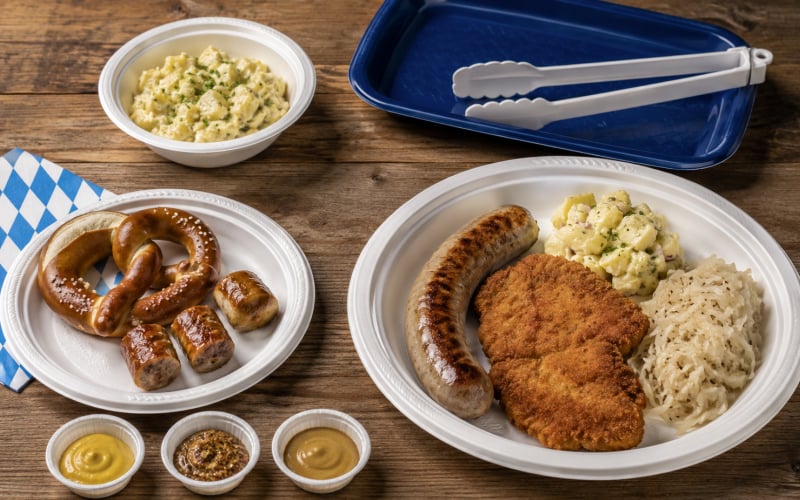
Small plates around 6 to 8 inches work well for pretzels, sliced sausage, cheese, and bread. They give guests enough room for two or three snack items without encouraging them to carry an oversized plate around the drink station.
Dry pretzels need little edge depth. Sausage bites, pickles, and dips need more control. When sauces are part of the appetizer table, portion cups or small bowls are cleaner than placing several mustards directly on one flat plate.
Sturdy Dinner Plates for Bratwurst, Schnitzel, and Sides
Dinner plates around 9 to 10.5 inches provide room for a main item and two or three sides. Strength is more important than diameter alone. The plate should stay level when it holds bratwurst, potatoes, cabbage, and sauce.
Thicker plastic plates can provide more rigidity for a buffet meal. Fiber and paper plates may also work when their weight rating and moisture resistance suit the menu. Buyers should test a sample with the heaviest planned meal before placing a large order. Product instructions should also be checked before serving very hot food or using any plate in a microwave.
Color can be added without covering every piece in a printed pattern. A two-size option such as this blue and gold plastic plate set includes 10.25-inch dinner plates and 7.5-inch smaller plates. Those sizes can support a main-course-and-appetizer setup while bringing blue into the table design.
Bowls and Portion Cups for Potato Salad, Sauerkraut, and Mustard
Bowls help control foods that are loose, moist, or served with a spoon. Potato salad, red cabbage, and sauerkraut can be placed in separate side bowls when the main plate has limited edge depth. This also keeps juices away from breaded food.
Small portion cups are practical for condiments. One- or two-ounce cups can hold sweet mustard, grain mustard, or cheese dip. Pre-portioned condiments keep the serving area cleaner, but open cups should be set out in small batches and handled under suitable food-safety conditions.
Serving Trays and Utensils for a Buffet
Buffet pieces should be selected after the menu is final. Flat trays work for pretzels, sliced bread, and pastries. Deeper bowls or pans are better for potato salad, cabbage, and other spooned sides. Tongs suit sausage, chicken, and bread, while serving spoons are better for soft foods.
Tableware does not keep food at a safe temperature. Hot and cold dishes still need suitable holding equipment and should follow local food-safety guidance. Disposable trays should only be used within the temperature and load limits stated by the manufacturer.
How to Style a Bavarian Table with Disposable Tableware
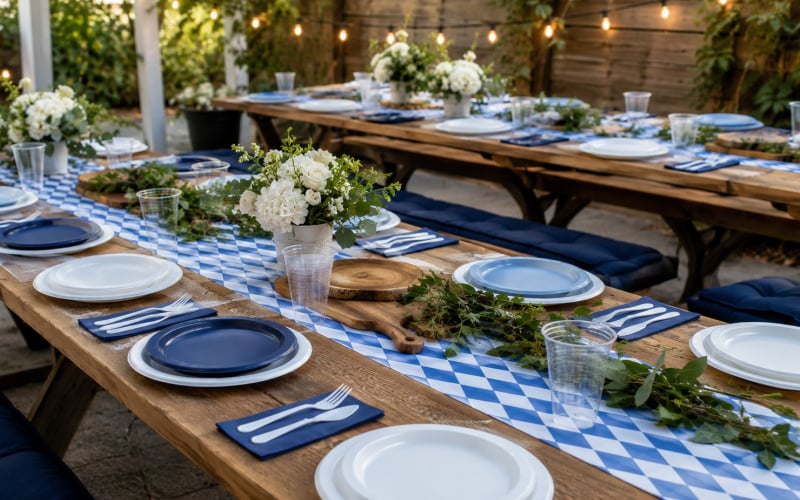
A Bavarian-inspired table is easiest to recognize when the color palette and layout are clear. Blue and white provide the main visual cue. Wood tones, greenery, and simple signage can make the table feel more like a relaxed biergarten and less like a wall of printed decorations.
Use Blue and White as the Main Color Palette
Blue and white are closely linked with Bavaria, so they are a natural base for Oktoberfest party tableware. A white table cover with blue napkins creates a clean starting point. The colors can then repeat in plates, cup markers, food labels, or a table runner.
The shades do not need to match perfectly. Navy, royal blue, and light blue can work together when white remains the main neutral. For a warmer fall setting, small touches of gold, kraft brown, or natural wood can soften the contrast.
Balance Patterned Pieces with Solid Tableware
One patterned layer is usually enough. If the table cover has a blue-and-white diamond design, solid plates and clear cups keep the surface readable. If the plates carry the color, a plain white or kraft table cover gives them room to stand out.
This balance also makes restocking easier. Solid cups, napkins, and flatware are simpler to replace than a full set of highly specific themed pieces. Event planners can build the look around one focal item and use standard supplies for the rest.
Add Wood, Greenery, and Low Centerpieces
Low decorations protect the table’s working space. Small greenery arrangements, wooden boards, and baskets can support the biergarten theme without blocking conversation. Wheat stems or simple white flowers may also fit the palette.
Food should remain easy to reach. Centerpieces should not compete with serving trays, condiments, or drink pitchers. Any decorative plant or prop placed near food should be clean, stable, and kept away from open dishes.
Arrange Long Tables in a Biergarten Style
Long shared tables are a strong visual cue, but the layout must still support movement. Seats need enough room, and guests should have a clear path to the buffet and drink station. Narrow tables benefit from small centerpieces and compact place settings.
For a backyard event, several shorter tables may work better than one long row. The same blue-and-white details can connect them. The aim is a shared dining feel, not a strict copy of a festival tent.
How to Choose Disposable Tableware for an Oktoberfest Party
The best choice comes from matching five details: menu, drink plan, material performance, visual style, and guest count. Starting with the table color alone can lead to cups that are too small or plates that do not support the food.
Match Each Piece to the Menu
The menu should be divided into practical serving groups. Dry snacks need small plates or trays. Heavy mains need rigid dinner plates. Wet sides need bowls or deeper plates. Condiments need portion cups and small spoons.
This method also shows which items are unnecessary. A pretzel-and-beer gathering may not need dinner knives or large bowls. A seated Bavarian meal may need both. Removing unused pieces can reduce cost and waste.
Choose Cup Sizes for the Drink Plan
Cup capacity should follow the serving size. A main beer cup needs space for both liquid and foam. Tasting cups need consistent volume. Water cups should be easy to refill and easy to tell apart from sample cups.
Ice changes the calculation for soda and other cold drinks. A cup filled with ice holds less liquid, so the selected size should leave enough working room. Buyers should also confirm lid fit when drinks will be carried away from the table.
Check Plate Strength and Bowl Depth
Plate strength should be judged with the full meal, not one item. A useful sample test places the heaviest main dish, the wettest side, and the planned flatware on the plate. The rim should stay firm when the plate is lifted with one hand.
Bowl depth should reflect the food. Shallow bowls work for small portions of potato salad or cabbage. Deeper bowls are better for soup or larger sides. The manufacturer’s use instructions remain the final guide for heat, microwave use, and reuse.
Decide Between Disposable Dinnerware Sets and Mix-and-Match Pieces
Coordinated dinnerware sets make counting and styling simpler. They may include plates, cups, flatware, and napkins for a stated number of guests. The tradeoff is that the included quantities may not match the menu. A set may provide one cup per person when the event needs two, or it may include spoons that the menu does not use.
Mix-and-match ordering gives planners more control. It works well when the drink station needs extra cups or the buffet needs two plate sizes. Before buying, the total cost and pack counts should be compared rather than the number of pieces printed on the box.
Order for the Guest Count and Serving Style
The final order should reflect how guests will eat. A seated dinner has a more stable count because each place is set in advance. A self-serve buffet needs a small buffer because guests may return with a fresh plate. A tasting station needs several small cups per person.
Pack size also affects the order. If a product is sold in packs of 25 and the event needs 55 pieces, three packs are required. Leftover unopened packs may be useful for another event, but return and storage terms should be checked before purchase.
How Much Oktoberfest Party Tableware Should You Buy?
Quantity planning should begin with one complete serving path per guest, then add a modest buffer. The figures below are planning baselines for a typical party. Menu format, event length, pack size, and local service rules can change the final amount.
Estimate Disposable Cups per Guest
For a main drink station, two cups per guest is a practical starting point. Three may be safer for a longer self-serve event or a party with several drink types. Cup markers can reduce waste because guests are more likely to keep the same cup.
Tasting cups should be counted by sample. A three-drink tasting usually needs three cups per participating guest unless cups will be rinsed and reused under a controlled service plan. Water cups should be counted separately.
Calculate Plates, Bowls, and Flatware
One dinner plate per guest covers a plated meal. A buffet often needs 10 to 20 percent extra because of second servings, dropped plates, or changes in guest count. Appetizer and dessert plates should be counted by course. Bowls should only be added for dishes that truly need them.
The following example shows a reasonable starting order for 50 guests:
| Item | Planning Baseline | Example for 50 Guests |
|---|---|---|
| Main cold-drink cups | 2 per guest | 100 |
| Dinner plates | 1 per guest plus 10-20% | 55-60 |
| Appetizer or dessert plates | 1 per planned course plus 10% | 55 per course |
| Bowls | 1 per guest when the menu needs one | 50-55 |
| Flatware sets | 1 per guest plus 10% | 55 |
| Napkins | 2-3 per guest | 100-150 |
This is an order-planning tool, not a fixed rule. A standing snack party will use fewer dinner plates. A full buffet with dessert may use more small plates and napkins.
Add Extras for Second Servings, Spills, and Refills
A buffer of about 10 to 20 percent is usually enough for plates and flatware at a private event. Cups may need a larger buffer because they are easier to misplace. Large public or catered events may need different safety stock based on service speed and restocking access.
Extra pieces should stay wrapped until needed. This protects them from dust and splashes. It also keeps unopened stock available if the party uses less than expected.
How to Set Up an Oktoberfest Buffet and Beer Station
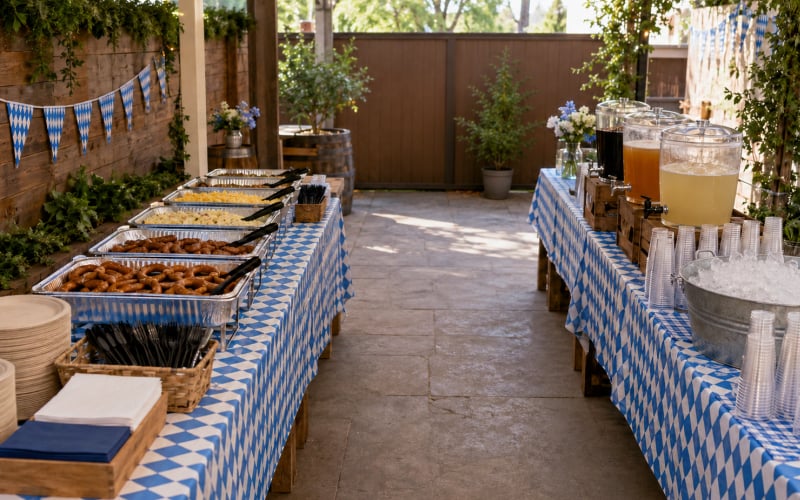
The best setup reduces crossing traffic. Food, drinks, condiments, and waste should each have a clear place. A good layout can make ordinary disposable tableware feel more organized and can reduce spills during busy periods.
Separate the Food and Drink Lines
The main buffet and beer station should not share one queue. Drinks take time to pour, especially when foam is involved. A separate station lets guests collect food without waiting behind the bar area.
Water can sit beside the drink station but should remain easy to reach. At larger events, a second water point near the dining area can reduce traffic.
Place Napkins, Flatware, and Condiments at More Than One Point
Flatware usually belongs near the end of the food line, after guests have filled their plates. This prevents guests from carrying loose utensils while serving food. Napkins can appear at the drink station, appetizer table, and dining area.
Popular condiments such as sweet mustard, grain mustard, and cheese dip may need more than one serving point. Small labeled cups can shorten the line and reduce shared handling.
Label Beer and Alcohol-Free Drinks Clearly
Drink labels should be readable before guests pick up a cup. Beer style, alcohol-free status, and common allergen information can be shown where relevant. Water should have a simple, visible label rather than relying on cup color alone.
For a tasting, each cup position can match a numbered card. This keeps the table organized and helps guests compare drinks in the intended order.
Add Waste and Recycling Stations
Waste points should be visible but kept away from open food. Clear signs can separate trash, liquids, and accepted recyclable items. A liquid-disposal container reduces leaks in waste bags.
Disposable does not automatically mean recyclable or compostable. Material type, food residue, and local collection rules all affect disposal. Hosts should follow the product label and local guidance instead of placing every plastic or fiber item in the same recycling bin.
Frequently Asked Questions
The most common questions concern cup size, plate material, visual style, and order timing. The answers depend on the planned menu and serving format, but a few practical rules cover most private events.
What Size Disposable Cups Work Best for an Oktoberfest Party?
A 14-to-16-ounce cup is a useful choice for a standard 12-ounce beer because it leaves room for foam. Larger pours need larger cups. For beer tasting, 4-to-6-ounce cups are easier to control, with each sample poured below full capacity.
Are Paper or Plastic Plates Better for Bratwurst and Sauerkraut?
Both can work if the plate is made for the food’s weight, moisture, and temperature. Thick plastic usually offers more rigidity. Heavy paper or molded-fiber plates may suit the meal when they have enough moisture resistance. A sample should be tested with bratwurst, sauerkraut, and a heavy side before the order is finalized.
How Can Disposable Tableware Still Look Bavarian?
The table needs a clear blue-and-white base, not a printed pattern on every item. Blue plates or napkins can sit on a white table cover, while clear cups and simple flatware keep the setting balanced. Wood accents, greenery, and low signs can complete the biergarten look.
How Far in Advance Should Oktoberfest Party Tableware Be Ordered?
Standard stock should be ordered after the menu and guest count are confirmed, with enough time for delivery and a quick quality check. Two to three weeks is a practical window for many private events, but seasonal demand, shipping location, pack availability, and custom work may require more time. Large or customized orders should follow the supplier’s confirmed lead time.
Bring the Oktoberfest Table Together
An Oktoberfest table works best when the menu, drink plan, and guest count guide the order. Sturdy dinner plates support hearty food, correctly sized cups reduce overflow, and blue-and-white details carry the Bavarian theme without making the table busy.
Wonderful Party offers disposable plates, drinkware, flatware, and coordinated dinnerware for seasonal events. Hosts can compare sizes, colors, and pack counts, then build a tableware plan that fits the way the party will actually be served.