

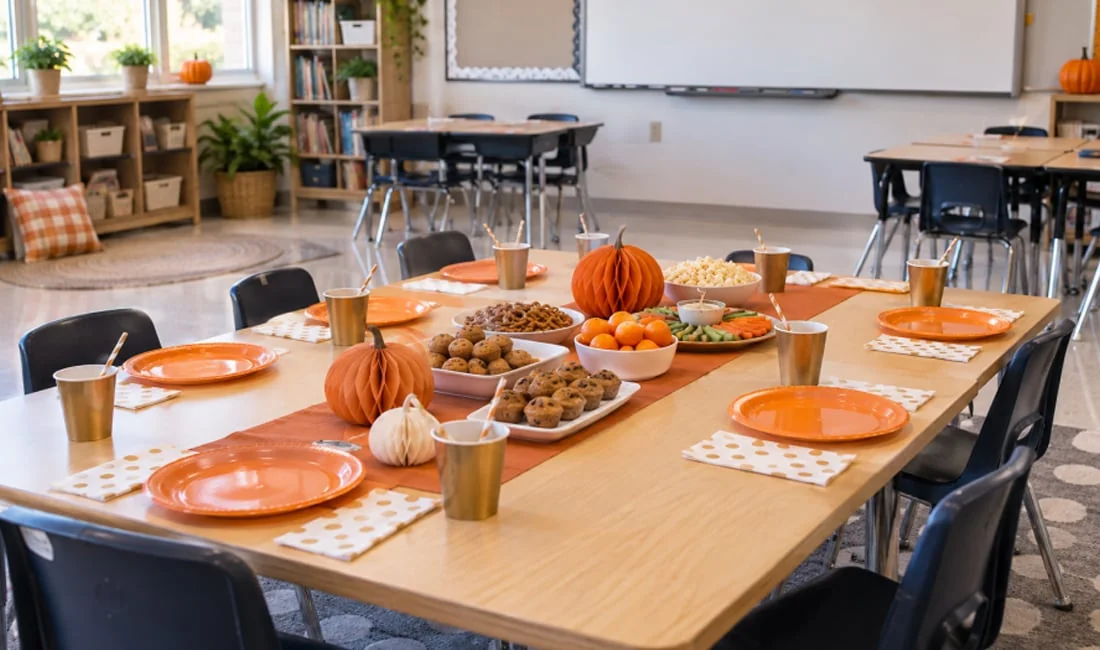
In a classroom, a Halloween party moves fast. Snacks appear, drinks are passed around, and a tidy table can become crowded within minutes.
Good disposable tableware helps control that rush. Plates must suit the menu, and cups must be easy to handle. When spills happen, napkins need to be close. Every item must also fit the school’s rules and service plan.
This guide takes teachers, room parents, and class party organizers from the first headcount to the final cleanup.
Start with the School’s Halloween Class Party Rules
The first decision does not come from a product page. It comes from the school. Policies on food, drinks, allergies, and party themes can change what the class is allowed to use.
Confirm the Food and Drink Policy
The menu comes before the tableware. A cupcake and fruit may fit on a small plate, while pizza and several sides call for more room. Drinks may need cups—or arrive in sealed bottles or boxes.
Homemade-food rules matter too. Some schools accept only food in its original package so staff can review the ingredients. Once the policy is clear, the supply list becomes easier to build.
Review Allergy and Cross-Contact Procedures
No plate or cup can replace a school food allergy plan. The teacher must confirm allowed foods, label rules, and any need for separate serving tools.
During setup, separate foods and tools as required, then keep clean tableware covered until service. That simple order can prevent mix-ups later.
Check the Party Time, Headcount, and Setup Limits
A short celebration leaves little room for a complex buffet. In a 30- or 45-minute party, prepared settings often move faster than an open serving line.
The headcount covers everyone being served, including students, staff, and volunteers. Available table space matters as well; a wide buffet plan will not work on one crowded desk.
Decide How Food Will Be Served
Service style changes both supply counts and room layout. Desk service keeps each child’s plate, drink, and napkin in one place. A shared station offers more choice but may create second servings and a longer line.
For many classrooms, a prepared set strikes the best balance. Adults arrange the food first, then hand out each setting with little movement around the room.
Essential Disposable Tableware for a Kids’ Halloween Class Party
Most class parties need a short list: plates, cups, and napkins. Bowls, cutlery, and serving trays earn a place only when the menu gives them a clear job.
Disposable Plates for Snacks, Desserts, and Small Meals
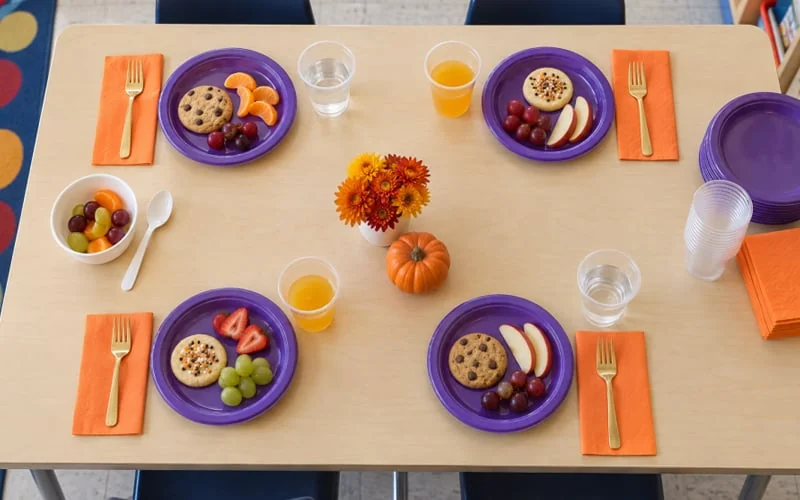
Plate size follows the portion. A dessert plate can hold cake, cookies, fruit, or one snack; several foods may need a larger dinner plate. Dry items are light, while sauces, moisture, and heavier servings demand more support. Size, material, and intended use matter more than color alone.
Disposable Cups for Water, Juice, and Cold Drinks
Cup choice begins with the drink. Smaller servings of water, juice, or another cold beverage are often easier for children to carry. They also create less mess if tipped. Sealed boxes or bottles may remove the need for cups altogether. Otherwise, the selected cup must suit the beverage.
Napkins for Place Settings, Spills, and Cleanup
Napkins complete the place setting and handle the first crumbs or spills. One can sit with each snack, while an adult keeps the reserve. The menu sets the size of that reserve: dry cookies need less help than frosting, fruit, sauces, or open drinks.
Optional Bowls, Cutlery, and Serving Trays
Not every menu needs a full dinnerware set. Bowls suit food that slides or spills; forks and spoons belong only where they help children eat neatly. Knives can usually stay out of a simple snack service unless the school approves a clear use. Serving trays work best in adult-managed areas.
How to Choose Safer Disposable Plates, Cups & Napkins for Kids
“Safe” is not one feature printed on a package. It comes from several choices working together. The product, food, temperature, and setup must all fit the children using them.
Check Food-Contact Information and Intended Use
Start with the product description and package. The item must be intended for food or drink contact. Its stated use must also match the class plan. Terms such as food-safe, BPA-free, reusable, or microwave-safe apply only to the product that carries the claim.
Match the Tableware to the Food and Drink Temperature
Temperature is a use condition, not a small detail. Cold and room-temperature foods are usually simplest for a classroom. Warm food requires tableware approved for that use. “Disposable” does not mean microwave-safe, oven-safe, or suitable for hot drinks. Heating stays off the plan unless the instructions clearly allow it.
Choose Sizes Children Can Handle Easily
Small hands change what feels practical. An oversized plate may look generous yet become awkward on the walk to a desk. A cup filled to the rim causes the same problem. Better sizing follows the portion, leaving enough plate space and keeping drinks at a manageable level.
Select Plates with Enough Strength for the Menu
A plate can match the theme and still be wrong for the food. Light desserts need less support than a full meal. Wet foods may call for a rigid plate or bowl. A sample test before party day—load, lift, and carry—quickly reveals bending, sliding, or poor balance.
Inspect All Tableware Before Food Service
Opening the order early leaves time to catch wrong sizes, colors, or counts. During setup, remove any cracked, chipped, dirty, or damaged piece. Keep the rest packaged or in a clean, protected area until service begins. An open stack handled by the class offers little protection.
How Much Disposable Tableware Does a Halloween Class Party Need?
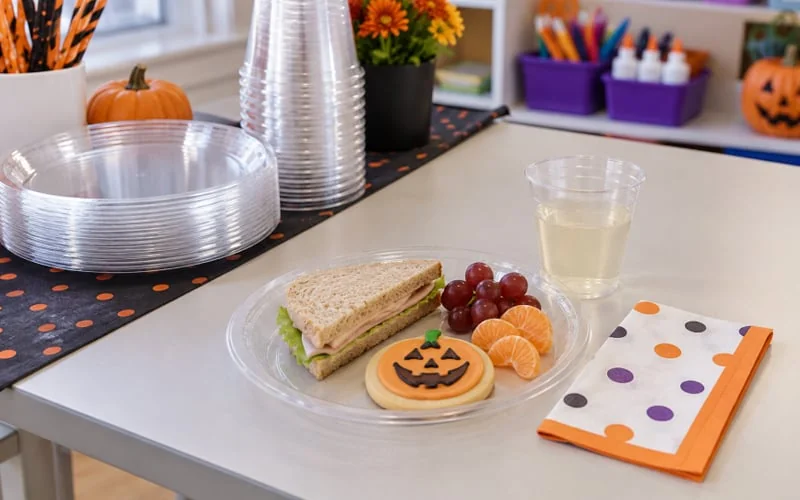
There is no universal number. The total depends on who will be served and how many rounds are planned. The risk of spills or replacements matters too.
Count Students, Teachers, and Volunteers
Every person receiving food or a drink belongs in the count. For 25 students, one teacher, and three helpers, that means 29 possible settings. Because ordering happens before attendance is known, the full expected group is a sounder starting point than guessed absences.
Base Quantities on the Number of Serving Rounds
One guest does not always equal one plate. Separate snack and cake rounds may use two plates per person; one combined service may need only one. Cups follow the same logic, with clean replacements added only when another drink round requires them.
| Item | Starting calculation | When to add more |
|---|---|---|
| Plates | People served × food-serving rounds | Separate courses, second servings, or damaged items |
| Cups | People served × drink-serving rounds | Clean cups for another round or likely spills |
| Napkins | At least one per place setting | Frosting, sauces, fruit, drinks, or messy snacks |
| Cutlery | One piece per person who needs it | More than one utensil type is required |
Add a Reasonable Reserve for Spills and Replacements
A useful reserve reflects the real setup. Open cups and messy food call for more backup supplies than sealed drinks and dry snacks. Keep those extras clean, under adult control, and away from the first serving round.
Compare the Final Count with Pack Sizes
Pack count can mislead when several products share one total. A set may include two plate sizes, cups, napkins, and several cutlery pieces. That piece count is not the guest count. Check each item separately before ordering.
Halloween Color Ideas with Disposable Dinnerware Sets
Color can carry most of the Halloween theme without printed characters or a crowded table. It also makes the dinnerware easier to reuse for another seasonal event.
Use Orange and Gold for a Classic Halloween Table
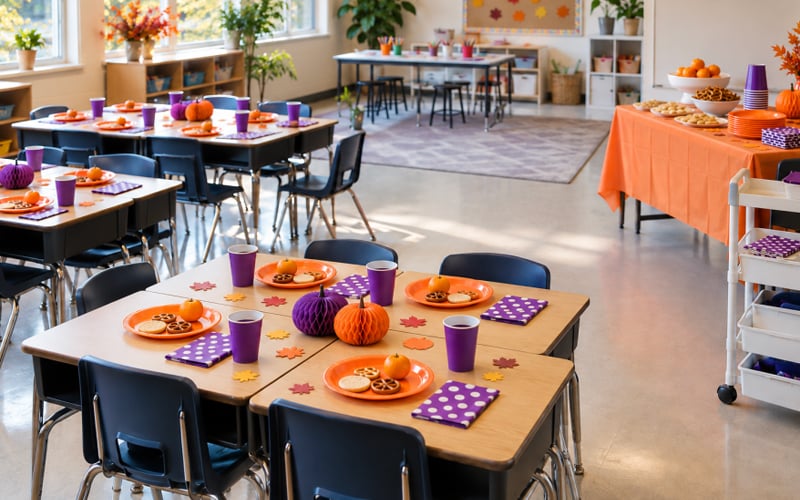
Orange gives the table an immediate Halloween feel, while gold adds warmth. Against a white or clear base, the pair stays festive without becoming dark. A few low paper pumpkins can finish the theme; extra layers are rarely needed.
Use Purple and Gold for a Playful Classroom Look
Purple feels playful and seasonal, especially for younger groups. A touch of gold—on a rim, napkin bundle, or piece of cutlery—adds contrast without taking over.
For a full place setting, a purple and gold disposable dinnerware set can bring the main pieces into one scheme. Plates, cups, cutlery, and napkins are coordinated, but their counts still need to match the menu and class size.
Balance Bold Colors with Clear or White Tableware
Too many strong colors can crowd a small table. Clear or white pieces create breathing room and keep food easy to see. Colored napkins with clear plates offer one simple mix; purple or orange plates on a light cover offer another.
Keep the Table Friendly, Simple, and Age-Appropriate
The table needs to work before it needs to impress. Tall displays block sightlines, while loose decorations steal space from food and drinks. Low accents outside the serving path are easier to manage. Without Halloween text or character prints, the same colors can also suit a fall celebration.
How to Set Up a Low-Mess Halloween Classroom Table
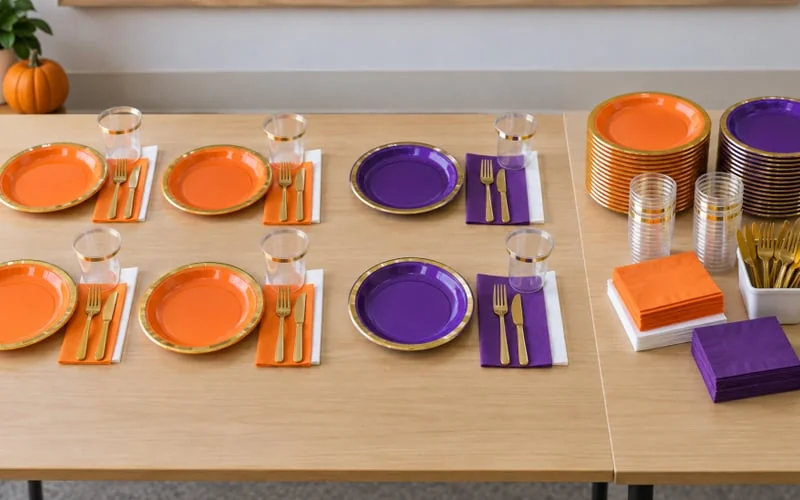
A good setup is easy to read at a glance. Children can see where food belongs, and adults can replace a cup or napkin without searching through boxes.
Pre-Sort Tableware Before Students Arrive
Grouping supplies by desk, table, or station saves time and reveals shortages before the party. Required cutlery can be placed with each napkin in advance, while the reserve stays apart from the first serving round.
Separate Food Service from Crafts and Games
Glue, paint, game pieces, and food do not belong on the same active surface. When space is tight, clear and wipe the activity station before it becomes the snack table. The sequence keeps volunteers focused and craft materials away from food.
Keep Extra Supplies at an Adult-Managed Station
One adult station can hold spare tableware, serving tools, and cleanup items. Children receive replacements there instead of reaching into a full package. The same area may serve as the drink point, with an adult pouring moderate portions when needed.
Prepare for Fast Classroom Cleanup
Cleanup begins with a clear destination for used items. Before service, confirm where waste goes and whether the school separates any materials. Local rules and package directions guide the choice. Move unused supplies away first, then clear one table or row at a time.
Halloween Class Party Tableware Ordering Checklist
Before checkout, the order should be tested against the full plan:
• Final student, teacher, and volunteer count
• Number of food and drink serving rounds
• Food type and serving temperature
• Size and intended use of each plate and cup
• Separate counts for plates, cups, napkins, and cutlery
• School rules for food, allergies, beverages, and waste
• Current stock and estimated delivery timing
• Enough time to inspect the order before party day
This last review catches a common mistake: treating a total piece count as a guest count. A 175-piece package does not serve 175 people when each setting contains several pieces.
Frequently Asked Questions
Are Plastic or Paper Plates Better for a Kids’ Halloween Class Party?
Neither material wins in every classroom. Paper plates may suit light, dry snacks, while plastic plates may give a larger or wetter serving more support. The best choice comes from the menu, the school’s rules, and the details of the specific product.
Do Children Need Both Dinner Plates and Dessert Plates?
Only when the menu or schedule calls for both. A small plate may cover one snack or dessert. Two sizes make sense when a meal is followed by a separate sweet course. Buying both without a clear role often leaves unused pieces.
Can Unused Plates, Cups, and Napkins Be Saved for Another Class Event?
Unused supplies can often be stored when they remain clean, dry, and protected. Original packaging or a clean, closed container offers the best protection. Items left open on the food table or handled by many people need closer review before they are saved.
What Is the Simplest Tableware Setup for a Short Classroom Party?
For one dry snack and one drink, the basic setting stays small. Each person receives one suitable plate, one cup, and one napkin. An adult holds the reserve, while bowls, cutlery, and a second plate size appear only when the menu requires them.
Can the Same Tableware Work for a Fall-Themed School Celebration?
Yes. Orange, gold, white, clear, or purple tableware can look seasonal without Halloween words or character designs. Removing the darker accents shifts the table toward a fall harvest theme with little extra work.
Plan a Safer, Simpler Halloween Class Party with Wonderful Party
A successful class table is built around practical choices: school rules, a clear menu, child-friendly portions, and accurate item counts. Once those basics are in place, color can add the Halloween mood without adding clutter.
Wonderful Party offers coordinated disposable tableware in a range of colors and pack sizes. Before ordering, buyers can review the current product details, contents, and availability. Delivery estimates also need to fit the classroom date.