

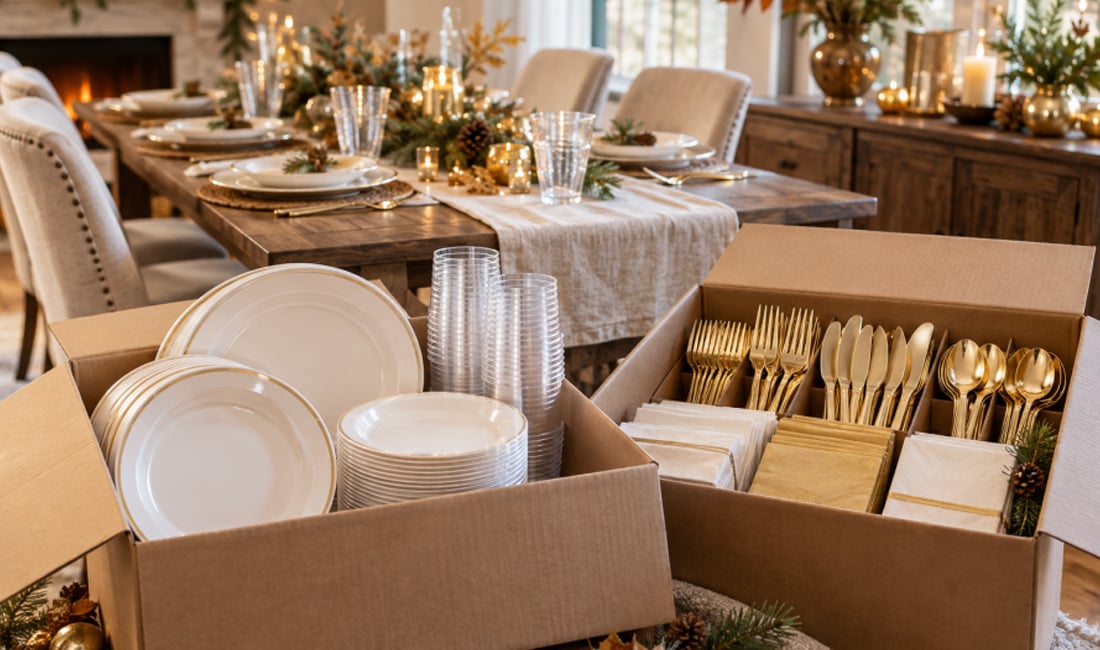
October comes just before the busiest part of the holiday calendar. Halloween is close, Thanksgiving plans are taking shape, and Christmas and New Year’s gatherings are not far behind. It can be a useful time for households, event planners, and businesses to prepare for several occasions.
However, a lower price does not always make an item a good purchase. Large packs can go unused. Themed designs may fit only one event, while incomplete sets can lead to extra orders.
From a supplier’s point of view, smart holiday buying begins with use rather than the discount label. This guide explains how to plan quantities and compare deals. It also shows how to stock up without creating waste or storage problems.
Why October Sales Can Be a Good Time to Buy Holiday Disposable Tableware
October gives buyers something that becomes harder to find later in the season: time. An early order leaves room to check the delivery. It also gives buyers time to address a missing, damaged, or incorrect item.
It can also reduce last-minute follow-up orders. Plates are easy to remember, but dessert plates, cups, napkins, and spoons may be missed. Buying the core pieces together makes the table easier to track. It can also spread seasonal spending over more than one month.
No October sale is guaranteed to offer the lowest price. Promotions, stock, and delivery terms can change. Its value lies in combining a reasonable deal with extra planning time. Neutral tableware can make that purchase useful across several events.
What Disposable Tableware Is Worth Stocking Up On?
The strongest products for early buying are useful, easy to match, and likely to appear at several gatherings. Buyers should begin with the main place-setting pieces. They can then add the items required by the menus and drink plans.
Start with Versatile Disposable Plates
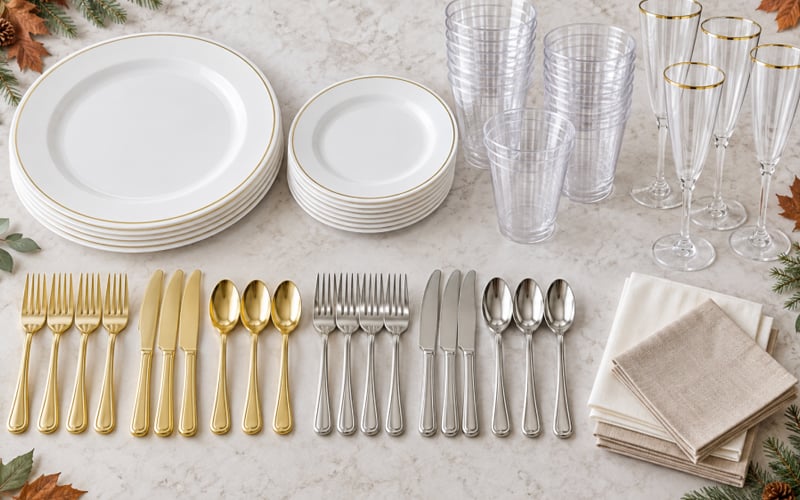
Dinner plates and smaller dessert or appetizer plates form the base of many holiday orders. The right mix depends on the service. Larger plates suit full meals, while smaller ones can hold cake, bread, appetizers, or a second buffet serving. A simple snack menu may not need dinner plates at all.
Color affects how often the plates can be used. A neutral style can move from an autumn dinner to a Christmas gathering or New Year’s table. Only the surrounding accents need to change. Holiday prints make sense when the theme and quantity are already clear.
Add Cups and Stemware for Planned Drink Service
Drinkware should follow the beverage plan. Standard cups can cover water, soda, juice, punch, and many mixed drinks. Stemmed glasses or champagne flutes may suit a toast, but they should not be purchased only because the sale looks attractive. Size matters too. Buyers should decide whether guests will keep one cup or take a fresh one. That choice changes the required quantity.
Complete Place Settings with Flatware and Napkins
Flatware and napkins are easy to overlook, yet a missing spoon or too few napkins can slow service. The menu should guide the mix. A fork and knife may be enough for a main meal, while soup or some desserts require spoons. Finger foods may need little flatware. Napkin size should also suit the service, from drinks and appetizers to a full meal.
Consider Complete Disposable Dinnerware Sets
A complete set can simplify color matching and reduce the number of products in the cart. Still, the total piece count is not the number of guests served. A 175-piece set, for example, may include seven items for each of 25 guests.
Buyers should read the full contents before comparing sets. A coordinated disposable dinnerware set is convenient when every included item has a role. If several pieces would go unused, separate packs may offer better value.
Which Disposable Tableware Items Should Wait Until Holiday Plans Are Final?
Not every holiday item belongs in an early stock-up order. Some choices depend too closely on the final theme, menu, or guest list.
Wait on Highly Themed Colors and Designs
A design made for one holiday can create a festive table, but it has fewer uses afterward. Before ordering several packs, buyers should know how many tables will be set and whether unopened extras could be used later. If those details are still changing, a neutral base with a smaller number of themed accents is safer.
Hold Off on Menu-Specific Pieces
Special sizes and shapes are easier to select after the menu is settled. Bowls suit soups, salads, pasta, and saucy foods, while dessert plates make sense for cake or a separate sweet course. Stemware should match the drinks being served. Buying these pieces too early can create a mismatch that a lower price cannot fix.
Avoid Oversized Packs Without a Clear Use
Large packs often have a lower cost per piece. They are worthwhile only when the items will be used and stored safely. Buyers should identify which events will use them, estimate what may remain, and decide where the extras will be kept. For one small dinner, a smaller pack may be the more sensible purchase.
How Much Disposable Tableware to Buy Before the Holidays
Quantity planning becomes more complex when one October order must support several events. The safest method is to calculate each item separately instead of starting with a general pack size.
Map Every Planned Holiday Gathering
Each gathering should be listed with its estimated guest count, menu, and service style. The same people may attend more than one event, but each event creates a separate use of tableware.
A basic planning sheet can include:
-
Event and date
-
Expected number of guests
-
Seated meal, buffet, appetizers, or dessert service
-
Plates and bowls needed
-
Cups or stemware needed
-
Flatware and napkins needed
This turns a broad shopping goal into a count that can be checked against real pack contents.
Calculate Each Item by Place Setting
One place setting is not always one piece. A full meal may use two plate sizes, flatware, a cup, and a napkin. A cocktail gathering may need no dinner plate but more drinkware. Buyers should divide each item count by the number needed per guest. The item with the lowest result sets the true service capacity of a mixed pack.
Subtract Usable Supplies Already in Storage
Existing stock should be checked before a new order is placed. Unopened packs may cover part of the season, while clean and undamaged pieces from open packs may fill smaller gaps. A buyer who already has enough cups can direct the October budget toward plates, napkins, or flatware instead of another complete set.
Add a Practical Reserve Without Overbuying
A small reserve covers added guests, dropped pieces, and changes during service. A seated meal usually needs fewer extras than a long self-serve buffet. There is no single spare percentage for every gathering. The amount should reflect the service style, confidence in the guest count, and possible use at another event.
How to Tell Whether an October Disposable Tableware Deal Is Worth It
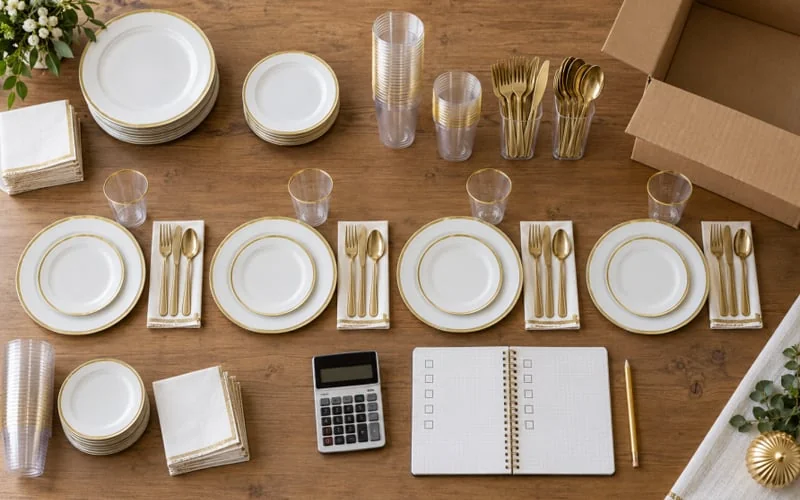
Sale labels make comparison look simple, but pack structure can hide the true value. A careful buyer checks the unit cost, the cost of a complete place setting, and the final order total.
Compare Cost per Piece and Cost per Place Setting
Cost per piece is useful when two packs contain the same type of item. It is less useful when a plate pack is compared with a mixed dinnerware set. For mixed sets, cost per place setting gives a clearer view:
Cost per place setting = pack price ÷ number of complete settings
Even this figure needs context. A low cost per setting is not a saving if the pack contains pieces the event will not use. Value comes from useful contents, not the largest count.
Check the Exact Pack Contents
Two packs with similar photos may serve different numbers of guests. One may include one plate per person, while another includes two plate sizes. Every fork, knife, spoon, cup, and napkin may count as a separate piece.
Before checkout, buyers should confirm:
-
The number of each plate size
-
The number and size of cups or glasses
-
Which flatware pieces are included
-
Whether napkins are part of the set
-
The stated number of complete place settings
-
The selected color, finish, and bundle size
This review can prevent an incomplete holiday table.
Include Shipping and Final Checkout Costs
The product price is only one part of the order. Shipping and other costs shown at checkout affect the final value. Buyers should compare final totals under the same conditions. Adding unrelated products only to reach a shipping threshold is not a saving unless those products have a planned use.
Review Availability, Delivery Dates, and Return Terms
A strong deal must still arrive in time. Buyers should check the estimated delivery information and use the earliest event as the deadline. Current return and exchange terms also deserve attention, especially for a large order. A low-priced purchase that is late, incomplete, or difficult to correct may offer poor value.
How to Choose Disposable Tableware for Several Holidays
The goal of a multi-holiday order is not to make every table look the same. It is to build a flexible base that can take on a different mood at each event.
Build Around a Flexible Color Palette
Clear and neutral tableware is easy to move across the season. White can support autumn colors, classic Christmas tones, or a clean winter table. Black works with orange, gold, and other metallic accents. Decorative rims can also connect several events. The choice should follow the decor already owned rather than a short-lived sale trend.
Match Plate Sizes to the Holiday Menus
Versatility does not mean using one size for every task. Full meals need room for expected portions, while desserts, bread, and appetizers are easier to manage on smaller plates. Buyers should focus on sizes that repeat across events. If every gathering includes a main meal and dessert, two sizes may be useful throughout the season.
Choose Drinkware by Beverage Plan
Clear cups fit many table styles, but capacity and form still need to match the drinks. A separate glass for every beverage is rarely necessary. Cup markers or a simple one-cup service can also reduce replacements without limiting the drink menu.
Keep Different Pieces Easy to Coordinate
Not every item must come from one set. Separate packs can create a complete table when their colors, rims, shapes, and sizes work together. This also gives buyers more options if one item becomes unavailable. A close substitute is easier to find when the table is built around a broad color and finish.

How to Check, Receive, and Store Holiday Disposable Tableware
The purchase is not complete when the checkout button is pressed. A short review before payment protects the event plan. A prompt check after delivery protects the value of the sale as well.
Audit the Cart Before Checkout
The cart should be checked against the event list, not against memory. Buyers need to confirm quantities, bundle sizes, colors, plate sizes, and set contents. If a cart holds plates for 50 guests but forks for only 30, the order is not ready. Complete settings matter more than the total number of items.
Inspect the Order Soon After Delivery
Boxes should be opened soon enough to leave time for action if something is wrong. Delivered items should be compared with the order confirmation. Counts, colors, sizes, bundle contents, and visible condition should match the order. After the check, products can be returned to their original packaging for storage.
Store Unopened Tableware in a Clean, Dry Space
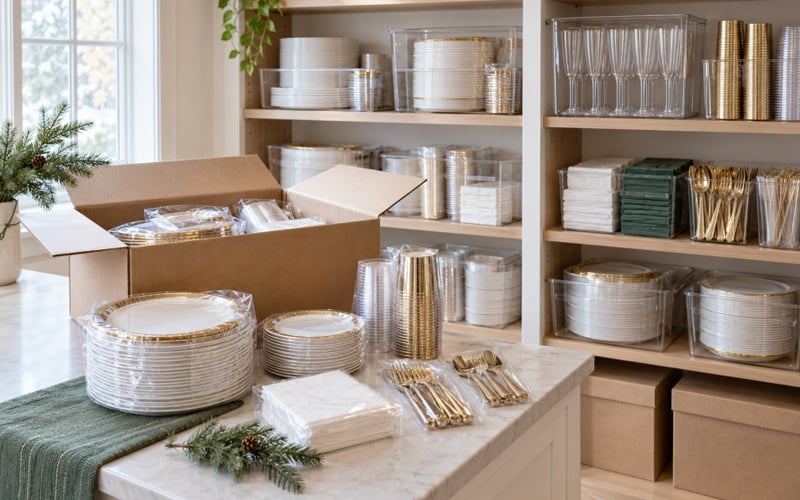
Disposable tableware should be kept in a clean, dry area. It should stay away from moisture, dust, direct sunlight, strong odors, and heat. Heavy boxes should not press down on cups, stems, or decorative rims. Storage space should be measured before a large order, since drinkware may take up more room than expected.
Label Supplies by Event and Product Type
Boxes can be labeled by product type, color, quantity, and planned event. Shared stock should stay separate so it is not used too early. After each gathering, the remaining pieces can be counted again to guide the next event and prevent a rushed reorder.
Common Mistakes When Stocking Up on Disposable Tableware in October
Shopping by Discount Percentage Alone
A large percentage looks impressive, but the final price, useful contents, and cost per setting tell the fuller story. Buyers should compare what the pack actually provides.
Buying a Theme Before the Event Plan Is Final
Theme-first shopping can leave buyers with colors or patterns that no longer fit. Core tableware should follow confirmed event needs, while decorative accents can be added later.
Overlooking Missing Pieces in a Dinnerware Set
A set may look complete in a photo but contain no cups, napkins, spoons, or dessert plates. Every included item should be verified before the service count is accepted.
Ignoring Delivery Time and Storage Space
An October order needs a realistic arrival window and a safe place to stay. Without both, early buying may create new problems instead of reducing holiday stress.
Waiting Until the Holiday to Inspect the Order
Keeping the shipping box sealed does not protect the plan. Early inspection gives buyers time to address missing, damaged, or incorrect items while the event is still weeks away.
FAQs About October Disposable Tableware Sales
Should Shoppers Wait for Black Friday Instead of Buying in October?
Not automatically. A later sale may offer another price, but future discounts, stock, and delivery times cannot be assumed. If a well-matched core item has a reasonable October price and is needed for an earlier event, buying it can reduce risk. Products tied to a later, unconfirmed plan may be left for another shopping period.
What If the Final Holiday Guest Count Is Still Uncertain?
Buyers can order for the confirmed base count and choose styles that will remain useful if plans change. A practical reserve can cover a small increase. When the range is wide, it may be safer to buy core items first and add another pack after more replies arrive.
Are Complete Dinnerware Sets Always a Better Deal Than Separate Packs?
No. Sets are useful when their plate sizes, flatware, cups, and napkins match the event. Separate packs may cost less when only a few categories are needed or when existing supplies already cover part of the setting. The comparison should use the cost of the pieces that will actually be used.
Can Unopened Disposable Tableware Be Stored for Next Year?
Many unused items can be kept for later events when the packaging remains intact and the products are stored in a clean, dry place. Buyers should follow any storage guidance supplied with the product. Pieces that show damage, dust, odor, warping, or other changes should be checked carefully before use.
What Should Buyers Do If One Matching Item Is Sold Out?
The first step is to identify what must match. Plate size and function may matter more than a small difference in shape. A shared color, clear finish, or metallic accent can help a substitute look intentional. If the exact item is central to the table design, the buyer may need to adjust several pieces rather than force one poor match.
Stock the Holiday Table Before the Rush
October sales are most useful when they support a clear plan. Buyers should count by place setting, compare the full order cost, and choose flexible styles. Early inspection then helps them prepare for several holidays without filling storage space with unneeded products.
Wonderful Party offers disposable plates, drinkware, flatware, napkins, and coordinated dinnerware sets for different guest counts and table styles. A thoughtful October order can put the practical pieces in place now, leaving the final holiday details for later.