

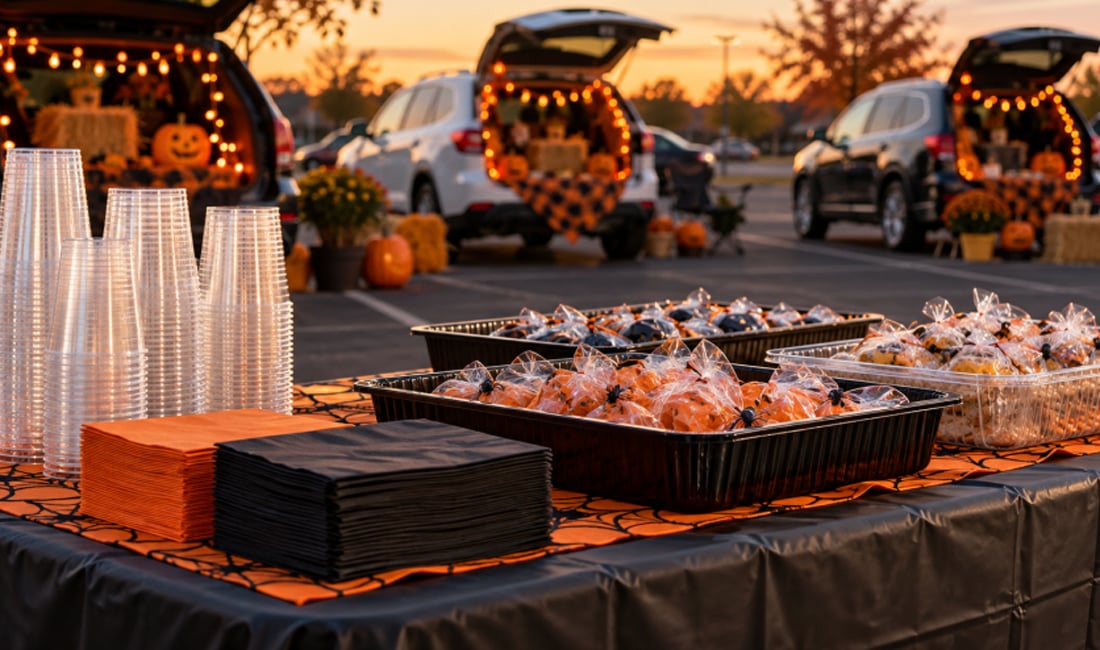
A trunk-or-treat may look like a row of decorated cars, but food and drinks often bring families to the same few spots. At a busy school or community event, missing cups can stop a drink line, while the wrong trays can make snack service messy.
The shopping list is short: cups for the planned drinks, trays for the way treats will be handed out, and napkins where families eat or drink. Quantities depend on who uses each station and which items leave with guests.
This guide helps organizers choose and order those trunk-or-treat party supplies for a large outdoor crowd. It also shows how to stage them so volunteers can serve people and restock without slowing the event.
Start with a Trunk-or-Treat Party Supplies Checklist
Before ordering, organizers should map where food and drinks will be offered. A small event may have only wrapped treats at the cars. A larger event may also have a snack table, a staffed drink station, and a separate place for non-food treats.
The list should name each station, its menu, its expected users, and the person who will refill it. This prevents a large order from having the wrong mix of supplies.
Decide What Stays at Each Trunk and What Goes at a Shared Station
Wrapped candy can be handed out from individual trunks. A shared station may work better for snacks or drinks that need a table and volunteer attention. The organizer should confirm the venue’s food-service rules first.
A candy tray stays with one car for many visitors; a cup leaves with one visitor. If a small food tray also leaves with the visitor, count it as an individual serving item.
List Cups, Trays, and Napkins by Serving Task
A practical checklist starts with the menu and the handoff:
| Serving task | Supplies to check |
|---|---|
| Drinks | Cup type and size, clean cup stacks, a refill reserve, and napkins |
| Wrapped treats at cars | Stable display trays and a way to replenish them |
| Shared snacks | Trays that fit the portions, serving tools where needed, and napkins |
| Station reset | Covered backup supplies, waste bins, and a person assigned to restock |
Not every trunk needs every item. An event without snacks may need fewer trays and napkins. A full meal may need a separate plan for plates and cutlery.
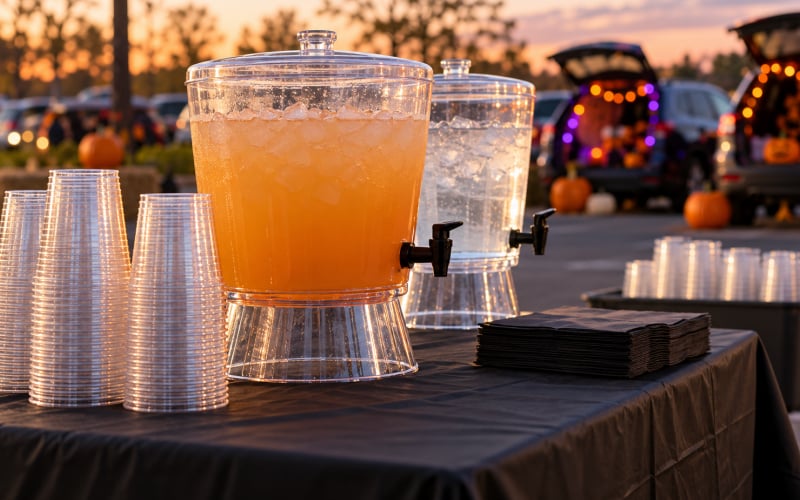
Choose Bulk Disposable Cups for the Drink Station
The cup order should follow the drinks, the serving size, and the people likely to visit the station. A short water service differs from a long event with several drink choices.
Match Cup Size to the Drinks and Serving Style
For water, juice, or cold punch, leave room above the planned pour. Ice also takes up space. A smaller cup may be easier for a child to carry; a larger one may suit an adult drink station.
Test a cup with the intended drink and ice before ordering. Check the grip, fill level, and chance of spills. Clear cups help volunteers identify drinks; colored cups can support the Halloween theme. Keep labels easy to read.
Organizers who need cold-drink cups can compare sizes and pack counts in the disposable drinkware selection. The cup chosen for the article’s example should still be checked against its own product description before purchase.
Check Product Specifications Before Serving Hot Drinks
Hot cider and cocoa can suit a cool October evening, but a cold-drink cup should never be assumed to work for them. Heat suitability depends on the specific cup. The organizer should check the product label or listing for its intended use and choose a cup made for hot beverages when hot drinks are on the menu.
A staffed hot-drink point keeps the pour controlled and away from the busiest child pickup area. If the event cannot supervise hot drinks well, cold drinks may be easier to manage.
Keep Clean Cups and Backup Stock Easy to Reach
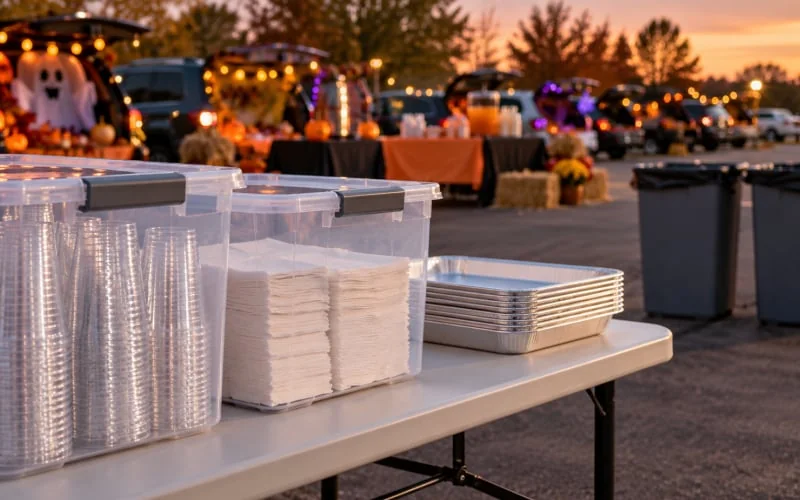
Keep a working stack of cups on the table and backup packs in a clean, dry place behind it. A volunteer can restock before the last stack runs out.
At a self-serve station, put cups before the drinks and napkins after the pour. Label drink options clearly, and keep used cups away from clean stock.
Choose Disposable Trays for Treats and Snacks
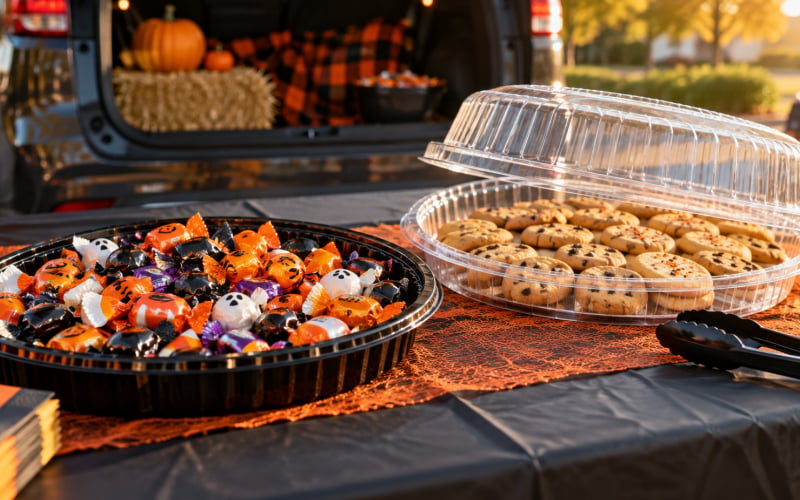
The word tray can mean two different things at a trunk-or-treat. A display tray stays at a car or snack table and holds many wrapped treats. A small individual tray carries one person’s food away. That difference changes both the style to buy and the quantity needed.
Match Tray Size and Strength to the Food
A tray for wrapped candy or cookies needs a surface that volunteers can refill quickly. A tray for fruit, pastries, or food with toppings may need more depth or a different shape. Before ordering, organizers should consider the weight of a full tray, how it will be carried to the station, and whether guests can reach the contents without touching everything else.
Two smaller trays may be easier to rotate than one wide tray on a narrow table. Use clean serving tools for uncovered food. Perishable food also needs suitable temperature control; a disposable tray alone does not provide it.
Separate Display Trays from Individual Servings
If each car uses a tray for wrapped candy, count one or more per car plus replacements. Visitor count does not determine the number of display trays.
If volunteers hand out an individual tray with each snack, count one per expected serving plus a reserve. Some foods may be easier to serve in a cup or on a small plate. The choice should follow the food and how families move through the event.
Refill Trays in Small Batches During Busy Periods
Volunteers can display smaller batches and replenish them as needed. This keeps the handoff tidy and makes shortages easier to spot.
Clean replacement trays should stay covered. Food that needs cold or hot holding must remain under those conditions until service. The FDA’s buffet guidance recommends serving small portions when food may not be eaten promptly.
Place Disposable Napkins Where Families Need Them
Napkin placement affects use. When one large pile sits beside the food, visitors may take a handful because they cannot find another stack later. Smaller stacks at pickup points are easier to use and refill.
Match Napkins to Drinks, Dry Treats, and Messier Snacks
A drink station may need napkins for damp cups and small spills. Dry cookies or wrapped snacks may call for fewer. Food with icing, sauce, or sticky toppings can use more. The menu, age mix, and serving method should guide the napkin order.
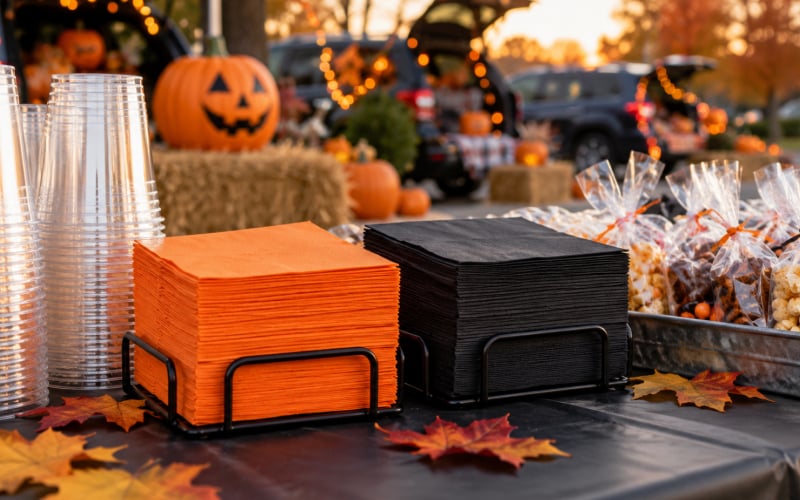
For a Halloween look, a dark napkin can pair with orange cups or a plain tray. A 150-pack of black gingham napkins is one option to compare. Check the current pack count and choose a style that fits the food as well as the colors.
Set Out Small Stacks at Each Pickup Point
At a drink station, place napkins where visitors finish pouring. At a snack table, keep them near the food handoff or where people leave the table. A few extra stacks can go where sticky snacks are served, rather than at every decorated car.
Outdoor wind can scatter loose napkins. A holder can keep a working stack in place; backup packs should stay sealed and dry. Volunteers can move reserve stock toward a busy station as needed.
How Many Cups, Trays, and Napkins Does a Trunk-or-Treat Need?
Visitor count is the starting point, not the final order. Some guests will take more than one cup, while a display tray may stay in place all evening. Write down the assumptions and update them if the plan changes.
Estimate How Many Guests Will Use Each Station
Begin with the expected attendance, then estimate how many people will visit each food or drink point. A short event with bottled water available elsewhere may have fewer cup users than an event whose main drink station serves everyone. A snack table near the exit may attract a different share of visitors than one tucked behind the cars.
Signups, past attendance, and service length can inform the estimate. At an open event, an RSVP count is not a guaranteed final number.
Count Cups and Napkins by Use, and Trays by Station and Refill
The following example shows the method for an event expecting 200 visitors. It is an illustration, not a standard rate for every trunk-or-treat:
| Item | Example assumption | Working count before pack-size rounding |
|---|---|---|
| Cups | 140 people use the drink station; 1.5 cups per drink user; 15% reserve | About 242 cups |
| Napkins | 140 people use the snack station; 2 napkins per snack user; 15% reserve | 322 napkins |
| Display trays | 3 snack points use 2 trays each, with 3 spare trays | 9 trays |
Multiply expected users by expected use per person, then add a stated reserve. Count display trays in use at the same time plus replacements; count takeaway trays by servings. Adjust the estimate for cup refills and the number of snacks served.
Check Pack Counts and Add a Practical Reserve
Compare bulk packs by usable item count. A dinnerware set may include plates, forks, cups, and napkins, but only a fraction of its total may be cups. Separate packs may fit a drinks-and-snacks event better.
Round each working count up to the actual pack sizes available. Then check whether the result leaves a reasonable reserve. A small buffer helps with dropped cups, late arrivals, and an uneven rush at one station. Ordering far beyond the likely need is less useful, especially when the event has no plan to store unopened extras.
Review the final order against the station map. This catches missing items that a headcount alone cannot show.
Set Up the Serving Area for Fast Service and Cleanup
Families should be able to collect treats without crossing a drink queue. Volunteers need a way to restock without walking against the flow.
Keep Drink and Snack Lines Clear of the Main Treat Route
Place a shared drink table where a line can form without blocking the row of trunks. If the snack table is separate, leave enough room for a family to stop and take a napkin without holding up the next group. A small sign can identify each station, but the table layout should be clear even without a long set of instructions.
Keep clean supplies away from waste. A short walk-through before opening can reveal a table or bin that narrows the path.
Protect Spare Supplies from Wind and Moisture
Keep unopened packs in clean covered containers, raised off wet ground. Put only the next working supply on the tables. A tipped cup stack or wet napkin pack is no longer useful reserve stock.
Trays need a stable surface, and napkin holders should keep stacks from blowing away. If rain is likely, plan which stations can move under cover and keep unused stock boxed during the move.
Place Waste Bins Where Guests Finish
Used cups, napkins, and food wrappers tend to collect near the end of a food or drink line. Put visible waste bins at those points and check them during the event. A bin at the entrance alone will not help a family that finishes a drink halfway around the route.
Follow the venue’s waste and recycling instructions; disposable products are not accepted in every local recycling system. At closing, gather unopened stock before clearing the tables and surrounding ground.
Trunk-or-Treat Party Supplies FAQ
Are Homemade Snacks Allowed at a School or Community Event?
There is no single rule for every venue. Organizers should ask the school, church, property manager, or event lead what foods may be served and how they must be handled. Some events choose individually wrapped items because ingredient information stays with the food and the handoff is simple. The approved food plan should be settled before trays and serving supplies are ordered.
What Can Organizers Offer Children with Food Allergies?
Non-food treats give families another option. They should be kept in a clearly marked container separate from food treats; the display should never promise that any snack is safe for every child. Original packaging and ingredient information should remain available when food is handed out. Food Allergy Research & Education’s Teal Pumpkin Project recommends separate non-food options for Halloween events.
Make Trunk-or-Treat Serving Easier with Wonderful Party
A smooth trunk-or-treat does not require a complicated table setting. It requires cups suited to the drinks, trays suited to the way snacks are served, and enough napkins at the points where families need them. Counting by station and keeping a modest reserve make the order more useful when a large crowd arrives.
Wonderful Party offers disposable drinkware, napkins, and coordinated tableware for events of different sizes. Organizers can compare the current products and pack counts, then build an order around their menu, expected visitors, and serving plan.