

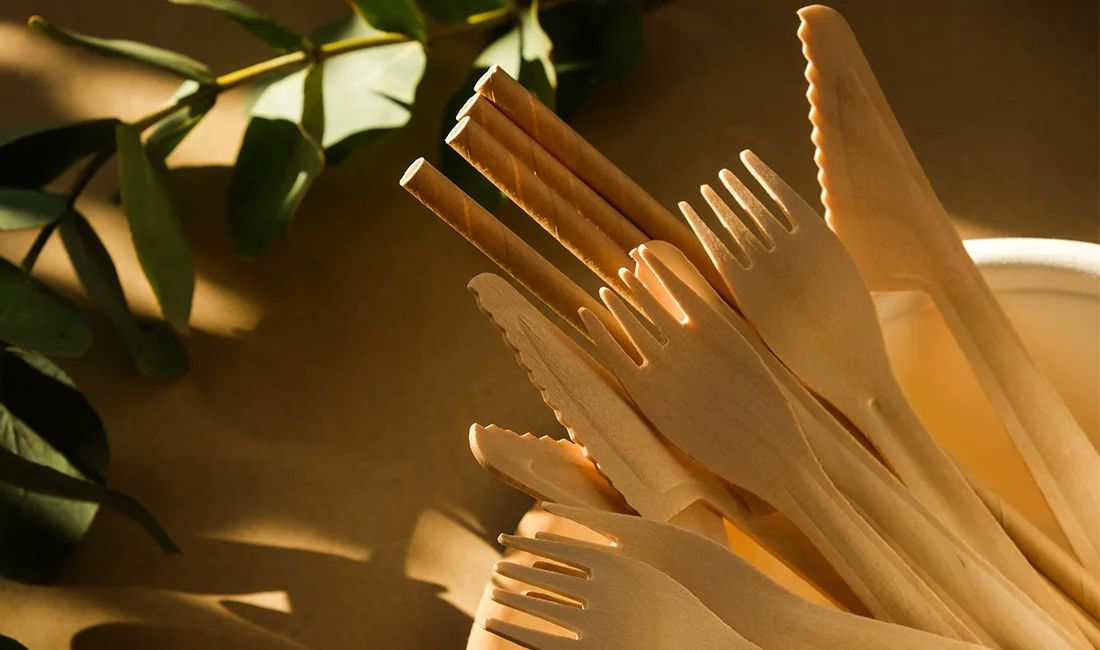
Picking between bamboo and wooden cutlery does more than set a table—it shapes the event’s waste output, guest experience, and overall aesthetic. Many hosts seeking a plastic-free alternative assume all “natural” utensils perform equally, but the two materials differ significantly in strength, texture, compostability, and sourcing. Understanding how each option is made and how it actually handles food helps event planners avoid weak forks, rough edges, and unnecessary waste.
What Is the Difference Between Bamboo and Wooden Cutlery in Material and Origin?
Bamboo cutlery is single-use or reusable tableware that is crafted from fast-growing plants in the grass family, while wooden cutlery is disposable tableware that is made from natural hardwoods such as birch. Bamboo regenerates from existing roots within a few years, whereas most cutlery-grade wood takes decades to reach harvestable maturity.
Both materials offer a biodegradable alternative to plastic, but their growth cycles create a fundamental divide. Bamboo delivers more harvests per acre over a shorter period, making it a faster-renewing resource.
Birch and other hardwoods require replanting and longer land commitments before each harvest. When untreated and free of chemical coatings, both materials break down in composting systems—though hosts should verify whether a product is certified for home composting or requires an industrial facility.
How Does Growth Rate Affect the Eco Impact of Each Material?
Growth rate is the single largest differentiator in environmental footprint. Bamboo matures in three to five years and regrows from the same root system after cutting, which eliminates the need for replanting. Hardwood trees used for disposable cutlery take far longer to reach usable size, tying up agricultural land across extended cycles. For events where renewability is a stated goal, bamboo’s rapid regeneration offers a measurable advantage over wood.
How Do Strength and Durability Compare During Actual Meal Use?
Bamboo’s dense fiber structure gives it a natural resistance to bending and splintering. High-quality bamboo forks hold up under pressure from heavier foods like grilled meats or pasta without snapping. Wooden cutlery—especially thinner birch varieties—tends to be lighter and more prone to cracking under force. Thin wooden forks can also soften or splinter when exposed to moisture or heat for extended periods. Neither material matches metal, but bamboo generally handles party meals and takeout with fewer breakage issues.
Which Material Feels Better for Guests at the Table?
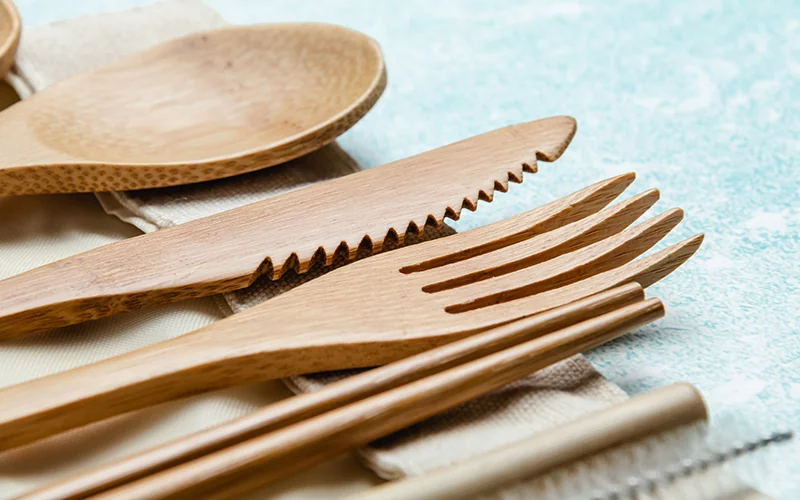
Bamboo cutlery that has been heat-treated or carbonized during production typically has a smoother finish and a slightly warmer tone. This processing reduces moisture content and creates a surface that feels comfortable against the lips. Wooden cutlery, particularly low-cost birch options, can feel dry or rough—sometimes compared to a popsicle stick. At sit-down dinners or formal events, the textural difference between the two becomes more noticeable to guests.
What Are the Advantages and Disadvantages of Bamboo Cutlery Compared to Wooden Cutlery?
Bamboo cutlery offers superior strength, smoother texture, and faster resource renewal, but costs more per unit. Wooden cutlery provides a lower price point and a rustic aesthetic, but carries higher risks of splintering, moisture damage, and slower environmental regeneration.
What Are the Advantages of Choosing Bamboo Cutlery for Events?
Bamboo’s primary advantages center on performance and sustainability. Its dense fibers resist bending during use with hot soups, saucy dishes, or dense foods. The smooth finish reduces splinter risk and creates a more polished dining experience. From an environmental standpoint, bamboo’s rapid regrowth cycle and high yield per acre make it one of the most renewable materials available for disposable tableware. Bamboo utensils also manage both hot and cold foods without softening or warping.
What Are the Disadvantages of Bamboo Cutlery That Hosts Should Consider?
The main drawback is cost—bamboo cutlery is typically priced higher per piece than basic birch alternatives. Quality also varies across manufacturers; thin or poorly finished bamboo pieces can still splinter. For events without access to composting infrastructure, single-use bamboo items still end up in landfill, reducing the environmental benefit.
What Are the Advantages of Choosing Wooden Cutlery for Events?
Wooden cutlery’s strongest advantage is affordability. For large-scale events—festivals, school functions, community fairs—the lower unit cost adds up to meaningful savings. The natural grain and matte finish create a rustic, handmade appearance that complements farm-themed gatherings, casual picnics, and backyard parties. Production is also relatively simple, requiring less processing than most bioplastics.
What Are the Disadvantages of Wooden Cutlery That Hosts Should Consider?
Strength is the primary concern. Thin wooden forks and knives can snap when cutting firm foods, and lower-quality pieces may leave rough edges or splinters. Some guests find the texture dry or unpleasant against the mouth. From a sustainability perspective, the decades-long growth cycle of hardwood trees means wooden cutlery draws on a slower-renewing resource than bamboo.
How to Choose Between Bamboo and Wooden Cutlery for a Party?
The best choice depends on the menu’s demands, the event budget, the desired table aesthetic, the host’s sustainability priorities, and the importance of guest comfort. Each factor can shift the balance between bamboo’s performance and wood’s affordability.
When Is Bamboo Cutlery the Better Option Based on the Food Being Served?
Bamboo cutlery is the stronger choice for menus featuring hot soups, grilled meats, pasta, rice bowls, or any dish requiring cutting pressure. Its dense fibers resist heat and force without cracking. Hosts serving heavy or saucy foods will see fewer broken utensils and a smoother guest experience with bamboo.
When Does Wooden Cutlery Make More Sense Based on Budget and Event Scale?
Wooden cutlery becomes the practical choice when budgets are tight and guest counts are high. For events serving lighter fare—cake, sandwiches, fruit, cold salads—wooden forks and spoons handle the task adequately at a lower per-unit cost. Large community events, casual office lunches, and children’s birthday parties with simple menus are typical scenarios where wooden cutlery delivers sufficient performance without overspending.
How Does Table Aesthetic Factor into the Bamboo Versus Wood Decision?
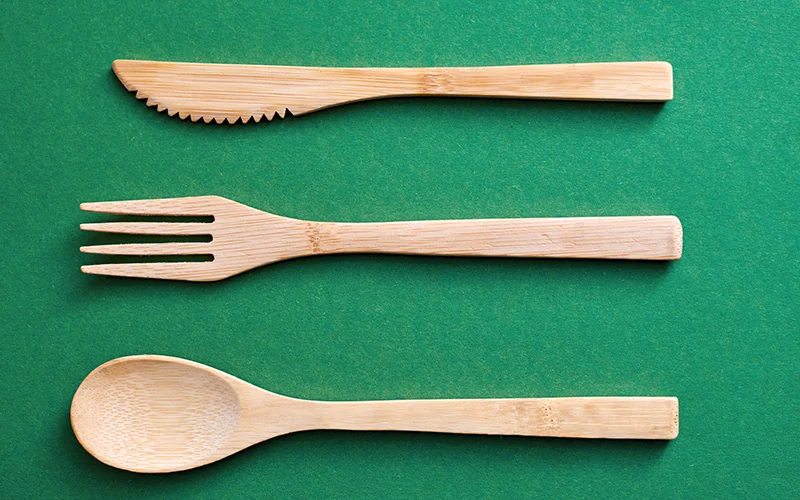
Bamboo cutlery carries a smooth, clean-lined appearance with a slightly warm tone that pairs well with modern, minimalist, or eco-focused table setups. Wooden cutlery leans more rustic, with visible grain and a lighter, matte surface that fits farm-to-table themes, outdoor picnics, and casual gatherings. Event planners building a photo-ready tablescape for a wedding or corporate function often lean toward bamboo’s polished look, while hosts prioritizing a relaxed, natural vibe may prefer wood.
Which Option Better Supports an Event’s Sustainability Goals?
Bamboo’s rapid regeneration cycle gives it a measurable edge in renewability for hosts who set specific environmental targets. Wooden cutlery still eliminates plastic from the waste stream but draws on a slower-renewing resource. Both materials are compostable when free of coatings—hosts should confirm whether their chosen product is certified for home or industrial composting and whether the venue offers the corresponding waste collection.
How Does Guest Comfort Differ Between Bamboo and Wooden Utensils?
Guest comfort favors bamboo at formal or extended dining occasions. Its smoother surface and sturdier construction feel more refined in hand and against the mouth, particularly over multi-course meals. Wooden cutlery performs adequately at quick, casual events where guests eat simple foods in a few minutes. For any event where the dining experience is a priority—seated weddings, corporate dinners, catered receptions—bamboo’s tactile qualities make a noticeable difference.