

Yes, the recyclability of disposable tableware depends on the material, local recycling rules, and how clean the item is after use. Uncoated paper plates and some plastics, such as #1 PET and #5 PP, often qualifies for recycling, while waxed paper, food‑soiled items, and polystyrene usually do not.
This article explains why recyclability matters, which disposable tableware can actually be recycled, and how to prepare items the right way. You will also learn about common challenges, how to choose more recyclable tableware, and where the future of compostable and recyclable products is heading, based on current waste data and recycling guidelines.
Why Recyclability Matters for Disposable Tableware?
Recyclability of disposable tableware refers to whether you can collect, process, and remake used items into new products.
Below are the reasons why disposable tableware needs to be recycled:
-
Resource Conservation
-
Pollution Reduction
-
Material Reuse
Recycling also cuts demand for virgin materials. When manufacturers use recovered plastic or paper, they reduce fossil fuel use and logging. Less extraction leads to lower energy use and fewer emissions tied to production.
Improper disposal causes another problem. Lightweight items break into small pieces over time. These fragments pollute soil and water and remain for decades. Choosing recyclable tableware, and placing it in the correct bin, lowers the chance that short-use products create long-term environmental harm.
What Disposable Tablewares Can Actually Be Recycled?
Some disposable tableware can enter recycling streams, but only when the material type, coatings, and food residue meet local rules. Plastic resin codes, paper treatments, and compostable labels decide what you can recycle and what you cannot.
Disposable tablewares that can be recycled include:
-
plastic tableware
-
paper tableware
Plastic tableware
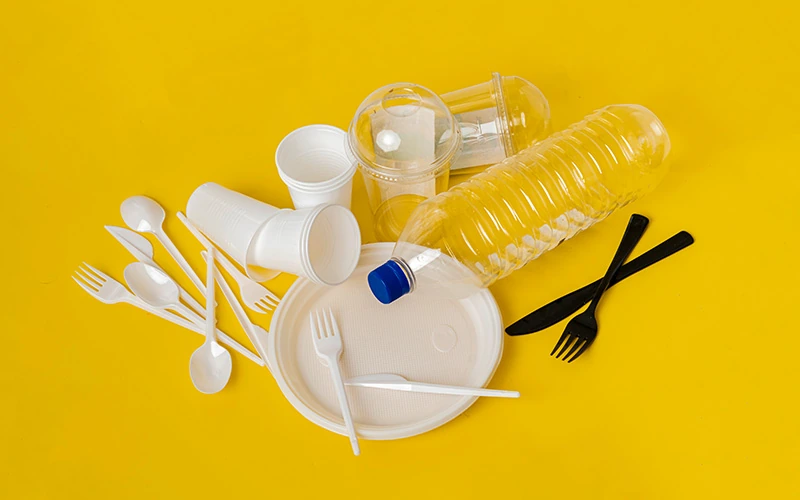
Plastic tableware includes plates, cups, and cutlery made from specific resin types. Recyclable plastics usually carry resin codes #1 (PET), #2 (HDPE), or #5 (PP). These plastics melt and reform without breaking down, which allows recycling plants to process them.
Paper Tableware
Paper tableware includes plates, bowls, and trays made from wood pulp. Plain paper without plastic or wax coatings can be recycled. Mills break paper into fibers using water, which fails when coatings repel water.
Steps to Prepare Disposable Tableware for Recycling
Disposable tableware includes single-use plates, bowls, cups, and cutlery made from paper, plastic, or plant fibers. You prepare these items for recycling by sorting them correctly, removing food waste, and following local rules that decide what recycling plants will accept.
Sorting by Material Type
Must sort disposable tableware by material, not by shape or use. Recycling plants process materials in separate streams, so mixing them causes rejection.
Use this table as a quick guide:
|
Material |
Common Examples |
Where It Goes |
|
Plastic #1 (PET) |
Clear cold cups |
Plastic recycling |
|
Plastic #5 (PP) |
Plastic cutlery, rigid plates |
Plastic recycling |
|
Paper (uncoated) |
Plain paper plates |
Paper recycling |
|
Paper (PE-coated) |
Grease-resistant plates |
Trash or compost* |
|
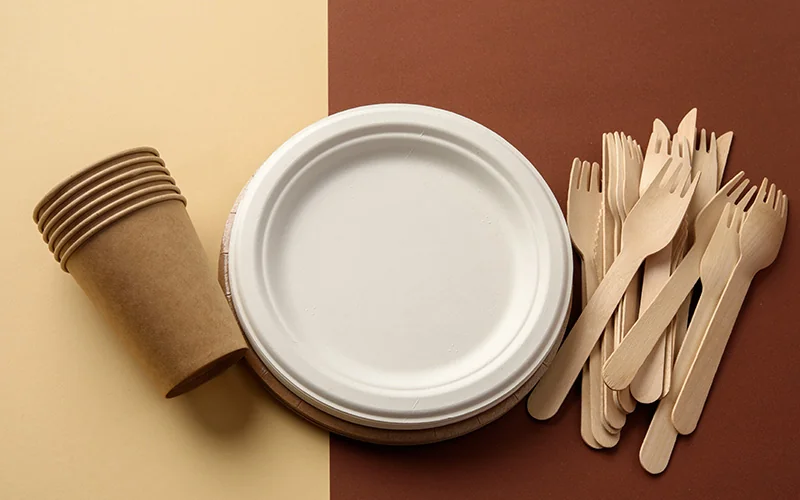
Molded fiber (bagasse) |
Sugarcane plates |
Compost* |
|
Bamboo or wood |
Wooden plates |
Compost* |
*Only if your area accepts these materials.
Cleaning and Removing Food Contamination
You need to remove food and liquids before recycling. Food residue causes paper and plastic loads to fail quality checks at sorting facilities.
Scrape leftovers into the trash or compost first. For plastics, rinse with cold water to remove sauces and oils. In other words, you do not need to wash items like dishes; you only need to remove visible food.
Avoid stacking dirty items together. Grease transfers easily and can contaminate clean pieces in the same bin.
Checking Local Guidelines
You must follow local recycling rules because acceptance varies by city and processor. A material that recycles in one area may go to landfill in another.
Check your city website or waste hauler guide for details on:
-
Accepted plastic resin numbers
-
Whether coated paper counts as recyclable
-
Composting standards, such as ASTM D6400 for certified compostables
ASTM D6400 means a product breaks down in an industrial composting system under controlled heat and moisture. For you, this means the item does not break down in a backyard pile unless the city says otherwise.
Challenges in Recycling Disposable Tableware
Disposable tableware often fails at this step because food waste, material blends, and gaps in recycling infrastructure block proper processing.
Contamination from Grease and Food
Contamination happens when grease, sauces, or food scraps stick to plates, cups, and disposable cutlery. Paper and cardboard tableware absorb oils, which breaks down fibers during recycling. Because of this damage, recycling mills reject many used items.
Plastic items face a similar issue. Food residue forces sorting facilities to discard items to avoid spreading contamination. For you, this means one dirty plate can cause a full batch to go to landfill.
Common contamination sources
-
Cooking oils and fats
-
Cheese and sauces
-
Leftover food stuck to surfaces
Mixed Materials
Mixed materials combine two or more bonded components, such as paper plates with plastic coatings. These coatings resist water, but they also prevent fiber separation during recycling. Because machines cannot split layers, facilities reject these items.
Disposable cutlery made from bioplastics creates another issue. Some require commercial composting at controlled heat levels around 55–60°C. Home composting rarely reaches this range. For you, this means items labeled “compostable” may still end up as waste.
Examples of hard-to-recycle combinations
-
Paper with polyethylene lining
-
Bamboo fiber with resin binders
-
Bioplastic mixed with plant fibers
Limited Facilities
Recycling infrastructure refers to the collection, sorting, and processing systems in your area. Many regions lack equipment to handle disposable tableware beyond basic plastics and paper. As a result, facilities often exclude these items by rule.
Commercial composting sites accept certified compostable tableware, but access remains limited. In the U.S., fewer than half of communities offer such programs. For you, this means correct disposal depends on local services, not product labels.
When facilities do not exist, recyclability becomes theoretical. Items designed for composting or recycling still go to landfill due to system limits.
How to Choose More Recyclable Tableware?
You can improve recycling results by checking product labels, choosing cleaner material designs, and knowing when compostable tableware fits your waste system. Small choices at purchase often decide whether an item gets recycled, composted, or sent to a landfill.
Look for Recycling Codes and Labels
Recycling codes identify the plastic type and show whether local programs usually accept it. Common codes for recyclable disposable tableware include #1 (PET), #2 (HDPE), and #5 (PP). These plastics work in many sorting systems because facilities already process them for bottles, containers, and food packaging.
Avoid items with heavy coatings or metallic inks. These features interfere with recycling equipment and often force facilities to discard the item, even if the base material is recyclable.
Prefer Single‑Material Products
Single‑material products use one main substance instead of layered parts. Examples include uncoated paper plates or polypropylene bowls made entirely from #5 plastic. Recycling systems handle these items more easily because they do not need extra separation steps.
Mixed designs, such as paper plates with plastic linings, create problems. Facilities cannot separate bonded layers at scale, so the item often becomes waste. For you, this means a product labeled recyclable may still end up in a landfill.
Check lids, hinges, and utensils. A cup made from PET with a different plastic lid lowers the recycling rate unless you remove and sort each part, which most users do not do.
Consider Compostable Alternatives
Compostable tableware breaks down into organic matter under specific conditions. Items made from polylactic acid (PLA) or molded fiber often require industrial composting, not home composting. Industrial composting uses controlled heat and moisture that PLA cutlery needs to fully decompose.
Always confirm access to a composting facility before buying compostable tableware. Without one, these items behave like regular waste and do not break down as intended.
Some fiber products, such as uncoated paper or bagasse, may work in home composting systems. For you, this means matching the product to the disposal option you actually use, not the one listed on the package.
What are the Future Directions of Recyclable Disposable Tablewares?
Recyclable disposable tableware refers to single-use plates, cups, and cutlery designed for collection and reprocessing after use. Progress depends on clear disposal behavior, material innovation tied to standards, and rules that support a circular economy.
Consumer Education and Proper Disposal
You play a direct role in recyclability because disposal errors block recovery. Clear labels matter. Products that show resin codes (such as PP #5) or compostability marks like EN 13432 give you a precise action to take.
Because compostable items often need industrial composting at 58–60°C, home compost bins cannot process them. In practice, this means you should place certified compostable tableware only where a municipal compost service exists.
Innovations and Sustainability Standards
Eco-friendly tableware now uses defined materials with known end-of-life paths. Common options include bagasse fiber from sugarcane waste, PLA bioplastic from corn starch, and recycled polypropylene (rPP).
Bagasse plates work because the fiber structure resists heat up to 120°C. For you, this means they hold hot food without warping. rPP cutlery qualifies for mechanical recycling because it melts at a stable range of 160–170°C, which fits standard recycling lines.
Policy and Regulatory Developments
Policy shapes what you can buy and how systems collect waste. The EU Single-Use Plastics Directive bans certain plastic items and pushes fiber and certified compostables. This shift increases access to recyclable options in retail and food service.
Extended Producer Responsibility (EPR) laws require manufacturers to fund collection and sorting. Because producers pay these costs, they choose materials that recyclers already accept. For you, this results in clearer labels and fewer mixed materials.
Cities also set rules on waste targets, such as 15% packaging reduction by 2040 in the EU. These rules favor recyclable disposable tableware that cycles back into production instead of landfill.
FAQs
Is it possible to compost biodegradable disposable tableware?
Yes, it is sometimes possible—but not always to compost biodegradable disposable tableware.
Biodegradable disposable tableware is made to break down into natural elements under controlled composting conditions. Most products labeled compostable meet standards such as ASTM D6400 in the U.S. or EN 13432 in the EU.
These items usually require industrial composting because high heat and moisture speed the breakdown. For you, this means home compost piles often cannot process them, even if the label says biodegradable.
Plant-based coatings like PLA allow composting because microbes can digest them. Plastic or wax coatings block this process, so facilities reject those items.
Can ceramic dinnerware be included in household recycling programs?
No, ceramic dinnerware cannot be included in household recycling programs.
Ceramic dinnerware includes plates, bowls, and mugs fired at very high temperatures. That process creates a material that does not melt at the temperatures used in glass or metal recycling.
Because of this mismatch, recycling centers remove ceramics to avoid damage to equipment. For you, this means you should keep ceramic items out of recycling bins.
Which disposable tableware materials are not accepted for recycling?
Expanded polystyrene foam (EPS) plates and cups, paper plates with plastic or wax coatings and items with food residue, black plastic, or mixed materials are not acceptable for recycling.
Expanded polystyrene foam (EPS) plates and cups are not accepted because they break into light fragments that machines cannot capture. In practice, they contaminate recycling loads and get sent to landfill.
Paper plates with plastic or wax coatings also fail recycling tests. The coating sticks to fibers during pulping, which ruins the recycled paper.
Items with food residue, black plastic, or mixed materials like paper bonded to plastic get rejected for the same reason. For you, this means cleaning does not help if the material itself does not meet program rules.