

A cup accessory is any functional add-on — sleeve, stirrer, lid, coaster, or decorative pick — designed to improve the comfort, hygiene, or presentation of drinks served at an event. These small extras often go unnoticed during planning, but they shape how guests experience every sip.
The difference between a forgettable drink station and a polished one often comes down to details: a sleeve that keeps hands comfortable, a stirrer that keeps flavors blended, a lid that prevents spills in a crowded room. When cup accessories are chosen with the same care as the cups and glasses themselves, the entire drink experience feels intentional.
This guide covers the most common cup accessories for party settings — what each one does, which materials perform best, and how hosts can coordinate accessories with the rest of their tableware for a cohesive look.
What Are the Most Common Cup Accessories for Parties?
The most common cup accessories for parties are sleeves, stirrers, lids, coasters, and decorative picks. Each serves a distinct functional purpose — insulation, mixing, spill prevention, surface protection, or visual appeal — and the right combination depends on the drinks being served and the style of the event.
A cup sleeve is an insulating wrap placed around a hot or cold cup to protect the hand from temperature extremes and reduce condensation. A drink stirrer is a thin rod — wood, plastic, bamboo, or metal — used to blend ingredients, dissolve sugar, or mix layered beverages. A cup lid is a fitted cover that reduces spills and keeps drinks sanitary in crowded settings. A coaster is a flat protective disc placed under a cup to shield surfaces from heat marks and water rings. A decorative pick or swizzle stick is an ornamental accessory placed in a drink to add visual interest and reinforce event theming.
Not every event needs every accessory. A casual backyard BBQ might only call for coasters and a few stirrers at the lemonade station, while a corporate cocktail reception could require coordinated sleeves, branded stirrers, and fitted lids for guests moving between rooms.
How Do Cup Sleeves Keep Party Drinks Comfortable?
Cup sleeves reduce heat transfer between hot beverages and the hand by adding an insulating layer, and they minimize condensation drip on cold drinks. A well-fitted sleeve also improves grip, which is especially useful at outdoor events where cups can become slippery.
For hot drinks like coffee, cider, or hot chocolate, sleeves prevent the discomfort that leads guests to double-cup — a wasteful habit that doubles cup usage at an event. For cold drinks, sleeves catch moisture before it drips onto clothing or furniture, keeping both guests and surfaces dry.
What Materials Are Used for Cup Sleeves?
The most widely used sleeve materials are kraft paperboard, corrugated cardboard, and neoprene fabric. Kraft paperboard is a single-layer sleeve made from recycled or virgin paper, commonly used at coffee bars and casual events — it is recyclable and often compostable. Corrugated cardboard is a multi-layered sleeve with air pockets between layers, offering stronger insulation for very hot drinks. Neoprene is a synthetic rubber fabric used for reusable sleeves, popular at branded corporate events where guests take the sleeve home as a keepsake.
|
Material |
Best For |
Sustainability |
|
Kraft paperboard |
Coffee bars, casual parties |
Recyclable, often compostable |
|
Corrugated cardboard |
High-volume hot drink service |
Recyclable, strong insulation |
|
Neoprene fabric |
Branded events, reusable favors |
Reusable, reduces single-use waste |
Sleeve sizing matters. A sleeve designed for a 12 oz cup will slide off a 16 oz cup and bunch up on an 8 oz cup. Hosts ordering in bulk benefit from confirming the cup diameter before selecting sleeves — a mismatch undermines both comfort and appearance.
What Types of Drink Stirrers Work Best at Events?
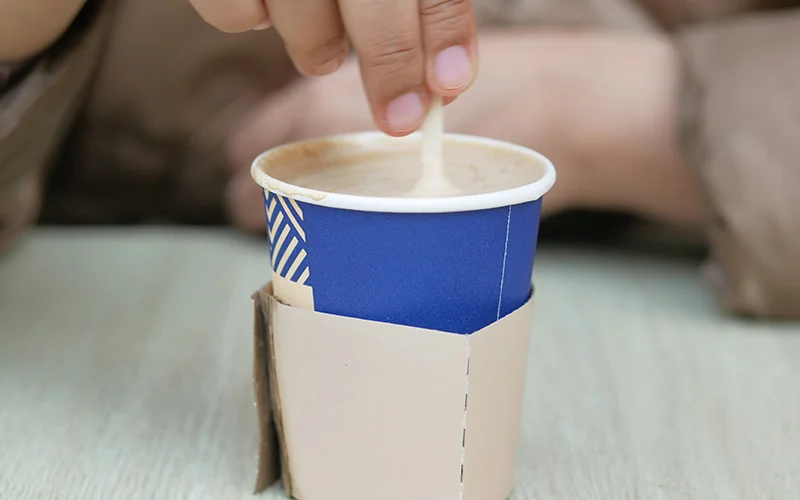
The best stirrer type depends on the drink being served and the formality of the event. Short stirrers (5–7 inches) suit standard coffee and tea cups, while long stirrers (8–12 inches) reach the bottom of tall cocktail glasses and layered drinks.
A coffee stirrer is a simple, thin stick — usually wood or plastic — designed to blend cream, sugar, or syrup into a hot beverage. A cocktail stirrer is a longer, sometimes decorative rod used to mix ingredients in tall glasses or tumblers. A swizzle stick is an ornamental stirrer, often topped with a custom shape or logo, that doubles as a visual accent in the drink.
Which Stirrer Materials Are Most Practical?
Wooden stirrers, typically birch or bamboo, are the most common disposable option. They are compostable, food-safe, and do not transfer flavor to the drink under normal conditions. Bamboo stirrers tend to be slightly sturdier than birch and resist splintering better.
Stainless steel stirrers are the standard for reusable setups at staffed cocktail bars. They are dishwasher-safe, durable, and add a premium feel — though they require washing between uses and secure storage.
Plastic stirrers remain the cheapest per-unit option but face increasing restrictions. Many municipalities now include stirrers in single-use plastic bans alongside straws and cutlery. Hosts planning events in jurisdictions with active plastic bans — including the EU, England, Scotland, and several U.S. states — need to confirm that their chosen stirrer material complies with local rules.
|
Material |
Best For |
Key Consideration |
|
Birch wood |
Coffee stations, buffets |
Compostable, affordable |
|
Bamboo |
Hot and cold drinks |
Sturdier than birch, compostable |
|
Stainless steel |
Cocktail bars, upscale events |
Reusable, dishwasher-safe |
|
Plastic |
Large-volume casual events |
Check local single-use plastic bans |
For food safety, stirrers that contact beverages should meet FDA food-contact requirements in the United States or Regulation (EC) No 1935/2004 in the European Union. Individually wrapped stirrers are preferable at self-serve stations where hygiene is harder to control.
How Do Lids and Covers Help at Crowded Party Drink Stations?
Lids reduce spills by up to 80–90% compared to open cups, making them essential at any event where guests carry drinks through crowded spaces, outdoor areas, or multi-room venues. A fitted lid also keeps insects, dust, and debris out of drinks at outdoor gatherings.
A flat lid is a flush-fitting cover with a straw slot or sip opening, designed for cold drinks. A dome lid is a raised cover that accommodates whipped cream, garnishes, or ice that rises above the cup rim. A sip-through lid is a hot drink cover with a small opening for drinking without removing the lid. A silicone stretch cover is a reusable, flexible lid that fits over various cup diameters, used at sustainability-focused events.
When Are Lids Worth the Extra Cost?
This cost is justified at events where spill risk is high — outdoor weddings, festivals, rooftop parties, or any setting without fixed seating. For seated dinner parties where drinks remain on the table, lids are generally unnecessary and can feel overly casual.
Clear lids are preferred when the drink itself is part of the visual presentation — layered cocktails, colorful smoothies, or drinks with decorative garnishes. Opaque lids work better when the focus is on the cup design, a printed sleeve, or branded labeling on the cup exterior.
What Materials Are Safest and Most Sustainable for Cup Accessories?
The safest cup accessory materials are those that meet food-contact safety standards and carry third-party certifications. In the U.S., FDA compliance under 21 CFR covers materials that contact food and beverages. In the EU, Regulation (EC) No 1935/2004 sets the baseline for food-contact materials.
For sustainability, compostable and recyclable materials outperform conventional plastics in end-of-life impact — but only when local waste infrastructure supports proper disposal. A compostable bamboo stirrer sent to landfill offers no environmental advantage over a plastic one.
Kraft paper and cardboard accessories (sleeves, coasters, trays) are widely recyclable and often compostable. Bamboo and birch wood accessories biodegrade naturally within weeks to months. PLA-based accessories — cups, lids, or stirrers made from polylactic acid bioplastic — require industrial composting at 55–60°C and are banned as single-use plastic in the EU and UK under the Single-Use Plastics Directive (2019/904).
Hosts concerned about chemical safety should verify that printed accessories use food-safe, soy- or water-based inks rather than solvent-based inks. For paper-based accessories, requesting PFAS-free certification ensures that water-resistant coatings do not contain per- and polyfluoroalkyl substances, which have been detected in a range of food-contact paper products.
How Can Hosts Match Cup Accessories to a Party Theme?
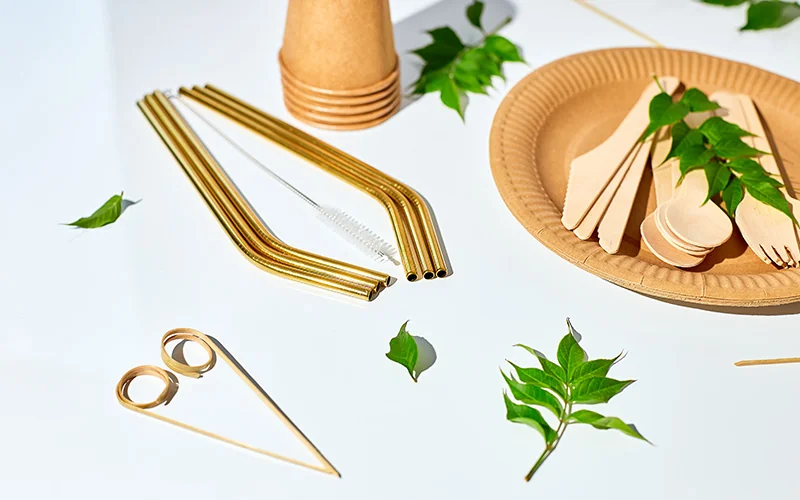
Matching accessories to a theme starts with selecting a consistent color palette and material finish, then applying it across sleeves, stirrers, coasters, and any other visible drink-station elements. A coordinated drink station looks intentional; a mismatched one looks like an afterthought.
What Are the Most Effective Customization Options?
Printed cup sleeves are the highest-impact customization surface because they wrap around the item guests hold longest. Common printing options include event names, dates, monograms, logos, and hashtags. Most commercial sleeve printers use soy- or water-based inks on kraft or white cardstock, with options for matte, gloss, or embossed finishes.
Custom stirrers — acrylic or laser-cut wood with names, initials, or themed shapes — serve double duty as functional accessories and take-home keepsakes. These are particularly popular at weddings and milestone birthday parties.
Color-matched coasters tie the table surface into the theme without adding clutter. Kraft coasters suit rustic or outdoor aesthetics, while black or white coasters work for formal events. Custom printing on coasters — a date, a short phrase, or a sponsor logo — is inexpensive and adds a finishing touch.
The key principle is consistency over quantity. Three coordinated accessories (for example, a printed sleeve, a matching coaster, and a themed stirrer) create a stronger impression than six mismatched ones. Event planners who select accessories from the same color family and material finish achieve a polished look with minimal effort.
How Do Cup Accessories Complete the Overall Table Setting?
Cup accessories bridge the gap between the drink station and the rest of the table, creating visual continuity that ties cups and glasses into the broader tableware scheme. When sleeves, stirrers, and coasters echo the same colors and materials as the plates, napkins, and centerpieces, the entire table reads as a single, deliberate design.
A common mistake is treating the drink station as separate from the dining table. In practice, guests carry their cups to the table, where the sleeve, lid, or stirrer sits alongside the plate and napkin for the duration of the meal. If the drink accessories clash with the table setting, the disconnect is noticeable — especially in photographs.
The most effective approach is choosing cup accessories after the core tableware — plates, cups, glasses, and napkins — is already selected. This ensures that accessory colors, finishes, and materials complement rather than compete with the main pieces. A rustic kraft sleeve pairs naturally with earth-toned plates and linen napkins, while a glossy black stirrer suits a modern white-and-metallic table setting.
Straws, while technically a cup accessory, warrant their own selection process due to the material, durability, and sustainability trade-offs involved. A separate guide on paper vs PLA straws covers those decisions in depth.
The details that guests notice most are the ones that feel effortless — a drink that stays comfortable in hand, a stirrer that matches the cocktail napkin, a coaster that protects the tablecloth without breaking the visual flow. These small choices, made together, are what transform a collection of party supplies into a setting that feels complete.