

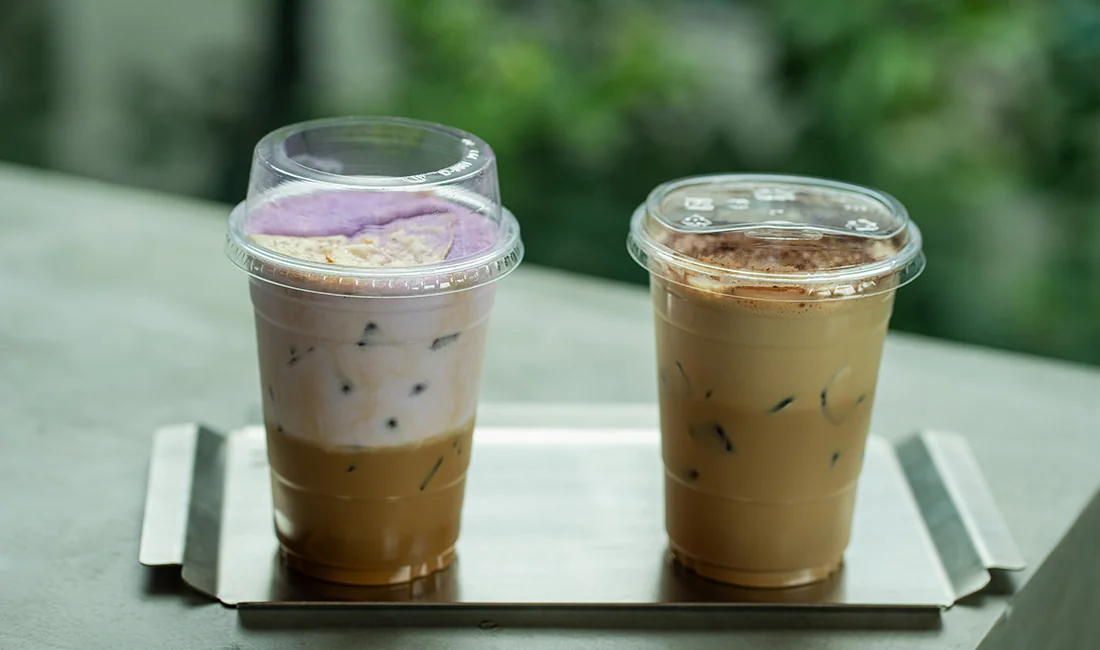
Cold drinks are meant to refresh guests, not leave condensation rings and puddles on tables. When disposable cups sweat, condensation forms on the exterior surface and drips downward, creating moisture buildup on surrounding surfaces. The right cup design helps control condensation, maintain structural integrity, and keep tables dry.
Effective disposable cups for cold drinks typically use moisture-resistant materials, secure lids, and sturdy wall construction to limit condensation and prevent leaks. Plastic materials such as PET do not absorb moisture, while coated paper cups provide moderate insulation and help reduce surface wetness. Structural features such as rolled rims, tight-fitting lids, and appropriate sizing also contribute to spill prevention.
This guide explains why disposable cups sweat, which materials help reduce condensation, and what design features improve performance. It also reviews eco-friendly alternatives and situations where reusable tumblers may be more practical.
Why Disposable Cups Sweat and Soak Surfaces
Cold beverages often cause moisture to form on the exterior of disposable cups. This moisture can drip onto tables, weaken certain cup materials, and create cleanup issues during events or food service.
Condensation and Its Effects
Disposable cups “sweat” because of condensation. When a cold beverage sits inside a cup, the cup’s outer surface cools down. Warm surrounding air contains water vapor, and when that air contacts the colder surface, the vapor condenses into liquid droplets.
Small droplets begin to form on the outside of the cup. As these droplets accumulate, they run downward and collect at the base, creating moisture rings on surfaces.
Condensation is not caused by leaks. Instead, it results from moisture present in the surrounding air. The greater the temperature difference between the drink and the air, the more condensation typically forms.
Humidity also increases condensation levels. In warm outdoor environments, sweating on cold drink cups often becomes more noticeable.
Common Problems With Standard Cups
Many disposable cups are made from thin paper or lightweight plastic. Paper cups usually contain an internal wax, PE, or PLA lining that prevents liquid from leaking through the interior surface, but the outer surface may not resist moisture effectively.
As condensation accumulates, paper fibers may absorb water. Over time, the cup may soften, lose rigidity, or begin to deform. In some cases, the outer paper layer may separate.
Plastic cups do not absorb water, but condensation can still accumulate on the exterior surface, making the cup slippery and increasing the risk of spills.
Common issues include:
-
Moisture rings forming on wooden or delicate surfaces
-
Slippery cup surfaces that reduce grip
-
Softening paper cups that bend or collapse
-
Additional cleanup for event staff or hosts
These problems can negatively affect guest comfort and damage table surfaces.
How Cup Design Influences Sweating
Cup design plays an important role in condensation control. One of the most significant factors is insulation.
Single-wall cups contain only one thin layer between the beverage and surrounding air. Cold temperatures transfer quickly through this layer, increasing the likelihood of condensation.
Double-wall cups add a second layer of material. The air gap between layers slows heat transfer, helping the outer wall remain closer to room temperature and reducing condensation.
Material thickness also affects temperature transfer. Thicker plastic slows cooling of the outer surface, while coated paper and foam provide greater insulation than plain paper.
|
Design Feature |
Effect on Condensation |
|
Single-wall paper |
High condensation |
|
Single-wall plastic |
Moderate to high condensation |
|
Double-wall paper |
Reduced condensation |
|
Foam or insulated |
Low condensation |
Improved insulation typically results in less surface moisture and fewer wet tables.
Key Materials for Disposable Cold Drink Cups
Material selection influences condensation control, grip, durability, and overall cost. Clear plastic, coated paper, and reusable metal options each perform differently when used for cold beverages.
Clear Plastic Cups vs. Paper Cups
Clear plastic cups are widely used for beverages such as iced coffee, soda, smoothies, and juice. Many food-service operations rely on 16 oz clear plastic cups to showcase drink layers and toppings.
Most clear cups are manufactured from PET plastic, which does not absorb moisture. As ice melts, the cup remains structurally stable and does not soften. PET cups also work well with tight snap-on lids that help reduce spills.
However, plastic materials do not block condensation. Moisture may still accumulate on the outer surface unless additional insulation or sleeves are used.
Paper cups use a paper base combined with a thin plastic or plant-based lining to prevent leaks. Paper surfaces provide improved grip compared with smooth plastic.
Single-wall paper cups may still experience condensation, but double-wall paper cups help reduce surface moisture while offering increased structural strength. Businesses sometimes choose paper cups for branding opportunities or aesthetic reasons.
Benefits of PLA Lining and Double-Wall Designs
Paper cups designed for cold beverages require an internal lining to prevent leaks. Two common lining materials include polyethylene (PE) and PLA (polylactic acid).
PLA is derived from plant-based sources and can meet composting standards when processed in appropriate facilities. Some cup manufacturers apply double PLA coatings to improve moisture resistance and extend structural durability during extended service times.
Double-wall paper cups include an additional outer layer separated by a small air gap. This design reduces condensation on the exterior surface and improves grip.
Common features that improve cold drink cup performance include:
-
Double-wall paper construction
-
Double PE or double PLA lining
-
Lids designed to match the cup diameter securely
These design features help prevent soggy cup surfaces and reduce moisture buildup on tables.
Stainless Steel and Insulated Alternatives
Not all cold drink containers are disposable. Some users prefer reusable materials such as 304 stainless steel, also known as 18/8 stainless steel.
This grade of stainless steel resists corrosion and does not react with most beverages, including acidic juices. It performs well with ice and cold liquids.
Many insulated travel mugs use double-wall stainless steel with a vacuum seal. This construction prevents condensation on the outer surface while helping beverages stay cold for extended periods.
Although stainless steel containers require washing and storage, they are often used in situations where long-term durability and condensation control are important. Disposable cups remain more practical for high-volume events or quick-service environments.
Essential Features to Prevent Sweating and Leaks
Certain design features help reduce condensation and prevent liquid from escaping the cup. Insulation, secure lids, and improved grip all contribute to better performance for cold drink containers.
Double-Wall Insulation
Double-wall insulation reduces heat transfer between the beverage and surrounding air. The inner wall holds the cold liquid while the outer wall remains closer to room temperature, limiting condensation formation.
Although vacuum insulation is primarily used in reusable tumblers, some disposable cups incorporate double-wall construction that offers similar benefits without requiring a vacuum seal.
Important characteristics include:
-
Double-wall construction to reduce surface temperature changes
-
Thicker interior liners in paper cups
-
Verified insulation features rather than simply thicker plastic walls
Single-wall plastic cups with lids typically do not prevent condensation, as cold temperatures quickly transfer through the thin wall.
For beverages such as iced coffee, smoothies, or cold brew that remain in the cup for extended periods, insulated walls can significantly reduce surface moisture.
Airtight and Leak-Resistant Lids
Secure lids play an important role in spill prevention and condensation control. A tight seal limits airflow into the cup, which can slow ice melting and reduce condensation formation.
Effective lid designs include:
-
Snap-on lids with firm sealing edges
-
Leak-resistant lids with sealing ridges or gaskets
-
Flip lids or straw lids designed to close securely
Standard flat plastic lids are often suitable for short-term use but may leak if the cup is tipped. Higher-quality lids often include raised rims and locking features that improve sealing.
Straw openings should also fit tightly around the straw. Oversized openings increase the risk of splashes or leaks.
A properly fitted lid should snap securely into place without excessive force.
Non-Slip Silicone Sleeves
Non-slip silicone sleeves improve grip and create a barrier between hands and wet cup surfaces. Even when condensation forms, the sleeve helps reduce contact with moisture.
Silicone sleeves provide several benefits:
-
Improved grip when walking or carrying drinks
-
Reduced contact with cold cup surfaces
-
Additional insulation around the center of the cup
These sleeves are most commonly used with reusable cups but may also be used with thicker disposable cups during certain events. A well-fitted sleeve should remain firmly in place without rotating around the cup.
For outdoor events or extended travel situations, sleeves can help reduce the likelihood of drops and keep surfaces drier.
Choosing the Best Disposable Cup for Cold Drinks
Selecting the right cup requires consideration of condensation control, beverage size, and lid compatibility. Proper selection helps prevent leaks, protect table surfaces, and improve the overall drinking experience.
Cup Sizes and Capacity Considerations
Cup capacity influences beverage presentation, comfort, and cost. Common disposable cup sizes for cold drinks include 12 oz, 16 oz, 20 oz, and 24 oz.
A 16 oz clear plastic cup is widely used for iced coffee, soda, and juice because it provides enough space for ice while preventing overflow. For thicker beverages such as smoothies or bubble tea, 20 oz or 24 oz cups allow room for toppings and dense ingredients.
Clear PET plastic cups are often selected because they display beverage colors and layered ingredients effectively. Thicker cup walls can also reduce flexing and improve handling.
Rim diameter should also be considered. Common lid diameters such as 90 mm, 92 mm, and 98 mm must match the cup design to ensure proper sealing.
Selecting Lids for Spill Prevention
A secure lid reduces the risk of spills during transportation. Disposable plastic cups paired with compatible lids are widely used in offices, vehicles, and event settings.
Two common lid styles include:
-
Flat lids, commonly used for iced coffee or soda
-
Dome lids, used for beverages with toppings such as whipped cream or fruit
Proper lid fit is critical. The lid should snap firmly into place without leaving gaps.
Important considerations include:
-
Snap-fit sealing that holds the lid securely
-
Straw openings sized appropriately for beverage type
-
Matching materials between cups and lids
Testing samples before bulk purchasing can help confirm compatibility and prevent sealing issues.
Matching Cups to Different Beverages
Different beverages place different demands on cup performance.
For iced coffee or soda, 16 oz clear plastic cups with flat lids typically provide adequate capacity for ice and carbonation.
Smoothies and milkshakes usually require thicker cups combined with dome lids and larger straw openings.
Bubble tea beverages often use 20–24 oz cups with reinforced sidewalls to support heavier toppings.
Juice bars frequently prefer clear plastic cups that display beverage color and ingredients clearly. Event planners may use standard disposable cups with lids to simplify service and cleanup.
Some specialty cold beverages are served in double-wall plastic cups, which help reduce condensation and prevent moisture rings on tables.
Eco-Friendly and Customization Options
Eco-friendly materials and customized branding options allow businesses to improve sustainability while maintaining strong visual presentation.
Compostable and PLA-Lined Options
Many disposable cups designed for cold beverages now use plant-based materials rather than traditional petroleum plastics.
Some cups are produced using paper combined with PLA lining or clear PLA plastic derived from plant sources such as corn starch.
PLA linings provide an internal moisture barrier that prevents leaks and slows condensation absorption in paper cups.
However, most PLA-lined cups require commercial composting facilities to break down effectively. They typically do not decompose in standard home compost environments.
Certain suppliers also manufacture cups from sugarcane fiber or other plant-based materials, which reduce reliance on fossil fuels and lower environmental impact.
When selecting compostable cold drink cups, it is helpful to confirm:
-
Material type (PLA, paper with PLA lining, plant fiber)
-
Composting requirements (industrial or home)
-
Compatibility of lids and straws with composting systems
Clear labeling can assist staff and guests in disposing of cups properly.
Custom Branding and Printing
Custom printing allows disposable cups to function as branding tools for businesses or events.
Logos, colors, or promotional information can be printed directly onto cold drink cups. Many manufacturers use water-based inks that reduce environmental impact compared with traditional solvent-based inks.
Some suppliers also offer low-VOC or compost-compatible inks, which help maintain the compostable status of PLA-lined cups.
Printing design can also influence appearance. Darker colors or full-wrap prints may help conceal condensation marks. Clear cups sometimes feature printed sleeves or minimal logos for a clean presentation.
Before placing large orders, it is helpful to confirm:
-
Print durability when exposed to condensation
-
Ink compatibility with compostable materials
-
Minimum order quantities
Discussing these factors with suppliers in advance can prevent performance issues.
Complying With Sustainability Standards
Sustainability claims for disposable cups should align with recognized certification standards.
Common certifications include:
-
ASTM D6400 — Industrial compostability certification
-
ASTM D6868 — Certification for compostable coatings such as PLA linings
-
BPI Certification — Third-party verification of compostable products
Local regulations may also restrict the use of foam cups or require compostable or recyclable materials in food service operations.
Before purchasing cups in bulk, it is advisable to review regional waste-management regulations. Providing clearly labeled recycling or compost bins can help ensure proper disposal.
Certified materials, clear labeling, and a defined waste-management plan support both environmental responsibility and regulatory compliance.
Reusable Tumblers: An Alternative to Single-Use Cups
Reusable tumblers provide a long-term alternative to disposable cups and offer effective condensation control through insulated construction.
Benefits of Insulated Tumblers
Insulated tumblers commonly use double-wall vacuum insulation, which significantly slows heat transfer between the beverage and surrounding air. This design keeps drinks cold for longer periods while preventing condensation on the exterior surface.
Most models are constructed from 304 stainless steel (18/8 stainless steel), which resists corrosion and does not retain odors or flavors.
Because the exterior surface remains dry, insulated tumblers help prevent moisture damage to desks, tables, and documents.
Using reusable tumblers also reduces the number of disposable cups used over time, lowering overall waste generation.
Popular Reusable Features and Materials
Reusable tumblers often include additional features designed to improve usability and spill prevention.
Common lid styles include:
-
Magnetic sliding lids
-
Straw lids for cold beverages
-
Flip lids for quick sipping
Some designs incorporate handles for easier carrying, particularly in larger capacity tumblers.
Glass tumblers are also available and often include silicone sleeves for improved grip and protection. However, stainless steel remains the most common material due to its durability and insulation performance.
Many tumblers are designed to fit standard vehicle cup holders and are often dishwasher-safe for easier cleaning.
When to Choose Reusable Over Disposable
Reusable tumblers are particularly useful in environments where condensation and spills may create problems, such as offices, classrooms, vehicles, or home workspaces.
Individuals who frequently purchase iced coffee or cold beverages may benefit from using a reusable travel mug instead of disposable cups.
Disposable cups remain practical for large events, festivals, and high-volume service situations where speed and convenience are priorities. However, for everyday use, reusable tumblers often provide better temperature control and reduced condensation.
When durability, spill resistance, and condensation prevention are important, insulated reusable containers can be a practical alternative.