

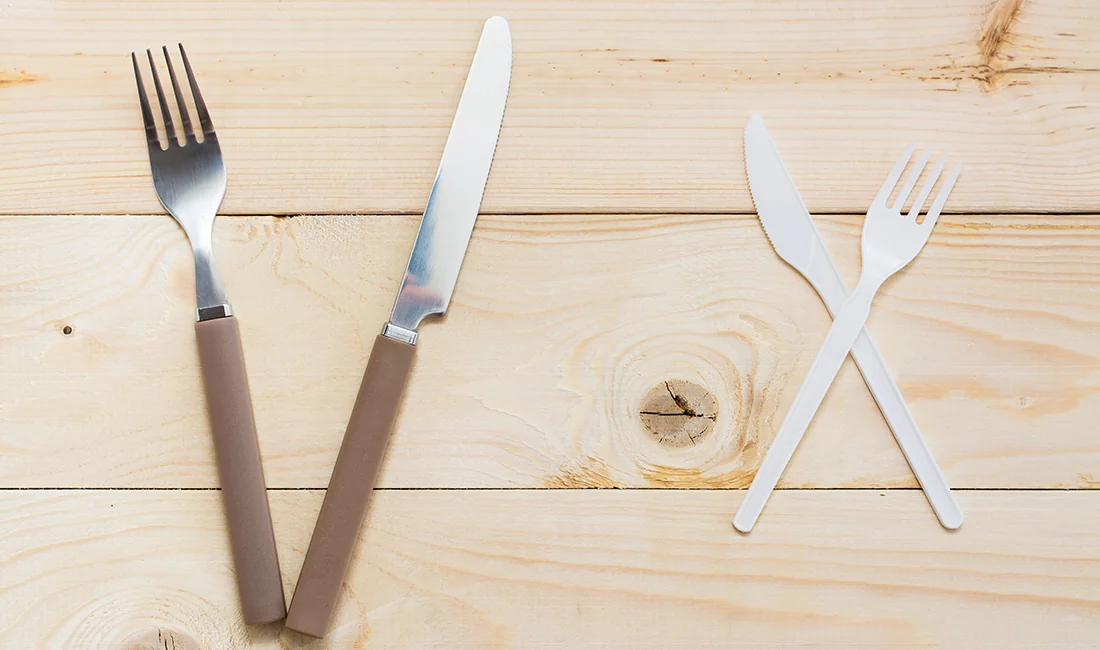
The disposable cutlery for steak uses heavy-duty plastic, clear or colored finishes, and serrated edges that cut through thick meat without bending. You get the function of a steak knife with the speed of single-use service.
You will learn which types handle heavy foods, how different materials affect strength, and how to choose clear disposable knives, heavy-duty cutlery, or eco-friendly options that match your event and budget.
Why Choosing the Right Disposable Cutlery Matters for Steak Meals?
You need the right disposable cutlery for steak because steak is dense, fibrous, and often served hot. A thin fork or light plastic knife will bend under pressure. When that happens, you lose control while cutting, and the meal becomes harder to enjoy.
Because the blade has more mass and rigidity, it resists flexing when you press down. In practice, this means you can slice through sirloin or ribeye without the knife bowing or snapping.
The fork matters just as much. Because the neck connects the handle to the head, it absorbs most of the force. For you, this means the fork stays stable while you hold the steak in place.
Heat resistance also plays a role. If you serve steak fresh off the grill, heat-resistant utensils prevent warping.
Consider the setting when you use disposable cutlery for steak:
-
Outdoor events: sturdy plastic or CPLA resists breakage.
-
Catering with sustainability goals: certified compostable CPLA or wooden steak knives.
-
Takeout meals: sealed, heavy-weight cutlery sets reduce complaints.
What are Materials Used in Disposable Cutlery for Steak?
Disposable cutlery for steak uses materials that resist bending under pressure and keep a sharp edge long enough to cut cooked beef.
The common options of disposable cutlery for steak include:
-
heavy-duty plastic
-
wood or bamboo
-
compostable plant-based plastics
Heavy-Duty Plastic and Polystyrene
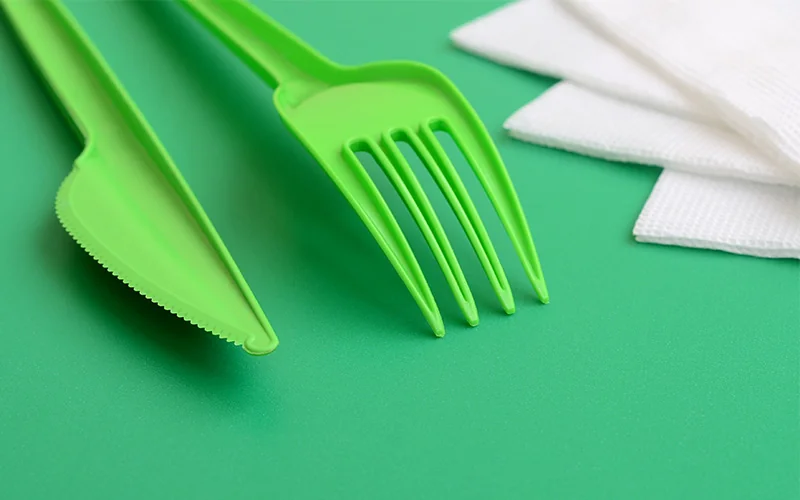
Heavy-duty plastic knives for steak are cutlery that often use polystyrene (PS) or polypropylene (PP). Manufacturers choose these petroleum-based plastics because they mold into thin, serrated edges that stay rigid under force.
Polystyrene has a higher stiffness rating than many basic plastics. Because of that stiffness, the knife flexes less when you press down on dense meat. For you, this means fewer broken tips and less sawing.
Plastic also resists moisture and grease. In practice, this means the handle does not soften during use. However, traditional PS and PP are not biodegradable and face limits in some regions under single-use plastic rules.
Wooden and Bamboo Alternatives
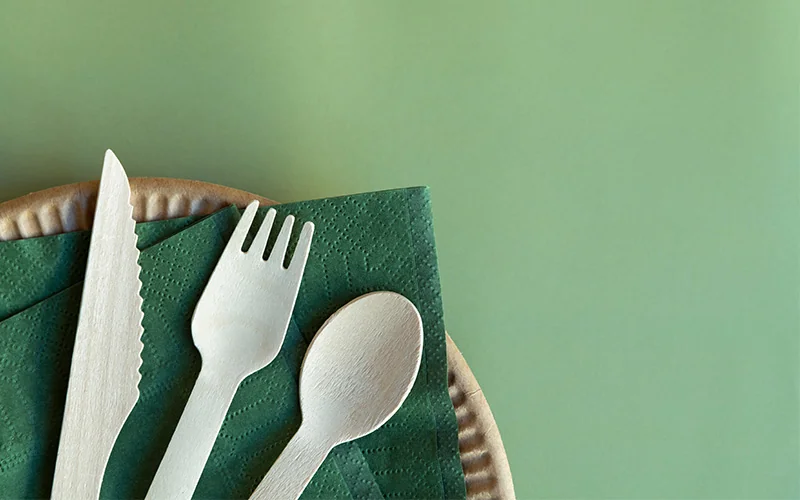
Wooden steak knives are cutlery that usually use birchwood, a hardwood with tight grain. The tight grain structure slows splintering because the fibers sit close together. For you, this means a smoother mouthfeel and fewer rough edges.
Bamboo cutlery uses fast-growing grass rather than hardwood trees. Bamboo fibers are long and dense, which increases bending strength compared to softer woods.
Wood and bamboo do not melt under heat. When you serve hot steak straight from a grill, the knife keeps its shape. These materials are also biodegradable, so they break down under composting conditions.
Compostable Plant-Fiber Utensils
Compostable steak knives are cutlery that often use PLA (polylactic acid) or CPLA (crystallized PLA) made from plant starch, such as corn. PLA alone softens at lower temperatures, but CPLA goes through a heat-crystallizing process.
That crystallizing step increases heat resistance. As a result, CPLA handles hot foods better than standard PLA. For you, this means the knife keeps its shape when used with freshly cooked steak.
Some compostable options blend PLA with natural fibers for added stiffness. The added fiber reduces flex, which helps the serrated edge bite into meat.
What are Types of Disposable Cutlery for Steak?
Each type uses a different material and blade design, which affects how well it cuts steak and how it looks on your table. You can choose from:
-
plastic steak knives
-
heavy-duty steak knives
-
silver or clear finishes
Plastic Steak Knives
Plastic steak knives are a common option for casual events, takeout, and large gatherings. Manufacturers usually make them from polystyrene or polypropylene.
Key features of plastic steak knives:
-
Serrated edge – small teeth help tear through meat fibers.
-
Lightweight design – easy to pack for catering or outdoor use.
-
Single-use format – reduces cleanup time after large events.
Polystyrene feels rigid because it has a hard structure. That stiffness allows the serrated edge to grip and see through cooked meat. For you, this means the knife can cut sirloin or grilled chicken without bending as long as the steak is not overly thick.
Most disposable plastic steak knives measure about 7 to 8 inches long. This length gives you enough leverage to cut a standard 1-inch steak.
Plastic works best for medium or thin cuts of steak. Very thick or well-done steaks can stress lighter knives and cause snapping at the handle.
Heavy-Duty Steak Knives
Heavy-duty steak knives are cutlery that use thicker plastic or reinforced designs to handle tougher cuts. Some models use dense polystyrene, while others use layered plastic to increase strength.
Common features of heavy-duty steak knives:
-
Extra-thick handle – reduces snapping during cutting.
-
Deeper serrations – improves grip on crusted or grilled meat.
-
Heat resistance – suitable for hot entrees straight from the grill.
A thicker spine along the blade increases rigidity. Because the blade flexes less under pressure, it transfers more force to the serrated edge. In practice, this means you can cut ribeye or well-done steak with less risk of the knife bending.
Some heavy-duty disposable plastic steak knives come individually wrapped. For you, this supports sanitary service in restaurants, catering lines, or takeout orders.
Silver Colored and Clear Disposable Options
Silver colored and clear disposable options are cutlery that focus on appearance as well as function. Manufacturers mold these knives from tinted or transparent plastic, then add a metallic finish or polished surface.
Typical features of silver colored and clear disposable cutlery:
-
Full-size dinner length – similar proportions to reusable steak knives.
-
Decorative handles – molded patterns add grip and visual detail.
-
Event-ready packaging – often sold in bulk packs for weddings or banquets.
A silver coating creates the look of stainless steel flatware. For you, this means you can match formal table settings without renting metal knives.
Clear disposable plastic steak knives use transparent polystyrene. Because the material remains rigid and smooth, it still supports serrated cutting while blending into modern or minimalist décor.
How to Select the Right Disposable Cutlery for Heavy Foods?
You select disposable cutlery for steak and other heavy foods by matching utensil strength to the food type, checking clear product specifications, and balancing durability with eco-friendly materials.
Start with utensil strength. A steak knife needs a reinforced handle and a thick blade edge because dense meat creates high cutting force. If the fork uses polypropylene (PP) with a heavier weight grade, it resists bending under pressure. For you, this means the tines will not twist when you lift a thick cut of meat.
Match the material to the meal:
-
PP or PS plastic (100°C+ heat resistance) – handles hot steak and firm sides.
-
CPLA (up to 95°C / 203°F) – plant-based and heat-resistant for hot entrees.
-
Wood or bamboo (up to 180°C) – rigid structure for firm foods.
CPLA works well because manufacturers crystallize PLA to increase heat resistance. In practice, this translates to a fork that stays firm with hot steak instead of softening.
Next, check the weight and product specs. Look for terms like heavyweight or grams per piece. A fork that weighs 5–7 grams usually has thicker walls than a 3-gram version. More material increases rigidity because the cross-section resists flexing.
Finally, balance durability and eco-friendliness. Traditional plastic offers strength but does not decompose. CPLA and bamboo provide compostable options, which reduce landfill impact while still supporting heavy foods when designed with reinforced necks and thick handles.
FAQs
Which material is recommended for disposable steak knives?
Heavyweight polystyrene plastic or CPLA is recommended.
Heavyweight polystyrene knives are rigid because they use thick injection‑molded plastic with reinforced handles. This stiffness limits flex when you press down on a steak. For you, this means the blade tracks straight instead of twisting sideways.
CPLA (crystallized polylactic acid) is a plant‑based plastic that goes through a heat‑crystallizing process. That process increases its heat resistance to about 185°F and improves rigidity. In practice, this means you can cut hot steak without the knife softening or bending.
Avoid thin polypropylene knives. They flex easily, and that flex reduces cutting force on dense meat.
Are there eco-friendly disposable cutlery options strong enough for steak?
Yes, some eco-friendly options can handle steak.
CPLA knives work for steak because the crystallized structure makes the material firmer than standard PLA. Many manufacturers rate them for hot foods and dense dishes. For you, this means you can serve steak at events and still meet compostable tableware goals, if you have access to an industrial composting facility.
Wooden cutlery made from birch is another option. Birch has a tight grain structure, which increases resistance to snapping under pressure. In practice, this means a properly shaped wooden steak knife can cut grilled meat without breaking, though it will not feel as sharp as plastic with a serrated edge.
Sugarcane fiber (bagasse) works well for plates but is not ideal for steak knives. The molded fiber structure lacks the thin, rigid edge needed for cutting thick meat.
How can I ensure disposable cutlery is sturdy enough for cutting steak?
Choose heavyweight or “extra heavy duty” disposable cutlery and check the material and thickness.
Look for product specs that list weight per 1,000 pieces or identify the knife as heavyweight polystyrene or CPLA. Heavier units use more material per knife, which increases rigidity. For you, this means less bending when you apply downward force.
Check for a serrated edge molded into the blade. Serrations concentrate force onto small points along the edge. In other words, the knife grips and slices meat fibers instead of sliding across them.
If possible, test a sample on cooked steak before bulk buying. Press down and saw through the center. If the handle flexes or the blade twists, move to a thicker or reinforced design.