

Picking disposable knives for steak and chicken isn’t just about grabbing whatever’s handy. Each meat has its own texture, and using the wrong knife can leave you with torn, ragged pieces instead of neat slices. That’s just not appetizing.
For clean cuts, go for serrated disposable knives with steak and sharper, fine-edged disposable knives with chicken. The texture and resistance of the meat really matter here. Steak’s dense and thick, so it needs those strong serrations to grip and slice through the fibers. Chicken? It’s softer, so a smoother, sharper edge gives you better results—no shredding.
Knowing these differences can spare you some frustration, whether you’re prepping food or just eating. Let’s break down how disposable steak and chicken knives actually differ, and how to pick the right one for your meal.
What Are Disposable Steak Knives?
Disposable steak knives are single-use, designed to tackle dense, fibrous meats like steak or grilled beef. They have sharper serrations and a firmer blade, so you can slice cleanly instead of tearing your food apart.
Most are made from heavy-duty polystyrene or thin stainless steel blades. Plastic versions show up at barbecues, catered events, and casual restaurants. Some bulk sets use lightweight stainless steel for a sturdier feel.
These knives usually run about 7 to 9 inches long, with either pointed or rounded tips and deep serrations to grip tough meat.
Advantages and Disadvantages
Advantages
-
Strong serrations make it easier to cut through thick steak.
-
Rigid blades don’t bend much, even with firm meat.
-
Polystyrene options are cheap and good for big gatherings.
-
Stainless steel feels sturdier and won’t rust during short-term use.
-
No washing up—just toss them after the meal.
Plastic versions often come individually wrapped, which is handy for keeping things sanitary at events.
Disadvantages
-
Plastic knives can snap if you try them on very thick or overcooked steak.
-
Serrated edges can shred softer foods like chicken.
-
Single-use means more waste, unfortunately.
-
Even stainless steel versions aren’t as strong as real, reusable cutlery.
What Are Disposable Chicken Knives?
Disposable chicken knives are made for softer poultry, aiming for clean slices without tearing. They focus on control, light serration, and just enough strength for chicken breast, roasted pieces, or breaded cuts.
Most are made from heavyweight polystyrene or similar rigid plastic. Some pricier options use a plastic handle with a thin stainless steel blade, but you still toss them after one use.
Advantages and Disadvantages
Advantages
-
Finer serrations slice through chicken skin and meat without turning it into a mess.
-
Moderate stiffness helps with clean cuts but keeps the knife light.
-
Low cost makes them practical for takeout, catering, or big events.
-
Easy disposal means less cleanup.
They’re great for casual dining—think grilled chicken, baked thighs, or breaded fillets. Polystyrene holds up better than cheaper plastics.
Disadvantages
-
They’re not made for thick steaks or dense meats.
-
Plastic edges dull faster than stainless steel.
-
Cheaper models might flex too much if you press hard.
Key Differences Between Disposable Knives for Steak and Chicken
Steak and chicken put different demands on a disposable knife. Clean cuts come down to serration style, blade strength, and how the knife handles heat and grease.
Blade Serration Design
Serration pattern really matters for cutting meat.
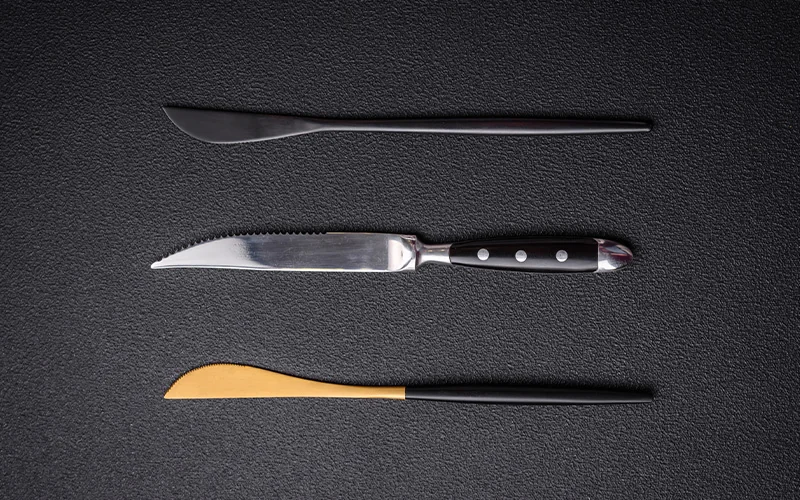
Steak knives use deep, pointed serrations to grip beef and cut through muscle with a sawing motion. This works well for thick cuts and seared crusts.
Chicken needs a finer edge. A chicken knife should have smaller, tighter serrations or just a lightly serrated edge. That way it slices through tender meat and thin skin without making a mess.
If you’re picking a knife for a casual event, heavy serration fits steak. For chicken, moderate serration gives smoother cuts and less shredding.
Blade Thickness and Rigidity
Thickness affects control and safety.
Disposable steak knives usually have a thicker, heavy-duty plastic blade. A lot of 8.5-inch models use reinforced plastic to stop bending when slicing dense meat. This extra rigidity helps you keep steady pressure.
Chicken doesn’t need as much stiffness. A standard disposable knife with moderate thickness handles boneless breasts or thighs just fine. If you’re cutting bone-in pieces, you’ll want a bit more firmness so the blade doesn’t flex.
If a blade bends too much, you end up pressing harder, and that’s when accidents happen. Steak really needs a rigid blade. Chicken’s best knife balances light weight with enough structure to stay straight while slicing.
Cutting Force Requirements
Steak takes more effort to cut than chicken.
Beef is dense. Your disposable knife needs to survive repeated sawing without snapping. You’ll probably use steady pressure on thick cuts like sirloin or ribeye.
Chicken’s much softer. A sharp disposable chicken knife usually glides through boneless pieces with less force. Pressing too hard just crushes the meat.
So, if you’re serving steak, go for heavy-duty knives that won’t bend. For chicken-only meals, lighter knives are fine and won’t tire your hand during long service.
Heat and Grease Resistance
Both steak and chicken release heat and fat, but not in the same way.
Steak’s often hot and seared, with surface fat that can soften cheap plastic. A stronger steak knife resists warping and keeps its edge shape.
Chicken, especially fried or roasted, can be greasy. The handle needs to stay grippy even when oily. Some disposable knives have textured handles for better control.
When you’re picking knives for events, check the material. Lightweight plastic works for room-temp dishes. For hot steak or fresh-off-the-grill chicken, sturdier plastics or compostable materials like reinforced PLA or wood handle heat better.
Event and Serving Context
The event matters a lot.
At barbecues or outdoor meals, steak’s common. Hosts usually pick heavy-duty disposable steak knives that won’t break. Individually wrapped options help with hygiene for takeout or big groups.
For catered lunches or buffets with sliced chicken, lighter knives do the trick. Guests cut smaller, softer pieces, so you don’t need maximum strength.
In fancier settings, wooden or compostable knives sometimes replace plastic. They’re sturdier and look better, plus they fit sustainability goals. Matching the knife to the main protein just makes for a better meal all around.
How to Choose Between Disposable Knives for Steak and Chicken
The right disposable knife depends on the protein, the cutting force needed, and the setting. Blade design, thickness, and sharpness all play a part in how easily guests can slice their food.
Assess the Type of Protein Being Served
First, look at what’s on the menu. Steak is firm, sometimes charred or thick-cut. It needs a serrated blade that grips and slices without slipping.
Chicken’s more varied. Boneless, skinless breast is soft and easy to cut. A lighter serrated or even a straight-edged blade works if the meat’s tender and not heavily seared.
Bone-in chicken is trickier. Guests need to cut around joints and cartilage, so you want a sharper, sturdier blade. In that case, a stronger knife with clear serrations is better than a thin, smooth edge.
Match your knife to the toughest thing you’re serving. If steak and grilled chicken are both on the plate, pick the knife that can handle steak.
Evaluate the Required Cutting Force
Steak usually needs more pressure. A steak knife should resist bending when guests press into thick cuts.
Look for heavy-duty or reinforced knives. Many use thicker plastic or rigid materials to stay firm. Less bending means better control and less risk of tearing the meat.
Chicken—especially roasted or baked—needs less force. A medium-weight disposable knife is often enough. Super thick blades can feel clunky and unnecessary for softer meat.
More cutting force calls for stronger construction and better edge retention—even if you’re just tossing the knife afterward.
Check Blade Thickness and Serration Depth
Blade thickness affects stability. Thin blades bend easily, which frustrates anyone cutting steak. Thicker blades give you better leverage and cleaner slices.
Serration depth matters too. Deep, defined serrations grip tough meat and break through seared crusts—perfect for steak.
For chicken, especially tender pieces, shallow serrations or a straight edge work better. Deep serrations can shred delicate meat instead of slicing it.
|
Feature |
Best for Steak |
Best for Chicken |
|
Blade Thickness |
Thick, rigid |
Medium or light |
|
Serration Depth |
Deep, defined |
Shallow or smooth edge |
|
Edge Retention |
High priority |
Moderate priority |
Pick a design that matches your protein’s texture—don’t just assume one knife works for everything.
Consider Event Formality and Guest Expectations
Setting changes everything. At a formal dinner or catered event, people expect clean, easy cuts.
A sturdy steak knife with a clear serrated blade makes that possible. It means less sawing and a nicer-looking plate.
For casual events—barbecues, quick meals, picnics—guests are fine with lighter knives. If the chicken’s pre-sliced or in small pieces, a basic disposable knife does the job.
Looks matter too. Black or clear heavy-duty knives look fancier than thin white plastic. Match the appearance to your event, especially with steak.
Balance Cost and Performance Needs
Cost counts, especially for big events. But going cheap can backfire.
If steak’s the main dish, spend a bit more for sharper blades and better edge retention. Weak knives can snap or force guests to struggle, which isn’t a good look.
For chicken-only menus, mid-range knives usually have enough strength. No need to pay for steak knives if you don’t need them.
Think about:
-
Type and thickness of meat
-
How many guests you’re serving
-
Chance of knives breaking
-
The dining experience you want to offer
Spend more when you need to. Save when you can, as long as it doesn’t mess up the meal.