

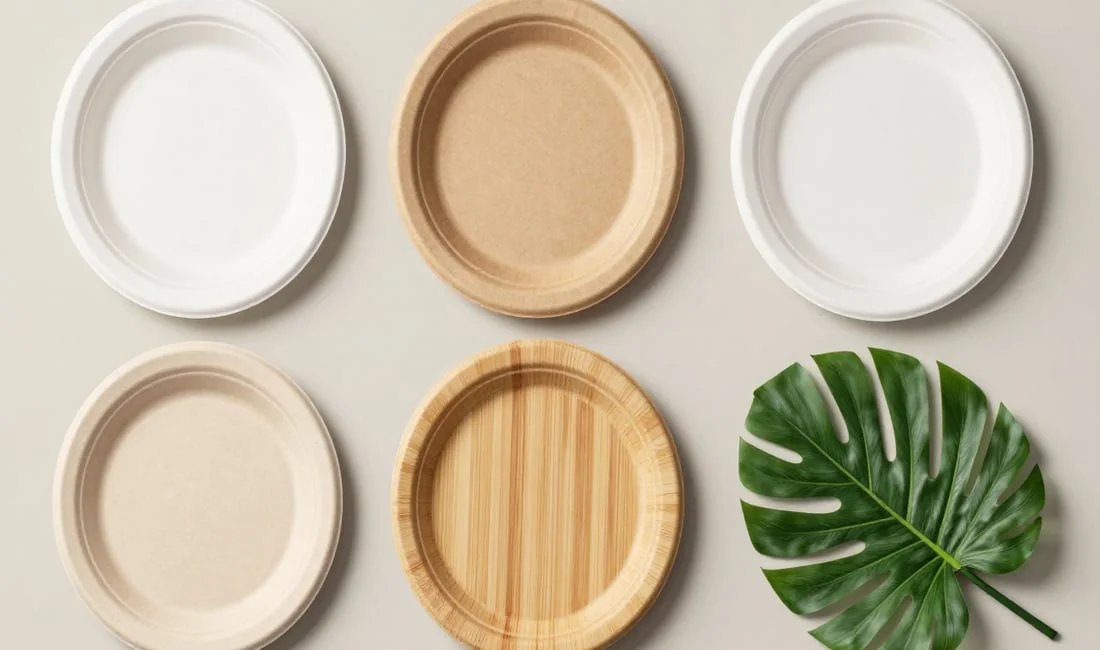
Disposable plates make hosting easy. They cut cleanup, handle big crowds, and now look good enough for weddings and holidays. But not all plates are the same. The wrong plate bends under a hot meal, leaks sauce, or clashes with the table.
This 2026 guide compares disposable plates by the three factors that matter most: material, size, and strength. It offers clear comparison tables, real sizes in inches, and simple tips for matching a plate to the food. With these facts, any host can pick the right disposable plates for an event.
What to Look for When Buying Disposable Plates
Disposable plates come down to four factors: material, size, strength, and safety. These four points decide whether a plate holds the food, fits the budget, and suits the event. When they align, the rest of the choice is simple.
Here is what each factor controls:
● Material sets the look, the price, and how eco-friendly the plate is, e.g., plastic, paper, and bagasse.
● Size matches the plate to the meal, e.g., a 7-inch dessert plate or a 10-inch dinner plate.
● Strength decides how much food the plate can hold without bending or leaking.
● Safety covers heat limits and food-grade materials, e.g., BPA-free and PFAS-free plates.
The rest of this guide breaks down each factor in detail, starting with material.
Disposable Plate Materials Compared
Disposable plates come in six main materials: plastic, paper, foam, bagasse, bamboo, and palm leaf. Each material has its own strength, price, and eco profile. The table below compares them at a glance, and the sections after it explain each one.
| Material | Strength | Heat resistance | Eco profile | Cost | Best for |
|---|---|---|---|---|---|
| Plastic | Very high | Medium (many microwave-safe) | Recyclable if single-resin | Low–High | Elegant events, heavy or saucy food |
| Paper | Low–Medium | Medium | Recyclable or compostable | Low | Casual meals, snacks, desserts |
| Foam | Medium | High (insulating) | Poor, banned in some states | Very low | Hot takeout, budget events |
| Bagasse | High | High (microwave & freezer safe) | Compostable | Medium | Eco events, hot and greasy food |
| Bamboo | Very high | High | Compostable | High | Upscale, rustic events |
| Palm leaf | High | High | Compostable | Medium–High | Natural-look parties |
Plastic Disposable Plates
Plastic disposable plates are the strongest and most versatile choice. They are made from polypropylene (PP) or polystyrene (PS), which resist cracking under heavy food. A premium plastic plate can mimic real china, which makes it popular for weddings, showers, and formal dinners.
Strength is the main draw. A heavyweight plastic plate with a thickness of 1.5 mm or more holds a full meal one-handed, without the “taco fold” of cheap plates. Many plastic plates are microwave-safe, and the label confirms which ones. The trade-off is the environment: standard plastic is not compostable, though single-resin plates with a recycling code can enter the recycling stream.
Paper Disposable Plates
Paper disposable plates are the most affordable and lightweight option. They are made from paperboard or sugarcane fiber, and they come in three strength grades: single-ply, double-ply, and laminated. Single-ply plates suit dry, light foods, e.g., cookies, chips, and cake.
Coated and laminated paper plates add real durability. A wax or plastic coating blocks grease and moisture, so the plate can hold saucy or oily food without soaking through. Double-ply and laminated plates handle heavier meals. Paper plates are easy to recycle or compost, which makes them a smart pick for casual parties and everyday use.
Foam Disposable Plates
Foam disposable plates are the cheapest option and the best insulators. They are made from expanded polystyrene (EPS), which keeps hot food hot and cold food cold. Foam also resists moisture, so liquids do not leak through.
Foam has two big drawbacks. First, it is not microwave-safe, so it cannot reheat food. Second, it is poor for the environment and does not break down in landfills. Several U.S. states now ban foam foodware, so local rules are worth a check before buying. Foam works best for low-budget events where insulation matters more than style.
Bagasse (Sugarcane) Disposable Plates
Bagasse disposable plates are the top all-around eco choice. Bagasse is the fiber left over after sugarcane is pressed, so the plate is 100% compostable and biodegradable. It also performs well, which sets it apart from other green options.
The performance is what wins hosts over. Bagasse plates are sturdy, naturally grease-resistant, and safe in both the microwave and the freezer. This means the same plate can serve hot, saucy food and store leftovers. Bagasse costs a little more than paper, but it delivers strength and sustainability in one plate.
Bamboo, Palm Leaf & Wood Disposable Plates
Bamboo, palm leaf, and wood disposable plates offer a natural, upscale look. All three are compostable, and each brings a different texture, e.g., smooth bamboo, veined palm leaf, and grained birch wood. They shine at rustic weddings, garden parties, and eco-conscious events.
Strength varies across these materials. Bamboo plates are the sturdiest and handle both hot and cold food, but they cost the most. Palm leaf plates are strong and photogenic, though thin ones can warp under a very wet meal. Wood plates, e.g., birch and pine, are firm and elegant, and they pair well with a natural food presentation.
Disposable Plate Sizes Explained
Disposable plate sizes run from 6-inch appetizer plates to 12-inch dinner plates. The right size controls portions, presentation, and budget. A plate that is too big wastes food and money, while one that is too small cannot hold the meal.
Standard Disposable Plate Sizes and Their Uses
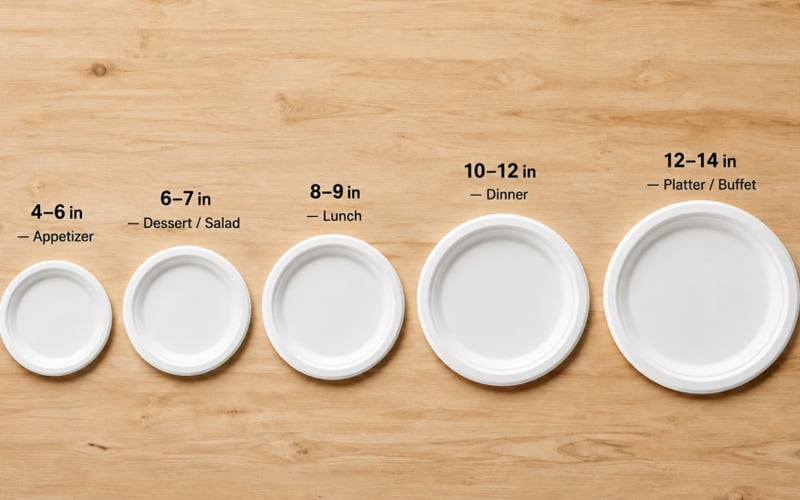
Most disposable plates fall into five standard sizes, each built for a certain course. The table below lists them by diameter and use.
| Plate size | Diameter | Best for |
|---|---|---|
| Snack / appetizer | 4–6 in | Finger foods, appetizers, tapas |
| Dessert / salad | 6–7 in | Cake, desserts, side salads |
| Lunch | 8–9 in | Sandwiches, light meals, pasta |
| Dinner | 10–12 in | Full meals with sides |
| Platter / buffet | 12–14 in | Large servings, buffets, sharing |
Dinner plates are the most common size at 10.5 inches, and they fit a standard main course with room for sides. Dessert plates and appetizer plates share a smaller 6-to-7-inch range, which keeps small portions looking neat.
Size is not the only choice, since disposable plates also come in several shapes, e.g., round, square, and compartment. Round plates are the classic, all-purpose pick and suit almost any meal. Square plates give a modern, upscale look for weddings and showers. Compartment and oval plates keep foods separate, which makes them ideal for buffets, barbecues, and saucy meals.
How to Match Plate Size to Food and Portions
The plate size should match the largest course on the menu. A full dinner with sides needs a 10-to-12-inch plate, while cake or finger food fits a 6-to-7-inch plate. When the choice is close, the larger plate is safer, since a crowded plate looks messy and can spill.
Portion control matters too. A smaller plate nudges guests toward lighter servings, which helps at a buffet where people return for seconds. For a formal, plated meal, a larger dinner plate creates an elegant, spacious presentation. Two sizes, e.g., a dinner plate and a dessert plate, cover most events.
Disposable Plate Strength and Durability Compared
Plastic plates resist cracking best, while double-ply and laminated paper plates hold heavy, saucy food. Strength comes down to two things: the material and the build. A strong plate keeps its shape under a full meal, so food does not slide off or leak onto guests.
What Makes a Disposable Plate Strong
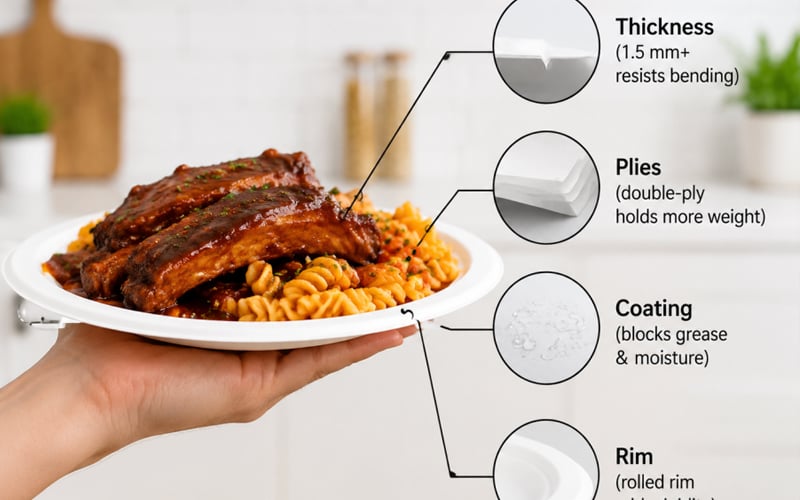
Four build features control a plate’s strength: thickness, number of plies, coating, and rim design. Each one adds durability in a different way, e.g., a thicker gauge, a second ply, and a rolled rim.
Here is how each feature helps:
● Thickness matters most for plastic. A heavyweight plate of 1.5 mm or more resists bending and cutting from a steak knife.
● Plies matter for paper. Double-ply and laminated plates carry far more weight than single-ply plates.
● Coating blocks grease and moisture, so saucy or oily food does not soak through and weaken the plate.
● Rim design adds rigidity. A wide, rolled, or reinforced rim stops the plate from flexing when carried one-handed.
Matching Plate Strength to the Menu
Plate strength should match how heavy and wet the food is. Heavy, saucy, or hot dishes, e.g., ribs, pasta, and curry, need a strong plate: heavyweight plastic, bagasse, or laminated paper. These plates hold up under weight and moisture without folding.
Light, dry foods, e.g., cookies, chips, and sandwiches, work fine on a lighter single-ply paper plate. This saves money where extra strength is not needed. A simple rule links strength to size: larger plates carry heavier meals, so a rigid material like bagasse or bamboo fits 10-inch-plus plates.
Are Disposable Plates Safe? Heat, BPA & Food-Grade Facts
Food-grade disposable plates are safe when they are BPA-free, PFAS-free, and used within their heat limits. Reputable plates meet food-contact rules, e.g., FDA standards in the U.S. A food-grade label confirms a plate is safe, and it also lists any heat limits before food is heated on it.
Two safety points have changed for 2026. First, PFAS, the “forever chemicals” once used for grease resistance, are now restricted in food packaging across a growing list of U.S. states. Plates labeled PFAS-free are the safer pick, and bagasse and other fiber plates now use safer grease barriers. Second, heat limits still vary by material: most plastic and bagasse plates are microwave-safe, but foam is not, and few plates are oven-safe unless the pack says so. Within these limits, disposable plates are a safe, practical choice for any meal.
Eco-Friendly Disposable Plates: Recyclable vs Compostable
Compostable plates break down naturally, e.g., bagasse, bamboo, and palm leaf, while some plastic plates are recyclable. The greenest choice depends on how the plate will be thrown away. Compostable plates return to soil, but only in the right facility, while recyclable plates need a clean recycling stream.
A few habits make disposal cleaner. Single-material plates recycle best, because plates with metallic rims or glued decorations are harder to process. A recycling code or a compostable certification on the bottom shows how to dispose of the plate. Scraping off food first helps, since heavy residue can spoil a whole batch of recycling. Recycling and composting rules vary by city, so local guidelines are worth a check before the plate goes in the bin.
How to Choose the Right Disposable Plates for an Event
Choosing the right disposable plate follows four steps: check the food, match the occasion, compare the cost, and set the quantity. Each step below narrows the options until one plate stands out.
Start with the Food on the Menu
Match the plate material to the heaviest and wettest dish on the menu. Saucy, greasy, or hot food needs a strong material, e.g., plastic, bagasse, or laminated paper. Dry, light food does fine on single-ply paper, which saves money where strength is not needed.
Match the Plate Style to the Occasion
Pick a plate look that fits the event’s formality. Premium plastic and square plates suit weddings, showers, and formal dinners. Printed or colored paper plates fit picnics, barbecues, and kids’ parties, where fun beats formality.
Compare the Cost per Plate
Judge plates by cost per plate, not by pack price. Paper and foam plates cost the least per plate, which suits large, casual crowds. Bagasse, bamboo, and premium plastic cost more, but they buy strength, style, or an eco edge. Bulk orders lower the cost per plate, so stocking up on go-to sizes pays off.
Buy Two Disposable Plates per Guest
Buy at least two disposable plates per guest, and round up for a buffet. Guests use one plate for the main course and another for dessert, and many take a clean plate for seconds. Use this quick math for common party sizes:
● 12 guests: about 30 plates to cover two courses plus extras.
● 25 guests: about 60 plates for seconds and spills.
● 50 guests: about 120 plates, plus dessert plates on top.
Leftover disposable plates store flat and keep for the next event, so a little extra always pays off.
Disposable Plates Buying Guide FAQs
What is the strongest disposable plate?
Heavyweight plastic plates are the strongest, since they resist cracking under heavy food. Bagasse and bamboo are the strongest eco options.
Are disposable plates microwave-safe?
Many are, e.g., most plastic and bagasse plates, but foam plates are not. The label confirms it before microwaving.
What size disposable plate works for dinner?
A 10-to-12-inch dinner plate suits a full meal with sides. A 10.5-inch plate is the most common choice.
Which is better, paper or plastic plates?
It depends on the menu. Plastic is stronger and more elegant for heavy or formal meals, while paper is cheaper and greener for casual, dry foods.
How many disposable plates are needed per guest?
At least two plates per guest, rounded up for buffets or events with dessert. Extras cover seconds and spills.
Are disposable plates eco-friendly?
Compostable plates like bagasse, bamboo, and palm leaf are the greenest. Single-resin plastic plates can be recycled where local programs accept them.
Can disposable plates be reused?
Heavyweight plastic plates can be rinsed and reused a few times for light, dry foods. Paper, foam, and thin plates are meant for single use only.
Are foam plates banned?
Several U.S. states and cities now restrict foam foodware because it does not break down. Local rules decide, so paper or bagasse work where foam is banned.
Buy Disposable Plates with Confidence
The right disposable plate comes down to three questions: what material fits the food, what size fits the meal, and how much strength the meal needs. Matched to the event and budget, with two plates per guest, the result is a clean, stylish table.
Wonderful Party carries a full range of disposable plates and party tableware in every material, size, and strength — ready for the next event.