

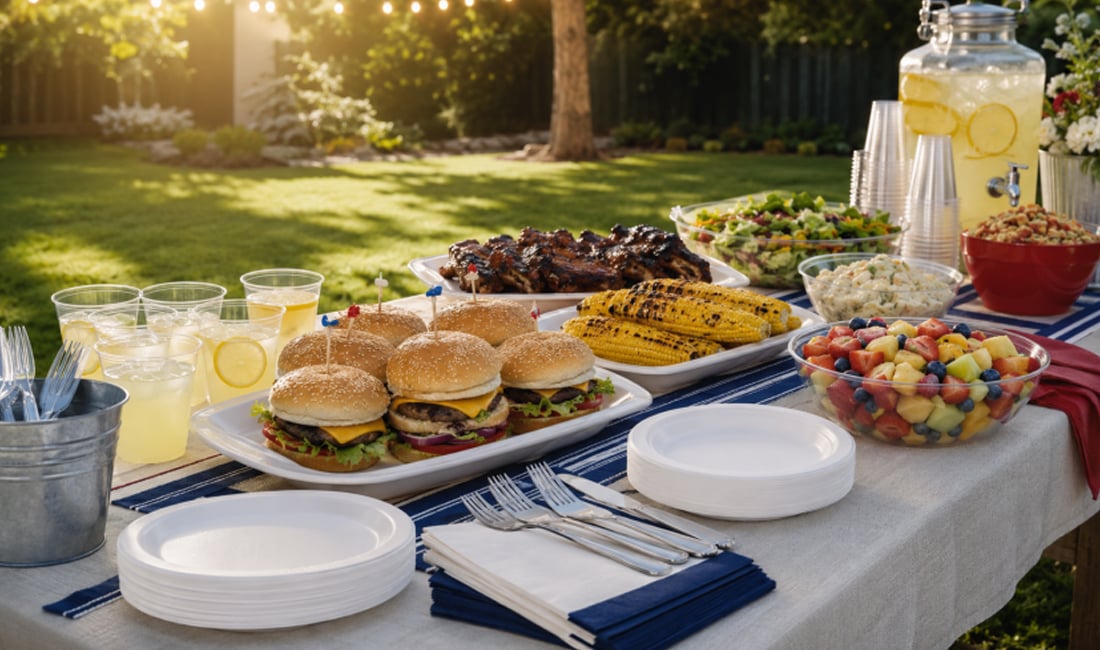
Labor Day often marks the last big cookout of summer. Families and friends gather for burgers, ribs, grilled vegetables, cold drinks, and classic BBQ sides. The right tableware helps the meal run smoothly from the first plate to the final dessert.
For an outdoor BBQ, disposable tableware should be sturdy, grease-resistant, easy to hold, and simple to clean up. Plates must support heavy and saucy food. Cups need to fit the drinks being served. Cutlery should be firm enough for grilled meat and dense side dishes.
This guide explains which items a cookout needs, how to compare materials and sizes, and how much tableware to order. It also offers simple ideas for casual, patriotic, elegant, large, and eco-conscious gatherings.
What Disposable Tableware Do You Need for a Labor Day Cookout?
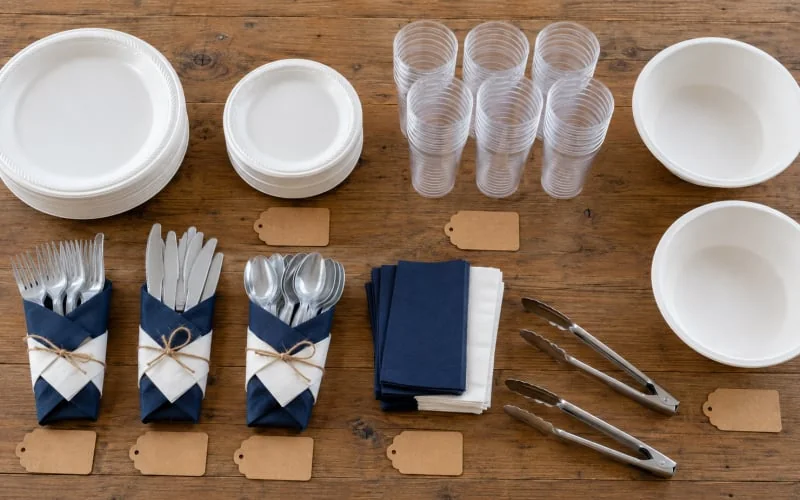
A complete Labor Day cookout setup needs tableware for the main meal, drinks, desserts, serving, and cleanup. The exact mix depends on the menu, but most events need the following items:
• Dinner plates: Large plates hold burgers, ribs, grilled chicken, corn, coleslaw, and other BBQ sides.
• Small plates: Appetizer and dessert plates keep snacks and sweets separate from the main meal.
• Bowls: Bowls are useful for baked beans, salads, fruit, ice cream, and other foods that may spill from a flat plate.
• Cups: The drink station may need cups for water, soda, lemonade, beer, wine, or cocktails. Different drinks may call for different cup sizes or shapes.
• Heavy-duty cutlery: Firm forks, knives, and spoons work better with grilled meat, dense salads, and frozen desserts than thin utensils.
• Serving utensils: Tongs, large spoons, and other serving tools keep the buffet organized and reduce direct contact with shared food.
Napkins: Dinner napkins suit the main meal, while smaller beverage napkins work well at the drink and dessert stations.
• Table covers: A disposable or washable cover protects the table and creates a clean base for the chosen color theme.
Serving platters, trays, and large bowls may also be needed. For example, a typical buffet could use one platter for burgers, one tray for grilled vegetables, and separate bowls for beans, salad, and fruit.
How to Choose the Best Disposable Tableware for BBQ Food
The best disposable tableware matches the weight, heat, grease, and moisture level of the menu. A light snack table has different needs from a buffet with ribs, baked beans, and several sauces.
Choose Sturdy Disposable Plates for Heavy and Saucy Foods
Sturdy plates are the safest practical choice for heavy BBQ meals. A loaded plate may hold a burger, ribs, corn, beans, and salad at the same time. Thin plates can bend under that weight. They may also soften when they hold grease or sauce for too long.
Buyers should look for plates described as heavy-duty, grease-resistant, or suitable for the foods on the menu. A raised rim can also help keep sauce and liquid on the plate. For a very heavy meal, a rigid plate or a strong molded-fiber plate is often easier to carry with one hand.
Plate strength should be checked before the event. One plate can be loaded with a sample meal and held at the edge for a few seconds. If it bends, leaks, or feels hard to control, a stronger option or two-handed service may be needed.
Pick the Right Disposable Plate Size
A 9- to 10-inch dinner plate fits most Labor Day main meals. It gives burgers, grilled meat, and side dishes enough room without making portions look crowded. A 6- to 7-inch plate is usually a better fit for appetizers, cake, pie, and other desserts.
Compartment plates can help when a menu includes foods that guests may want to keep apart, such as ribs, baked beans, and coleslaw. Standard plates offer more open space and a cleaner look. They also fit foods with uneven shapes more easily. The menu and serving style should guide the choice.
Compare Paper, Plastic, and Bagasse Disposable Tableware
Paper, plastic, and bagasse each serve a different type of cookout. No single material is best for every menu or event.
| Material | Strength and grease control | Appearance | Best fit |
|---|---|---|---|
| Paper | Varies by thickness and coating; basic paper may soften with grease or sauce | Casual and familiar | Snacks, desserts, and lighter meals |
| Plastic | Rigid options can support heavier portions and resist grease well | Available in clear, solid, and decorative finishes | Heavy BBQ meals and polished table settings |
| Bagasse | Molded fiber is often firm and works well with moist or greasy food when the product is rated for it | Simple, natural look | Casual outdoor meals and eco-conscious events |
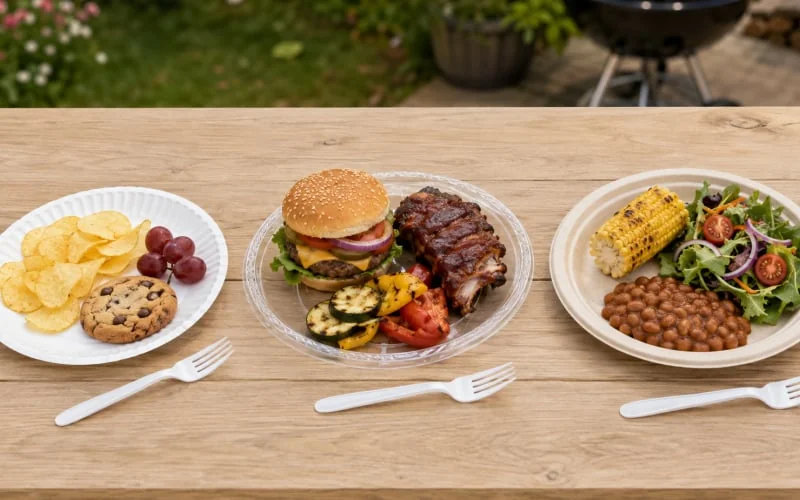
Bagasse is made from sugarcane fiber. Wonderful Party’s 10-inch square compostable paper plates are described as heavy-duty bagasse plates for parties and picnics. They provide a direct option for hosts who want a simple molded-fiber dinner plate.
Disposal claims need careful handling. A bagasse item should go into a compost stream only when the product label and the local composting program both allow it. Plastic recycling rules also vary by material and location. Clear bin labels should follow local collection rules instead of relying only on a general material name.
Match Cups, Cutlery, and Napkins to Your Menu
Cups should match the drinks, not only the table color. A smaller cup may suit cocktails, wine, or tasting portions. A larger cup offers more room for water, soda, lemonade, and ice. Product instructions should be checked before any disposable cup is used for a hot drink.
Cutlery should match the food texture. Burgers and corn may need only forks and knives, while baked beans and ice cream also need spoons. Ribs are often eaten by hand, but firm knives and forks remain useful for grilled chicken, steak, dense salads, and larger vegetables.
Saucy food also raises napkin demand. Dinner napkins belong at the food station or each place setting. Beverage napkins can sit beside cold drinks, appetizers, and desserts. Keeping a second stack near the ribs or sauce station makes it easier for guests to take more without crossing the full buffet.
How Much Disposable Tableware Do You Need Per Guest?
Most cookouts should plan for 2–3 plates, 2–3 cups, one full cutlery set, and 3–5 napkins per guest. The higher end of each range works well when the event includes appetizers, a main meal, dessert, and several drinks.
One complete cutlery set per person is usually enough, with about 10% extra for dropped or misplaced pieces. The buffet also needs shared serving items. These may include platters, serving bowls, trays, tongs, and large spoons.
Menu structure can reduce waste. If dessert is served in a bowl, the host may not need both a dessert plate and a dessert bowl. If all beverages use the same suitable cup, fewer cup styles are needed. A simple menu count should come before the final order.
Quick Labor Day Disposable Tableware Quantity Chart
The chart below uses the high end of the planning range: three plates, three cups, one cutlery set plus 10% extra, and five napkins per guest. It provides a practical buffer for a multi-course cookout. Pack sizes may require rounding the final order up.
| Number of guests | Plates | Cups | Complete cutlery sets | Napkins |
|---|---|---|---|---|
| 10 | 30 | 30 | 11 | 50 |
| 25 | 75 | 75 | 28 | 125 |
| 50 | 150 | 150 | 55 | 250 |
| 100 | 300 | 300 | 110 | 500 |
These totals cover individual tableware only. Serving platters, bowls, tongs, and spoons should be counted by dish. As a simple rule, each buffet dish needs its own serving container and utensil, plus a few clean backups for the busiest stations.
Labor Day Disposable Tableware Ideas for Every Cookout Style
The tableware style should support the mood of the cookout without making service harder. Color, material, pack size, and layout can all change while the basic function stays the same.
Casual Backyard BBQ
A casual backyard BBQ works well with a simple set of sturdy dinner plates, small dessert plates, all-purpose cold cups, firm cutlery, and absorbent napkins. White, kraft, black, or one bright summer color can keep the setup easy to coordinate.
The buffet can stay relaxed and practical. Plates begin the line, followed by food, cutlery, and napkins. Cups remain at a separate drink station so guests do not carry an empty cup through the food line.
Classic Red, White, and Blue Table
Red, white, and blue create a clear Labor Day theme. The three colors do not need to appear on every item. A white plate can form the base, blue napkins can add the main accent, and red cups or small decorations can complete the palette.
This limited color plan keeps the table from looking busy. It also makes it easier to reuse neutral supplies for another event. Stars, stripes, or small flag details can appear on signs and centerpieces instead of every plate and cup.
Elegant End-of-Summer Dinner
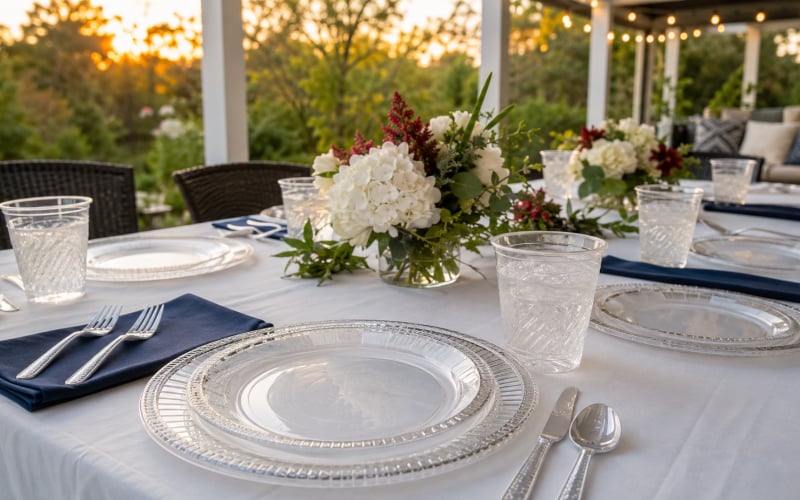
An elegant table can use clear plates or white plates with gold- or silver-style trim. Matching cutlery and simple folded napkins give disposable tableware a more finished look. A solid table cover and low centerpieces can keep the setting polished without blocking conversation.
For a large formal-style setup, Wonderful Party’s 600-piece silver disposable dinnerware set for 100 guests includes dinner plates, dessert plates, cups, knives, forks, and spoons. Because the set is built around a stated guest count, it also gives planners a clear base for the order. Extra napkins and backup pieces can then be added as needed.
Large Family or Neighborhood Cookout
Large cookouts need durable tableware, clear quantities, and easy self-service. Bulk packs reduce the number of open packages at setup. Matching sets can also make it easier to confirm that plates, cups, and cutlery have been counted.
Supplies should be divided between the active stations and a nearby backup area. Only part of the stock needs to sit on the table at once. Refill bins can keep spare items clean and prevent a tall stack of plates or cups from tipping outdoors.
Eco-Conscious Outdoor Gathering
An eco-conscious gathering can use paper or bagasse items when those materials suit the menu and the local waste system. A smaller, well-planned order may also reduce unused supplies. Neutral colors and natural textures fit a picnic-style table without added decoration.
The disposal plan matters as much as the purchase. Compostable items should be separated only when an available program accepts them. Recyclable items should be clean enough and made from materials accepted by the local service. When those services are not available, signs should not promise an outcome the waste system cannot provide.
Tips for a Stress-Free Labor Day Cookout
A smooth cookout uses simple stations, clear order, and a small backup supply. The following steps help guests find what they need and help hosts manage wind, weather, and cleanup:
• Set up separate food, drink, and dessert stations. This layout reduces crowding and keeps drink spills away from the main buffet.
• Arrange the buffet in use order. Plates should come first, followed by main food, sides, sauces, cutlery, and napkins.
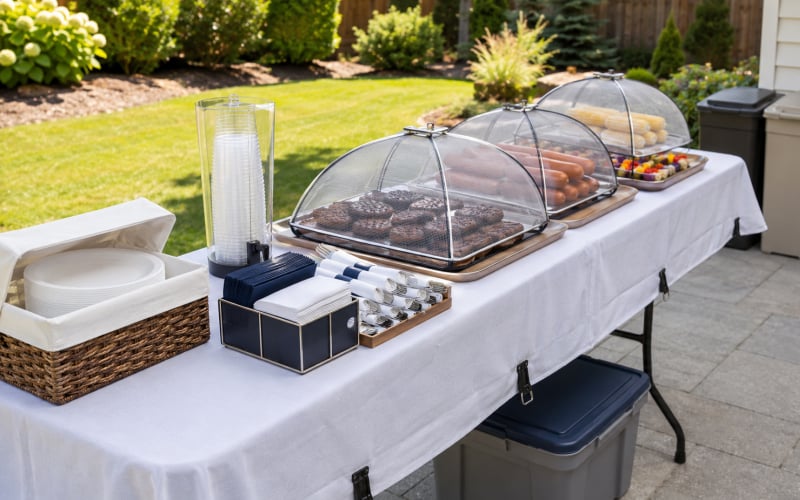
• Pre-roll napkins and cutlery. Ready-made bundles are easy to pick up and help keep loose utensils together.
• Keep backup supplies nearby. Extra plates, cups, utensils, and napkins should stay in a clean, covered bin close to the serving area.
• Secure the outdoor table. Tablecloth clips can hold the cover in place. A weighted holder, basket, or covered container can keep napkins from blowing away.
• Cover food when it is not being served. Lids, mesh food covers, or suitable wraps help protect dishes from wind and insects.
• Label waste stations clearly. Separate trash, recycling, and compost bins only when local services support those streams. Signs can list the exact items that belong in each bin.
• Prepare cleanup supplies. Extra trash bags, wipes, and containers for leftovers should be ready before guests arrive.
• Check the weather. A simple rain plan may use a covered patio, canopy rated for outdoor use, garage, or indoor serving area. Food and tableware should be moved before conditions become unsafe.
Food safety should remain part of the setup. Perishable food should not sit outside longer than guidance from the relevant local food-safety authority allows. Covers protect food from debris and insects, but they do not replace safe time and temperature control.
Labor Day Cookout Disposable Tableware Checklist
A checklist prevents small items from being missed during the final store run or supplier order. It should cover individual place settings, buffet service, outdoor control, and cleanup.
Place-Setting Essentials
• 9- to 10-inch dinner plates
• 6- to 7-inch appetizer or dessert plates
• Bowls when the menu includes beans, salads, fruit, or ice cream
• Cups suited to each drink type
• Forks, knives, and spoons
• Dinner and beverage napkins
Buffet and Serving Essentials
• Platters for burgers, ribs, grilled chicken, and vegetables
• Serving bowls for salads, beans, fruit, and desserts
• Trays for appetizers, buns, toppings, or sweets
• Tongs for grilled food, buns, and salad
• Serving spoons for sides and desserts
Outdoor and Cleanup Essentials
• Table covers and tablecloth clips
• Food covers, lids, or wraps
• Clearly labeled trash, recycling, and compost bins as locally appropriate
• Extra trash bags
• Wipes and paper towels
• Containers for safe leftover storage
Frequently Asked Questions About Labor Day Cookout Tableware
What size disposable plates are best for a BBQ?
A 9- to 10-inch dinner plate is best for most BBQ main meals. It gives burgers, ribs, grilled vegetables, and sides enough room. A 6- to 7-inch plate is a practical choice for appetizers and desserts.
How many disposable plates should I buy per person?
Most cookouts need 2–3 plates per guest. Two may cover a main meal and dessert. Three gives more room for appetizers or a guest who returns for a fresh plate. A small extra supply should be added when pack sizes allow it.
Are paper or plastic plates better for BBQ food?
The better material depends on the menu. A rigid plastic plate often suits heavy or saucy meals. A strong paper plate can work for lighter food. Bagasse offers a molded-fiber option that can handle many moist or greasy foods when the specific product is rated for that use.
Can disposable plates safely hold hot food?
Some disposable plates are made for hot food, but the answer depends on the product. Buyers should follow the manufacturer’s temperature and use instructions. A plate should not be used in a microwave, oven, or with very hot food unless its label clearly allows that use.
What plates work best for ribs and saucy foods?
Heavy-duty plates with good grease resistance and a raised rim work best for ribs and saucy foods. A 9- to 10-inch size leaves room for meat and sides. The plate should be tested with a sample portion if the meal will be especially heavy.
How can I keep disposable tableware from blowing away?
Tablecloth clips, covered napkin holders, baskets, and low storage bins can secure loose supplies. Plates should stay stacked or covered until guests need them. Cups can remain in their sleeve or dispenser. Tableware should be moved indoors when wind creates an unsafe setup.
What colors work best for a Labor Day table?
Red, white, and blue create a classic Labor Day table. Navy, white, and silver offer a calmer version. Clear, white, gold, or silver-style tableware can support an elegant end-of-summer dinner. A limited palette of two or three colors usually keeps the table coordinated.
Enjoy an Easy and Stylish Last BBQ of Summer
The best Labor Day cookout tableware fits the menu, guest count, setting, and service plan. Sturdy dinner plates support heavy BBQ food. Correct cup sizes make the drink station easier to manage. Firm cutlery, absorbent napkins, and the right serving pieces complete the setup.
A small reserve of plates, cups, utensils, and outdoor supplies can solve common last-minute problems. Careful quantity planning also helps prevent both shortages and excess stock.
Wonderful Party offers disposable plates, cups, cutlery, napkins, and serving supplies for casual cookouts and polished outdoor tables. By matching each item to the food and the event style, hosts can create a Labor Day meal that is practical, welcoming, and easy to clear away.