

Packing disposable tableware for outdoor events is a logistics process that determines how smoothly dining service runs from setup to cleanup. Unlike indoor gatherings where supplies sit safely on kitchen counters until needed, outdoor occasions expose every plate, cup, and napkin to wind, moisture, sun, and the unpredictability of open-air venues. A poorly packed collection of dining supplies leads to bent plates, scattered cups, damp napkins, and missing serving pieces—problems that slow setup, frustrate helpers, and force hosts to improvise under pressure.
A strong packing system treats disposable tableware as part of the event service plan rather than as loose supplies tossed into bags at the last minute. When plates, drinkware, cutlery, and napkins are counted, grouped, protected, and loaded in a deliberate order, the event team arrives at the venue ready to build stations quickly and keep dining areas clean throughout the gathering. This guide provides a practical framework for packing disposable tableware with less waste, less confusion, and less risk of shortage or damage.
What Should Be Planned Before Packing Disposable Tableware for an Outdoor Event?
Pre-packing planning is a preparation phase that aligns guest count, menu complexity, service style, venue layout, weather exposure, and setup timeline to determine the correct quantity, material choice, and packing method for every item in the tableware kit.
Guest count provides the baseline quantity signal, but it is not the only variable. A dessert-only reception requires a different item mix than a full dinner with appetizers, entrées, sauces, and drinks. Buffet service also creates a different consumption pattern than seated dining because guests tend to take extra napkins, replace cups between courses, and return for additional servings. Planning should therefore reflect event behavior, not headcount alone.
Venue and weather carry equal weight. A beachfront celebration demands stronger wind and sand protection, while a park gathering calls for compact, highly portable containers. A backyard dinner may allow a more detailed station layout with larger bins staged nearby. If the event takes place in direct sun, on damp grass, or near water, the packing method must account for those exact conditions before a single item is boxed.
How Does Event Type Shape the Packing Approach?
Event type shapes the packing approach by changing which items take priority and how aggressively supplies must be protected. A casual park picnic may need only basic plates, cups, and cutlery in a few sealed totes, while a formal outdoor wedding requires carefully separated drinkware—such as champagne flutes for the toast station—packed with extra cushioning layers and organized by service phase. Beach events demand sealed, sand-resistant containers; backyard parties permit more relaxed staging with open bins placed near each table group.
Which Items Belong on an Outdoor Dinnerware Packing List?
An outdoor dinnerware packing list is a complete dining-and-service inventory that covers three layers: guest dining essentials, serving and display supplies, and cleanup and backup stock.
Which Dining Essentials Should Be Packed for Every Guest?
Dining essentials form the guest-facing core of the packing list. Plates—both dinner-size and dessert-size—should be counted according to the menu. Cups should be included for every beverage station, with additional quantities if the event features multiple drink types. Cutlery sets covering forks, knives, and spoons belong in the same planning tier. Napkins round out the basic kit, and bowls should be added whenever the menu includes salads, pasta, soup, or side dishes that do not serve well on flat surfaces.
Packing items grouped by theme or color also accelerates table styling on-site. When tableware of matching tones is stored together, the setup team can dress each table without sorting through mismatched stacks under outdoor conditions.
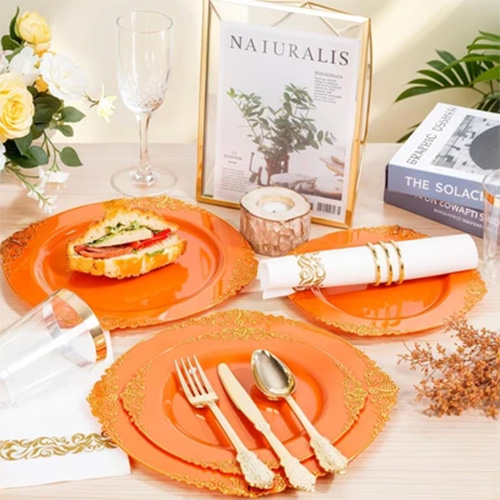
Wonderfulparty provides Orange & Gold 175-Piece Disposable Tableware Set
Which Serving, Display, and Cleanup Supplies Complete the Packing List?
Serving and display supplies support the food stations that guests interact with directly. Serving trays, platters, tongs, large spoons, and table covers should be packed with the same priority as guest-facing items. Without these pieces, buffet lines stall and food presentation suffers.
Cleanup items close the loop. Trash bags, recycling bags, paper towels, and wet wipes are part of the tableware system because they keep dining surfaces usable throughout the event. Ordering all supplies in bulk well before the event date prevents last-minute shortages and ensures that every category is fully stocked when packing day arrives.
How Much Single-Use Dinnerware Should Be Packed per Guest?
The safest quantity rule is a calculation that starts with one complete set per guest and then adds a controlled reserve of ten to twenty percent to cover spills, drops, second servings, extra drinks, and minor attendance changes.
Guests misplace cups, children use more napkins than expected, and multi-hour gatherings create higher turnover as attendees refresh drinks and replace soiled items more frequently than at a short indoor meal. The reserve should therefore be distributed unevenly rather than duplicated identically across all products. Napkins and cups typically need the largest buffer, followed by plates and cutlery. Serving utensils and trays need fewer extras, but at least one backup per category is wise for large or multi-course events. A clearly labeled reserve bin, kept separate from the main setup supply, prevents the backup stock from being opened prematurely or confused with active inventory.
Which Disposable Tableware Materials Travel Best for Outdoor Use?
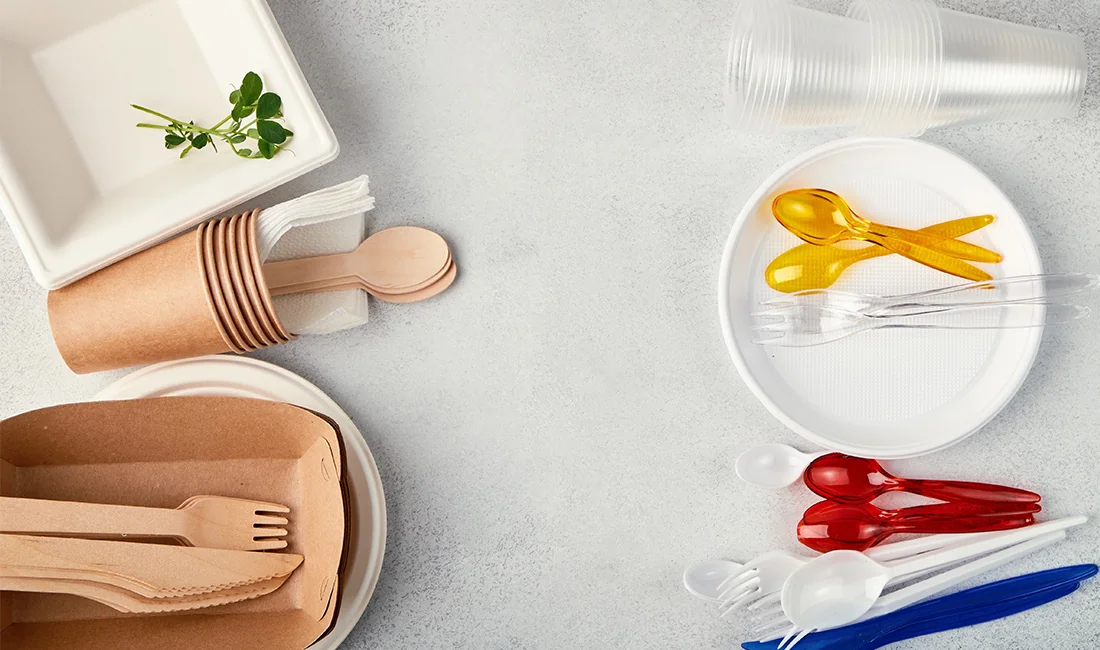
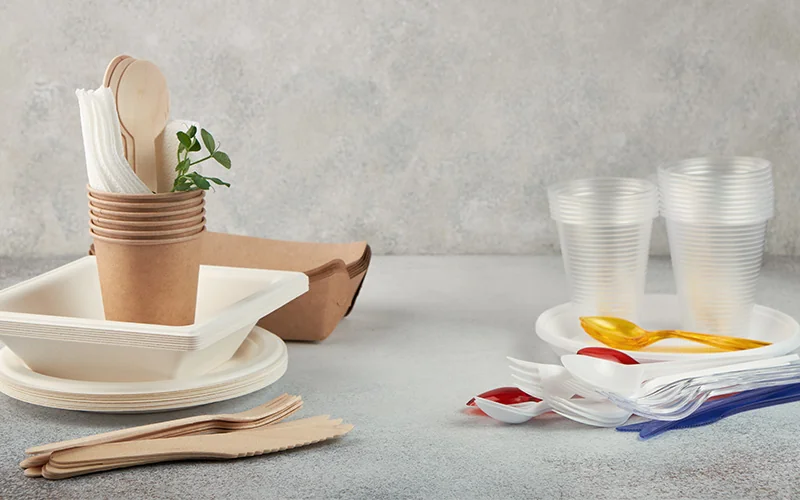
The most travel-friendly disposable tableware material is premium plastic—a category of durable, moisture-resistant, and structurally stable products that maintain shape, cleanliness, and appearance through packing, transport, and extended outdoor exposure far more reliably than paper-based alternatives.
Paper products are efficient when the menu is light and the weather is calm. However, they absorb moisture, soften under humid conditions, and compress or bend when packed under heavier items. If the event involves sauces, oily foods, or a long drive to the venue, paper goods require extra protective layering to arrive in usable condition.
Premium plastic products handle demanding conditions more effectively. They resist moisture, hold their shape through stacking and transit, and perform consistently at drink stations, buffet lines, and multi-hour outdoor service. The material decision should come from function first—matching the food type, the weather forecast, and the transport distance—rather than from habit or price alone.
What Are the Advantages and Disadvantages of Different Packing Methods for Event Dinnerware?
A packing method is an organizational system that determines whether items are grouped by product category or by functional station, each approach carrying distinct advantages and trade-offs depending on event size, helper count, and venue layout.
When Does Category-Based Packing Work Best?
Category-based packing groups all plates together, all cups together, all cutlery together, and so on across separate labeled containers. The advantage is simplicity: inventory is easy to count, restocking during the event is straightforward, and any helper can locate a specific item type quickly. The disadvantage is that setup requires a secondary distribution step—someone must carry the right quantities from each category bin to each station, which slows the process at larger venues.
Category-based packing works best for smaller casual events where the setup team is small and the venue layout is simple.
When Does Station-Kit Packing Work Best?
Station-kit packing assigns each functional area its own self-contained box—a drink station kit with cups, beverage napkins, and straws; a buffet kit with serving trays, utensils, and labels; a cleanup kit with trash bags, wipes, and paper towels. The advantage is speed: each zone can be set up independently without waiting for items from a central supply. The disadvantage is that initial packing takes longer, and reallocating items between stations is less flexible if the event layout changes on arrival.
Station-kit packing works best for larger multi-zone events with multiple helpers who can unload and build stations simultaneously.
How Should Plates, Cups, and Cutlery Be Packed to Prevent Damage in Transit?
Plates, cups, and cutlery should each be packed according to their physical shape—plates flat-stacked in rigid containers, cups nested into stable columns, cutlery bundled or pre-grouped—to arrive clean, intact, and ready for immediate setup.
How Should Plates and Bowls Be Stacked for Transport?
Plates and bowls should be separated by size and purpose before stacking. Dinner plates and dessert plates belong in different stacks so the setup team opens the correct size first. Flat-bottom rigid containers reduce edge damage, and lighter plate styles benefit from snug packing rather than loose placement in oversized boxes. Bowls follow the same principle: nesting by size inside a stable container prevents shifting during transport.
How Should Cups and Drinkware Be Nested for Safe Transit?
Cups should be nested into stable vertical columns rather than dropped loosely into large boxes. Specialty drinkware such as wine glasses benefits from a separate compartment or protective divider layer that prevents scratching and preserves the polished appearance expected at formal outdoor events. Lids or sealed covers over each column keep dust and debris out during the drive to the venue.
How Should Cutlery and Napkins Be Bundled Before Transport?
Cutlery should be packed either by type—all forks together, all knives together—or as pre-assembled place settings. Pre-rolling a fork, knife, and spoon inside a napkin and securing the bundle with a band or ribbon creates a grab-and-go unit that speeds table setup significantly. Serving utensils belong in a separate group because they travel to the food area, not to guest place settings. Napkins not used for bundling should remain sealed in their original packaging, stored in more than one pack so only the needed quantity is opened on-site.
How Can Tableware Stay Hygienic During Outdoor Transport?
Hygiene during transport depends on sealed storage and deliberate separation. All dining items should remain in closed containers or original packaging until setup begins. Clean tableware should never share a container with cleaning chemicals, wet wipes, or used supplies. Keeping food-contact items elevated above floor level inside the vehicle and away from direct contact with coolers or ice chests also reduces contamination risk during the drive.
How Can Outdoor Party Supplies Be Protected from Wind, Heat, and Moisture?
Outdoor party supplies stay protected when hosts combine three defenses: delayed unpacking for wind-prone items, sealed storage for moisture-sensitive goods, and shaded staging for heat-vulnerable materials.
Wind protection starts with timing. Napkins, cups, and loose accessories should stay sealed until tables are nearly ready for guests. At the table level, tablecloth clips, corner weights, double-sided adhesive strips, and elastic-fit table covers hold surfaces in place against gusts. Securing cups with grouped placement or weighted bases also prevents tipping at exposed drink stations.
Moisture protection relies on sealed bins and bags. Paper goods should remain in closed containers until the moment of use, and backup stock should never sit directly on damp grass or wet ground surfaces.
Heat protection depends on transport and staging choices. Supplies should not remain in a sun-heated vehicle longer than necessary. Shade, covered staging areas, and late-phase unloading all reduce the chance that tableware loses structural integrity or visual quality before guests arrive.
What Packing Mistakes Are Most Likely to Ruin Disposable Dinnerware at an Outdoor Event?
Four recurring mistakes account for most packing failures: underpacking, overmixing, underprotecting, and forgetting support items—each capable of creating shortages, damaging supplies, or slowing setup at the venue.
Underpacking hits napkins and cups first because these items face the highest per-guest consumption rate. Overmixing occurs when unrelated items share a single large container and must be re-sorted on-site under time pressure. Underprotecting happens when paper products are left exposed to humidity or when delicate drinkware is stacked beneath heavier stock. Forgetting support items—serving utensils, trash bags, wipes, or backup pieces—removes tools the team needs for smooth service and efficient cleanup.
The most reliable prevention method is a checklist-based packing system. A counted inventory list, clearly labeled containers, a separated reserve bin, and a weather-specific protection plan eliminate most of these errors before the vehicle is loaded.
How Should Leftover Party Tableware Be Sorted and Stored After an Outdoor Event?
Post-event sorting is a four-category process that separates remaining supplies into unopened stock, clean unused stock, recyclable material, and waste so that reusable inventory stays protected and the next event benefits from accurate supply data.
Unopened packages are the easiest items to reclaim because they remained sealed throughout the event. Clean backup cups, plates, napkins, and cutlery that were never exposed to food or moisture can typically be stored for future use in a dry, cool location. Damaged or contaminated items should be removed immediately to prevent cross-contamination of the remaining clean inventory.
Sorting is the final step of the packing system, not an afterthought. When the event team saves clean extras, discards compromised pieces, recycles eligible materials, and records what was used versus what survived, the next outdoor event starts with a more accurate packing list and a faster preparation cycle.