

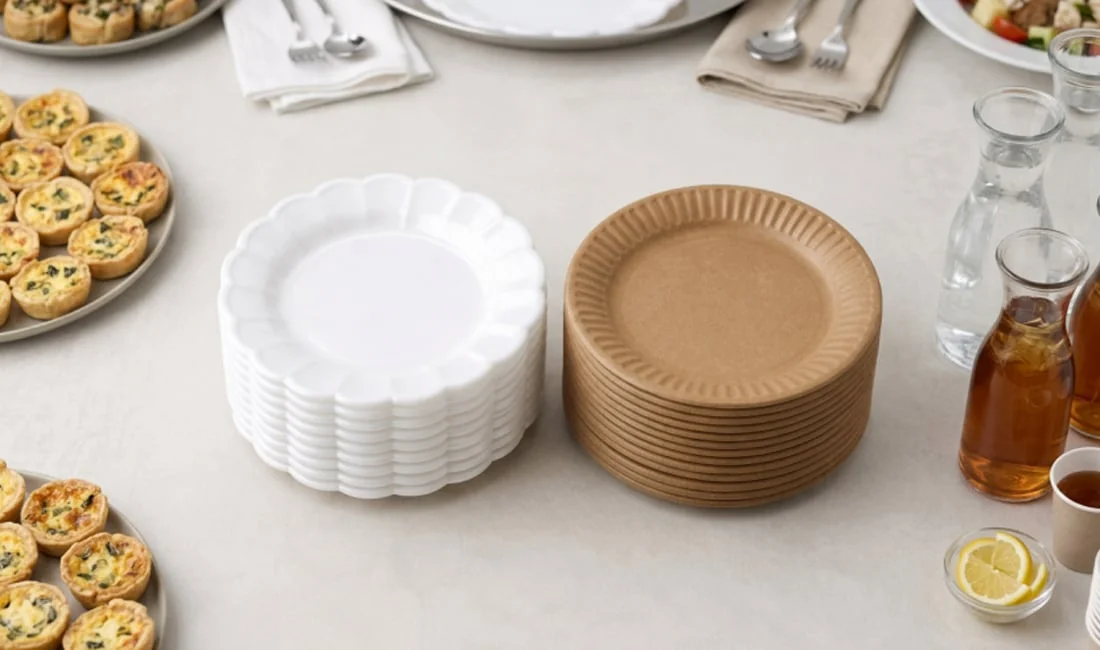
Paper and plastic are still the two most common disposable plates on any party table. The old rule said plastic was stronger and paper was greener, and that was the end of the debate. In 2026 the picture has changed, since heavy-duty paper plates have closed much of the strength gap and plastic faces tighter rules.
This guide compares the two across durability, cost, eco-impact, and food safety, then matches each one to the right event.
Paper vs Plastic Plates: The Quick 2026 Verdict
Plastic disposable plates win on raw durability, paper wins on eco-impact and entry price, and modern heavy-duty paper now handles most meals just as well. The right answer depends on the food, not on brand loyalty.
Three points sum up the 2026 state of play:
-
Plastic still leads on rigidity and moisture resistance, which matters for heavy, saucy, or outdoor meals.
-
Paper leads on cost per plate, disposal, and compostability, especially in uncoated or fiber form.
-
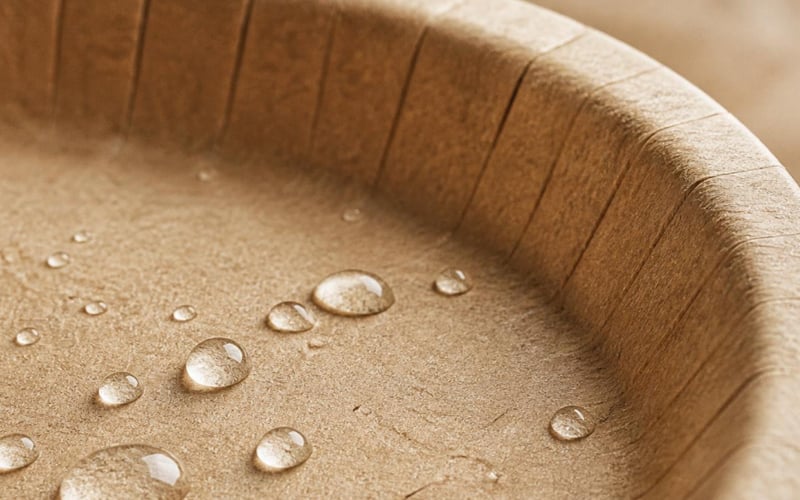
The gap has narrowed, since heavy-duty paper plates now reach 350 gsm and higher with water-based coatings that resist grease without a plastic film.
Paper vs Plastic Disposable Plates at a Glance
The table below compares the two disposable party plates across the factors that decide most purchases.
| Factor | Paper plates | Plastic plates |
|---|---|---|
| Durability | Low to high, depends on ply and coating | Consistently high, resists cracking |
| Moisture and grease | Good when coated, poor when uncoated | Excellent, no soak-through |
| Heat tolerance | Good, many are microwave-safe | Medium, varies by resin |
| Cost per plate | Lowest at entry level | Low in bulk, higher for premium looks |
| Look and feel | Casual to rustic, printable | Formal, can mimic real china |
| Decomposition | Weeks to months if uncoated | Roughly 200 to 500 years |
| Recycling or composting | Compostable if uncoated, else landfill | Recyclable only if single-resin and accepted locally |
| Best for | Casual, dry, eco-minded events | Heavy, saucy, formal, outdoor events |
Each row deserves a closer look, since the details decide which plate suits a specific party.
Durability: Which Disposable Plate Holds Up Better?
Plastic plates resist bending, cracking, and sogginess best, while heavy-duty coated paper now rivals them for most meals. Durability is the one area where plastic keeps a real edge, though the size of that edge depends on the paper plate being compared.
Plastic Disposable Plates: Strength and Moisture Resistance
Plastic disposable plates hold their shape under a full meal. The material resists moisture and grease completely, so juices never soak through, e.g., saucy pasta, barbecue ribs, and juicy steak. A rigid plate can be carried one-handed at a standing party, which is why plastic suits buffets and outdoor events.
Premium plastic also delivers a formal look. Heavyweight plates can mimic real china with clear finishes, metallic rims, and scalloped edges, e.g., weddings, showers, and holiday dinners. That combination of strength and polish is the main reason hosts still choose plastic.
Paper Disposable Plates: Ply, Coatings, and the 2026 Upgrade
Paper plate strength varies more than any other factor in this comparison. Thin single-ply plates suit dry, light foods only, e.g., cookies, chips, and cake slices. Double-ply and laminated plates handle a full dinner without folding.
The 2026 upgrade is real. Heavy-duty paper plates now reach 350 gsm and above, and water-based coatings block grease without the plastic film older plates relied on. These plates handle hot and moderately saucy food, which used to be plastic-only territory. The lesson for buyers is simple: compare paper plates by weight and coating, not by the word “paper.”
The Double-Stacking Test for a Weak Plate
Guests reveal a weak plate without saying a word. Reaching for a second plate to stack under the first is the clearest signal the plate cannot carry the meal. That habit is worth watching, because it doubles the number of plates a party uses.
Double-stacking also destroys the savings that made the cheap plate attractive. A plate that needs a partner costs twice its listed price in practice. Buying one sturdy plate beats buying two weak ones, both for the budget and for the waste bin.
Cost Compared: Price Per Plate vs Price Per Use
Basic paper and bulk plastic cost the least per plate, but the real cost depends on how many plates each guest actually uses. Sticker price alone is a poor guide, since a weak plate quietly doubles the count.
Sticker Price vs Real Per-Guest Cost
The honest number is cost per use, not cost per plate. A cheap plate used two at a time costs the same as a sturdy plate at twice the price, e.g., two $0.10 plates versus one $0.20 plate. Uncoated paper is cheapest on the shelf and most likely to need stacking under heavy food.
Premium plates flip the math on presentation. A china-look plastic plate or a heavy paper plate costs more per piece, yet each guest uses one, and the table looks styled rather than cheap. Matching plate strength to the menu is what keeps the real cost down.
Bulk Buying Lowers the Cost of Both Plate Types
Bulk pricing works the same way for paper and plastic. Larger packs cut the price per plate, so the cost per guest falls as the count rises. Stacking a coupon and clearing a free-shipping minimum lowers it further, and a full breakdown lives in the guide to saving on disposable tableware.
Neutral colors make bulk buying safer. Solid plates carry over to any future event, e.g., white, kraft, black, and clear. Themed prints do not, so they are worth buying in smaller counts.
Eco-Impact: Which Plate Is Greener in 2026?
Paper breaks down in weeks to months while plastic can take roughly 200 to 500 years, though coatings, forestry, and disposal complicate the comparison. Paper wins the headline, but neither plate is impact-free.
Plastic Plates: Microplastics and Recycling Limits
Plastic plates are made from fossil fuels, and they do not break down in a landfill. Over time they fragment into microplastics that spread through soil and water, which is the core environmental objection. Recycling helps only when the plate is a single resin and the local program accepts it, and many programs do not.
Regulation is tightening as well. A growing list of cities and states restricts single-use plastic foodware, so availability and rules vary by location. Checking local requirements matters most for public events, schools, and venues.
Paper Plates: Compostability, Coatings, and PFAS
Paper is renewable and breaks down far faster, yet its footprint is not zero. Producing paper plates consumes trees, water, and energy, and plates buried in a landfill release methane as they decompose. Sourcing matters, since a significant share of commercial paper plates comes from forests that are not sustainably managed.
Coatings create the biggest paradox. A wax or polyethylene coating makes a paper plate grease-resistant, and that same coating can block composting and recycling. The 2026 improvement is the shift toward water-based coatings and PFAS-free products, which keep the performance without the disposal penalty. Reading the label for compostability certification is the only reliable check.
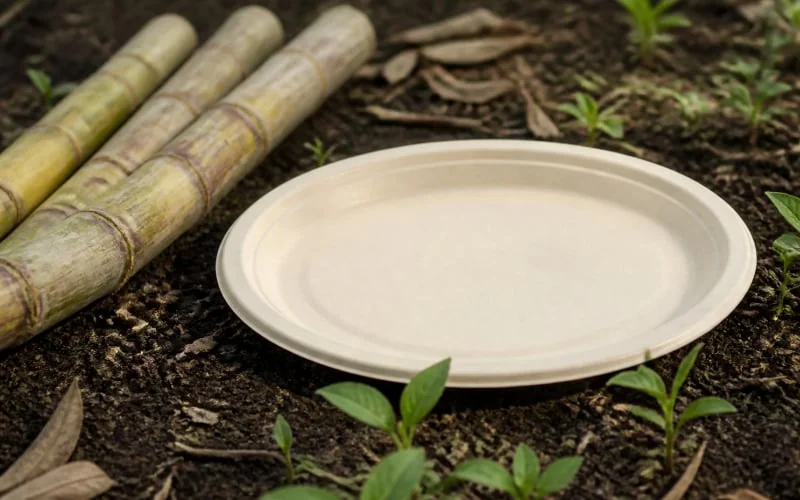
Where Bagasse Plates Sit Between Paper and Plastic
Bagasse plates are the practical middle ground. Bagasse is the fiber left after sugarcane is pressed, so the plate is made from a byproduct rather than a felled tree. It is compostable, naturally grease-resistant, and safe in the microwave and freezer.
Performance is what makes it more than a compromise. Bagasse holds hot, oily food that would defeat a thin paper plate, without the disposal problem of plastic. The full material lineup, including bamboo and palm leaf, is covered in the disposable plates buying guide.
Health and Food Safety For Disposable Tableware: BPA, PFAS, and Coatings
Food-safe disposable plates are BPA-free, PFAS-free, and used within their stated heat limits. Both materials are safe when made to food-grade standards, so the label matters more than the material.
Three checks cover most concerns:
-
Plastic plates should be BPA-free, and only plates marked microwave-safe belong in a microwave.
-
Paper plates should be PFAS-free, since older grease-proofing chemistry is being phased out.
-
Heat limits apply to both, so hot food belongs on a plate rated for it.
A deeper breakdown of heat limits and food-grade materials lives in the disposable tableware safety guide.
Which Disposable Plates to Choose by Event and Menu
Match the plate to the food, the setting, and the sustainability goal. Most hosts land on the right answer after considering the menu alone.
Pick Plastic Party Plates for Heavy, Saucy, or Formal Meals
Plastic is the safer pick when the meal is heavy or wet, e.g., barbecue, curry, carved meats, and loaded buffet plates. It also suits standing events where guests balance a plate in one hand. For a formal table, a china-look plastic plate delivers the most polish per dollar.
Pick Paper Party Plates for Casual, Dry, or Eco-Minded Gatherings
Paper is the better pick for lighter menus and larger crowds, e.g., cake, pizza, snacks, and dessert bars. It costs less per plate, prints well for themed parties, and composts when uncoated or fiber-based. For a hot or greasy menu on a green budget, a bagasse plate covers both needs.
Complete the Table with Matching Drinkware, Bowls, and Servingware
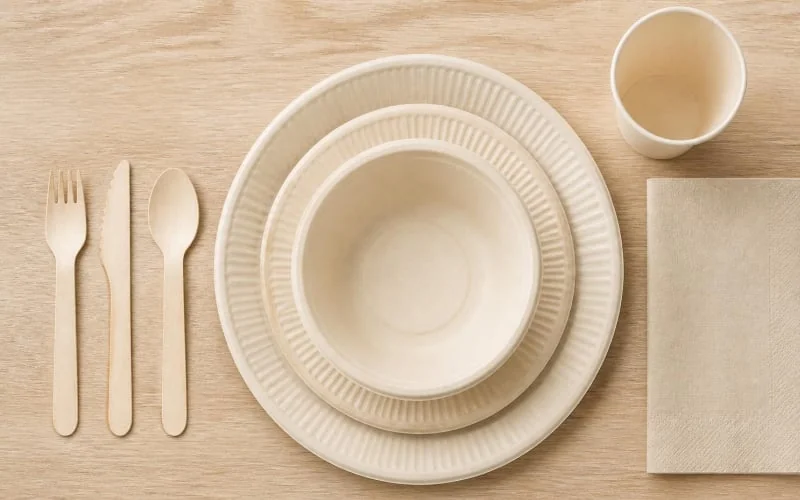
A plate rarely goes out alone. Coordinated disposable drinkware, bowls, and flatware finish the place setting and keep the palette consistent. Servingware and accessories handle the rest of the table, e.g., napkins, serving trays, and table covers. A disposable dinnerware set bundles these pieces at one price and removes the guesswork from counts.
Paper vs Plastic Plates FAQs
Which is cheaper, paper or plastic plates?
Basic paper plates cost the least per plate, while bulk plastic closes the gap at larger counts. Cost per use is the fairer comparison, since weak plates get double-stacked.
Which is more eco-friendly?
Paper is more eco-friendly overall, because it breaks down in weeks to months instead of centuries. Uncoated or bagasse plates are the greenest versions, since coatings can block composting.
Are paper plates strong enough for hot food?
Heavy-duty coated paper and bagasse plates handle hot food well. Thin single-ply plates do not, so they suit dry snacks and desserts.
Can plastic plates be recycled?
Some can, when the plate is a single resin and the local program accepts that resin. Many curbside programs do not take disposable plates, so local rules decide.
Are paper plates microwave-safe?
Many are, and the label confirms it. Plates with metallic trim never belong in a microwave.
Paper or plastic for a wedding?
Premium plastic delivers the most formal, china-like look for a plated meal. Heavy paper or bagasse suits a rustic or outdoor reception with a lighter menu.
The Bottom Line on Paper vs Plastic Plates
The 2026 comparison is closer than it has ever been. Plastic still holds the durability crown for heavy and formal meals, while paper wins on price, disposal, and everyday casual use. Heavy-duty paper and bagasse now cover much of the middle, which gives hosts a strong option that performs well and composts. Matching the plate to the menu, then buying it in bulk, delivers the best result on every measure.
Both materials earn a place at the table. Wonderful Party shelves paper and plastic disposable plates side by side, along with the bowls, cups, and napkins to match whichever one the menu calls for.