

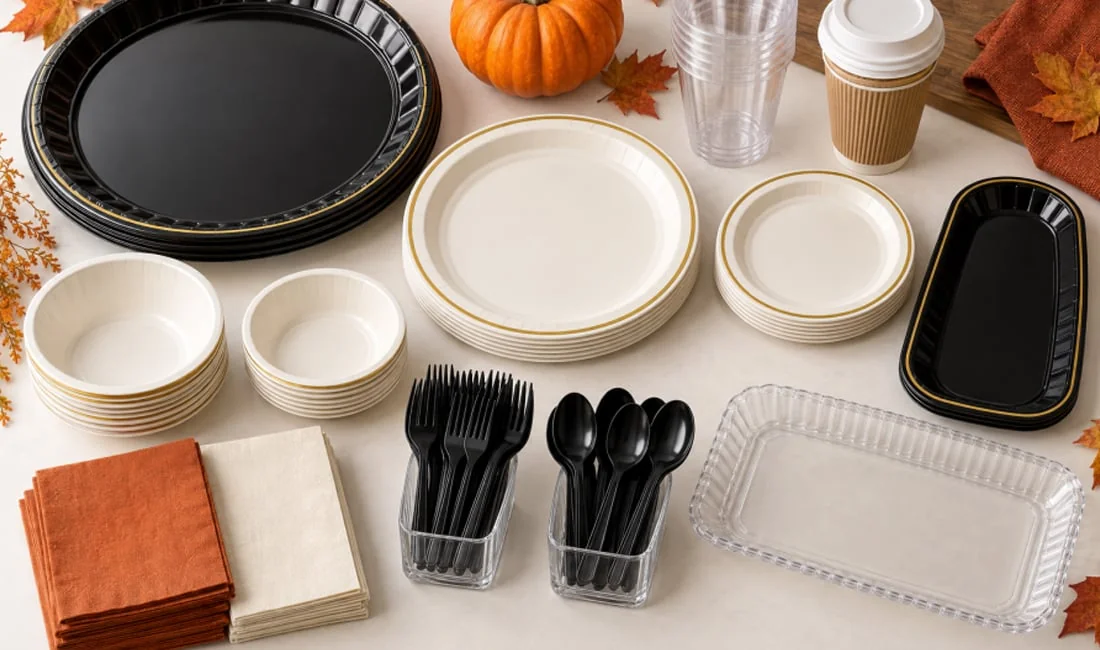
A pumpkin carving party is easy to enjoy and just as easy to underestimate. Every pumpkin brings seeds, wet pulp, sticky hands, carving scraps, and a finished jack-o’-lantern that needs a safe place to stand. Add snacks and drinks to the same room, and an unplanned table can become crowded within minutes.
The most useful pumpkin carving party ideas solve these practical problems before guests arrive. This guide explains how to choose, count, and arrange disposable trays, plates, bowls, cups, napkins, and serving pieces for a cleaner table and faster cleanup.
Disposable Tableware Checklist for a Pumpkin Carving Party
A carving party does not need a full formal place setting at every seat. It needs the right items in the right zones. Carving supplies should contain wet waste, while food-service items should keep snacks and drinks away from the work area.
Disposable Party Trays for Seeds, Pulp, and Carving Scraps
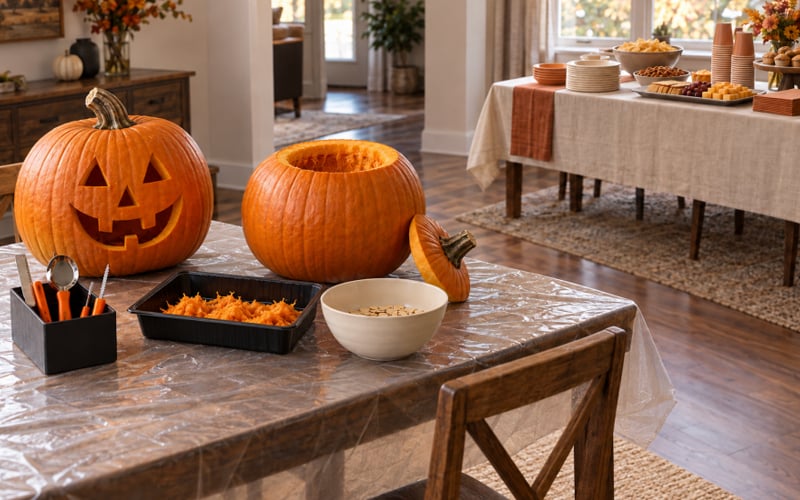
Use rimmed trays to collect seeds, pulp, moisture, and small carving scraps. Place one beside each pumpkin or between two carvers, while keeping the pumpkin itself on a stable, covered work surface. Check the tray’s size and rigidity before use; a light serving tray may not support a large pumpkin safely.
Disposable Bowls for Shared Snacks and Dips
Disposable bowls help organize foods that do not sit well on flat plates. Popcorn, candy, crackers, dips, and small toppings are easier to serve in bowls with enough depth. Separate bowls also keep different foods from spreading across a crowded buffet.
Bowls used for food should stay in the food area. A bowl that has collected pumpkin pulp or carving scraps should never return to food service, even if it still looks clean.
Disposable Party Plates for Finger Foods and Desserts
Most carving parties work well with snack-size or dessert plates because guests often eat before, after, or between carving steps. Small plates suit cookies, brownies, sliders, cheese, fruit, and other easy-to-hold foods. Larger plates may be needed when the menu includes chili, sandwiches with sides, or a full meal.
The key is to match the plate to the food. Wet, oily, or heavy dishes need more support than dry cookies or wrapped candy. Product size, material, and intended use should guide the choice rather than color alone.
Disposable Drinkware for Party Beverages
Place cups at a separate beverage station to reduce traffic around the carving table. Choose the cup type from the planned drinks, including whether they will be served cold or warm. Not every disposable cup is suitable for every beverage.
Plastic Cutlery, Napkins, and Disposable Serveware
Choose cutlery to match the menu instead of adding a full set by default. Forks may be enough for cake or soft desserts, while spoons may be needed for chili, soup, dips, or dessert bowls. Standard plastic cutlery is not a pumpkin carving tool.
Plan more napkins than for a standard snack table, since guests may need them for spills as well as food. Serving trays, bowls, and other suitable serveware can also make a self-serve table easier to manage.
How to Choose Disposable Trays, Plates, and Cups
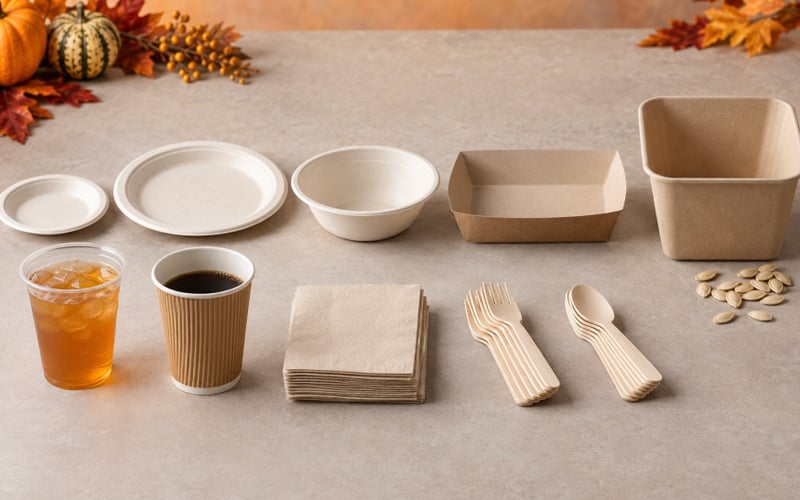
Once each item has a clear role, compare the features that affect its performance. Size, shape, strength, and intended use matter more than Halloween styling alone.
Choose Rimmed Trays With Enough Strength and Depth
For pumpkin seeds and pulp, raised edges matter more than decorative detail. The collection tray needs enough depth and room to avoid being carried while overfilled. Wet pulp adds weight, so check its dimensions and construction before use. For food service, party trays can organize snacks and shared dishes when their specifications match the menu. Keep wet scraps in a separate, clearly marked collection container.
Match Plate and Bowl Sizes to the Menu
A snack-only menu may need dessert plates and shared bowls. A meal with chili, soup, or several sides may require dinner plates, individual bowls, and suitable cutlery. Writing the menu first and assigning a serving piece to each dish quickly reveals what is needed, including whether the event requires more than one plate size.
Check Strength, Leak Resistance, and Intended Use
Terms such as sturdy, premium, or heavy-duty can vary between products. Compare the listed material, dimensions, product description, and use instructions for the exact item. If the description does not clearly cover wet, oily, or hot foods, confirm its intended use before ordering.
Confirm Cup Temperature Limits Before Serving Warm Drinks
Warm cider and cocoa require cups made for the planned serving temperature. Product specifications—not appearance or thickness—should guide the choice, and drinks should be heated in suitable equipment before serving.
Compare Individual Products With Disposable Dinnerware Sets
Individual products offer more control over quantities, while coordinated dinnerware sets can simplify a larger event or full meal. However, a set’s total piece count is not its guest capacity. Count plates, cups, napkins, and each utensil separately.
How Much Disposable Tableware Should Be Prepared?
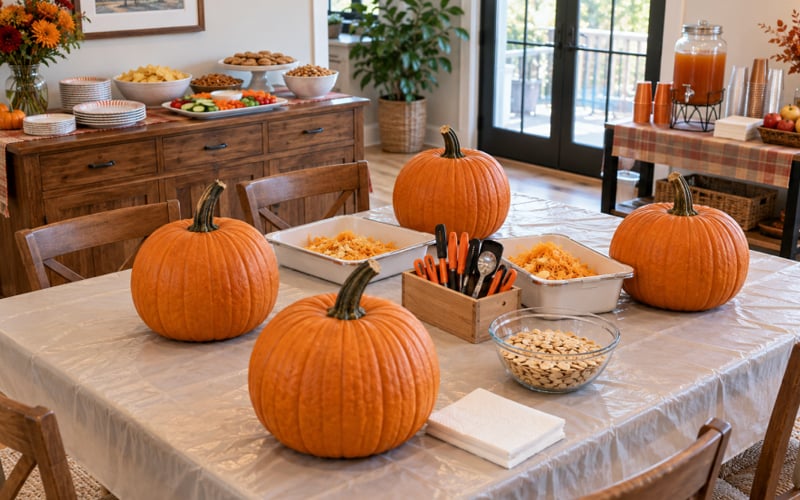
Once the product types are settled, quantity becomes the next decision. Start with the number of carving stations, then adjust the food-service count to the menu, guest ages, serving schedule, and pack sizes. The figures below are planning baselines, not fixed rules.
|
Item |
Practical starting point |
When to adjust |
|---|---|---|
|
Collection trays |
One per carving station or small pair of carvers |
Add more for large pumpkins or limited table space |
|
Seed bowls |
One per station if the seeds will be saved |
Skip or reduce if seeds are not being separated |
|
Snack plates |
One per guest for one service period |
Add a second plate when dessert is served later |
|
Meal plates or bowls |
One per guest for each course that needs one |
Match the count to the actual menu |
|
Cups |
One per guest when cups can be identified |
Add more when several drink types need separate cups |
|
Cutlery |
One suitable utensil per guest for each dish that needs it |
Do not buy full sets when the menu uses only forks or spoons |
|
Napkins |
More than for a standard snack party |
Increase the reserve for children, dips, and self-service drinks |
Count Carving Trays Separately From Food-Serving Trays
Count carving containers and food trays as separate groups from the start. Labels, different colors, or distinct locations can help guests recognize each group. Keep replacement collection trays near the work area and backup serving pieces near the food station.
Estimate Plates, Bowls, Cups, and Cutlery From the Menu
The menu gives a more accurate count than the guest list alone. Ten guests eating finger foods may need ten small plates and few utensils. Ten guests eating chili and dessert may need bowls, spoons, dessert plates, and more napkins. A later dessert service may also call for a fresh small plate.
Add a Practical Reserve for Spills and Replacements
A modest reserve covers dropped cups, damaged plates, unexpected guests, and collection containers that fill early. One small unopened backup pack may be easier to manage than a large loose stack. Keeping it sealed protects clean leftovers for another event.
How to Set Up Disposable Tableware for Less Mess
After quantities are planned, placement determines how smoothly the tableware works. One of the most practical pumpkin carving party ideas is to use separate zones for wet carving work and ready-to-eat food.
Give Pumpkin Seeds and Pulp Separate Trays or Bowls
If the seeds will be saved, provide one clearly marked bowl for seeds and another container for pulp and scraps. Place them within easy reach, without requiring guests to pass wet waste over another person’s hands or tools.
Keep Disposable Party Plates Away From the Carving Area
Place food plates on a separate table, counter, or cart whenever space allows. In a small room, serve food before carving and clear it before tools come out, or wait until the tools have been collected and the worktable wiped.
Place Disposable Drinkware at a Separate Beverage Station
A beverage station away from the carving table gives guests room to fill cups without reaching over tools or plates. Keep cups, drinks, napkins, stirrers, and any needed lids together. Name labels can reduce mix-ups and unnecessary replacements.
Keep Extra Dinnerware Covered Until Needed
Set out only what guests need at first. Keep extra plates, bowls, cups, and cutlery in their original packaging or a closed container so they stay clean and the remaining stock is easy to track. Protect replacement collection trays from splashes until needed.
Easy Foods for Disposable Party Plates and Bowls
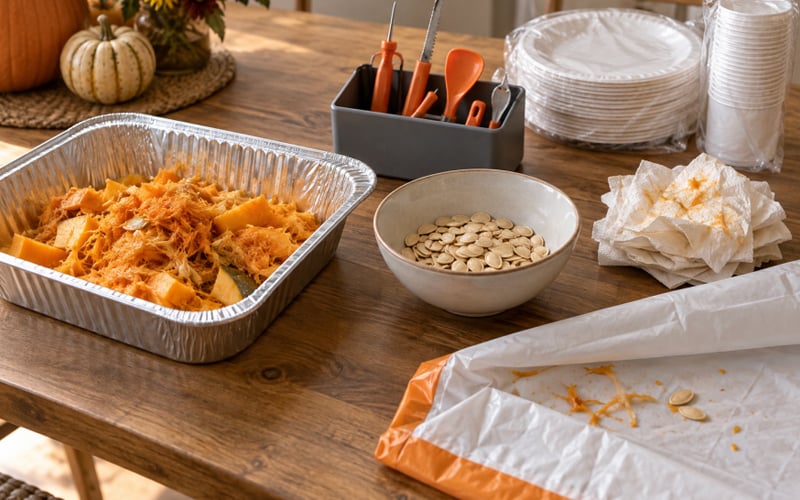
Food is a supporting part of the event, so choose a short menu that fits the tableware and stays at the food station.
Choose Dry, Bite-Size Foods for Small Plates
Cookies, brownies, fruit, cheese, crackers, mini sandwiches, and sliders fit small plates and need little cutlery. Keep sticky sauces and foods that require cutting at the food table with the right plate and utensils.
Use Disposable Bowls for Dips, Popcorn, and Candy
Shared bowls keep popcorn, chips, candy, and dips contained, while individual bowls work better for chili, soup, or desserts that cannot sit on a plate. Match each bowl to the food’s weight, moisture, and serving temperature.
Serve Desserts on Small Plates or Dessert Bowls
Dessert plates suit cake, cookies, donuts, and brownies, while dessert bowls provide more depth for pudding, ice cream, or fruit. Serving dessert after carving creates a useful pause for collecting tools and clearing the work area.
Match Disposable Drinkware to Each Beverage
Cold punch, juice, and water may use one type of drinkware, while warm or adult beverages may need a different cup. A single cup can serve several planned drinks only when its specifications support each use.
Mess-Free Cleanup With Disposable Trays and Party Supplies
The same zone system also makes cleanup easier. Planned collection points keep wet waste from moving around the room and make the final cleanup more controlled.
Separate Pumpkin Seeds, Pulp, and Food Waste
Keep seeds in a clean bowl if they will be roasted, and place pulp and food waste in their assigned containers. Local disposal rules vary, so check both the product label and local guidance before recycling or composting disposable items. Never return a tray or bowl that has held pumpkin waste to food service.
Replace Full Trays and Clean Spills During the Party
An overfilled tray is harder to lift and more likely to spill. Check the carving area at natural pauses, replace containers before waste reaches the rim, and wipe small spills before they spread beneath tools or pumpkins. Guests should wash and dry their hands before returning to food or using carving tools.
Collect Sharp Tools Before Clearing Disposable Tableware
Carving tools should be gathered and counted before table covers, trays, or loose waste are moved. This prevents a small blade or serrated tool from being hidden inside pulp, napkins, or folded coverings.
Adults should handle cutting when children are present and follow the instructions supplied with the carving kit. Younger guests can draw designs and help scoop seeds and pulp with a spoon. Plastic table knives and disposable flatware should be used for food only, not as substitutes for carving tools.
Roll Up Surface Covers and Wipe Down the Table
After tools and finished pumpkins are removed, place loose waste in the correct container and fold or roll a disposable table cover inward to contain debris. Disposable tableware reduces washing, but the covered work surface still needs cleaning.
Common Disposable Tableware Mistakes to Avoid
Before checkout, confirm the purpose, size, material, temperature rating, and piece count of each item. These quick checks prevent the most common ordering mistakes.
Using Flat or Flimsy Plates for Wet Pumpkin Pulp
Flat or flexible plates can spill wet, stringy pulp. Use a separate rimmed container whose construction suits the load.
Selecting Disposable Tableware by Color Alone
Color comes after size, strength, menu fit, and intended use. A coordinated table still needs products that perform their assigned jobs.
Mixing Waste Containers With Food-Serving Pieces
Use labels, colors, or separate locations so a food tray cannot be confused with a pulp container. Once a piece has held carving waste, keep it out of food service.
Assuming Every Cup Can Hold Hot Cider or Cocoa
Appearance and thickness do not confirm heat suitability. Use the product label or specification to choose drinkware for warm beverages.
Counting Total Pieces Instead of Complete Guest Settings
A 100-piece package may include several items per guest. Divide the contents by item type and compare each count with the menu and guest list.
FAQs About Pumpkin Carving Party Tableware
When Should Disposable Tableware Be Ordered for an October Party?
Order once the guest count and menu are reasonably clear. Check current inventory, pack size, order volume, and the supplier’s delivery estimate, especially when matching seasonal colors are important. Leave time to inspect the order and address any missing or damaged pieces before the event.
Are Charger Plates Suitable for Collecting Pumpkin Pulp?
Do not assume that a charger plate can replace a collection tray. Check the exact product’s dimensions, rim, construction, and intended use. A separate, clearly marked container made for the weight and moisture of pumpkin waste is the better choice when those details are not confirmed.
Can Disposable and Reusable Serveware Be Used Together?
Yes. A party can combine reusable serving dishes with disposable guest tableware when that arrangement suits the menu and cleanup plan. The host should decide which pieces will be washed, which will be discarded, and where each group will be collected after service.
Can Disposable Tableware Be Set Out the Night Before?
It can be arranged early if the room is clean and the items stay covered and dry. Keep food-contact pieces in their packaging or under a clean cover, and wait to place them near the carving area until that area is ready for guests.
Choose Disposable Tableware for a Cleaner Pumpkin Carving Party
A practical pumpkin carving setup starts by separating carving waste from food service. Rimmed trays contain seeds and pulp, plates and bowls support the menu, suitable cups handle the planned drinks, and a small reserve covers spills without creating unnecessary excess.
Count the carving stations and finalize the menu before comparing sizes and pack counts. Then explore Wonderful Party for coordinated trays, plates, bowls, drinkware, and serveware that fit both the table style and the job each piece needs to do.