

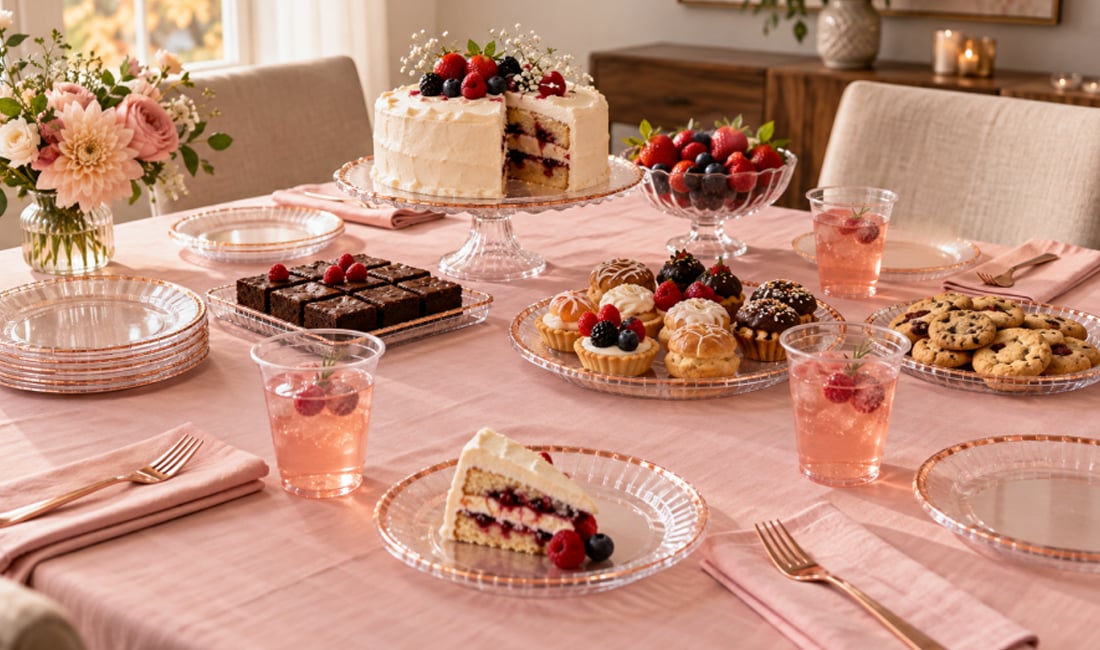
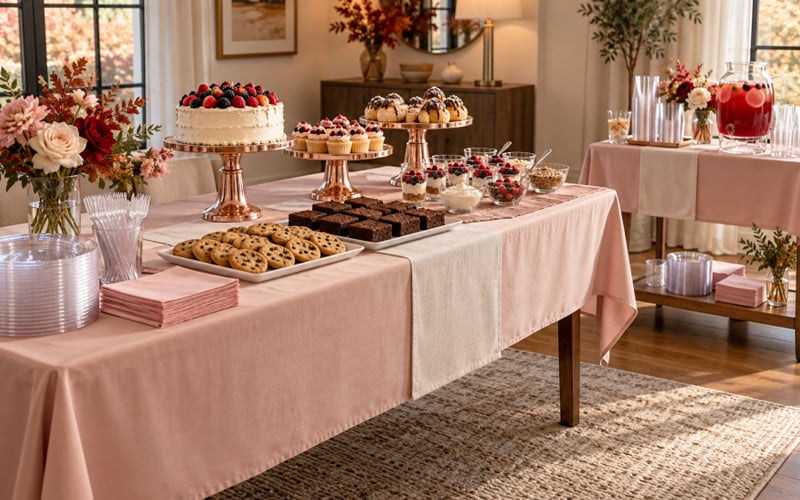
Sweetest Day falls on the third Saturday in October. The occasion began as a way to share kindness through small gifts and thoughtful acts. Today, it may be marked with a partner, family, friends, coworkers, or anyone who deserves a little appreciation. A table filled with cake, cookies, fruit, and drinks fits that spirit naturally.
The food may be simple, but the tableware still matters. A soft slice of cake needs a different serving piece from a cup of punch or a bowl of ice cream. Guest count, dessert texture, and serving style also affect what should be ordered.
With the right disposable dessert plates, cups, bowls, napkins, and cutlery, the spread can look polished without creating a sink full of dishes. The following guide explains how to match each piece to the menu and arrange everything for smooth service.
Plan the Sweetest Day Dessert Spread Before Choosing Disposable Tableware
The menu should come first. Once the desserts and drinks are clear, it becomes much easier to select sizes, shapes, and pack quantities. This order also prevents buyers from choosing attractive tableware that does not work well with the food.
Sliced Desserts: Cakes, Pies, and Pastries
Cake slices, pie, cheesecake, and pastries need enough flat space to sit securely. A fork is usually required, while a slightly raised rim can help hold crumbs, filling, or sauce. If generous slices will be served, the plate should leave some open space around the food.
Handheld Sweets: Cupcakes, Cookies, and Brownies
Handheld treats are easier to serve, yet plates still help guests collect more than one item. Small plates keep cookies, brownies, and cupcakes together while guests move around the room. Napkins may be enough for a single dry cookie, but frosting and chocolate coatings often make a plate more practical.
Spoon Desserts: Pudding, Ice Cream, and Fruit
Soft or liquid desserts belong in bowls rather than on flat plates. Pudding, mousse, fruit with syrup, and ice cream are easier to carry in a bowl with a stable base. The opening should also be wide enough for a dessert spoon to move comfortably.
Drinks: Punch, Juice, and Sparkling Beverages
The drink list helps determine cup style and capacity. Punch and juice usually work well in simple plastic cups, while sparkling drinks may suit flutes for a more finished presentation. Ice takes up room, so cup capacity should be considered before the final quantity is ordered.
Disposable Dessert Plates for Cakes, Cookies, and Pastries
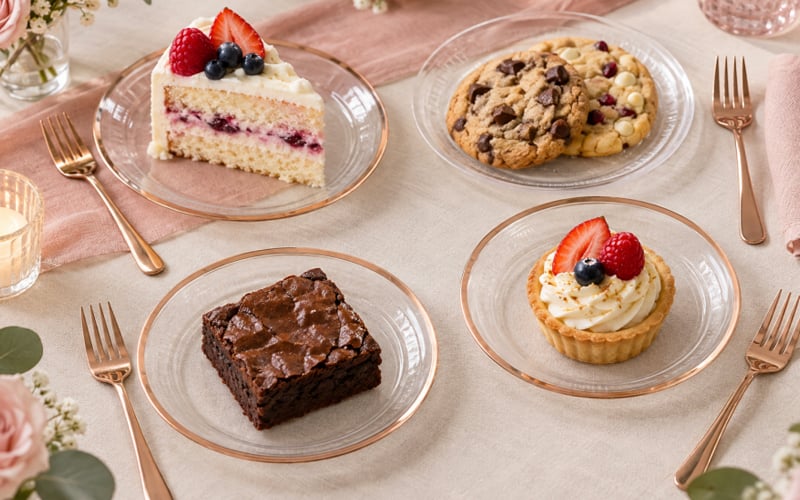
Dessert plates do more than hold food. Their size shapes portions, their strength affects serving comfort, and their finish helps set the visual tone. For a Sweetest Day spread, the best option is the one that fits both the menu and the way guests will eat.
Small Plates for Individual Dessert Servings
A plate around 6 to 7 inches is often practical for one slice of cake, a pastry, or a few small treats. It takes up less table space than a dinner plate and is easier to carry at a standing gathering. Smaller plates also keep the dessert station from looking crowded.
Before ordering, buyers should compare the plate dimensions with the planned portions. A tall piece of cake or a wide slice of pie may need more room than a cookie-and-brownie selection.
Sturdy Plates for Frosted, Filled, or Saucy Sweets
Dry cookies place little pressure on a plate. Cheesecake, fruit-topped cake, and pastries with soft fillings are different. Their weight and moisture call for a plate that stays firm when lifted with one hand.
Strength cannot be judged by appearance alone. Product details should be checked for size, material, and intended use. A rim or scalloped edge can help contain crumbs, but it should not reduce the usable center area too much.
Plate-and-Fork Sets for a Coordinated Self-Service Table
For a larger group, matched sets can simplify ordering. Plate and fork counts are already paired, and the colors are designed to work together. This reduces the chance of buying too many plates but too few forks.
A coordinated set also gives the table a consistent look with less effort. Buyers who prefer to select pieces separately can explore disposable party plates and then match the finish with suitable cutlery and napkins.
Disposable Cups and Dessert Bowls for Drinks and Spoon Desserts
Plates cover only part of the spread. Drinks and softer desserts need containers that are easy to hold, fill, and place on a table. Clear plastic pieces are especially useful when colorful punch, layered desserts, or fruit are part of the display.
Plastic Cups for Punch, Juice, and Cold Drinks
Cup capacity should match the drink and the serving method. Smaller cups may suit a short toast or a tasting-style table. Larger cups make more sense when guests will add ice or carry a drink for longer.
Clear cups allow the color of the beverage to remain visible. A metallic rim can add detail without covering the drink itself. Whatever the style, the cup should feel stable when full and should be used only for the type of drink listed by the supplier.
Dessert Bowls for Pudding, Ice Cream, and Fruit
Dessert bowls give spoonable foods a defined portion and help keep toppings contained. They work well for pudding, mousse, fruit, ice cream, or a small sundae bar. For self-service, a short, open bowl is often easier to fill than a tall, narrow container.
Cold desserts should remain stored at the proper temperature until close to serving time. The bowls can be arranged in advance, but the food should be added according to its storage needs.
Champagne Flutes for a Sweetest Day Toast
A small toast can give the gathering a clear opening or closing moment. Plastic champagne flutes may hold sparkling wine, sparkling juice, or another cold drink approved for the product. Their narrow shape creates a different look from standard party cups.
Flutes are optional rather than essential. If several beverages will be served, one versatile cup style may be more efficient. A wider range of disposable drinkware makes it easier to compare the available shapes and capacities.
Complete the Sweet Spread With Disposable Serving Essentials
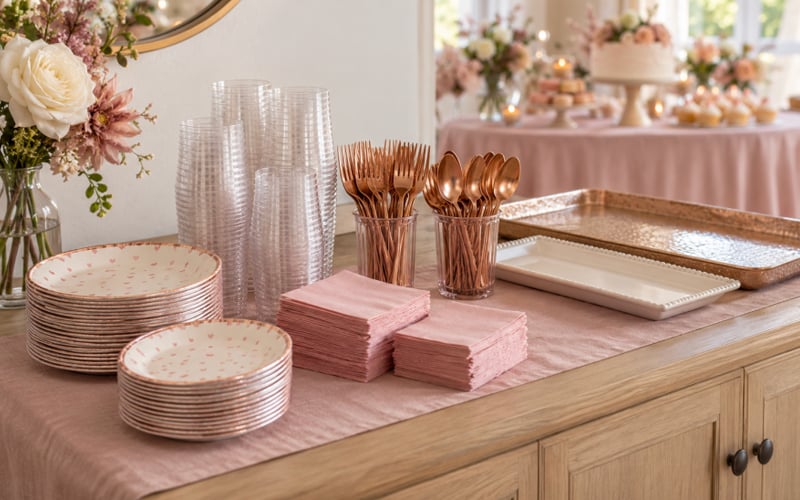
Plates and cups receive the most attention, but smaller pieces often decide whether the table works smoothly. Cutlery, napkins, trays, and serving tools should be selected at the same time as the main tableware.
Dessert Forks and Spoons for Easy Serving
The dessert list shows which utensils are needed. Forks suit cake, pie, brownies, and firm pastries. Spoons are better for pudding, ice cream, and fruit with syrup. When both types appear on the menu, both should be available rather than asking one utensil to handle every food.
Serving utensils also need a separate count. A cake server, tongs, or a large spoon should stay with its matching dessert so guests do not move tools from tray to tray.
Napkins for Frosting, Crumbs, and Spills
Dessert tables tend to create small messes. Frosting touches fingers, cookies leave crumbs, and drink stations collect drops. Several short stacks of napkins are easier to reach than one tall stack placed at the back.
Color can come through the napkins, but function remains important. They should be large enough for the foods being served and strong enough for light cleanup.
Party Trays and Serving Utensils for Refills
Trays create clear groups on the table. One may hold cupcakes, another can display cookies, and a third can carry clean cups or bowls. Separate trays also make refilling simpler because an empty piece can be removed without disturbing the full spread.
The tray size should leave room around each dessert. Crowding may save a few inches, yet it makes food harder to pick up and can damage frosting or decorations.
Sweetest Day Color Ideas for Disposable Plates and Cups
Sweetest Day does not require one fixed color palette. The right combination depends on the people, setting, and mood of the gathering. Two main colors plus one small accent are usually enough to create a clear theme.
Pink and White for a Soft, Romantic Table
Pink and white suit an intimate dessert spread without feeling heavy. White plates create a clean base, while pink cups, napkins, flowers, or sweets add warmth. The balance can be adjusted for a bright candy table or a softer adult gathering.
Rose Gold and Clear for a Polished Sweet Spread
Rose gold adds warmth and a slight shine. Clear cups and plates keep the setting light, allowing rose gold rims or forks to stand out. This pairing works well when the desserts already include several colors and the tableware should not compete with them.
Red Accents With Neutral Disposable Tableware
Red can be effective in smaller amounts. Neutral plates and clear cups may form the base, with red napkins, berries, ribbons, or a centerpiece used as accents. This approach feels seasonal while keeping the table balanced.
How to Choose Disposable Dessert Tableware for Sweetest Day
Style matters, but it should follow function. A good buying decision brings the food, guest count, table size, and cleanup plan together. Four checks can narrow the options quickly.
Match Each Piece to the Dessert Menu
The food should have a clear path from serving tray to guest. Cake needs a plate and fork. Pudding needs a bowl and spoon. Punch needs a cup that suits both the drink and any ice added to it.
This simple match prevents missing items. It also limits unnecessary purchases because every tableware piece has a defined purpose.
Compare Size, Strength, and Rim Design
Product photos show the style, but measurements provide the practical answer. Buyers should check outside dimensions, usable serving area, cup capacity, and pack count. For heavier desserts, plate stiffness is also important.
Rim design affects both appearance and space. A wide decorative rim may look elegant, though it leaves less room in the center. The portion size should therefore be considered before a highly detailed design is selected.
Coordinate Plates, Cups, Napkins, and Cutlery
Every piece does not need to match exactly. A shared finish or color is often enough. Clear cups can sit beside white plates, for example, when rose gold forks and napkin details connect the set.
This mix-and-match method gives buyers more freedom across different pack sizes. It also keeps the table from looking too uniform.
Check Product Guidance for Intended Food and Drink Use
Not every disposable cup is made for hot drinks, and not every plate is intended for microwave use. Product instructions should decide how an item is used. The same rule applies to washing, reuse, recycling, and disposal claims.
A dependable listing should state the material, dimensions, quantity, and intended application. If a detail is missing, the supplier should be asked before the order is placed, especially for hot liquids or bulk event use.
How Much Disposable Tableware Does a Sweetest Day Spread Need?
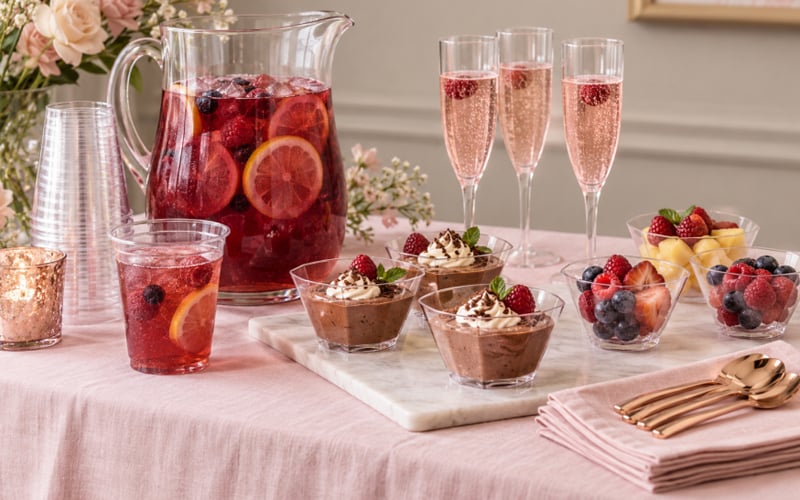
There is no single quantity that fits every dessert table. A seated dessert course uses tableware differently from an open buffet where guests may return several times. The following figures work as planning points, not fixed rules.
Count Guests and Dessert Varieties
For one planned dessert serving, one plate and the needed utensil per guest form the basic count. A self-service spread with several sweets may require more plates because some guests return with a clean plate.
Cup needs depend on beverage choice. One drink station with a single cup style is easier to estimate than separate punch, water, and toast stations. Spoon and bowl counts should follow the number of spoon desserts rather than the total number of sweets.
|
Item |
Practical starting point |
Increase the count when |
|---|---|---|
|
Dessert plates |
One per guest, plus a spare supply |
Guests may return for seconds or plates are used at several stations |
|
Drink cups |
One per guest, plus spares |
Several drinks or separate toast cups are planned |
|
Forks and spoons |
One required utensil per guest, plus spares |
The menu includes both plated and spoon desserts |
|
Napkins |
Two to three per guest |
Frosting, sauces, children, or a drink station may create more mess |
|
Serving tools |
One for each dessert that needs one |
Allergy-sensitive items or different food types must remain separate |
Allow Extras for Seconds, Spills, and Replacements
A small reserve prevents the table from running short. For plates, cups, and cutlery, roughly 10 to 20 percent above the basic count is a reasonable starting range for many gatherings. More may be needed when service lasts several hours or guests move between indoor and outdoor areas.
The spare supply should remain wrapped or covered until needed. Unused pieces can then stay clean for another suitable occasion, subject to the product’s storage guidance.
Compare Separate Packs With Complete Tableware Sets
Separate packs offer more control. They work well when the event needs many plates but only a few special cups. Complete sets, by contrast, can simplify a larger order and keep colors consistent.
Pack contents still require a careful check. A set described by its total piece count may include several types of items, so that number does not always equal the number of guests served. Buyers should review the count of each component before ordering.
How to Arrange a Sweetest Day Dessert Table for Easy Serving
A beautiful display should also be easy to use. Guests need to see where the serving line begins, find the right utensil, and move away without crossing the next person. A simple layout often works better than a crowded one.
Place Plates, Napkins, and Forks at the Starting Point
Plates belong at the natural entrance to the dessert table. Napkins and forks can sit beside them, either in short stacks or small containers. Guests can then collect the basics before reaching for food.
Spoons may stay closer to bowls and soft desserts. This makes their purpose clear and keeps the starting area from becoming overloaded.
Keep Cups Beside the Drink Station
Cups should stay near the drinks rather than between dessert trays. Separating the two stations reduces reaching and helps protect the food from small spills. If space allows, drinks can occupy a nearby side table.
Flutes for a toast can remain grouped on their own tray. Standard cups should be placed closer to everyday drinks so guests do not confuse the two.
Use Trays and Height to Keep Desserts Within Reach
Different heights add visual interest, but access comes first. Taller stands work best toward the back, while low trays should remain at the front. Each dessert needs enough space for a hand, tong, or server to reach it safely.
Height can also help organize the menu. A central cake may act as the main feature, with cookies, brownies, and small bowls arranged around it in lower groups.
Store Backup Tableware and Refills Close By
Extra plates, cups, and napkins do not need to appear in the main display. They can stay in a clean box or cabinet nearby. Refills are then easy to reach without making the table look crowded.
The same approach works for food. Smaller batches keep the display neat, while covered backup trays remain ready away from guest traffic.
FAQs About Sweetest Day Disposable Dessert Tableware
Is Sweetest Day Only for Couples?
No. Although some people celebrate it in a romantic way, Sweetest Day can include family members, friends, coworkers, and acquaintances. The occasion centers on appreciation and thoughtful gestures, so the dessert table can be designed for an intimate pair or a wider group.
Are Disposable Plastic Cups Suitable for Hot Coffee or Cocoa?
Only cups clearly labeled for hot drinks should hold coffee, cocoa, or other hot liquids. A cup designed for cold beverages should not be treated as heat-safe based on appearance or thickness. The product description and supplier guidance should always be checked first.
Can Dinner Plates Be Used Instead of Dessert Plates?
Yes, but they may be larger than the menu requires. Dinner plates take up more room on the table and can make small portions look lost. Dessert plates are usually more comfortable for cake, cookies, and pastries, while dinner plates remain useful when the sweet course follows a full meal and one coordinated set is preferred.
When Should Sweetest Day Tableware Be Ordered?
The order should be placed once the guest count, menu, and color plan are reasonably stable. Buyers also need to allow time for processing, shipping, and a final count check. Stock and delivery times vary, so the current product page and shipping policy should guide the schedule rather than a fixed number of days.
A Sweet Finish Starts With the Right Tableware
Before placing an order, buyers can make one final check:
• Is each dessert matched with the right plate, bowl, fork, or spoon?
• Are the cups suited to the drinks being served?
• Does the pack count include a practical supply of extras?
Once those answers are clear, the table is almost ready. The next step is to explore Wonderful Party‘s disposable tableware, compare the available pack sizes and finishes, and build a Sweetest Day spread prepared for every slice, sip, and second serving.