

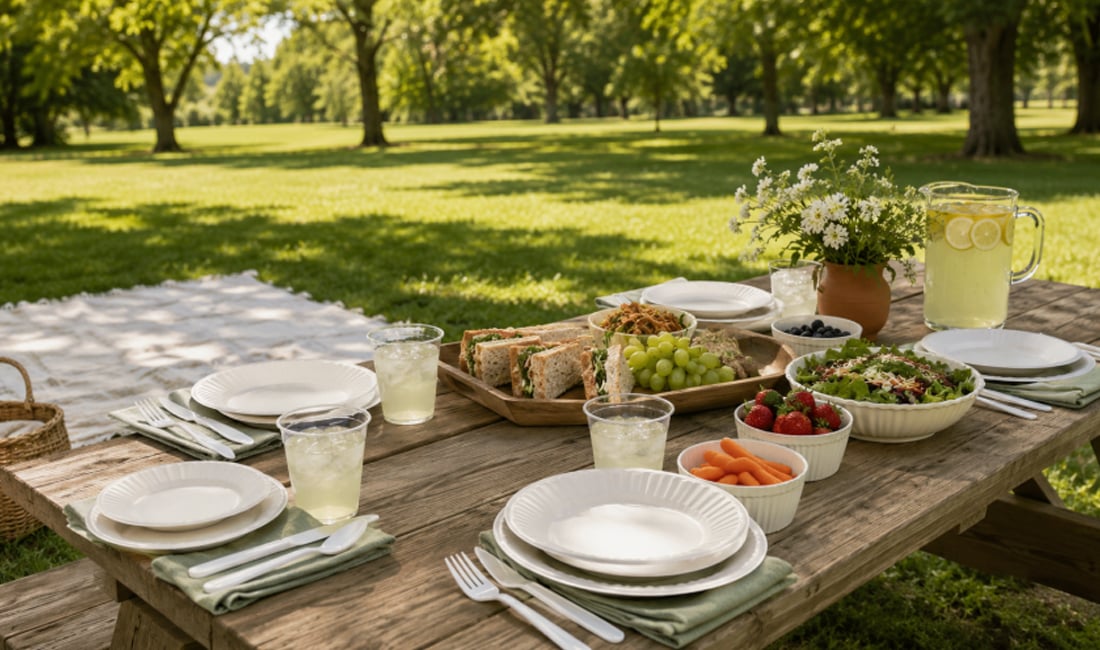
A good picnic feels simple once the food reaches the table. Before that moment, the host has to plan portions, transport, serving, food safety, and cleanup. Missing even one serving spoon or stack of cups can turn a relaxed meal into a problem.
This 2026 picnic disposable tableware checklist follows the order in which most hosts plan an outdoor meal. It starts with the menu, moves through quantities and packing, and ends with cleanup. The goal is not to pack every possible item. It is to bring the right pieces in the right numbers.
The Essential Picnic Disposable Tableware Checklist
The menu should guide the packing list. Sandwiches need less tableware than grilled food with several side dishes. A short checklist still gives every picnic a useful starting point.
| Pack | Best used for | Quick planning note |
|---|---|---|
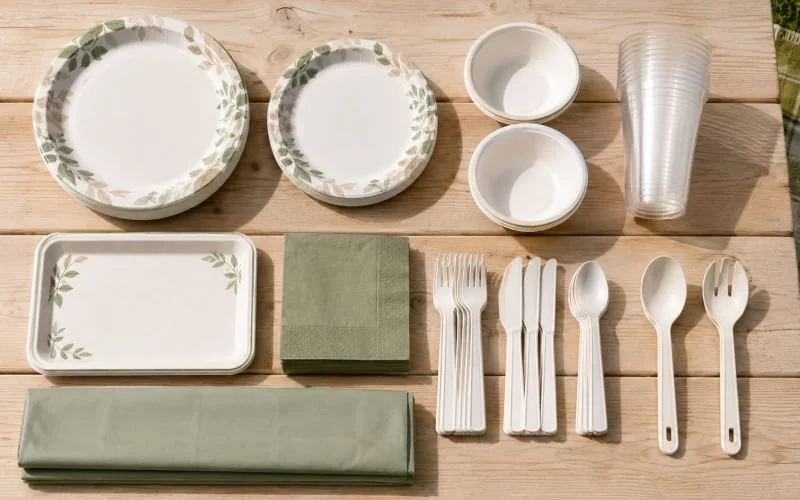
| Dinner plates | Main dishes and full meals | Choose a size that leaves room for sides |
| Small plates or bowls | Salads, fruit, desserts, dips, or soup | Pack only the shape the menu needs |
| Cups | Water, soft drinks, juice, or other cold drinks | Match the cup to the drink and serving size |
| Forks, knives, and spoons | Eating and food prep | Skip pieces the menu does not require |
| Serving utensils | Shared dishes, condiments, and desserts | Assign one clean tool to each shared dish |
| Trays or platters | Carrying and presenting food | Use pieces that fit inside the picnic container |
| Napkins | Dining and small spills | Pack more for saucy or handheld food |
| Table cover | Keeping the eating area clean | Add clips or weights for windy locations |
Disposable Plates and Bowls
Pack one dinner plate for each main serving. Add a smaller plate only when the menu includes a separate salad, snack, or dessert course. Bowls are more practical for pasta salad, fruit with juice, chili, soup, and other foods that can spill from a flat plate.
Plate strength matters as much as size. Heavy, wet, or saucy food needs a firm base. A light snack may not. The chosen plate or bowl should also fit the food container, picnic table, and waste bag.
Disposable Cups and Drinkware
Start with the drinks. Cold water, juice, and soft drinks may use the same basic cup, while a different drink may need another size or shape. Check the product label before using any cup for a hot drink.
Cup markers or a waterproof pen can help guests keep one cup for longer. Keep cups nested and covered until service. This protects the rims and stops loose cups from blowing across the picnic area.
Disposable Flatware and Serving Utensils
The menu may need forks only, or it may require forks, knives, and spoons. Pre-packed meals and sandwiches often need fewer pieces. Steak, fruit, cake, dips, and shared salads need more planning.
Serving tools belong on the main checklist. Pack one utensil for each shared dish, plus the right tool for cutting or lifting dessert. Condiments may also need small spoons or spreaders. Keep clean serving tools separate from any tools used with raw meat.
Disposable Trays and Serveware
Trays make it easier to group sandwiches, fruit, desserts, or grilled food. They can also reduce the number of open containers on a small table. Select sizes after the food containers and cooler have been chosen, so every piece can travel flat.
Use a separate clean platter for cooked food at a cookout. A tray or utensil that held raw meat, poultry, or seafood should not be used for ready-to-eat food unless it has been washed first.
Napkins and Disposable Table Covers
Two or three napkins per guest is a useful starting range. Saucy ribs, ice cream, fruit, and food served to children may call for more. Keep most napkins covered and place out a smaller stack at a time.
A table cover can create a cleaner serving surface and make the eating area easier to clear. It should fit the table without long, loose edges. Table clips are safer and easier to manage than random objects placed near the food.
How to Choose Disposable Tableware for a Picnic
Once the basic list is clear, the next step is to choose pieces that suit the meal and the location. Good picnic disposable tableware should make serving easier without adding bulk that the group does not need.
Match Each Item to the Picnic Menu
Write the menu first. Then place the plate, bowl, cup, and utensil needed beside each dish. This simple check finds gaps before packing begins.
A sandwich-and-fruit lunch may need dinner plates, cups, forks, and napkins. A barbecue with salad, sauce, and cake may also need small plates, knives, spoons, serving tongs, and a cake server. Menu-based planning prevents both shortages and unused pieces.
Choose Enough Strength for the Food
Weight and moisture can make a weak plate bend. Grilled meat, baked beans, pasta salad, and foods with sauce usually need a stronger plate than chips or cookies. Rimmed plates and bowls can also help hold loose or wet food.
Strength should be checked on the actual product page or package. For example, a 60-piece heavy-duty plate set for 30 guests includes both dinner and dessert plates, which makes the pack count clear before the event.
Compare Complete Sets with Individual Pieces
A complete set can reduce counting when most guests need the same place setting. It may also keep colors and styles consistent. A 300-piece coordinated dinnerware set for 50 guests combines plates, cups, and full flatware in one planned quantity.
Individual packs are often better when the menu needs forks but no knives, or bowls but no dessert plates. The better option is the one that matches the menu with the least unused stock.
Select Stackable and Stable Outdoor Tableware
Stackable pieces save space and are easier to count. Plates should sit flat, cups should nest without sticking too tightly, and serving trays should fit inside a firm container.
Outdoor stability also matters. Very light pieces can move in the wind. Keep unused stacks covered, set out small amounts at a time, and place cups on a level surface away from the edge of the table.
Check Materials and Local Disposal Rules
Material names do not tell the whole disposal story. A recycling symbol does not mean that every local program accepts the item. Compostable products may need a commercial composting service, and some facilities do not accept food-service ware.
Read the product label, then check the rules at the picnic site and at home. The U.S. Environmental Protection Agency notes that local acceptance varies, food residue can prevent recycling, and compostable plastic should not enter a standard recycling bin.
How Much Picnic Tableware Should You Pack?
There is no single pack count for every picnic. Guest count is the base, but the menu, meal length, and serving style change the final number. The ranges below are planning estimates rather than fixed rules.
| Item | Starting quantity | When to add more |
|---|---|---|
| Main plates | 1 per guest, plus about 10% | Second main serving or a long event |
| Small plates | 1 per guest when needed, plus about 10% | Separate salad and dessert courses |
| Bowls | 1 per guest when the menu needs one, plus about 10% | More than one bowl-based dish |
| Cups | 1–2 per guest, plus about 10% | Several drink types or no cup markers |
| Flatware | 1 of each needed piece per guest, plus about 10% | Several courses or messy food |
| Napkins | 2–3 per guest | Children, sauces, dessert, or spills |
| Serving tools | 1 per shared dish, plus 1–2 spare tools | A buffet or several condiments |
Start with Guest Count and Courses
Count adults and children, then list each course. A plate used for the main meal should not be counted again for dessert unless that is part of the service plan. The same rule applies to bowls and cups.
For 20 guests, a basic main-plate count starts at 20. Adding about 10 percent gives 22 plates. The order can then be rounded up to the nearest available pack size.
Add Extras for Drops, Spills, and Second Servings
A small reserve handles dropped plates, damaged cups, unexpected guests, and second servings. About 10 percent is often enough for a short, planned meal. A larger backup may be useful at an open gathering where the final guest count is less certain.
Extras should be packed as a separate reserve. When the first stack runs low, the host can open only what is needed and keep the rest clean.
Adjust for Children, Shared Dishes, and Longer Picnics
Children may need smaller portions but more napkins. Shared snacks can reduce the number of plates, while a buffet with many dishes can increase it. A long picnic may also need fresh cups or flatware for a later dessert.
The group should also account for anyone arriving late. Their clean place settings can be packed together and kept sealed until needed.
How to Pack Disposable Tableware for a Picnic
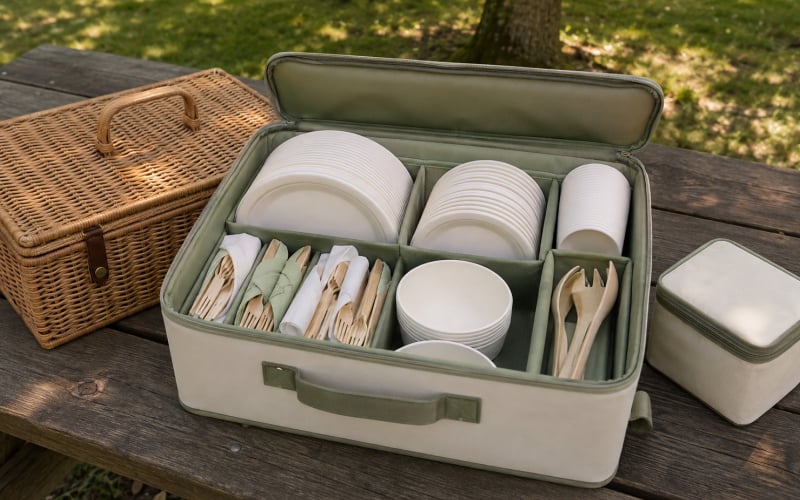
Correct quantities are useful only if the items arrive clean and unbroken. Packing by use makes setup faster and keeps the table from filling with open boxes.
Group Items by Course or Use
Create small groups for drinks, the main meal, dessert, and serving. Each group can go in a clean, labeled bag or lidded box. Put the first items needed on top.
Flatware can be bundled with napkins before the event. Serving tools should stay with the matching dish when this can be done without touching the food.
Separate Clean Tableware from Food and Waste
Clean tableware should not share a bag with raw food, leaking ice, used utensils, or trash supplies. Place it in a dry box outside the cooler. Keep trash bags folded in a separate pocket.
If raw meat will be cooked at the picnic, pack its tools and tray apart from clean serving pieces. Marking the containers can prevent a mix-up during service.
Protect Stacks from Crushing and Wind
A hard-sided tote or firm box protects plates and cups in the car. Keep heavy coolers and food containers off the tableware box. Fill empty space with clean towels so stacks cannot slide.
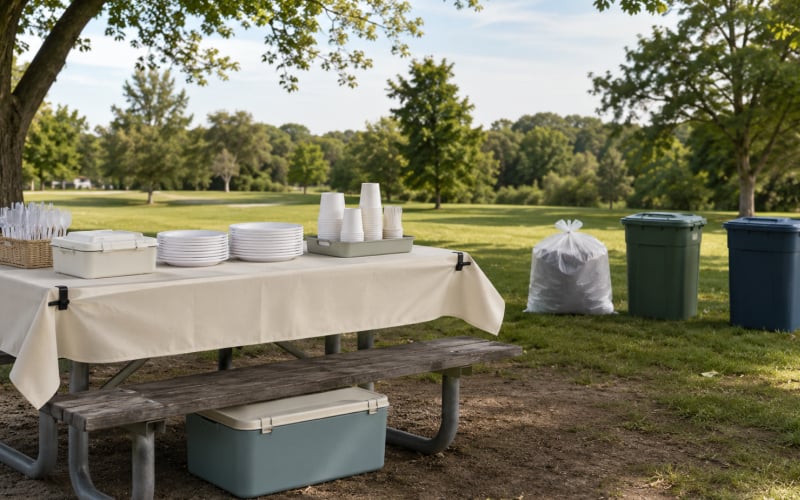
At the site, leave extra pieces inside the box and close the lid. Use table-cover clips, a covered napkin holder, and small plate stacks. These steps control wind without placing dirty objects near the food.
Picnic Hygiene, Cleanup, and Waste Supplies
Disposable tableware is only one part of a safe, easy picnic. The host also needs a plan for temperature control, clean hands, leftovers, and the waste that leaves the site.
Bring Food Containers and Cooler Supplies
Use lidded food containers, enough ice or cold packs, and an insulated cooler for perishable food. A food thermometer is useful when meat, poultry, seafood, or egg dishes will be cooked outdoors.
The FDA’s outdoor food safety guidance says cold perishable food should stay at 40°F or below and hot food at 140°F or above. Perishable food should not sit out for more than two hours, or one hour when the outdoor temperature is above 90°F.
Pack Hand-Cleaning and Spill-Control Items
Bring clean water and soap when the site has no handwashing station. Paper towels, hand-cleaning supplies, and a small roll of absorbent towels help with food prep and spills. Hands should be washed before and after handling food.
Keep one set of towels for food areas and another for general cleanup. This lowers the chance that dirt from a bench, cooler, or ground reaches the serving surface.
Carry Trash Bags and Leftover Containers
Pack strong bags for trash and separate bags or bins for materials accepted by the local waste program. Bring clean, lidded containers for leftovers. Bags should be closed before transport so litter and food scraps cannot escape.
Only save perishable leftovers that have stayed within safe time and temperature limits. Label the container if the meal includes foods that look similar but have different storage needs.
Follow Venue Waste and Picnic Rules
Parks, beaches, campsites, and event spaces may have different rules for grills, glass, waste sorting, and carry-out trash. Check the venue page before buying and packing supplies.
If the site has no suitable waste bins, every item should leave with the group. Keep recycling, compost, and trash separate only when the venue or local service accepts those streams.
Common Picnic Tableware Packing Mistakes
Most packing problems come from planning items one at a time. A final review of the menu, guest count, and location can catch the most common gaps.
Choosing Tableware Before the Menu
Buying plates first can lead to bowls that are too small, missing knives, or cups that do not suit the drinks. Finalize the menu before selecting shapes, sizes, and counts.
Forgetting Serving and Condiment Utensils
Personal flatware cannot replace every serving tool. Give each shared dish and condiment its own utensil. Add a clean cutting or lifting tool for cake, pie, or large fruit.
Packing No Backup
Exact counts leave no room for a dropped plate or surprise guest. A small reserve keeps the meal moving without creating a large amount of unused stock.
Ignoring Wind, Uneven Ground, and Venue Rules
Light cups, loose napkins, and long table covers can become litter. Uneven tables can also tip drinks and trays. Pack clips and covered holders, then check the site rules before departure.
Picnic Disposable Tableware FAQs
The answers below cover the final questions that often come up while the picnic box is being packed.
What disposable tableware is essential for a picnic?
Most picnics need main plates, cups, the flatware required by the menu, serving utensils, and napkins. Bowls, small plates, trays, and a table cover depend on the food and venue.
How many plates and cups are needed per person?
Start with one main plate per guest and add a small reserve. Add one small plate or bowl for each separate course that needs it. Plan one or two cups per guest based on the drink plan, then add extras.
Are paper or plastic plates better for a picnic?
Neither material is best for every meal. The choice should reflect food weight, moisture, transport, product instructions, and local disposal options. A firm plate is important for heavy or saucy food.
How can disposable tableware be kept from blowing away?
Keep unused items in a lidded box. Set out small stacks, nest cups until needed, use a covered napkin holder, and secure the table cover with clips. Do not leave loose pieces unattended.
Can used picnic tableware be recycled?
It depends on the material, food residue, and local program. Check the label and local rules. Do not place compostable plastic in a recycling bin, and do not assume a recycling symbol guarantees local acceptance.
Pack Smarter for Your 2026 Picnic
The best picnic checklist begins with the menu and ends with the waste plan. When each item has a clear purpose, the host can pack fewer unnecessary pieces, avoid shortages, and set up the meal with less stress.
For coordinated plates, cups, flatware, bowls, and dinnerware sets in a range of pack sizes, visit Wonderful Party. Compare current product details, availability, and intended-use guidance before choosing the tableware for the next outdoor meal.