

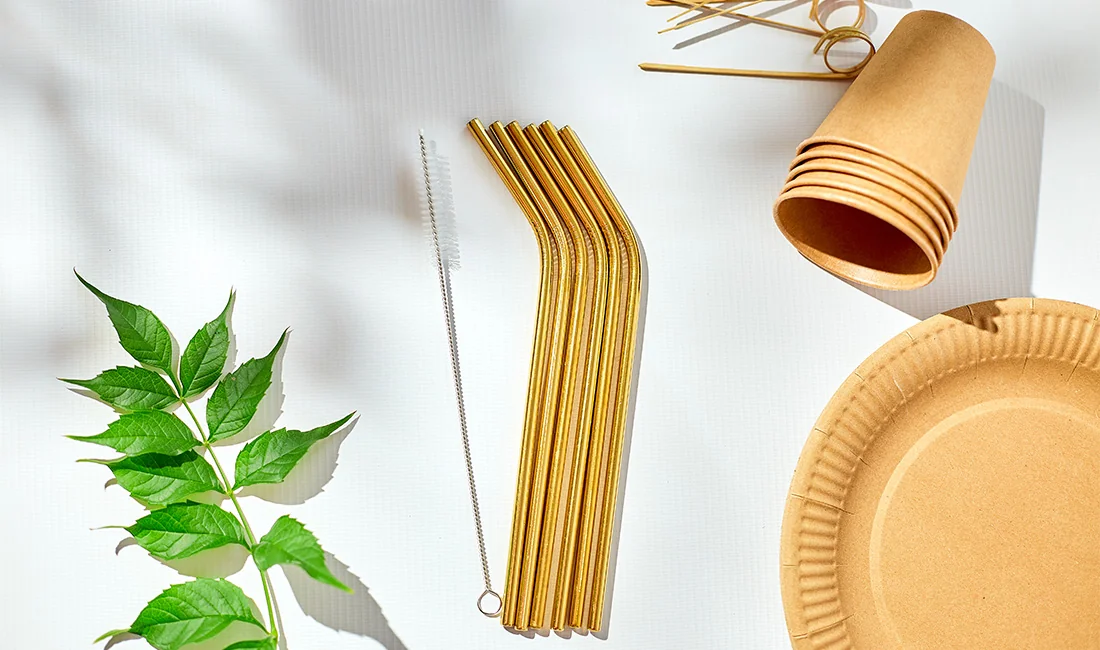
You choose eco-friendly party tableware by picking materials that come from renewable sources, break down safely after use, and fit your event needs without plastic. Look for biodegradable tableware made from bamboo, palm leaf, or sugarcane bagasse, or choose reusable tableware you can wash and use again.
This guide draws on current industry standards and supplier data used by caterers and event planners. You will learn why eco-friendly choices matter, which materials work best, how to match tableware to food and guests, and how to avoid common mistakes before you buy.
Why Choosing Eco-Friendly Party Tableware Matters?
Key benefits you gain by choosing eco-friendly party tableware include:
-
Reduced waste, because items compost or stay in long-term use
-
Lower resource use, since materials come from renewable or recycled sources
-
Safer food contact, due to fewer synthetic additives
-
Clear disposal paths, such as composting or standard recycling
Eco-friendly tableware refers to plates, cups, and cutlery made from renewable, reusable, or compostable materials instead of petroleum-based plastics. Common materials include bamboo, palm leaf, sugarcane bagasse, glass, and stainless steel. These materials break down naturally or stay in use for years, which reduces landfill waste.
Traditional plastic party items often contain polyethylene or polystyrene. These plastics can persist for decades because microbes cannot break their chemical bonds. For you, this means one event can create waste that lasts far longer than the party itself.
Eco-friendly tableware supports a sustainable party by lowering waste volume and improving disposal options. For example, bagasse plates come from sugarcane fiber left after juice extraction. Because the fiber already exists as a byproduct, using it reduces demand for new raw materials. In practice, this turns agricultural waste into usable tableware.
As an eco-conscious consumer, your choices affect more than one event. Reusable options like stainless steel cutlery can handle hundreds of wash cycles without degrading. For you, this means fewer repeat purchases and less material sent to trash or recycling plants.
Sustainable party supplies also reduce chemical exposure. Many compostable and reusable items avoid BPA, phthalates, and lead-based dyes. In real use, this lowers the chance of chemicals leaching into food, especially with hot or acidic dishes.
Understanding Eco-Friendly Tableware Materials
Eco-friendly plates and serving items use plant-based or fiber-based materials that break down after use. Each material handles heat, moisture, and food weight differently, so your choice affects food safety, guest comfort, and waste handling.
|
Material |
What It Is |
Why It Works for Parties |
|
Bamboo plates and bamboo tableware |
Pressed bamboo fibers from fast-growing bamboo |
Dense fiber structure resists bending. For you, this means plates hold full meals without sagging. |
|
Palm leaf plates and bowls |
Fallen areca palm leaves heat-pressed into shape |
Natural waxes resist moisture. This helps with saucy or oily foods. |
|
Sugarcane bagasse and bagasse plates |
Fiber left after sugar juice extraction |
Molded pulp handles heat up to serving temperatures. You can serve hot entrees and reheat safely. |
|
Paper tableware and paper cups |
Paperboard with compostable, plant-based coatings |
Coatings prevent leaks. For you, drinks stay contained without plastic liners. |
|
Coconut tableware |
Shells or fibers from discarded coconuts |
Thick walls add weight and stability. This suits small plates and bowls for dry foods. |
Choosing the right material depends on food temperature, moisture, and disposal options at your venue.
How to Select the Right Eco-friendly Party Tableware?
You make better choices when you focus on materials, proof, use, cost, and disposal. Clear checks help you avoid waste, false claims, and poor fit for your menu and guests.
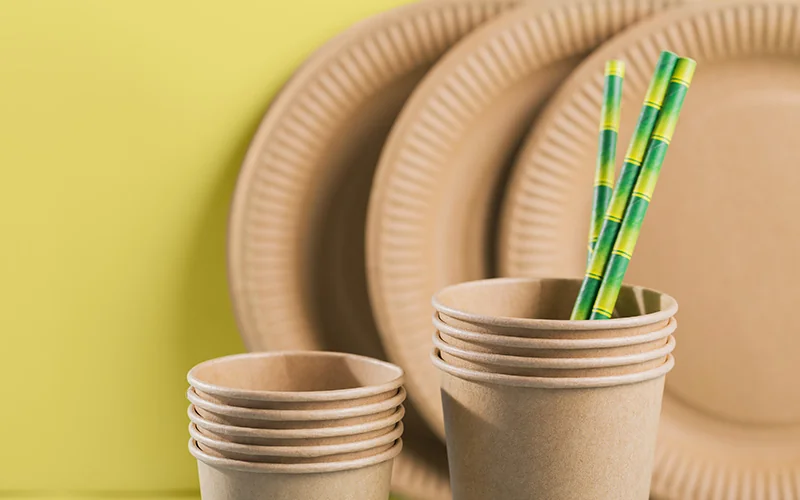
Step1: Evaluate Core Eco-friendly Materials
Start with the base material because it controls strength, heat tolerance, and disposal. Sugarcane bagasse comes from pressed sugarcane fiber left after juice removal. Because manufacturers mold dense fiber under heat, plates resist oil and hold hot foods. For you, this means fewer leaks with chili or pasta.
Palm leaf plates use fallen areca leaves that workers wash and heat-press. This process adds stiffness without coatings. In practice, you get plates that hold heavy meals and compost at home.
Bamboo grows fast and regrows from roots. Plates made from bamboo fiber handle weight because long fibers interlock. Avoid microwave use; heat can warp fibers.
Polylactic acid (PLA) is a plant-based plastic from corn starch. It stays rigid for cold items, so compostable cups stay clear for drinks.
Step2: Check Sustainability Certifications
Certifications prove composting claims with testing, not slogans. Look for BPI certification for items that break down in industrial composting. BPI tests heat, time, and residue limits. For you, this means the item will compost where curbside organics exist.
Seek TÜV Austria OK compost HOME for home composting. This mark requires breakdown at lower heat. In practice, you can add plates to a backyard pile.
Use CMA acceptance when available. Facilities test items in real systems, which reduces rejection. Avoid vague icons without a standard.
|
Label |
What it Proves |
What It Means for You |
|
BPI |
Industrial compostable |
Works in city organics bins |
|
OK compost HOME |
Home compostable |
Breaks down in backyard piles |
|
CMA |
Facility acceptance |
Fewer sorting problems |
Step3: Match to Party Practical Needs
Match material to food and timing to avoid failures. For hot, oily meals, choose sugarcane or palm leaf because molded fiber resists soaking. For you, this means fewer plate swaps during service.
For cold items, PLA compostable cups keep shape below 110°F. Because PLA softens with heat, skip hot coffee. Use uncoated paper for cake and sandwiches.
Check size and rim depth. A 9–10 inch plate with a raised edge holds sauces. Test one plate with your heaviest dish before buying cases. This step prevents spills and waste.
Step4: Calculate Cost-Effective Budgets
Price per unit matters, but failure costs more. Calculate cost per guest and add a buffer for seconds. Sugarcane often costs more than paper, yet fewer leaks cut replacement needs. For you, this can lower total spend.
Buy mixed packs. Use sturdy plates for mains and lighter paper for desserts. This reduces material use.
Watch shipping weight. Dense palm leaf weighs more, which raises freight. Local suppliers cut transport costs and emissions. Set a cap per guest and choose materials that meet it without compromise.
Step5: Confirm Disposal and Reusability
Plan disposal before you buy. Ask your city which items go in organics. If you lack industrial composting, avoid PLA. It will not break down at home. For you, this prevents landfill outcomes.
Set labeled stations with pictures of your exact items. Group compost, recycling, and trash together. This setup reduces sorting errors.
Consider reusables for small groups. Reusable plates eliminate disposal and often cost less over time. If you choose disposables, confirm that inks are water-based and free of PFAS, which block composting.
Step6: Avoid Greenwashing Missteps
Ignore vague words like “eco” without proof. Demand specifics: material type, coating, and certification number. If a paper plate claims composting but has a glossy lining, it likely contains plastic. For you, this signals a false claim.
Check temperature limits. Some items claim heat use but lack a tested range. Look for stated limits, such as “microwave safe to 220°F for 2 minutes.” This shows lab testing.
Eco-conscious consumers reward brands that publish data sheets. Choose sellers that list fiber source, coatings, and disposal paths.
Step7: Prioritize Party-Friendly Designs
Design affects waste and comfort. Plates with raised rims reduce spills because liquid stays contained. In practice, guests carry food with fewer drips.
Choose neutral colors made from natural fibers. Dyes can add chemicals that slow composting. Flat, matte finishes also show food clearly.
Stackability matters. Uniform sizes nest well, which speeds setup and cleanup. For you, this saves time.
Avoid oversized cutlery. Right-sized forks reduce plastic use and improve grip. When design supports use, guests waste less and sort better.
FAQs
What materials should I look for in sustainable party tableware?
You should choose tableware made from sugarcane bagasse, palm leaf, bamboo, or uncoated paper.
Sugarcane bagasse is a fiber left after juice extraction, and it resists leaks because the pressed pulp forms a dense surface. For you, this means plates hold hot or oily food without soaking through.
Palm leaf plates come from fallen areca palm leaves, not cut trees. Heat pressing shapes the leaves without chemical coatings, which allows them to break down in home compost within a few months.
Bamboo tableware uses fast-growing grass that regrows from its roots. Because bamboo fibers have a tight grain structure, plates stay rigid under full meals. In practice, this reduces bending when you serve heavy food.
How can I ensure the party supplies I choose are environmentally friendly?
You should check for third-party compostability certifications, not marketing claims.
A BPI label confirms the product breaks down in industrial composting systems, which operate at controlled high heat. For you, this means the item will not leave plastic fragments behind after processing.
Look for TÜV Austria OK compost HOME if you plan to compost at home. This certification proves the item decomposes at lower, variable temperatures found in backyard compost bins.
Avoid supplies labeled only as “biodegradable.” Without a certification, the product may require conditions that landfills and home compost piles cannot provide.
Can you suggest some eco-friendly decorations for events and celebrations?
Yes. You can use fabric banners, paper garlands, dried flowers, and reusable table linens.
Fabric banners made from cotton or linen last for years because the woven fibers resist tearing. For you, this means you can store and reuse them for future events.
Paper garlands made from uncoated kraft paper compost after use. Dried flowers work as table décor because they contain no synthetic dyes and do not require water or refrigeration.
You should avoid latex balloons and plastic confetti. These items break into small pieces that are difficult to collect and cannot be composted.