

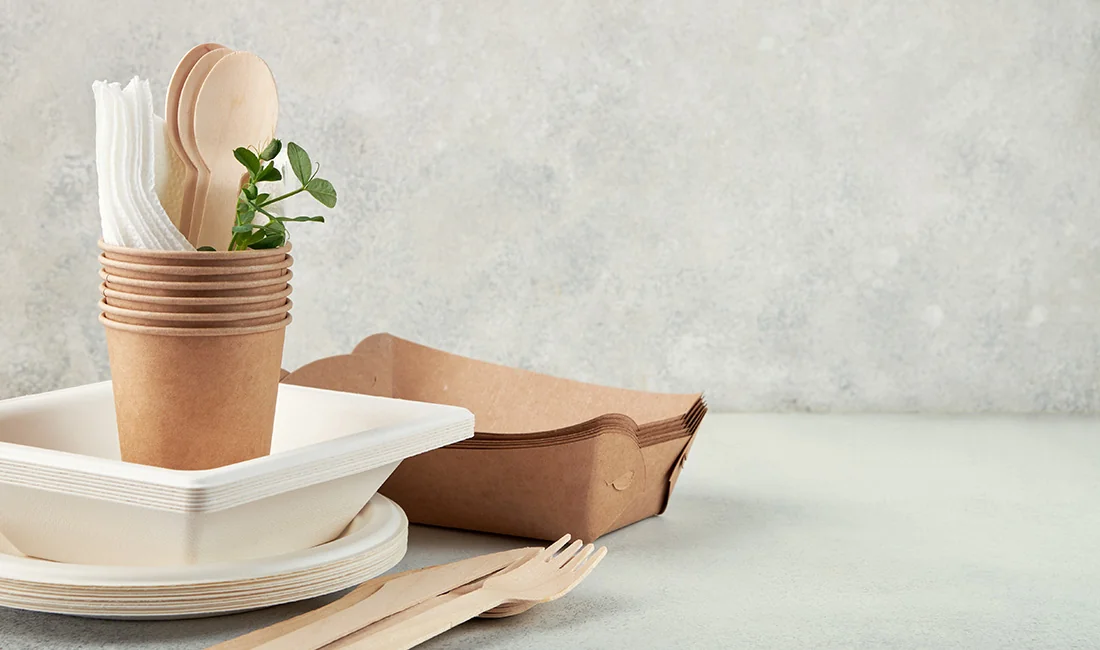
The best disposable tableware for catering prioritizes strength, heat resistance, and fast cleanup. Sugarcane fiber and bamboo work well for hot foods, while rigid plastic supports heavier portions without bending or leaks.
Disposable catering tableware includes single-use plates, bowls, cups, and cutlery made from plant fibers or plastic, helping caterers serve large groups efficiently and reduce cleanup time. This guide shows how to choose the right disposable tableware for different catering events, balancing material, performance, cost, and eco-friendly options.
What Is Catering Tableware?
Catering tableware is the set of items you use to serve food and drinks at events. It includes disposable tableware for catering such as plates, bowls, cups, cutlery, trays, napkins, and serving containers.
You use catering tableware for parties, buffets, weddings, and corporate events. It supports fast service, clean presentation, and easy cleanup. In this section, you learn what counts as catering tableware and how it differs from regular tableware.
Common catering tableware items
-
Disposable dinnerware: plates, bowls, and cups
-
Cutlery: forks, knives, and spoons
-
Serving pieces: trays, platters, and tongs
-
Extras: napkins, table covers, and food containers
Many caterers choose disposable options made from paper, plant fiber, or plastic. Food-service guides and event planners often recommend these items for high-volume service and tight timelines.
Catering tableware differs from regular tableware in purpose and design. You select it for short-term use, not daily meals at home. It focuses on speed, safety, and uniform looks across large groups.
Key differences between catering and regular tableware:
|
Catering Tableware |
Regular Tableware |
|
Built for events and crowds |
Built for home use |
|
Often disposable or compostable |
Reusable and washable |
|
Lightweight and stackable |
Heavier and breakable |
|
Suits buffets and lines |
Suits seated meals |
Why Use Disposable Tableware for Catering?
You use disposable tableware for catering because it saves time, controls costs, and keeps service efficient at any event. This section explains how catering disposables improve cleanup, hygiene, planning, and presentation.
Disposable tableware cuts cleanup time. You skip washing, drying, and storing dishes, which helps you reset faster between events. Staff can focus on guests instead of back-of-house work.
Catering disposables support better hygiene. Each guest gets clean, unused items, which reduces cross-contact risks. Many caterers rely on this standard for large crowds and public venues.
Bulk packs help you manage costs and inventory. You can buy plates, cups, and cutlery in set quantities that match guest counts. Bulk packs also reduce last-minute supply gaps.
Disposable tableware fits many event styles. You can choose from plastic, paper, bagasse, or palm leaf options. Designs range from plain white to formal looks that suit weddings and corporate events.
Key benefits of using disposable cateringware at a glance:
|
Benefit |
How it helps you |
|
Fast cleanup |
Less labor and shorter breakdown time |
|
Cost control |
Predictable pricing with bulk packs |
|
Hygiene |
Single-use items reduce handling |
|
Flexibility |
Options for casual to formal events |
|
Logistics |
Easier transport and storage |
You also meet growing demand for eco-aware choices. Many disposable tableware options now use compostable or recyclable materials, which helps align with venue rules and guest expectations.
How to Choose the Best Disposable Tableware for Catering?
You choose the best disposable tableware for catering by matching the event type, menu, durability needs, sustainability goals, and budget. This section explains how to select disposable dinnerware, cups, and utensils that serve food well, look right, and control costs.
Identify the Catering Event Type
Start by defining the event. A corporate lunch, wedding, food truck service, and outdoor festival all need different disposable tableware.
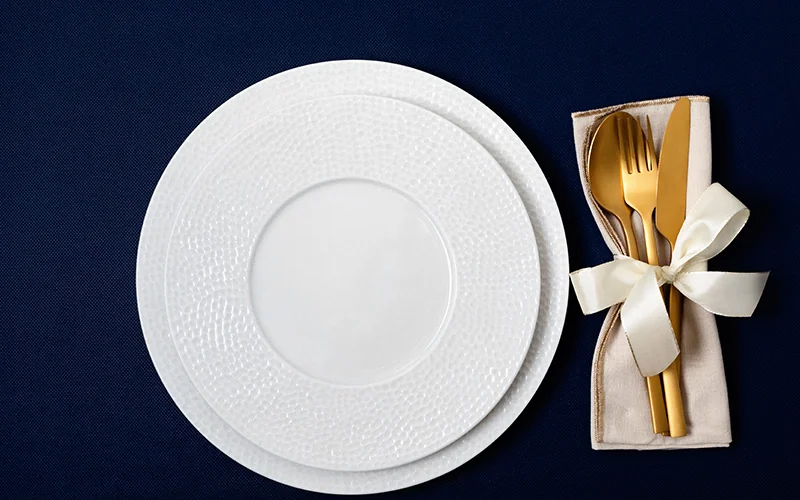
Formal events call for clean lines and upgraded finishes. You may use linen-feel napkins, champagne flutes, and sturdy plastic cutlery that feels close to metal. Casual events work well with paper napkins, plastic cups and lids, and simple disposable trays.
Also note the service style. Buffets need serving utensils, skewers, and wide disposable containers. Plated meals need full place settings with disposable cutlery and matching cups. Event setting matters too. Outdoor events benefit from heavier items that resist wind and spills.
Match Tableware to the Catering Menu
Your menu drives many tableware choices. Hot soups and saucy foods need leak resistance and heat control. Paper bowls, compostable bowls, and some plastic bowls work well for these items.
Cold foods like salads and desserts pair well with clear disposable bowls and plastic cups. Drinks also matter. Use paper cups for coffee and tea. Choose plastic cups and lids for cold drinks and transport. Avoid thin items that bend or leak under food weight.
Use this simple guide for choosing your cateringware:
|
Menu Item |
Best Tableware |
|
Soups, stews |
Paper bowls, compostable bowls |
|
Salads, pasta |
Plastic bowls, disposable bowls |
|
Hot drinks |
Paper cups |
|
Cold drinks |
Plastic cups and lids |
|
Appetizers |
Disposable trays, skewers |
Consider Durability and Appearance
Durability protects food and reduces mess. Plates and bowls must hold full portions without cracking. Plastic utensils and disposable utensils should not snap during use.
Appearance still matters, even with disposables. Clean colors, smooth edges, and uniform shapes create a professional look. Clear plastic bowls show layered foods well. Neutral plates keep the focus on the meal.
Balance strength with style. Heavy-duty plastic cutlery suits meats and hot foods. Lighter options work for snacks and desserts. Test samples before buying in bulk. This step prevents service issues during the event.
Evaluate Eco-Friendly Options
Many caterers now include sustainability in their choices. You can reduce waste by selecting compostable or recyclable items when local facilities allow it.
Compostable bowls, paper-based plates, and paper napkins lower plastic use. Some disposable straws and utensils also come in compostable materials.
Check labels for compostable or recyclable claims. Confirm that items fit your waste plan and local rules. Eco-friendly options often cost more, so apply them where they matter most, such as visible dining areas. You can also reduce waste by limiting extra items, like unused cutlery or cups.
Plan Quantity and Budget
Accurate counts prevent shortages and overspending. Start with your guest count, then add a buffer.
Use this rule of thumb of buying cateringware:
-
Plates or bowls: 1.2–1.3 per guest
-
Disposable cups: 2–3 per guest
-
Disposable cutlery: 1 full set per guest
-
Disposable napkins: 2–3 per guest
Balance cost across items. Spend more on core pieces like plates and bowls. Save on less visible items like disposable containers for food packaging. Buying in bulk lowers unit cost. Track usage after each event to refine future orders.
Disposable Caterware Checklist for Different Types of Catering Events
You choose the best disposable tableware for catering by matching plate strength, style, and cleanup needs to the event type. This section shows what to use for formal settings, business events, and outdoor service, with clear guidance on materials, sizes, and finishes.
Weddings and Formal Occasions
You need disposable tableware that looks polished and holds full meals without bending. Plastic dinner plates with a heavy-weight build work well for plated dinners and buffets. Choose white, black, or clear styles to match formal décor.
Use plastic serving trays with a smooth or gloss finish for passed appetizers and desserts. They help staff serve fast and keep a clean look. Avoid thin trays that flex under weight.
For sustainability goals, select compostable tableware made from sugarcane or palm leaf. These options handle hot foods and sauces better than basic paper. Many caterers with wedding experience now use these materials to meet client requests without losing performance.
Checklist highlights
-
10–12 inch rigid dinner plates
-
Matching salad or dessert plates
-
Heavy-duty cutlery
-
Compostable or eco-friendly plastic cups
Corporate Catering and Business Functions
You should focus on clean presentation, speed, and easy handling. Plastic dinner plates in neutral colors support a professional look and stack well for large orders. Medium-weight plates often balance cost and strength for boxed lunches.
Choose eco-friendly plastic or compostable options when the company has waste guidelines. Clear labeling helps guests sort items correctly. This matters in offices with recycling or compost programs.
Use compartment plates for lunches to keep foods separate. Add sturdy plastic serving trays for conference tables and coffee stations. Based on common corporate catering standards, these choices reduce spills and setup time.
Checklist highlights
-
Stackable dinner and compartment plates
-
Clear or matte cups for water and soft drinks
-
Disposable napkins with low lint
-
Serving trays for shared stations
Outdoor Events and Festivals
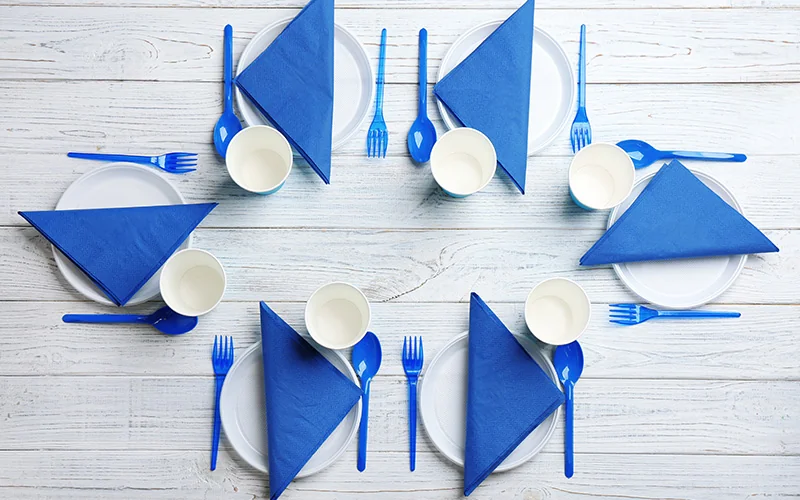
You need disposable tableware that handles movement, weather, and heavier foods. Plastic dinner plates with a thick rim or molded edge reduce spills when guests stand or walk. Larger sizes support meals with sides.
For greener events, use compostable tableware that resists heat and grease. Sugarcane plates perform well with grilled foods and sauces. Avoid light paper plates that soak through.
Rely on deep plastic serving trays for bulk service and fast refills. Choose darker colors to hide scuffs during long events. Many experienced festival caterers use a mix of compostable items and durable plastic to control cost and waste.
Checklist highlights
-
Large, sturdy dinner plates
-
Grease-resistant compostable bowls
-
Strong cutlery that will not snap
-
Deep serving trays for high-volume service
FAQs
What are the top-rated disposable dinnerware sets suitable for weddings?
You should use premium disposable dinnerware sets made from heavy plastic or palm leaf for weddings. These sets rank high for formal events because they look clean, hold weight, and match table décor.
For Best Disposable Tableware for Catering weddings, you want full dinnerware sets that include dinner plates, salad plates, and sturdy utensils. This setup speeds service and keeps table settings consistent.
How do different materials of disposable plates compare when serving hot food?
Plastic and bagasse plates perform best for hot food, and paper plates perform the worst. Brands that use thicker plastic or molded fiber resist bending and leaks during service.
You can serve hot and oily foods safely on heavy plastic plates or compostable bagasse plates. These materials handle heat better and keep their shape during long catering events.
Are there any eco-friendly disposable plastic plate alternatives for large events?
Yes, you can replace disposable plastic plates with compostable plates made from bagasse, bamboo, or palm leaves. These options work well for large events and meet common sustainability standards.
Many caterers now use bagasse plates because they handle hot food and break down in commercial composting systems. Palm leaf plates also work well and need no coatings or additives.
If you want eco-friendly disposable tableware for catering, you should confirm local composting access. This step ensures the plates meet your waste plan and event goals.