

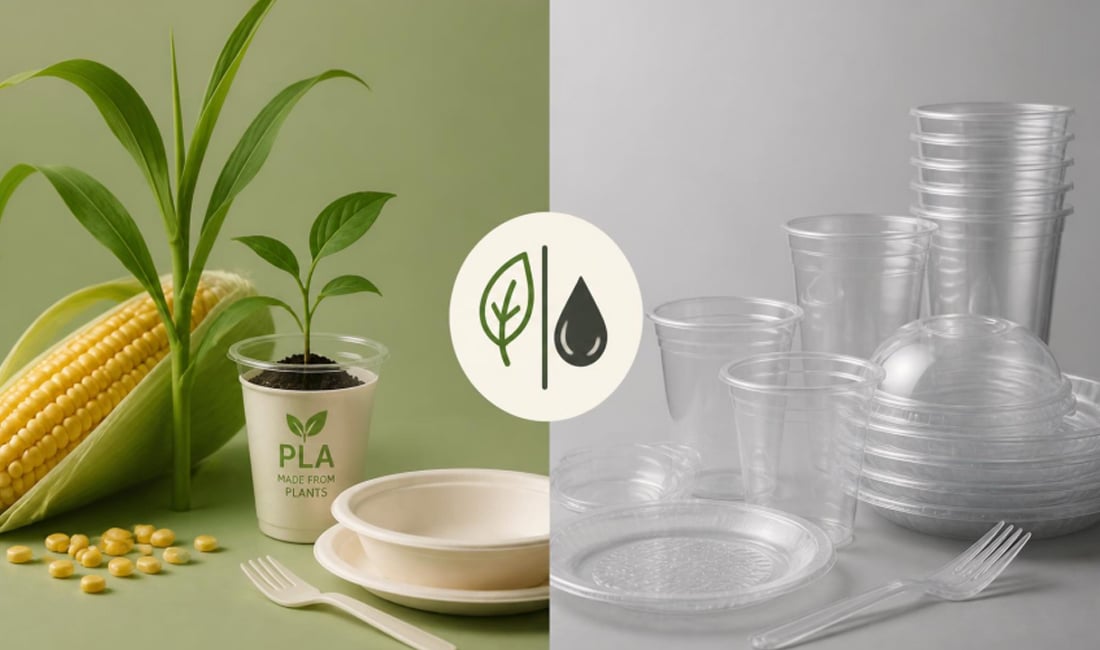
The PLA vs plastic tableware question does not have a one-word answer. PLA comes from plants and can compost, while plastic comes from fossil fuels and lasts for decades. But the real environmental impact depends on how each item is thrown away and how many times it is used, not on the material label alone.
This guide compares PLA and plastic tableware from a supplier’s point of view. It updates the 2026 picture on materials, cost, certifications, and disposal rules. Readers will learn how each material is made, how it performs, and how to judge which one is truly the greener choice for a given setting.
PLA vs Plastic Tableware: The Short Answer for 2026
Neither material is automatically more sustainable. The greener choice depends on three things: the full life of the product, the disposal options in the area, and how many times the item is used.
PLA is the better choice when an industrial composting facility is nearby and the tableware is single-use for cold or short-term food. In that setting, PLA returns to the soil instead of sitting in a landfill.
Plastic can be the better choice when no composting exists, when the food is hot, or when a sturdy set is washed and reused many times. A reused plastic plate spreads its footprint across many parties, which lowers the impact of each use.
The rest of this guide explains the trade-offs behind that answer.
What Is PLA Tableware?
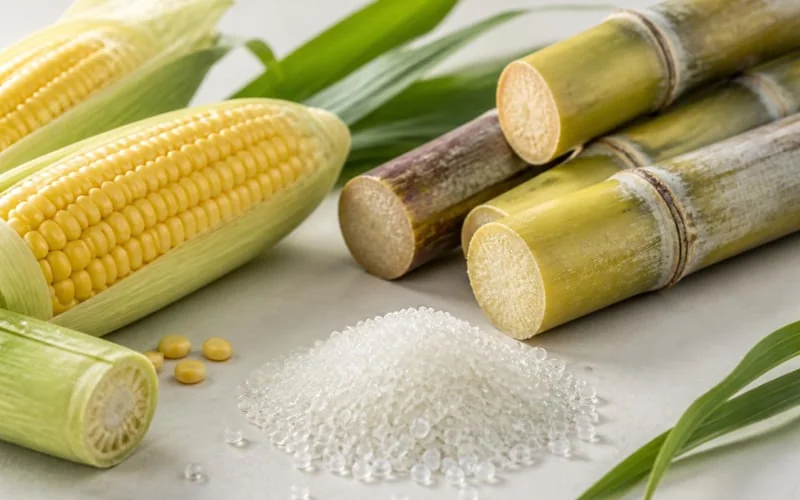
PLA tableware is foodware made from polylactic acid, a bioplastic made from plant sugars. Manufacturers ferment sugar from corn, sugarcane, or cassava into lactic acid, then form it into plates, cups, and cutlery.
Because PLA starts with plants, it relies less on fossil fuels than standard plastic. It also breaks down in industrial composting, where controlled heat and moisture turn it into water and carbon dioxide within months.
How PLA Is Made and Where It Comes From
PLA production starts in a field, not an oil well. The steps run in a clear order: grow the crop, extract the sugar, ferment the sugar into lactic acid, then turn that acid into PLA resin.
Because plants supply the raw material, PLA counts as a renewable resource. The crop regrows each year, and the plants absorb carbon dioxide as they grow. That plant stage is the main reason PLA carries a lower raw-material footprint than fossil-based plastic.
What PLA Tableware Is Best Used For
PLA works best for cold, short-term, single-use food service. Standard PLA softens near 60°C (140°F), so heat is its main limit.
Common uses include cold drink cups, salad bowls, deli containers, and single-use cutlery at catered events. PLA fits schools, offices, and venues that collect compost. It is a poor fit for hot soup, a microwave, or a dishwasher, since heat warps it.
What Is Plastic Tableware?
Plastic tableware is foodware made from petroleum-based polymers such as polypropylene, polystyrene, and polyethylene. These plastics shape easily under heat, which allows mass production at a low cost.
Because these polymers come from fossil fuels, they do not break down quickly in nature. A plastic item can last for years after disposal unless it is recycled or handled through controlled waste systems.
The Common Resins: PP, PS & PET
Three resins cover most plastic tableware, and each has a different strength. Knowing which resin is in a product explains how it performs.
• Polypropylene (PP): handles heat up to about 100°C, so it suits hot food and takeout.
• Polystyrene (PS): stays rigid and clear, which suits cold cups, but it can crack under stress.
• Polyethylene terephthalate (PET): clear and strong, common for cold cups and clamshells.
Food-grade versions of these resins are BPA-free and tested for food contact. Wonderful Party uses food-grade plastic that meets those safety standards.
What Plastic Tableware Is Best Used For
Plastic tableware suits a wide range of uses because it balances cost, weight, and strength. It handles both cold and hot food, depending on the resin.
Common uses include party plates, cups, and cutlery, takeout and delivery containers, and sturdy sets meant to be washed and reused. A heavy-duty plastic plate holds a full meal without folding and survives a rinse, which sets it apart from thin single-use items.
PLA vs Plastic Tableware: A Side-by-Side Comparison
PLA and plastic tableware differ in five main areas: source, heat tolerance, cost, disposal, and reuse. The table below shows the key differences at a glance.
| Factor | PLA Tableware | Plastic Tableware |
|---|---|---|
| Source | Plant sugars (corn, sugarcane) | Fossil fuels (crude oil) |
| Heat tolerance | Cold to warm food; softens near 60°C | Cold to hot food, depending on resin |
| Cost per unit | Higher | Lower |
| Disposal | Industrial composting | Landfill or recycling |
| Reuse | Single-use only | Sturdy sets can be washed and reused |
| Certifications | BPI, ASTM D6400, EN 13432 | Food-grade, BPA-free standards |
Material Source and Production
The two materials start from opposite places. PLA starts with a crop, and plastic starts with crude oil.
PLA comes from fermented plant sugars, which makes it a renewable material. Standard plastic comes from petroleum through chemical refining, which ties it to oil extraction. This difference in source is the root of most other differences between the two.
Heat Tolerance and Everyday Performance
Heat is where the two materials split most clearly. PLA has a low heat limit, while plastic depends on the resin.
Standard PLA softens near 60°C, so it warps with hot liquids or in a microwave. That keeps PLA in the cold-food lane. Polypropylene plastic holds hot food up to about 100°C, which gives plastic a wider range of everyday uses, from hot takeout to warm party meals.
Cost and Availability
Cost usually favors plastic. Plastic tableware benefits from mature supply chains and large-scale production, which keeps the unit price low and stock easy to find.
PLA production volumes remain lower, so PLA often costs more per unit. The gap has narrowed as demand for bioplastics has grown, but for most 2026 buyers, plastic is still the cheaper option per piece.
Which Is Really More Sustainable? A Full-Lifecycle View
Sustainability is decided across the full life of a product, not by the material name. A fair comparison looks at three stages: raw materials, end of life, and reuse. On the first stage PLA leads, but the other two decide the real outcome.
Raw Materials: Plant Sugars vs Fossil Fuels
At the raw-material stage, PLA has the clear advantage. Its crops absorb carbon as they grow and regrow each year, which lowers fossil-fuel use at the start of the life cycle.
That advantage is real but not complete. Farming still uses water, fertilizer, and fuel-powered equipment, so PLA is not free of impact at this stage. Plastic, by contrast, draws on non-renewable oil from the very first step.
End of Life: Why Disposal Decides the Real Impact
Disposal is the stage that most often flips the answer. A material’s green label means little if the item ends up in the wrong bin.
PLA only composts under industrial conditions, with sustained heat above 55°C and active microbes. In a home compost pile or a landfill, PLA breaks down very slowly, much like regular plastic. Standard plastic does not compost at all and can persist for decades. So PLA beats plastic at the end of life only where industrial composting actually exists. Without it, the gap between the two shrinks sharply.
How Reuse Changes the Footprint of Sturdy Plastic
Reuse is the stage most sustainability comparisons leave out. It is also where sturdy plastic makes its strongest case.
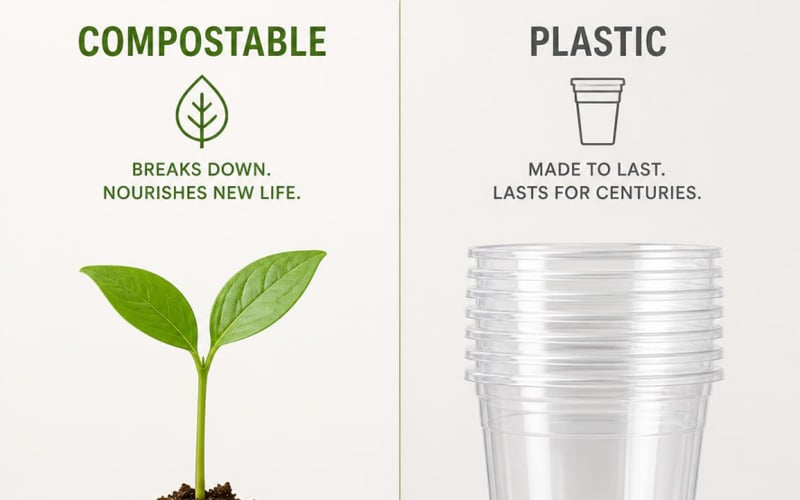
A single-use PLA plate carries its whole footprint in one meal. A heavy-duty plastic plate that is rinsed and reused across several parties spreads that footprint across many meals. Used enough times, a durable plastic set can cost the environment less per use than a single-use item. That holds true no matter what the single-use item is made from. In short, single-use versus reusable often matters more than plant-based versus fossil-based.
How to Choose Between PLA and Plastic Tableware
The right choice depends on local disposal, the food being served, proof of compostability, and the balance of cost and reuse. Four checks, taken in order, lead to a clear answer.
Check Whether Industrial Composting Exists Nearby
Composting access is the first and most important check. It decides whether PLA’s main advantage is real or only on paper.
Where a curbside or commercial compost program accepts PLA, the material can live up to its promise. Where no such program exists, PLA usually goes to a landfill, where it breaks down slowly and its green edge mostly disappears. Checking the local waste guide before buying prevents a wasted purchase.
Match the Material to the Food and Its Heat
The food itself narrows the choice fast. Heat is the deciding factor.
Cold food, such as salads, fruit, and iced drinks, suits either material, so PLA is a fair option there. Hot food, such as soup, warm barbecue, or anything microwaved, rules PLA out, because it softens near 60°C. For hot and reused settings, plastic is the more practical material.
Look for Certifications That Prove Compostability
A green label is not proof. Certifications are what separate truly compostable products from vague claims.
Three marks carry weight: BPI, ASTM D6400, and EN 13432. Each confirms that a product breaks down under industrial composting within a set time and leaves no harmful residue. A PLA product without one of these marks may not compost as claimed, so the certification, not the leaf icon, is the thing to check.
Weigh Cost, Reuse & Local Rules Together
The final check balances three practical factors at once: budget, reuse, and local law. No single one settles the choice on its own.
The table below matches common needs to the better-fit material.
| Need | Better Fit | Why |
|---|---|---|
| Industrial composting nearby | PLA | Composts fully and returns to soil |
| Hot food or microwave use | Plastic | Handles higher heat without warping |
| Many reuses from one set | Plastic | Washable, sturdy, spreads its footprint |
| Lowest price per piece | Plastic | Mature supply chains keep costs down |
| Single-use plastic ban in effect | PLA | Certified compostable meets the rule |
When PLA Tableware Makes Sense
PLA makes sense when composting is available and the food is cold and single-use. In that narrow setting, it delivers on its plant-based promise.
Three conditions point toward PLA. First, a local industrial composting program accepts it. Second, the menu is cold or short-term, such as salads, cold drinks, and takeaway. Third, a single-use plastic ban requires certified compostable materials. Where all three line up, PLA is the greener pick.
PLA also sends a clear sustainability signal. Cafés, events, and offices sometimes choose it to show a plant-based commitment to guests, which has value beyond the material itself.
When Plastic Tableware Makes Sense
Plastic makes sense when composting is out of reach, the food is hot, or a sturdy set will be reused. These cover most everyday party and event settings.
Four conditions point toward plastic. First, no industrial composting exists nearby, so PLA would land in a landfill anyway. Second, the food is hot, which PLA cannot handle. Third, a heavy-duty set will be washed and used again, which lowers its impact over time. Fourth, budget is tight, since plastic costs less per piece.
Reuse is the key point here. A sturdy plastic set is not a single-use item unless it is treated as one. Wonderful Party’s plates, cups, and cutlery are food-grade and made from durable plastic, so a host can hand-wash a set and bring it back for the next party rather than throwing it away.
FAQs
Is PLA really better for the environment than plastic?
Only in the right conditions. PLA starts from renewable plants and can compost, which gives it a lower raw-material footprint. But it only composts in an industrial facility. Without one nearby, PLA lands in a landfill and breaks down slowly, much like plastic. A durable plastic set that is reused many times can have a lower impact per use than single-use PLA.
Can PLA tableware go in the microwave or dishwasher?
No. Standard PLA softens around 50 to 60°C (122 to 140°F), so a microwave or a hot dishwasher cycle can warp it. PLA is built for cold and room-temperature food. It should not be used to reheat food or run through a dishwasher.
Does PLA break down in a home compost or a landfill?
Not well in either. PLA needs steady heat above 55°C and active microbes to break down. Home compost piles rarely get that hot. In a landfill, low heat and little oxygen mean PLA breaks down very slowly. It composts as intended only in a commercial facility.
Is reusable plastic tableware more sustainable than single-use PLA?
It can be. A single-use PLA plate carries its full footprint in one meal. A sturdy plastic plate that is rinsed and reused across several parties spreads its footprint across many meals. After enough uses, the reused plastic set can cost less per use than a single-use item, whatever the material.
How can shoppers tell if tableware is truly compostable?
By the certification, not the label. Look for BPI, ASTM D6400, or EN 13432 marks, which confirm a product breaks down under industrial composting and leaves no harmful residue. A “biodegradable” or leaf-icon claim without one of these marks is not a guarantee of true compostability.
The Bottom Line: Match the Material to Its End of Life
The PLA vs plastic question has no single winner. PLA wins on renewable source and composts where industrial facilities exist. Plastic wins on heat tolerance, cost, and reuse. The greenest choice is the one that fits how the tableware will actually be thrown away or reused.
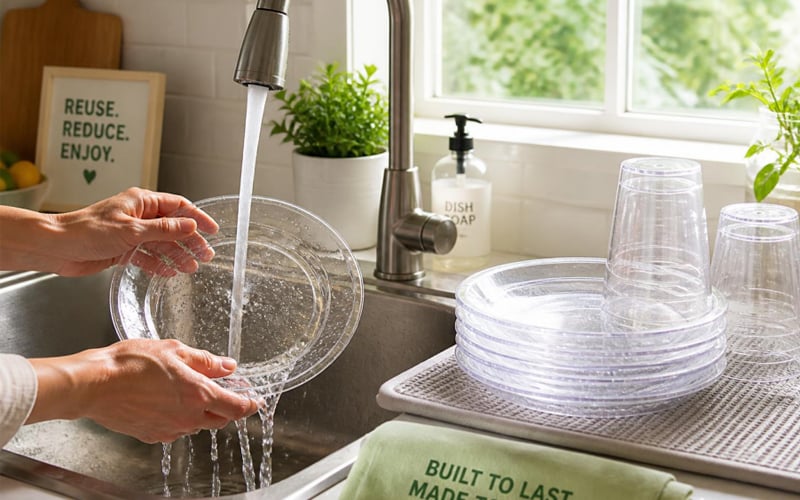
For a host without composting access, the most sustainable habit is often the simplest one. Choose a sturdy set and use it more than once. Wonderful Party builds its plastic dinnerware sets from food-grade, durable plastic. Each set rinses clean and stores for the next event, so one purchase can serve many parties instead of one.