

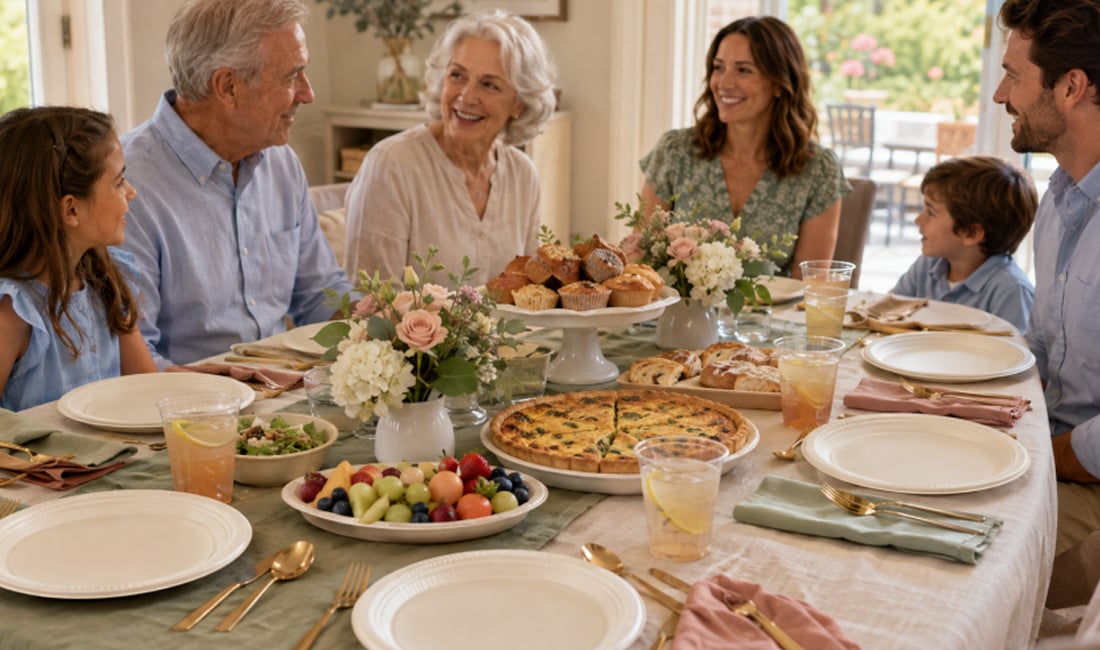
Grandparents Day brunch is one of the easiest ways to bring three generations to the same table. In the United States, National Grandparents Day falls on the first Sunday after Labor Day, which places it in early September. In 2026 that date is September 13. The meal is late enough for guests who drive in and light enough that no one spends the day in the kitchen.
A brunch table for this occasion has two jobs. It has to feel special, because the day is a celebration. It also has to work for a mixed group of grandparents, parents, and young children, who all reach for plates and cups at different heights and speeds.
Disposable tableware handles both jobs when it is chosen with care. This guide looks at the day from a tableware supplier’s point of view. It covers menu planning, the items a brunch needs, how to judge quality, how much to buy, how to style the table, and how to keep setup and cleanup simple.
How to Plan a Grandparents Day Brunch
Planning starts with three facts: who is coming, where the meal happens, and how long it will last. Every later decision, from the menu to the number of plates, depends on those answers. Hosts who settle them first avoid buying twice.
Confirm the Guest Count, Time, and Location
The guest count, start time, and location set the size of the whole event. A brunch for eight relatives in a dining room is a different job from a brunch for 25 people in a backyard.
Location shapes the tableware most. Indoor tables allow lighter items and taller glasses. Outdoor tables in early September face sun, breeze, and uneven ground, so heavier plates and cups with a wide base work better. Time matters too. A brunch that starts at 11 a.m. and runs two hours usually means one main course and one dessert round. A longer, open-house style brunch means guests eat in waves and use more plates and cups. Writing down the guest count, the start time, and the expected length gives the host a base number for every order.
Ask About Food Preferences and Dietary Needs
Dietary needs should be confirmed with each guest rather than guessed. Families are diverse, and age alone says nothing about what a person eats.
A short message to each household usually covers it. Useful questions include food allergies, foods a guest avoids, and whether anyone follows a specific eating plan. Common brunch allergens include eggs, milk, wheat, and tree nuts, and all four appear in standard brunch dishes such as quiche, pastries, and French toast. Some guests may also prefer softer foods or smaller portions. Collecting this information early lets the host plan a menu that works for everyone, and it also affects tableware, since separate dishes need separate serving pieces and clear labels.
Choose a Seated, Buffet, or Mixed Serving Style
Serving style decides how many plates the brunch uses and how much table space it needs. There are three practical options.
A seated brunch means each guest has a set place setting, and food is passed or plated. It feels the most formal, and it uses the fewest plates, usually one main plate and one dessert plate per guest. A buffet means guests serve themselves from a side table. It suits larger groups and needs more serving trays, bowls, and utensils, and it usually raises plate use, because many guests return for a second helping on a clean plate.
A mixed style combines both, and it is often the best fit for a family brunch. Guests sit at a set table, while drinks and desserts sit on a separate surface. This keeps the main table calm for older guests and still lets others move around freely.
What Disposable Tableware Do You Need for a Grandparents Day Brunch?
A brunch needs four groups of disposable items: plates, drinkware, cutlery and napkins, and serving pieces. Each group covers a different part of the meal, and buying them as a set keeps the table looking coordinated.
Dinner Plates and Dessert Plates
Two plate sizes cover a brunch menu. The larger plate carries the main course. It usually measures 9 to 10 inches across, and it holds hot dishes such as scrambled eggs, quiche, French toast, and breakfast potatoes. Its size keeps a saucy dish from crowding the fruit next to it.
The smaller plate handles everything light. A 6 or 7 inch dessert plate suits pastries, sliced fruit, cake, and a scone with jam. Offering both sizes serves a second purpose at a family brunch. Guests who only want a small portion take the small plate, and they do not need to be handed a large plate they will not fill. Many hosts stock disposable party plates in both sizes and place each stack at the point where it is used.
Cups and Glasses for Brunch Drinks
Brunch drinkware should be chosen by drink type, not by one general cup. A typical brunch table pours several very different things.
Cold drinks such as orange juice, water, and sparkling drinks work in a 9 to 12 ounce cup. Clear plastic cups suit juice well, since the color is part of the look. Coffee and tea are a separate case. Not every disposable cup is made for hot liquids, so hosts should match the product to the drink and follow the product description. Suppliers of disposable drinkware list the intended use and capacity for each item, and those notes are the correct guide. Providing a second, smaller cup for coffee also stops guests from mixing drinks in one cup all morning.
Disposable Cutlery and Napkins
Cutlery should follow the menu rather than a fixed formula. A fork is essential at every brunch, because eggs, salad, and cake all need one. A knife matters when the menu includes quiche, a whole pastry, or anything spread with butter or jam. A spoon matters when the table includes yogurt, oatmeal, fruit cups, or a soup course.
Napkins work the same way. Larger dinner napkins belong at each place setting, since brunch food is often soft and moist. Smaller drink napkins belong at the beverage station, where they catch condensation from cold glasses. Cloth-feel disposable napkins raise the look of a table at little extra cost, which suits an occasion like this one.
Serving Trays, Bowls, and Serving Utensils
Serving pieces let food be shared safely and neatly. Trays hold flat, dry items such as pastries, sandwiches, and cookies, and a raised edge keeps them from sliding on the way to the table. Bowls hold anything loose or wet, such as fruit salad, yogurt, and green salad.
Small bowls also work for toppings and add-ons, including berries, granola, and syrup. Serving utensils finish the group. Tongs suit pastries and bread. A large spoon suits fruit and salad. A server or spatula suits quiche and casseroles. Shared dishes should each have their own utensil, which is basic food safety and also keeps flavors and allergens separated.
How to Match Disposable Tableware to the Brunch Menu
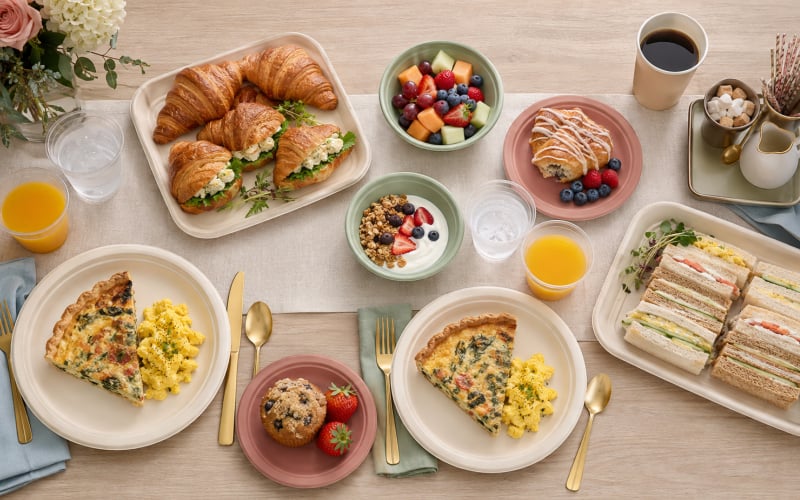
The menu should decide the tableware. Heavy hot dishes need strong plates. Light foods need small plates and trays. Drinks need cups chosen by temperature and volume. Matching these lists before ordering prevents both shortages and waste.
Use Sturdy Plates for Eggs, Quiche, and Other Hot Foods
Main dishes need the strongest plate on the table, because hot brunch food is heavier and wetter than it looks. A slice of quiche, a serving of eggs, and a side of potatoes together make a full plate.
Suppliers describe plate strength through material, thickness, and shape. Rigid plastic plates hold their form under weight and resist grease from bacon and sausage. A raised rim adds stiffness and keeps sauce, syrup, and juices from running over the edge. Product listings state the size, the material, and the intended use, including whether an item is meant for hot food. Hosts should read those details and match them to the dishes they plan to serve.
Use Small Plates and Trays for Pastries, Fruit, and Desserts
Light foods belong on small plates and trays, not on the main dinner plate. A 6 to 7 inch plate is the right size for a muffin, two cookies, or a slice of coffee cake.
Trays and small bowls do the organizing work. A tray groups pastries in one place. A bowl keeps fruit salad contained. Small bowls hold toppings such as whipped cream, berries, and nuts, which also makes it easy to keep a nut topping separate for guests with allergies. This layout has a practical benefit as well. When dessert has its own plates and its own station, guests do not reuse a main plate that still holds syrup or dressing.
Match Cups to Coffee, Tea, Juice, and Cold Drinks
Cup choice depends on three things: temperature, volume, and how the drink is served. Cold drinks are the simplest case. Juice suits a 9 ounce cup, since a smaller pour stays cold. Water and iced tea suit a 12 to 16 ounce cup, because guests refill them less often.
Hot drinks require a closer look at the product. Coffee and tea should only go into a cup that the manufacturer states is intended for hot liquids, at a temperature within the stated limit. Serving style matters too. A self-serve coffee station usually needs more cups than a seated table, because guests take a fresh cup each time they return.
How to Choose Elegant and Easy Disposable Tableware
Elegant disposable tableware comes down to five checks: plate stability, cup shape, product instructions, color coordination, and pack size. A product that passes all five looks refined on the table and still saves the host time.
Start With Stable Plates That Are Easy to Hold
A brunch plate should feel steady in the hand and sit flat on the table. Stability matters more at a multigenerational meal than at any other kind of party.
Three features create it. A firm rim gives fingers and a thumb somewhere to grip. A flat base keeps the plate from rocking on a tablecloth or an outdoor table. Enough thickness stops the center from bending when a guest carries a full serving with one hand. Plates that flex are the main cause of spills at a buffet, so this is the first thing worth checking. A simple test is to load one sample plate at home with the heaviest dish on the menu.
Choose Cups With a Comfortable Shape and Stable Base
Cups should be easy to grip and hard to tip. Shape does most of the work here.
A slight taper or a textured surface helps a hand hold the cup securely. A wide, flat base lowers the chance of a knock-over at a crowded table. Very tall, narrow cups look elegant but tip more easily, especially outdoors or on a table with a cloth. For guests who prefer a handle, cups with a handle or a rigid stem may be more comfortable than a plain tumbler. Capacity matters too, since a cup filled close to the rim is harder to carry than one filled two thirds full.
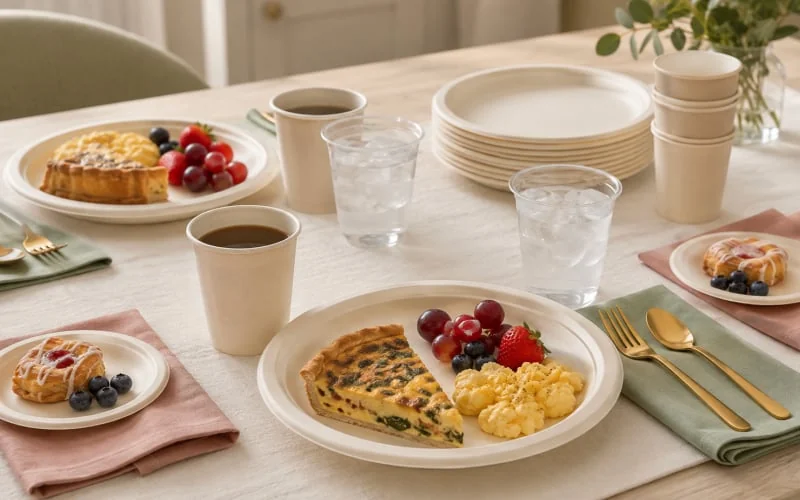
Check Product Instructions for Hot Food and Drinks
Product instructions are the only reliable source on heat, and they should be read before the order is placed. Disposable tableware is made in many materials, and each one behaves differently.
The details worth checking are the stated intended use, any temperature limit, and any microwave guidance. Some items are made for hot food and hot drinks. Others are made for cold or room-temperature service only. A host serving coffee, tea, and hot quiche needs to confirm that the chosen plates and cups are suitable for those uses. Following the manufacturer’s instructions is also the safest approach, and no general rule covers all disposable products.
Coordinate Colors, Shapes, and Finishes
A coordinated table looks more elegant than a colorful one. The simplest method is one base color, one accent, and one shape family.
The base color carries the largest pieces, such as dinner plates and the table cover. Ivory, soft white, and pale grey all work. The accent appears on smaller pieces, such as dessert plates, cutlery, or a rim detail. Gold and silver are the usual choices, and using only one of them keeps the table calm. The shape family means matching the visual style across pieces, such as scalloped edges on both plate sizes, or clean round shapes throughout. Mixing three finishes on one table is the most common styling mistake, and it makes disposable tableware look less considered than it is.
Compare Pack Sizes Before Ordering
Pack size should be compared against the guest count before checkout. Disposable tableware is sold in fixed counts, such as 24, 50, or 100 pieces, and sets are often sold as service for a set number of guests.
The math is worth doing per item rather than per set. A brunch for 20 guests that needs two plates per guest needs 40 plates, so a 50-piece pack fits and a 24-piece pack does not. Buying a slightly larger pack usually costs less per piece than buying two small ones. Sealed extras also store well in a dry container and carry over to the next family gathering, so a small surplus is rarely wasted.
How Much Disposable Tableware Should You Buy?
Quantity depends on the guest count, the number of courses, and the serving style. Counting only complete sets is the most common error, because a brunch uses far more cups and napkins than plates.
Count Each Guest and Each Brunch Course
The starting number is guests multiplied by courses, not guests alone. A brunch with a main course and a dessert course uses two plates per guest at minimum.
Adding a third round changes the total again. If the table includes a pastry course at the start, most guests will take a small plate for it, and the total rises to roughly two small plates and one large plate each. Buffet service raises it further, since guests who go back for seconds usually take a clean plate. A seated brunch with plated food stays closest to the base number, which is one reason smaller families often choose it.
Plan Separate Pieces for Food and Drinks
Food pieces and drink pieces should be counted separately, because they run out at different rates. A guest uses two plates over a brunch but may use four cups.
The reason is simple. Drinks are refilled, swapped, and set down. A guest who starts with juice, moves to coffee, and later takes water has used three cups unless the table is cleared and refilled. Napkins follow the same pattern and are used faster than any other item. Counting dinner plates, dessert plates, cups, forks, knives, and napkins as six separate lines gives a far more accurate order than counting sets.
Allow for Spills, Extra Drinks, and Last-Minute Guests
A margin above the calculated total is standard practice for event supplies. Three things reliably increase use at a family brunch.
Spills happen, especially with young children at the table. Drinks are refilled more often than planned, particularly on a warm September afternoon. Guest numbers change late, since relatives often bring someone along. Adding 20 to 25 percent above the calculated need covers all three. For a 20 guest brunch, that means buying for about 25 people. The extra stock costs little and removes the risk of running out mid-meal.
Use a Quick Grandparents Day Brunch Quantity Chart
The chart below gives a starting point for a two to three hour brunch with a main course and a dessert course. It already includes a modest margin.
| Item | 8 guests | 12 guests | 20 guests |
|---|---|---|---|
| Dinner plates (9–10 in) | 12 | 18 | 30 |
| Dessert plates (6–7 in) | 16 | 24 | 40 |
| Cold cups (9–12 oz) | 24 | 36 | 60 |
| Hot drink cups, if serving coffee or tea | 16 | 24 | 40 |
| Forks | 16 | 24 | 40 |
| Knives | 8 | 12 | 20 |
| Spoons | 8 | 12 | 20 |
| Dinner napkins | 24 | 36 | 60 |
| Serving trays | 2 | 3 | 4 |
| Serving bowls | 3 | 4 | 6 |
Hosts should raise the plate and cup rows for buffet service, and lower the knife and spoon rows if the menu does not need them.
How to Style an Elegant Grandparents Day Brunch Table
An elegant brunch table uses a soft color base, layered plates, meaningful decorations, and clear space at each seat. The last point matters most, since a table that looks good but crowds the guests will not feel comfortable.
Choose Soft Fall Colors and One Refined Accent
Early September sits between summer and autumn, and soft colors suit that moment. Practical base choices include ivory, blush pink, sage green, and soft blue.
One metallic accent then lifts the whole table. Gold suits warm bases such as ivory and blush. Silver suits cool bases such as sage and soft blue. The accent should appear in small amounts, on items such as cutlery, plate rims, or napkin bands. Using one metallic rather than two keeps the table looking deliberate. This palette also photographs well, which matters on a day when families usually take group pictures at the table.
Layer Dinner and Dessert Plates
Layering two plate sizes is the fastest way to make disposable tableware look formal. The method is simple. The dinner plate sits on the table, and the dessert plate sits on top of it, centered.
The layered stack marks each seat clearly, which helps guests find their place without direction. It also creates a small color contrast when the two plates differ, such as a white dinner plate under a gold-rimmed dessert plate. A folded napkin on top of the stack completes the setting. For a buffet, the same effect works on the serving table, with the two sizes stacked side by side at the start of the line.
Add Low Flowers, Family Photos, or Recipe Cards
Decorations should be low and personal. Low arrangements let guests see and talk across the table, which is the point of the gathering.
Three ideas work particularly well for this occasion. Small flower arrangements under about eight inches tall keep sightlines open, and seasonal blooms such as dahlias, sunflowers, and chrysanthemums suit September. Framed family photos placed along the center of the table give guests something to talk about. Handwritten recipe cards from a grandparent’s own recipes can serve as place cards or table markers. All three cost little and add more meaning than generic party decor.
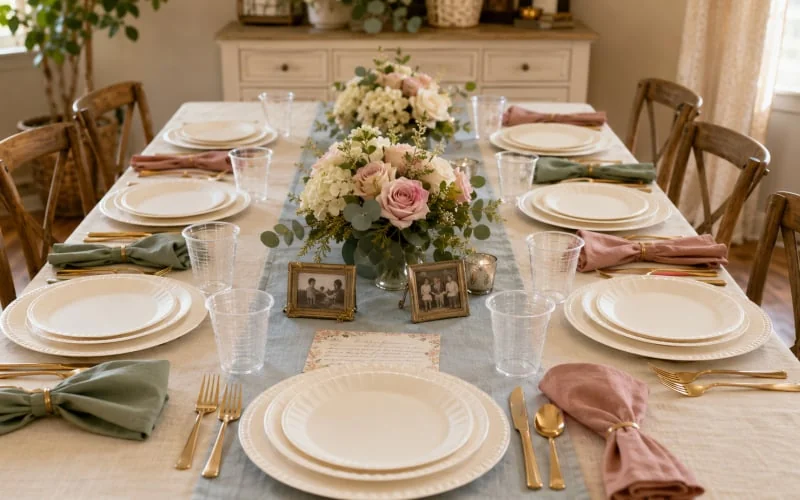
Keep Each Place Setting Clear and Comfortable
Each place setting needs open space around it. A crowded setting is harder to use for every guest, and it raises the chance of a spill.
A practical guide is about 24 inches of table width per guest. The plate sits in the center of that space. Cutlery sits beside the plate, and the cup sits above and slightly right of the plate, within easy reach but away from the elbow. Decorations belong in the middle of the table, not between settings. Leaving this space also makes it easier for a guest to set down a phone, a glass, or a pair of reading glasses without moving anything else.
How to Set Up a Comfortable Brunch Buffet for All Ages
A comfortable buffet uses a clear serving order, an easy reach height, a separate drink station, and open walkways. These four points matter more at a family brunch than at any other event, because guests move at different speeds.
Arrange Food in a Simple Serving Order
Buffet items should follow the order in which guests use them. The standard sequence prevents backtracking and keeps the line moving.
Plates come first, at the very start of the table. Hot main dishes come next, since they are the heaviest items and belong on the plate first. Side dishes and salads follow. Condiments and toppings, such as syrup, butter, and jam, come after that. Cutlery and napkins come last, so guests pick them up with a free hand rather than juggling them along the whole line. Dessert is best placed on a separate surface and brought out later, which stops the main line from doubling back.
Keep Plates, Cups, and Condiments Within Easy Reach
Everything guests handle should sit within a comfortable reach. A standard dining or folding table at about 30 inches high works well for most people.
The items in constant use, including plates, cups, and condiments, belong toward the front edge of the table. Tall decorations should not sit in front of them. Deep or heavy serving dishes are easier to use when they are placed closer to the front rather than at the back of a wide table. If any guest uses a wheelchair or a walker, a lower side table for plates and drinks gives clear access without singling anyone out.
Create a Separate Drink Station
Drinks belong on their own surface, away from the food line. This single change removes most of the crowding at a brunch.
The reason is that guests return for drinks far more often than for food. A separate station lets someone refill coffee without waiting behind the buffet line. It also reduces spills, since drinks are poured away from a table crowded with serving dishes. A useful setup includes cups grouped by drink, a stack of drink napkins, a small tray for stirrers, and a bin or tray for used cups. Placing the station near the seating area, rather than in a corner, saves older guests a longer walk.
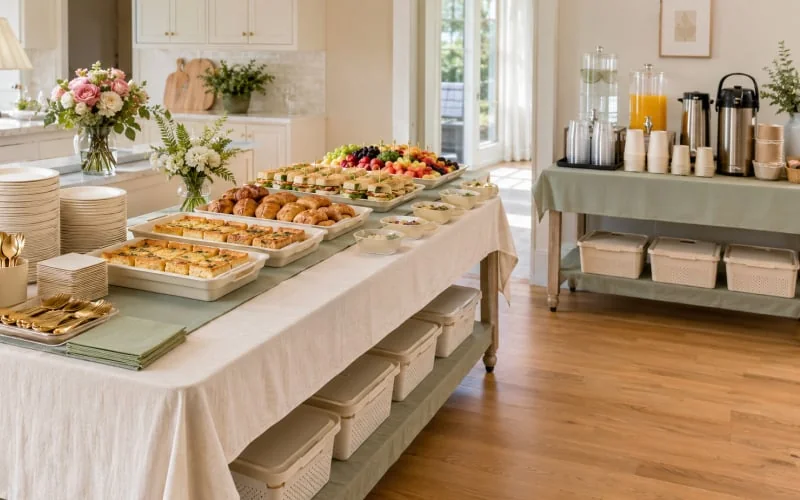
Label Dishes and Keep Walkways Clear
Labels and clear paths make a buffet easier and safer for everyone. Simple cards in front of each dish should name the food and note key allergens, such as eggs, milk, wheat, and nuts.
Clear labels help guests with allergies and also stop the host from repeating the same answer all morning. Walkways matter just as much. A path of about 36 inches around the table and between chairs allows guests to pass comfortably. Bags, cords, and chairs should be moved out of the route before guests arrive. Keeping the floor around the drink station dry is worth checking during the meal, since that is where spills most often land.
How to Make Brunch Setup and Cleanup Easier
Setup and cleanup get easier when most of the work happens before the day. Disposable tableware already removes the washing step, so the remaining tasks are arranging, restocking, and sorting waste.
Set the Table and Sort Tableware the Night Before
Most of the table can be finished the night before. Brunch starts in the morning, which leaves very little preparation time on the day itself.
The table cover, place settings, cutlery, napkins, and centerpieces can all be set in advance. Serving dishes can be placed empty on the buffet table, each with a note of the dish it will hold. Drink station items can be grouped on a tray and set aside. This leaves only food, ice, and hot drinks for the morning. A light cloth over a fully set indoor table keeps dust off overnight.
Keep Backup Tableware Covered Until Needed
Only the tableware in use should be out on the table. Everything else belongs in a covered container.
Covered storage protects backups from dust, moisture, and accidental contact, and it matters even more for an outdoor brunch, where breeze and pollen reach open stacks. Sorting the backups by type, with plates in one bin and cups and napkins in another, makes restocking a few seconds’ work. A practical routine is to set out one stack at a time and refill it from the bin as it runs low.
Separate Food, Drink, and Dessert Supplies
Supplies should be grouped by station, not by item type. Grouping by station means a refill needs one trip, not three.
The food group holds dinner plates, cutlery, serving utensils, and dinner napkins. The drink group holds cups, stirrers, and drink napkins. The dessert group holds small plates, forks, and dessert serving pieces. Each group can travel in its own labeled bin or tote. This also makes it easy for another family member to help, since they can find what a station needs without asking the host.
Plan for Leftovers and Waste Before Guests Arrive
Leftover and waste supplies should be ready before the first guest arrives. Brunch produces both quickly, and sorting them afterward takes longer than preparing in advance.
Sealed storage containers should be set aside for leftovers, which many families send home with guests. Trash and recycling bags belong near the drink station and the end of the buffet, where most waste is created. Recycling rules differ by city, so hosts should sort according to local guidance. A container for used serving utensils keeps them separate from food that is going into the refrigerator, which is a simple food safety habit.
Grandparents Day Brunch Disposable Tableware Checklist
This checklist groups every item by where it is used. Hosts can work through it station by station when placing an order.
Place Settings
Each seat needs five items: a dinner plate, a dessert plate, a cup, cutlery, and a napkin. Cutlery means a fork at minimum, plus a knife for quiche or bread and a spoon for yogurt or fruit. Matching the two plate sizes and the napkin color keeps every setting consistent. Counting this group by seat, then adding a margin, gives the base order.
Buffet and Serving Supplies
The buffet needs serving pieces and the tools to use them. Trays hold pastries, sandwiches, and cut items. Bowls hold fruit salad, green salad, and toppings. Serving utensils include tongs for baked goods, large spoons for salads, and a server for quiche or casseroles. Dish labels complete the group, and each shared dish should have its own utensil.
Coffee and Drink Station Supplies
The drink station needs cups matched to each drink, plus the small items around them. Cold cups suit juice, water, and sparkling drinks. Cups intended for hot liquids suit coffee and tea, according to the product instructions. Stirrers, drink napkins, and small bowls for sugar, sweetener, and lemon slices finish the station. A separate tray for used cups keeps the surface clear.
Cleanup and Leftover Supplies
Cleanup needs three things ready in advance: waste bags, cleaning supplies, and leftover containers. Trash and recycling bags should be placed where waste is produced. Cleaning supplies mean paper towels, wipes, and a cloth for the table. Leftover containers with secure lids let the host send food home with guests, which is one of the more welcome traditions of a family brunch.
Grandparents Day Brunch FAQs
What Colors Work Best for a Grandparents Day Brunch Table?
Soft, warm colors suit early September best. Practical base choices include ivory, blush pink, sage green, and soft blue, and any of them can carry the largest pieces on the table. One metallic accent in gold or silver then adds a refined touch, used only on small items such as cutlery or plate rims. Limiting the table to one base color and one accent looks more elegant than mixing several bright shades.
What Size Disposable Plates Are Best for Brunch?
Two sizes cover a brunch menu well. A 9 to 10 inch plate suits main dishes such as eggs, quiche, and French toast, since it holds a full serving without crowding. A 6 to 7 inch plate suits pastries, fruit, and dessert. Offering both lets guests choose a portion size that suits them, and it keeps light foods off plates that already hold syrup or sauce.
How Many Plates and Cups Are Needed per Guest?
A two to three hour brunch usually needs about three plates and three to four cups per guest. The plate figure covers one main course and one or two lighter rounds. The cup figure is higher because guests switch between juice, water, and coffee. Buffet service raises the plate number, since many guests take a clean plate for seconds. Adding 20 to 25 percent above the calculated total covers spills and late guests.
Can Disposable Tableware Be Used for Hot Brunch Food and Drinks?
It depends on the specific product. Disposable tableware is made from several materials, and each one has its own intended use and temperature limit. Some plates and cups are made for hot food and hot drinks, while others are intended for cold or room-temperature service only. Hosts should read the product description and the manufacturer’s instructions, including any stated temperature limit and microwave guidance, before serving coffee, tea, or hot dishes.
How Can a Brunch Buffet Be Made Easier for Older Guests?
Four adjustments make the largest difference. A separate drink station shortens the food line and reduces waiting. A clear serving order, with plates first and cutlery last, means less backtracking. Items placed toward the front of the table are easier to reach than items at the back. Walkways of about 36 inches around chairs and tables allow comfortable movement. Offering to carry a plate to the table is also a simple courtesy that costs nothing.
How Can Disposable Tableware Look Elegant Without Making Setup Complicated?
Elegance comes from coordination rather than effort. Choosing one base color, one metallic accent, and one shape family across plates, cups, and cutlery creates a unified look with no extra work. Layering a dessert plate on a dinner plate adds a formal touch in seconds. Low flowers and a folded napkin finish each setting. Because none of these steps involve washing or renting, the table looks considered while cleanup stays a matter of minutes.
Conclusion
An elegant Grandparents Day brunch rests on five decisions. The menu sets the plate strength and the cup type. The guest count and course plan set the quantities. Plate and cup stability keep the meal comfortable for every generation at the table. A single base color with one accent creates the look. A clear serving path and a separate drink station keep the room moving.
Wonderful Party supplies disposable plates, cups, cutlery, napkins, and serving pieces for gatherings like this one. Hosts planning a September brunch can browse by category and match sizes and colors to the menu and the family.
Grandparents Day comes once a year, and the point of it is time spent together. Tableware that looks refined and clears away in minutes leaves the host free to sit down and enjoy the meal.