

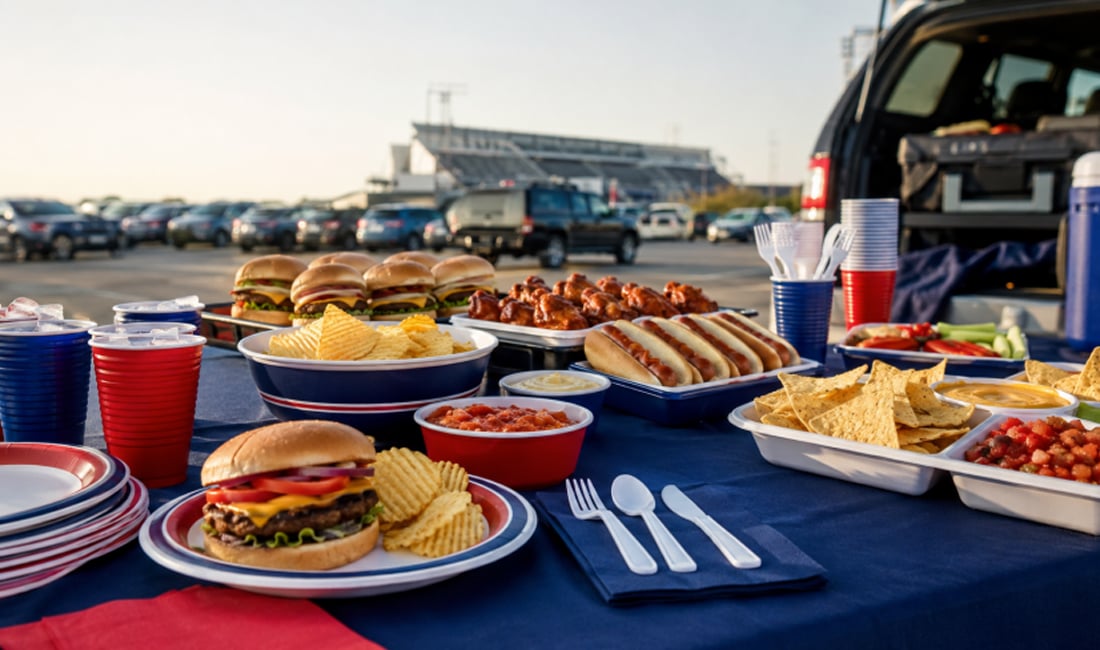
Football season turns parking lots, driveways, and backyards into party spaces. College kickoff weekends start in late summer, and pro games fill the calendar through winter. Fans set up folding tables, fire up grills, and eat standing next to a car.
That setting is hard on tableware. Tailgate menus are heavy, greasy, and full of sauce. Table space is small. Wind moves light items. Guests walk around with food in one hand and a drink in the other.
Disposable tableware suits this job well, but the details matter. A thin plate bends under a loaded burger. A short cup tips over on a truck bed. This guide looks at game day from the view of a tableware supplier. It explains which items a tailgate needs, what sizes and strengths work, how much to buy, and how to pack and clean up fast.
What Disposable Tableware Do You Need for The Party?
A tailgate party needs five groups of disposable items: plates, drinkware, serving pieces, cutlery, and cleanup supplies. Each group solves a different problem at the table. Buying them together keeps the setup simple and avoids a last-minute run to the store.
Disposable Dinner Plates and Snack Plates
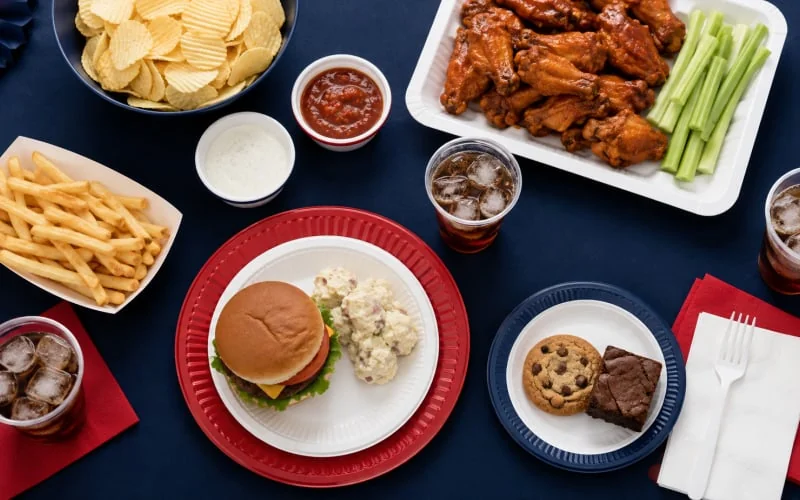
A tailgate runs best with two plate sizes: a dinner plate and a smaller snack plate. The dinner plate is the main plate. It usually measures 9 to 10 inches across, and it holds a full meal such as a burger, a side of coleslaw, and a scoop of baked beans. The rim helps keep sauce from running onto a guest’s sleeve.
The snack plate is smaller, often 6 to 7 inches. It fits chips, wings, brownies, and other small servings. Guests take a snack plate when they are grazing rather than eating a full meal, so the host uses fewer large plates over the day. Many hosts stock disposable party plates in both sizes and set them at two different points on the table, one at the grill and one at the snack area.
Disposable Cups and Drink Napkins
Cold drink cups and napkins belong together at a drink station. Tailgate cups usually run from 9 to 16 ounces. A 9 ounce cup suits soda and juice. A 12 or 16 ounce cup suits water and iced tea, because guests refill less often in warm weather.
Clear plastic cups let guests see what is inside, which helps at a busy table. Colored cups in team shades make it easy to tell one drink from another. A supply of disposable drinkware plus a marker for names cuts down on wasted cups.
Drink napkins are the small square napkins used at the cup, not at the plate. They catch condensation and sticky hands. Because tailgate menus include sauce, most hosts add larger dinner napkins as well.
Disposable Serving Trays, Bowls, and Food Boats
Serving pieces move food from the grill to the guests. Each type does a different job:
• Trays hold shared items such as sliders, cut vegetables, and cookies. A large tray also works as a landing spot for hot food coming off the grill, once the food has been placed on foil or a heat-safe surface first.
• Bowls hold anything loose or wet, such as chips, potato salad, and dips like salsa, queso, and ranch. Deep bowls also keep chips from blowing away.
• Food boats are small open containers used for single servings. They suit hot dogs, nachos, and fries, and they keep sauce off the table.
Together these pieces build a simple buffet line on one folding table.
Cutlery, Table Covers, and Cleanup Supplies
The last group covers everything that is not a plate or a cup. Disposable forks and knives handle sides such as pasta salad, beans, and cake. Spoons matter when the menu includes chili or dips that need scooping.
Table covers protect a folding table and make wiping up simple. Serving tongs keep hands out of shared food. Trash bags, paper towels, and a few food storage containers finish the list, since leftovers need a home before the drive back.
How to Match Disposable Plates, Cups & Trays to the Tailgate Menu
The menu should decide the tableware, not the other way around. Heavy food needs stronger plates. Wet food needs a rim or a bowl. Finger food needs small pieces that guests can hold in one hand. Matching the two lists in advance prevents both waste and shortages.
Plates for Burgers, Hot Dogs, Wings, and Barbecue
Main dishes at a tailgate need the sturdiest plate on the table. Burgers, brisket, and ribs are heavy and wet. A plate that flexes in the middle will spill.
Suppliers usually describe plate strength by material and thickness. Rigid plastic plates hold their shape under weight and resist grease. A raised rim helps with saucy food such as pulled pork, wings, and chili. For barbecue, many hosts choose a 9 or 10 inch plate and offer a second plate for anyone going back for more. Product pages list the size and material for each item, and hosts should check those details against the menu before ordering.
Trays and Bowls for Chips, Dips, Sliders, and Shared Snacks
Shared snacks work best on trays and in bowls rather than on individual plates. A tray gives guests a clear view of what is on offer and keeps the table organized. Sliders, wings, and skewers all sit well on a flat tray.
Bowls handle everything a tray cannot. Chips, popcorn, and pretzels stay contained. Dips such as guacamole, buffalo dip, and onion dip go into small bowls near the chips, so drips stay in one place. A useful rule is one bowl for each dip and one tray for each main shared dish. This layout also makes refills fast, because the host replaces one bowl at a time instead of rebuilding the table.
Smaller Plates and Food Boats for Desserts and Small Bites
Small plates and food boats control portion size and mess. A 6 or 7 inch plate is enough for a slice of cake, two cookies, or a small helping of nachos. Guests take less food, so less food ends up in the trash.
Food boats do the same job in a different shape. Their sides hold loose items such as fries, tots, and popcorn chicken. They also work for single servings of chili dogs, where sauce would slide off a flat plate. Because both items are small, they stack easily and take up little room in a bin.
Cups for Water, Soda, and Other Cold Drinks
Cup size should follow the drink and the length of the event. Soda and juice fit a 9 to 12 ounce cup. Water and iced tea suit a 16 ounce cup, since guests drink more of them.
Event length matters just as much. A two hour tailgate before a noon game needs fewer refills than an all day event in warm weather. Larger cups reduce trips to the cooler and cut total cup use.
Heat is a separate question. Cold drink cups are made for cold drinks. Hosts serving coffee or cocoa should check the product description and the manufacturer’s guidance, because not every disposable cup is intended for hot liquids.
How to Choose Durable Disposable Tableware for an Outdoor Tailgate
Durability at a tailgate comes down to four checks: strength, shape, stacking, and weather. A product that passes all four will hold up in a parking lot, which is a harder setting than a dining room.
Check the Strength for Heavy, Greasy, and Saucy Foods
Strength is the first thing to confirm, because it decides whether a plate survives the meal. A tailgate plate has to carry a loaded burger, a pile of ribs, or a hot dog covered in chili without folding.
Manufacturers describe this through material, thickness, and design. Rigid plastic resists bending. A raised rim adds stiffness and holds sauce. Product listings often state weight capacity, leak resistance, and intended use, and those notes are the most reliable guide. Hosts who are unsure can test one plate at home with a full serving before ordering in bulk.
Choose a Practical Size and Shape for One-Handed Eating
Shape matters because most tailgate guests eat standing up. A plate that is easy to grip lets a guest hold food in one hand and a drink in the other.
Round plates around 9 inches are simple to carry. Plates with a wide, flat rim give the thumb somewhere to rest. Deep plates and shallow bowls suit food that slides, such as pasta salad, coleslaw, and beans. Very large platters are better kept on the table as serving pieces, since they are awkward to hold. Trays with raised edges are easier to carry across a parking lot than flat ones.
Prioritize Stackable Tableware for Easy Transport
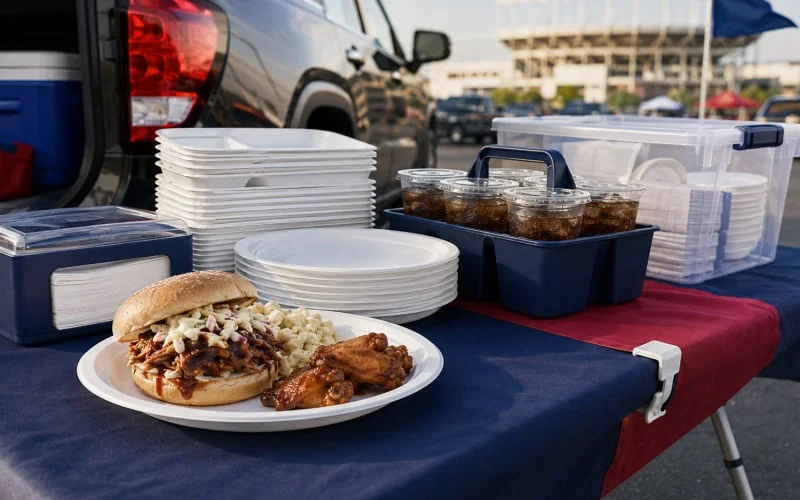
Stackable items save space in the car and time at the table. A tailgate host is already packing a grill, a cooler, chairs, and food, so every inch counts.
Plates that nest tightly, cups that stack inside each other, and flat-packed trays all reduce the volume of the load. Stacking also speeds up service. A neat stack of plates at the start of the buffet line is faster to hand out than a loose pile. Extra stacks can stay in a bin near the car and come out only when the first stack runs low.
Prepare for Wind and Accidental Spills
Wind is the most common problem at an outdoor tailgate, and a few habits solve most of it. Tableware should stay inside a bin with a lid until the moment it is needed. An open sleeve of napkins on a folding table will scatter.
Cups belong in one stable zone, ideally on a low, flat surface away from the edge of the table. Weighted napkin holders, clips on the table cover, and a heavy tray placed on top of a napkin stack all help. Full cups also stay put better than empty ones, so hosts often pour drinks only when a guest asks.
How Much Tailgate Party Tableware Should You Buy?
Quantity depends on three things: guest count, event length, and serving style. Buying by guest count alone leads to shortages, because guests at a tailgate return to the table several times.
Start With the Guest Count and Serving Style
Guest count sets the baseline, and serving style adjusts it. A buffet where guests serve themselves uses more plates than a setup where one person plates each meal.
Event length has the same effect. A short tailgate before kickoff may involve one meal per guest. An all day event with a grill running for hours can involve two or three rounds of food. Menus with several courses, such as snacks, a main dish, and dessert, also raise plate use, since most guests take a fresh plate for each round.
Allow for Refills, Spills, and Extra Guests
Extra stock is not waste at a tailgate, because three things reliably increase use. Guests go back for seconds. Cups get set down and lost, so people take a new one. Friends from nearby spots stop by, especially at large college games.
A common approach among event suppliers is to add 20 to 25 percent above the calculated need. On a 20 guest tailgate, that means buying for about 25 people. Leftover sealed packs store well in a dry bin and carry over to the next home game.
A Quick Tailgate Tableware Quantity Checklist
The table below gives a starting point for a three hour tailgate with a grilled menu. Hosts should adjust it up for longer events or open invitations.
| Item | Suggested amount per guest | Notes |
|---|---|---|
| Dinner plates (9–10 in) | 1.5–2 | Round up for buffet service |
| Snack or dessert plates (6–7 in) | 1–2 | Used for chips, wings, and dessert |
| Cold cups (12–16 oz) | 3 | More in warm weather |
| Dinner napkins | 3–4 | Sauce and grease raise the number |
| Forks | 1–2 | One extra if dessert is served |
| Knives | 1 | Only needed for cut meats and cake |
| Serving trays | 1 per 8–10 guests | One per shared dish |
| Serving bowls | 1 per dip or side | Keeps flavors separate |
How to Style Team-Color Disposable Party Supplies
Team colors give a tailgate table a clear look without extra decorations. The goal is a table that reads as one theme from a distance, while still being easy to use.
Choose Two Team Colors and One Neutral Base
Two team colors plus one neutral base is the simplest formula that still looks intentional. The neutral can be white, black, silver, or clear.
The neutral usually carries the largest items, such as dinner plates and the table cover. The team colors then appear on smaller pieces, such as cups, napkins, and snack plates. This keeps the table from looking busy, and it makes restocking easier, since the neutral pieces work for any opponent or any season. A table using navy and gold over white, for example, still looks coordinated when only the napkins are left.
Create Separate Food, Drink, and Condiment Zones
Zones prevent crowding, which is the main cause of spills at a tailgate. The table should follow the order in which guests use it.
Plates go at the start of the line, followed by hot food, then sides, then condiments such as ketchup, mustard, and barbecue sauce. Napkins and cutlery sit at the end, so guests pick them up last with a free hand. Drinks belong on a separate surface entirely, such as a cooler lid or a second small table. Splitting drinks from food keeps the main line moving during pregame.
Use Serving Trays and Table Covers as Part of the Decor
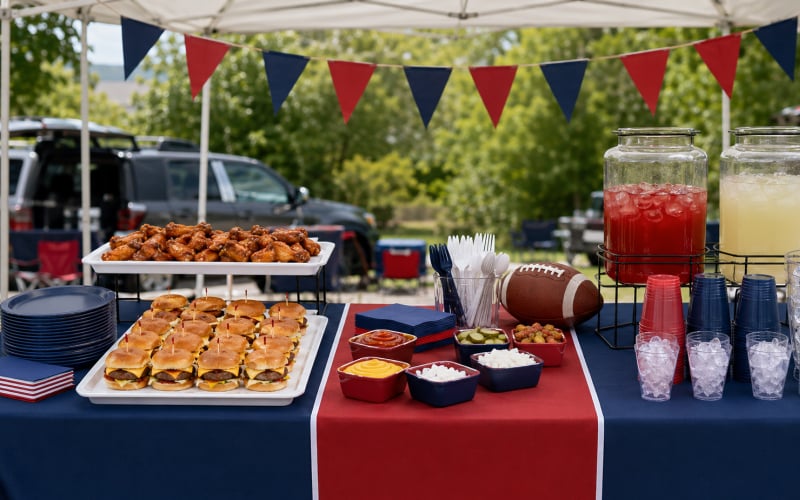
Serving pieces can do decorating work at the same time. A table cover in a team color instantly sets the theme and protects the table underneath.
Trays in the second team color mark the shared dishes. Colored bowls group items by course, such as one color for snacks and another for dessert. This approach adds no extra items to pack, since every piece is one a host already needs. It also fits the reality of tailgating, where wind and limited space make loose decorations a poor choice.
How to Pack and Set Up Tailgate Party Tableware
Packing is part of the setup. Tableware that arrives crushed, damp, or mixed together slows down the whole party. A short packing routine the night before solves most problems.
Pack Disposable Party Supplies in Labeled Bins
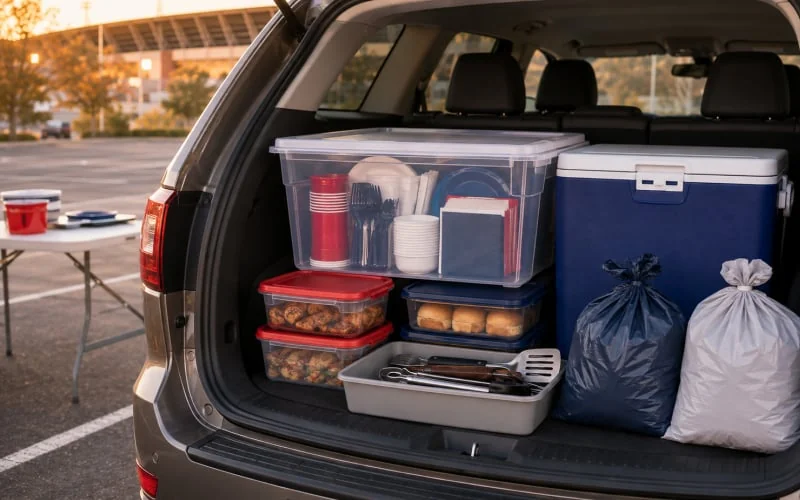
Sorted bins are faster to unload than loose bags. Most hosts use four categories: dining, drinks, cooking, and cleanup.
The dining bin holds plates, cutlery, and napkins. The drinks bin holds cups, ice, and drink napkins. The cooking bin holds tongs, foil, and grill tools. The cleanup bin holds trash bags, paper towels, and storage containers. Labeling each lid means anyone can find an item without opening every box. Packing the night before also leaves time to notice a missing item while stores are still open.
Keep Backup Tableware Covered Until Needed
Only the tableware in active use should sit out. Everything else belongs in a closed bin.
Parking lots are dusty, and wind carries grit and pollen onto open stacks. Rain and morning dew soften uncoated paper items. Keeping backups covered protects them and makes the table look tidier. A practical method is to set out one stack at a time, then refill from the bin as it empties.
Check Stadium and Parking-Lot Rules Before Game Day
Rules vary by venue, so hosts should check them before packing. Many stadiums and universities publish tailgating policies on their websites.
Common restrictions cover glass containers, open flames and charcoal, tent size, and where vehicles may park. Some venues also set rules for trash and recycling, including whether bags must be left in a certain spot. Alcohol rules differ widely by venue and by local law. A quick check avoids a problem at the gate and helps a host decide what to bring.
How to Make Tailgate Cleanup Faster After the Game
Cleanup is faster when it is planned before the first plate is served. Disposable tableware already removes the washing step, so the remaining work is collecting and sorting.
Set Up Waste Stations Before Serving
Waste stations should be ready before guests arrive, not after the mess starts. Two open bags at the end of the food table are usually enough for a small tailgate.
One bag takes general trash. The other takes recyclable items, sorted according to the rules of that city or venue. Placing the stations where guests already stand, such as near the exit of the buffet line, means most waste goes in a bag instead of on the ground. A third bag near the drink area catches cups, which are the most common item left behind.
Separate Leftovers From Used Cooking Tools
Leftover food and used tools should never share a container. Mixing them makes the food unusable and the tools harder to clean.
Leftovers go straight into sealed storage containers and back into a cooler. Used tongs, spatulas, and grill brushes go into a separate bag or bin for washing at home. Serving trays that held raw meat should be discarded or kept apart from anything that will be eaten later. This habit is basic food safety, and it takes only a minute during packing.
Complete a Final Parking-Area Check
A final sweep of the area is the last step before leaving. Small items are easy to miss once the table is folded.
Hosts should look under the table, around the vehicle, and along the edges of the parking space. Napkins, cup lids, and cutlery often blow a short distance and settle against curbs and tires. A quick check of nearby spots is also courteous, since wind moves waste between vehicles. Leaving the space clean protects tailgating access for everyone at the next home game.
Tailgate Party Tableware FAQs
What Type of Disposable Plates Work Best for Tailgate Food?
Rigid plates with a raised rim work best for tailgate food. Tailgate menus are heavy and saucy, so the plate has to resist bending and hold liquid. A 9 to 10 inch plate suits main dishes such as burgers, ribs, and chili dogs. A 6 to 7 inch plate suits snacks and dessert. Hosts should read the product description for material, thickness, and intended use before buying in bulk.
How Many Plates and Cups Are Needed per Guest?
A three hour tailgate usually needs about two plates and three cups per guest. That figure covers one main serving, one snack or dessert serving, and several drink refills. Longer events, warm weather, and open invitations all push the number higher. Adding 20 to 25 percent above the calculated total covers seconds, spills, and unexpected guests, and any sealed leftovers keep for the next game.
What Size Serving Trays Work for a Football Tailgate?
Medium trays are the most practical size for a tailgate. Very large platters take up scarce table space and are hard to carry across a parking lot. A useful guide is one tray for each shared dish, plus one spare, which is roughly one tray per eight to ten guests. Trays with raised edges hold sliders, wings, and cut vegetables more securely than flat boards.
How Can Disposable Plates and Napkins Be Kept From Blowing Away?
Wind control depends on covering, weighting, and placement. Backup stacks should stay in a bin with a lid until they are needed. Napkins can be held down with a weighted holder, a clip, or a heavy tray placed on top. Cups belong in one low, stable zone away from the table edge. Table covers stay put with clips or clamps at the corners.
Can Disposable Plates and Cups Be Used for Hot Food or Drinks?
It depends entirely on the product. Disposable tableware is made in many materials, and each one has its own temperature limits. Some items are made for hot food or hot drinks, and others are made only for cold or room-temperature service. Hosts should read the product page and the manufacturer’s instructions for stated intended use, temperature limits, and microwave guidance. No single rule applies to all disposable tableware.
Conclusion
A successful tailgate table comes down to three decisions. The menu sets the plate strength, cup size, and serving pieces. The guest count and event length set the quantities, with a margin added for refills and drop-in visitors. The parking lot sets the packing plan, from stackable items and labeled bins to waste stations and a final sweep.
Wonderful Party supplies disposable plates, cups, bowls, trays, napkins, and cutlery for exactly this kind of gathering. Hosts planning a game day setup can browse by category and match sizes and colors to the menu and the team.
Game day comes around every week during the season. Choosing tableware that travels well, holds up to barbecue, and clears away in minutes lets the host watch the game instead of the table.