

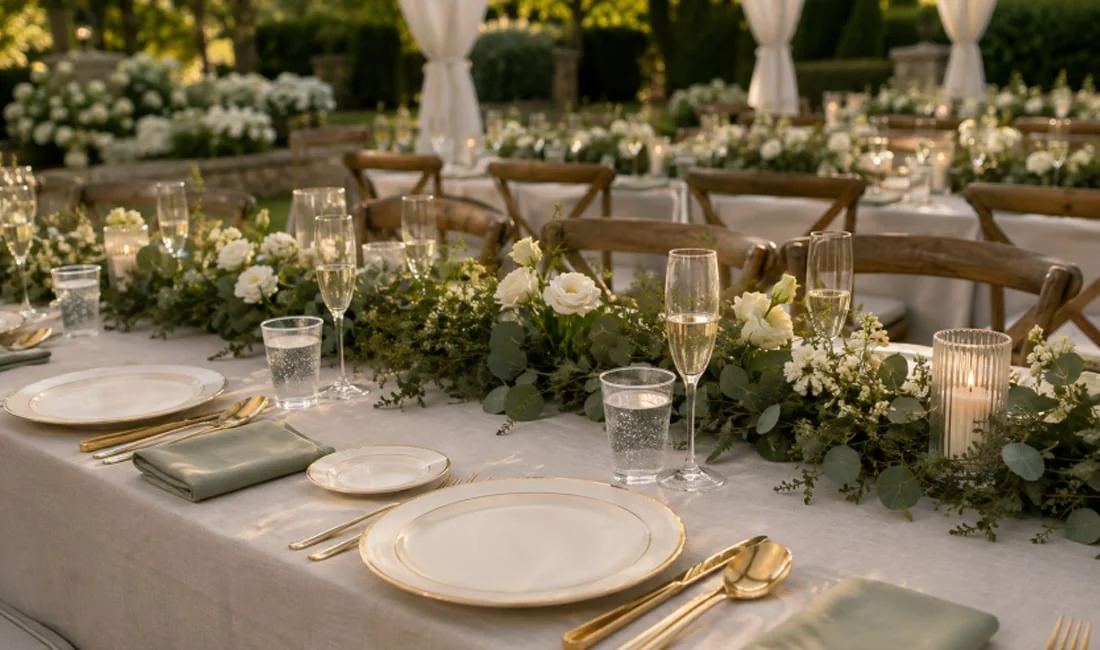
Disposable tableware can support a full wedding reception or only the areas where china is less practical, such as the cocktail hour, buffet, bar, or dessert table. The right choice depends on the event style, menu, service format, product quality, and venue rules.
This supplier-focused guide explains how plated and buffet service affect product choice, placement, and quantities. It also covers styling, ordering, setup, and cleanup for a 2026 wedding.
Is Disposable Tableware Right for a Wedding Reception?
Disposable tableware suits many weddings, but the decision should reflect the full cost, service plan, and venue rules.
Compare Disposable Tableware With Rented China
Neither option is always cheaper. Rented china may involve delivery, pickup, damage fees, pre-return scraping, and more clearing staff. Disposable tableware involves purchase, shipping, storage, and waste handling, but removes breakage and return logistics. The best comparison uses the actual guest count, venue, staffing plan, and local rental prices.
Decide Where Disposable Tableware Makes the Most Sense
Many weddings mix formats. China may stay at the seated dinner, while disposables serve the cocktail hour, bar, dessert table, late-night snack, and outdoor areas. These busy zones have more guest movement, greater breakage risk, and harder cleanup. Remote venues without kitchen support may use disposables throughout the reception.
Check the Venue and Caterer Requirements
Before ordering, confirm whether outside tableware is allowed, who will set and clear it, who removes the waste, and which recycling or composting services are available. Some caterers only handle items they supply, and some venues limit glass in outdoor areas. Written confirmation prevents problems during service and load-out.
How Serving Style Changes Wedding Disposable Tableware
Service format decides what to buy, where each item sits, and how quantities are calculated.
Plan Tableware for a Plated Wedding Reception
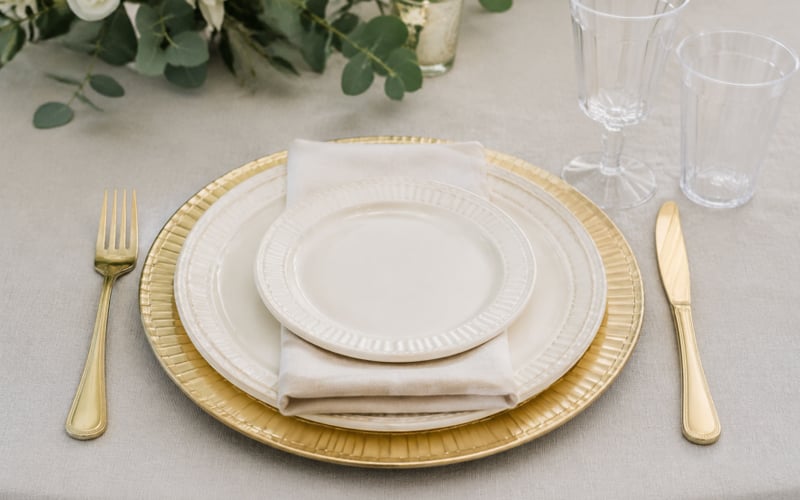
A plated reception counts tableware by seat and course. Drinkware, cutlery, napkins, and often a charger are set before guests arrive, while course plates come from the service area. Plate quantities stay close to one per guest per course, plus a reserve. Because the full setting remains visible during speeches and photos, its colors and finishes should coordinate.
Plan Tableware for a Wedding Buffet
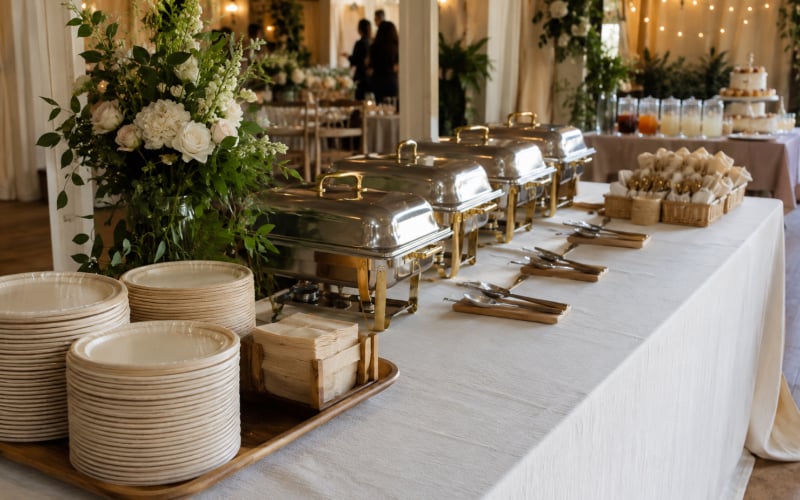
A buffet counts tableware by station and guest trip. Plates should stack securely at the start of the line, with backup stock nearby. Second helpings and separate food zones increase the number of plates and serving pieces, so a buffet usually needs more stock than a plated dinner with the same guest count.
Plan Tableware for Food Stations and Cocktail Service
Food stations and cocktail receptions need light pieces that guests can manage while standing. Small 6- to 7-inch plates suit appetizers and station servings. Stable cups, cocktail napkins, and simple cutlery are usually enough. Because guests visit several stations and take fresh napkins often, the total small-item count can be high.
Decide What Goes on the Table and What Stays at the Station
Give every item one clear location. At a plated dinner, settings stay on the table while plates come from service. At a buffet, dinner plates and serving utensils stay at the food line; placing cutlery on the tables keeps guests’ hands free. Dessert plates belong at the dessert station, and cups belong at the bar or drink station. Share this placement map with the caterer.
What Wedding Disposable Tableware Do You Need?
A complete order covers plates, drinkware, cutlery, napkins, serving pieces, and any place-setting accessories. Each group should be counted separately.
Dinner Plates, Salad Plates, and Dessert Plates
Three sizes cover most receptions: a 10-inch dinner plate for the main course, a 7- to 8-inch plate for salads and appetizers, and a 6- to 7-inch plate for cake or small desserts. Order the sizes separately because cocktail hours and dessert stations often use more small plates than the seated meal. Many orders start with elegant disposable dinner plates, then add smaller sizes by station.
Cups and Glasses for Water, Wine, Champagne, and Cocktails
Choose drinkware by beverage. Water and soft drinks usually need 10- to 16-ounce tumblers. Wine may use a stemmed or short-stemmed glass, while a toast can use disposable champagne flutes. Cocktails may need a wider cup. Check the product instructions before using any cup for hot drinks or a beverage outside its stated use.
Disposable Cutlery and Wedding Napkins
Match cutlery to the menu: forks for each course, knives for food that must be cut, and spoons for soup or sauced desserts. Dinner napkins belong at the place setting or buffet, while smaller cocktail napkins serve the bar, appetizers, and dessert area. Cocktail napkins move quickly and need a generous reserve.
Bowls, Serving Trays, and Serving Utensils
Bowls suit soup, salad, and loose side dishes, while trays suit passed appetizers and mini desserts. Match tongs, spoons, servers, or spatulas to each dish. Every shared dish needs its own utensil, with clean spares kept near a buffet in case one is dropped.
Chargers, Table Covers, and Place-Setting Accessories
Chargers give a plated setting structure while course plates come and go. Table covers set the base color, and place cards, menu cards, or napkin bands add detail. Keep accessories above or beside the plate so they do not take up the guest’s working space.
How to Choose Wedding Disposable Tableware
Choose products for the actual menu and service conditions, then check their appearance and pack details.
Match Plate Size and Strength to the Wedding Menu
Heavy foods and meals that require cutting need a rigid plate. Sauced dishes need a raised rim, while appetizers and cake can use smaller pieces. Check the listed size, material, structure, and intended use against the final menu. A product sample tested with a full serving gives the clearest answer.
Check the Intended Use and Temperature Instructions
Disposable materials respond differently to heat. Check the stated food-contact use, temperature limit, hot- or cold-service guidance, and any microwave instructions. A hot main course and coffee service may require different products. The manufacturer’s directions should always control the decision.
Choose Stable Cups and Comfortable Cutlery
A wide, flat cup base is safer on crowded tables and uneven outdoor surfaces. Cutlery should have enough length and weight for comfortable use, and knives need a suitable edge for the menu. Test samples with the actual food rather than judging appearance alone.
Compare Complete Sets With Mix-and-Match Pieces
Sets make it easy to match color, rim style, and finish across the seated dinner. Separate pieces give better control over quantities for the bar, cocktail hour, dessert table, and late-night station. Many weddings use sets for the main tables and mix-and-match pieces elsewhere.
Confirm Pack Counts, Colors, and Finishes Before Ordering
Confirm the piece count, included items, color name, and finish before checkout. A set labeled for 24 guests may not include cups or napkins. Ivory, cream, and off-white can also look different under warm lighting. Ordering matching pieces together reduces the risk of shade differences between batches.
How to Set an Elegant Plated Wedding Table
An elegant plated table should look coordinated without slowing service or crowding guests.
Build the Place Setting Around the Number of Courses
Let the course list decide the setting. A salad, main course, and dessert may need two forks, one knife, and dessert cutlery; soup adds a spoon. Do not add pieces that have no job. A simpler setting costs less, leaves more room, and is easier for guests to use.
Layer Plates, Chargers, and Napkins With Restraint
Two or three layers are enough: a charger, the first-course plate, and a folded napkin. A slight contrast in color or finish helps each layer show in photos. More layers crowd the setting and create extra setup and clearing work.
Position Cutlery and Drinkware for Easy Use
Place forks to the left and knives and spoons to the right, with the knife blade facing the plate. First-course pieces sit on the outside, and dessert cutlery may sit above the plate. Water and wine glasses go above and to the right. This familiar order helps guests move through each course without confusion.
Leave Enough Space Around Every Place Setting
Allow about 24 inches of table width per guest when the table and venue permit. Keep a few inches clear on both sides of each setting and leave a service path behind the chairs. Centerpieces should not block views across the table. A crowded table may photograph well before dinner but becomes difficult once plates arrive.
Coordinate the Final Setup With the Caterer
Agree in advance who sets the tables, where course plates and backup stock are held, which plate serves each course, and who clears used items. Give the team a short written list and one photo of the approved setting.
How to Organize Disposable Tableware for a Wedding Buffet
A clear buffet layout keeps guests moving and makes refills easier for staff.
Place Dinner Plates at the Start of the Buffet Line
Place dinner plates at the start of the line in several moderate stacks. Shorter stacks are safer and allow more than one guest to take a plate. If chargers remain at the seats, use a small sign or announcement so guests know to leave them on the table.
Put Cutlery and Napkins Near the End
Put cutlery and napkins near the end so guests do not carry them while serving food. Rolled cutlery is easy to hold and looks tidy in a basket. Placing cutlery at the dining tables is another practical option.
Create Separate Drink and Dessert Stations
Keep drinks and desserts away from the main food line. Guests return for drinks more often than food, so a separate bar prevents crossing traffic. A dessert table also creates a clear later stage of the reception. Give each station its own stock and backup supply.
Keep Backup Tableware Near Service Areas
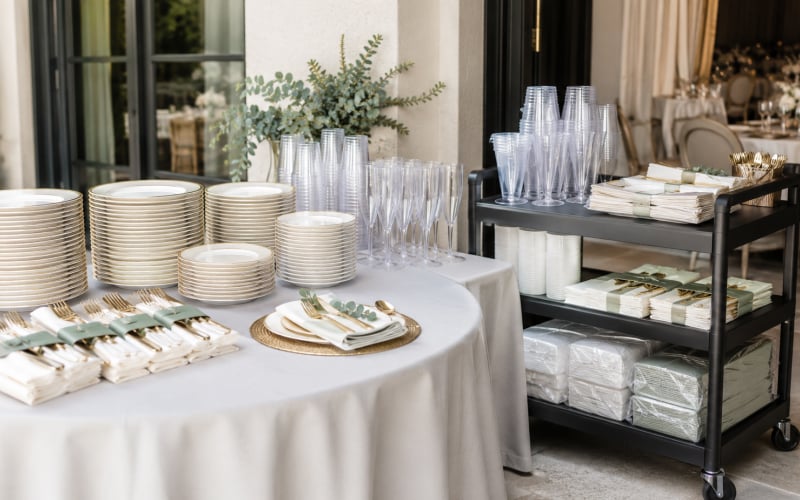
Store backups by zone: plates and serving tools near the buffet, cups behind the bar, and dessert pieces near the cake table. Keep them sealed until needed and show staff each location before guests arrive.
Keep Buffet Routes Clear for All Guests
Keep routes well lit and free of decorations or signs that block food. Where space permits, allow about 36 inches around the buffet and place plates and utensils near the front edge. Guests with limited mobility should be offered table service when needed.
Wedding Disposable Tableware Trends for 2026
For 2026, a neutral base with one clear accent remains a flexible approach.
Start With a Timeless Neutral Base
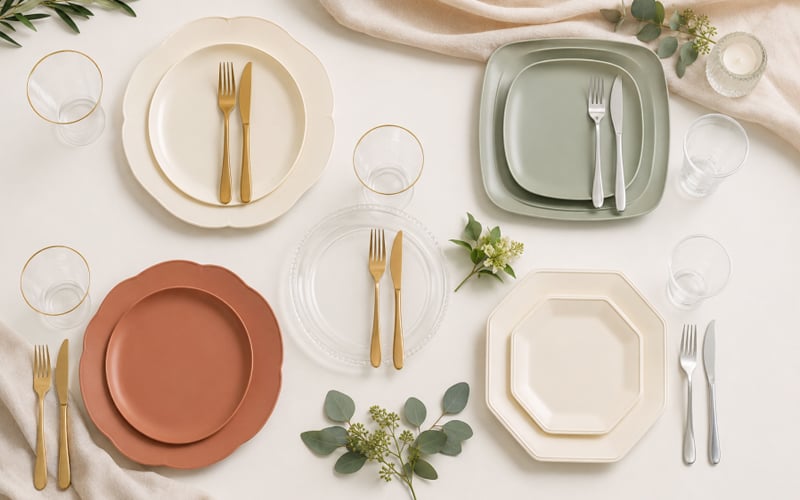
White, ivory, clear, and black pair easily with flowers, linens, and venue decor. White is clean, ivory feels warmer, clear lets the linen lead, and black suits modern evening events. Using a neutral for the largest pieces also makes later palette changes easier.
Add Bold Color or Earthy Tones for a 2026 Look
Bold shades such as deep red, bright pink, and cobalt blue suit modern events. Earthy tones such as sage, terracotta, and warm brown fit garden and autumn weddings. Use strong color on napkins, accent plates, or glassware instead of every piece, and pull the shade from the flowers, linens, or bridal party palette.
Choose Gold, Silver, or Clear Accents
Gold adds warmth and suits ivory or candlelight. Silver feels cooler and pairs well with white, grey, and blue. Clear accents keep attention on a colorful palette. Choose one metallic finish and use it consistently across rims and cutlery.
Mix Shapes and Textures With Restraint
Use one shape family and one texture. A scalloped plate with plain cutlery or a square plate with a hammered charger adds interest without visual noise. Put texture on pieces guests see longest, such as chargers, napkins, and cutlery.
Let the Couple’s Wedding Style Lead the Trend
Use trends as a shortlist, not a rule. The venue, season, lighting, and couple’s own style should lead the final choice. A sample setting photographed in the venue or under similar lighting is more useful than a trend forecast alone.
How Much Wedding Disposable Tableware Should You Buy?
Quantities should reflect the final headcount, courses, service areas, service style, and a practical reserve.
Start With the Confirmed Guest and Vendor Count
Start with confirmed guests, then add every vendor who receives a meal, such as photographers, planners, musicians, and crew. Include children who need a full setting. Vendors often eat later, so forgetting them can create a shortage at the end of service.
Count Each Course and Service Area Separately
Count cocktail plates, dinner plates, dessert plates, cups, glasses, each type of cutlery, and both napkin sizes on separate lines. Their use rates differ widely. A station-by-station list is more accurate than multiplying complete sets by the guest count.
Adjust the Count for Plated, Buffet, and Food Stations
A plated dinner stays near one plate per guest per course. A buffet often needs about 1.2 to 1.4 dinner plates per guest because of second helpings. Food stations raise the small-plate count because guests may visit several stations. For a mixed-format reception, calculate each area separately and add the totals.
Account for Children, Late RSVPs, Spills, and Drops
Adjust the order for a children’s table, late RSVPs, spills, and dropped pieces. Outdoor events and self-service formats usually need a larger reserve because guests handle more items themselves.
Add a Practical Reserve and Round Up to Full Packs
Plated service with experienced staff may need a smaller reserve than a buffet, cocktail reception, or outdoor event. Cups and cocktail napkins usually need the largest margin. After calculating the reserve, round up to full pack sizes. Keep unused packs sealed for another event.
Use a Wedding Disposable Tableware Quantity Chart
This example assumes a four-hour buffet reception with a cocktail hour, separate drink and dessert stations, and a reserve. Add vendor meals separately.
| Item | 50 guests | 100 guests | 150 guests |
|---|---|---|---|
| Dinner plates (10 in) | 70 | 140 | 210 |
| Salad or appetizer plates (7–8 in) | 120 | 240 | 350 |
| Dessert or cake plates (6–7 in) | 60 | 120 | 180 |
| Water and soft drink cups (12–16 oz) | 130 | 250 | 380 |
| Wine glasses or champagne flutes | 100 | 200 | 300 |
| Forks | 130 | 250 | 380 |
| Knives | 60 | 120 | 180 |
| Spoons | 25 | 50 | 75 |
| Dinner napkins | 150 | 300 | 450 |
| Cocktail napkins | 200 | 400 | 600 |
| Serving trays | 5 | 10 | 15 |
A plated reception can lower the dinner plate and fork rows, since staff control service. A cocktail-style reception should raise the small plate and cocktail napkin rows instead.
How to Order Wedding Disposable Tableware
Samples, clear pack comparisons, early ordering, and prompt inspection reduce most wedding-day tableware problems.
Order Samples Before Placing a Large Order
Order samples before a large purchase. Check color against the real linen, finish under similar lighting, plate size and strength, stack stability, and cutlery feel. Photograph the sample setting and test a full serving of the planned menu.
Compare Pack Contents and Cost per Place Setting
Compare the cost per complete place setting, not only the pack price. List every item the wedding needs, then note what each pack includes. A set for 24 may omit cups or napkins, so the missing pieces must be included in the comparison.
Order Matching Tableware Early
A standard order is often placed about 4 to 6 weeks before the wedding. Large orders or strict color matching may need 6 to 8 weeks or more. These are planning ranges, not guarantees; confirm current stock and shipping time with the supplier. Order matching pieces together when possible.
Inspect the Shipment Before the Wedding
Inspect the shipment on arrival. Confirm quantities, compare colors and finishes, check for damaged pieces or packaging, and retain a product label with the use instructions. Report problems at once so there is time for replacement.
Keep Backup Packs Sealed Until Needed
Sort backup packs by service zone, label the boxes, and keep them sealed until needed. This protects the pieces, keeps counts clear, and leaves unused stock suitable for later use.
How to Plan Wedding Tableware Setup and Cleanup
Assign roles and confirm storage, sorting, and disposal rules before the wedding week.
Assign Setup, Refill, and Cleanup Roles
Name the person responsible for table setting, station refills, clearing, and final waste removal. These duties may belong to the caterer, planner, or venue under the contract. Share a short list with names and times before the event rather than relying on family members during the reception.
Keep Unused Tableware Covered
Keep unused tableware covered, dry, out of direct sun, and away from food preparation. Store each box near the station it serves without blocking the catering team’s work area.
Separate Leftovers From Used Tableware
Separate safe leftovers, washable serving tools, and guest-used tableware. Follow the caterer’s food safety procedure for leftovers, place reusable tools in a wash bin, and send used disposable pieces to the correct waste stations.
Follow Product Labels and Local Waste Rules
Follow both the product label and local waste rules. A recyclable item must be accepted by the local program and may need to be free of food residue. A commercially compostable item also needs an available facility that accepts it; home composting is not the same. No single disposal claim applies to all products or locations.
Wedding Disposable Tableware FAQs
Can Disposable Tableware Look Elegant at a Formal Wedding?
Yes. A coordinated base color, one metallic accent, and one shape family can create a formal look. A charger and a well-folded napkin add structure without crowding the table.
What Plate Sizes Are Best for a Wedding Reception?
A 10-inch plate suits most main courses, a 7- to 8-inch plate suits salads and appetizers, and a 6- to 7-inch plate suits cake. Order each size by its service area rather than in equal numbers.
Should Buffet Plates Be Placed on the Tables or at the Buffet?
Place buffet plates at the start of the food line. Chargers or decorative under-plates can stay at the seats. A small sign can explain the difference when both are used.
How Many Plates and Cups Are Needed per Wedding Guest?
A buffet often uses about 1.2 to 1.4 dinner plates per guest, plus separate plates for appetizers and dessert. Cup needs depend on the bar plan and whether guests reuse drinkware. Add vendors, children, and a reserve to the service-area calculation.
Can Disposable Plates Be Used for Hot Wedding Food?
Only when the specific product is approved for the food and service temperature. Check the manufacturer’s stated use and limits before ordering; the dinner plate and hot-drink cup may need different materials.
Should Wedding Tableware Be Bought as a Set or Separately?
Sets make matching easy at the seated dinner. Separate pieces give better control over the different quantities needed at the bar, cocktail hour, and dessert table. Many weddings combine both methods.
When Should Wedding Disposable Tableware Be Ordered?
About 4 to 6 weeks ahead is a common planning range for a standard order. Large or color-sensitive orders may need 6 to 8 weeks or more. Confirm current stock and delivery time with the supplier, and order samples earlier.
Is Disposable Wedding Tableware Always Cheaper Than Rentals?
No. Compare purchase, shipping, storage, and waste handling with rental, delivery, pickup, damage, and labor costs. The answer depends on the event and local market.
Conclusion
Wedding disposable tableware should follow the service format, menu, venue rules, and real headcount. Counting by course and station produces a more accurate order than buying equal sets for every guest.
Wonderful Party offers coordinated options for plated dinners, buffets, bars, food stations, and dessert tables. Couples can begin with samples, test the pieces with the menu and linen, and then place the full order with enough time for delivery and inspection.