

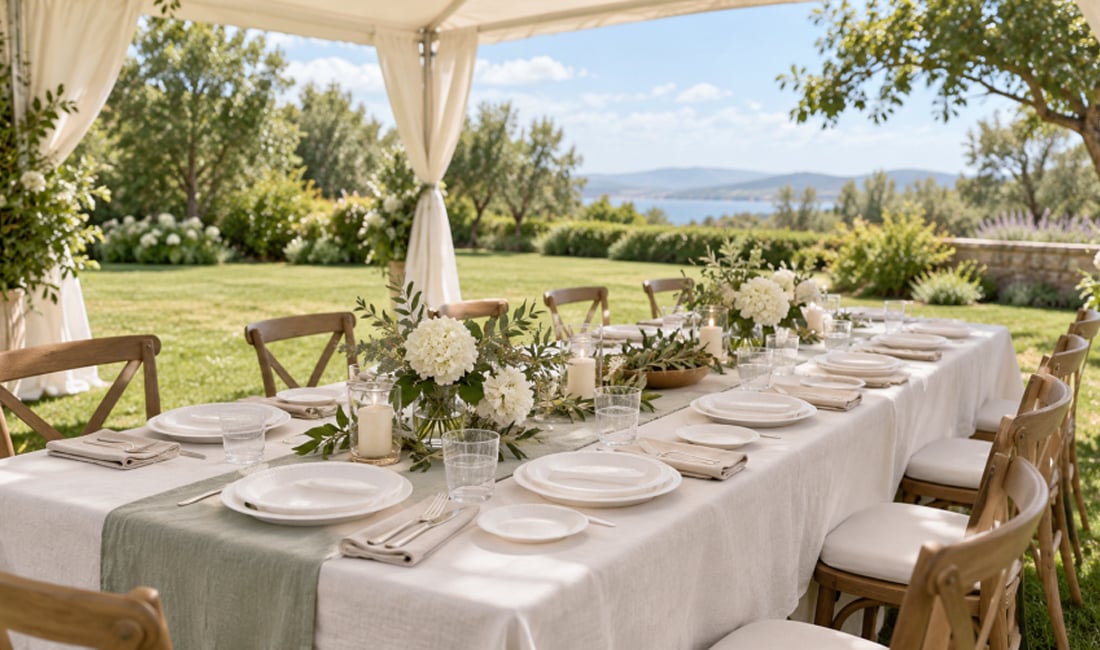
Outdoor events make simple tableware choices more demanding. A plate that works well indoors may flex when carried across a lawn. An empty cup may tip on an uneven table, while loose napkins can disappear before the meal begins. Heat, rain, and humidity create further problems for storage and service.
From a supplier’s point of view, a reliable order begins with five details: the menu, guest count, service style, venue, and expected weather. This guide explains how planners can choose, count, pack, and set up disposable tableware for an outdoor event in 2026.
How Wind and Weather Affect Outdoor Event Disposable Tableware
Outdoor tableware does not need to be bulky, but it must suit the conditions. The same item can perform very differently on a sheltered patio and an open beach. Weather should therefore be part of the buying plan from the start.
Wind: Moving Plates, Cups, and Napkins
Wind affects empty items first. Lightweight plates can lift, tall cups can tip, and loose napkins can scatter. Heavier construction, firm rims, wider cup bases, and compact stacks can help. Planners should also keep extra pieces covered and release them in smaller batches. No disposable item is fully windproof because performance depends on the product, setup, and actual conditions.
Heat and Sun: Serving Temperature and Material Limits
Direct sun can heat tables and supplies. Hot foods and drinks add another concern because not every plate, bowl, or cup is designed for the same temperature range. Buyers should check product directions before ordering. A cold-drink cup should not be assumed suitable for coffee, and disposable tableware should not be used as a way to control food temperature.
Rain and Humidity: Moisture and Storage Risks
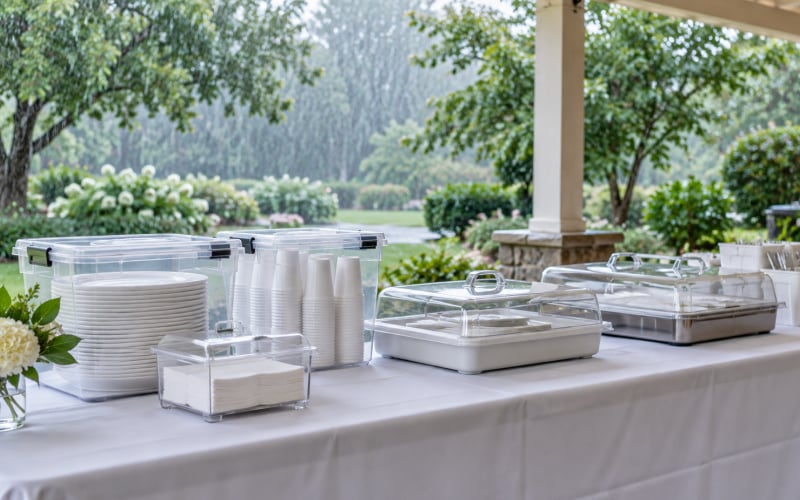
Rain can interrupt service within minutes. Humidity may also soften paper packaging and affect napkins. Sealed sleeves, lidded bins, and a covered reserve area help keep supplies dry. Only the amount needed for the current service period should be opened. Items exposed to dirty spray, wet ground, insects, or heavy handling should not return to clean stock.
Wet or Uneven Ground: Stability During Service
Grass, gravel, decks, and sloped areas can make tables and drink stations less stable. The event team should choose the most level, protected area available. Cups with broad bases are generally easier to manage on less stable surfaces, while trays with raised edges can help staff carry several drinks or small plates.
How to Choose Disposable Tableware for Outdoor Events
Material alone does not decide whether an item is suitable. Thickness, shape, rim design, size, and intended use all affect performance. Buyers should compare product details instead of assuming that every paper or plastic item will behave in the same way.
Match Disposable Plates and Bowls to the Menu
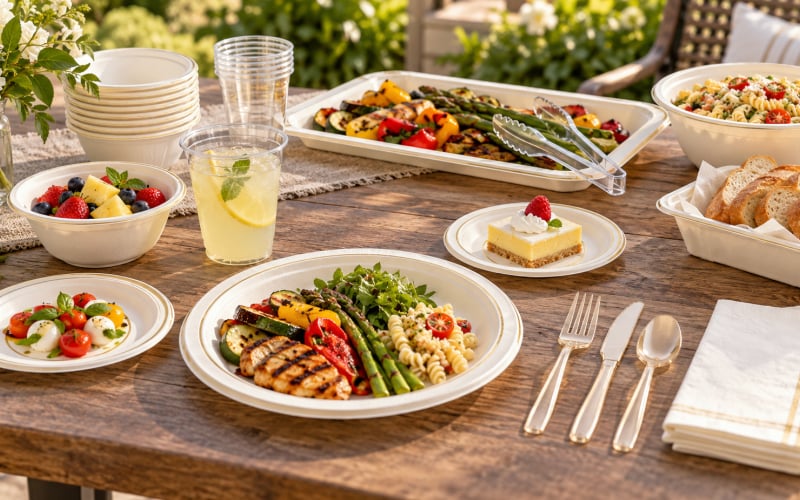
The menu sets the strength requirement. Light appetizers and dry desserts place less pressure on a plate than grilled meat, pasta, or foods with sauce. Firm dinner plates and raised rims can help with full meals. Bowls suit soup, chili, salads, and desserts when their stated use matches the food. When comparing disposable party plates, buyers should check dimensions, pack count, and product directions as well as design.
Choose Disposable Cups for the Drink Station
The beverage plan should guide cup size and shape. Water, soft drinks, wine, cocktails, and hot beverages may require different items. Shorter cups with wider bases are often easier to manage at exposed venues, while tall or stemmed drinkware may suit sheltered tables. Before selecting disposable cups, buyers should confirm capacity, intended beverage type, and any stated temperature limits.
Select Disposable Flatware for the Foods Served
Flatware should match the food. A soft dessert may need only a small fork or spoon, while firm foods place more demand on knives and forks. A complete set is useful for a mixed menu but may create unnecessary cost and waste when only one utensil is needed. A comfortable, firm grip also helps guests who are eating while standing.
Pick Napkins That Are Easier to Manage Outdoors
Napkin size and absorbency should match the menu. Barbecue, finger foods, and saucy dishes usually require more than cake and drinks. Planners can use covered holders, tuck napkins beside flatware, or prepare individual utensil bundles. Clips, weights, and decorative objects should stay away from surfaces that touch the guest’s mouth or food.
Add Serving Trays, Platters, and Utensils
Buffets and self-service tables may need serving trays, bowls, platters, tongs, spoons, and covers. Each dish should have a suitable serving utensil. Coordinated sets can simplify purchasing and presentation, but every pack should still be checked. Its plate sizes, cup count, and flatware mix must match the menu.
How Much Disposable Tableware to Pack for an Outdoor Event
Quantity planning should begin with the number of guests and the number of service rounds. The following figures are practical starting points rather than fixed rules.
|
Item |
Basic Planning Method |
|---|---|
|
Dinner plates |
One per guest for each main meal service, plus a reserve |
|
Appetizer or dessert plates |
One per guest for each separate course that needs a new plate |
|
Bowls |
One per guest when the menu includes a bowl-based dish |
|
Flatware |
One suitable set per guest, plus the serving utensils required by the menu |
|
Cups |
Begin with one per guest, then add more for refills, several drink types, or unmarked self-service cups |
|
Napkins |
Begin with two per guest and increase the count for finger foods or messy dishes |
|
Serving pieces |
At least one suitable utensil for each dish, with backups for key stations |
Count by Guest, Course, and Service Station
A guest count alone is not enough. A three-course meal uses more pieces than a single buffet, while separate drink and dessert stations need their own supplies. Listing each pickup point also catches easy-to-miss items, such as spoons for coffee or small forks for cake.
Add a Reserve for Seconds, Spills, and Damaged Pieces
A reserve of about 10 to 15 percent above the base count is a useful starting point. Long self-service events and remote venues may need more, while a staffed meal with controlled place settings may need less. This reserve covers normal changes; it cannot correct a plate that is too small or unsuitable for the menu.
Adjust Quantities for Buffets and Self-Service Events
Buffets can increase use because guests may return for another serving or visit several stations. Cup use may also rise when drinks are offered in different areas. Where venue or catering rules call for a fresh plate on each buffet visit, that policy must be included in the count.
Keep Backup Stock Sealed Until Needed
Reserve stock should remain in its original sleeve or a clean, closed container. One team member can manage it, preventing several boxes from being opened and exposed at once.
Outdoor Event Disposable Tableware Packing Checklist
Packing by station makes unloading faster and helps staff see what is missing.
Guest Place Settings
• Dinner plates, appetizer plates, and bowls required by the menu
• Forks, knives, and spoons selected for the food
• Cups for each beverage type
• Napkins in the right size and quantity
• Optional pre-packed flatware and napkin bundles
Buffet and Food-Service Supplies
• Serving trays, platters, bowls, and a suitable utensil for each dish
• Covers or lids for food and clean tableware
• Extra plates at high-use stations
• Small plates and forks for dessert service
• Clean containers for backup supplies
Beverage Station Supplies
• Cups and dispensers matched to the planned drinks
• Ice scoop and a clean holder, if ice is served
• Stirrers, straws, or garnishing tools only when needed
• Napkins for spills and a tray for filled drinks
Wind and Weather Backup Items
• Lidded storage bins and covered napkin holders
• Clips or weights made for table covers
• Food covers for exposed serving areas
• Dry towels for tables and supply boxes
• Spare bags for separating wet items
• A marked quick-access box
Cleanup and Waste Supplies
• Lined waste containers near service areas
• Separate collection bins where local recycling or composting is available
• Extra trash bags and ties
• Gloves and cleaning supplies kept away from food-contact items
• Boxes or bins for clean, unused stock
How to Pack and Transport Disposable Tableware for Outdoor Events
Poor packing can leave plates cracked, cup sleeves crushed, and paper items damp. A clear transport plan protects both the order and the schedule.
Group Supplies by Service Station
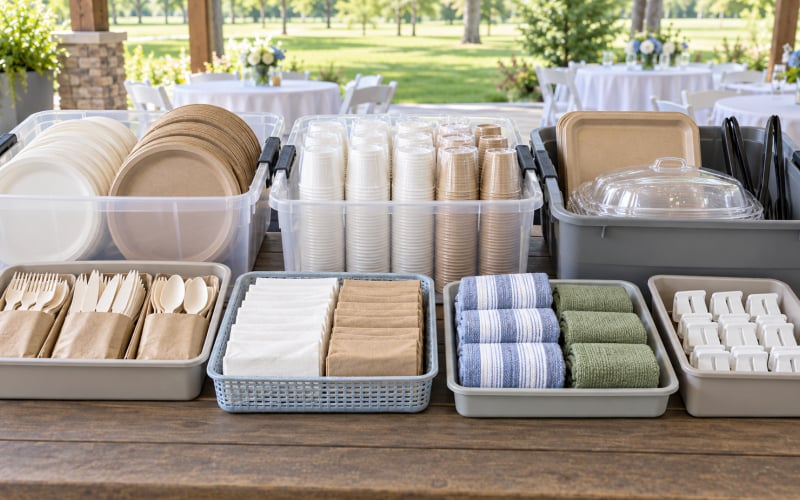
Each box should serve one area: guest tables, buffet, bar, dessert station, or reserve stock. Staff can then carry a complete box to each station instead of opening several cartons across the venue.
Protect Tableware from Moisture and Crushing
Food-contact items should remain wrapped for as long as practical. Strong cartons or lidded bins add protection, and heavy equipment should never sit on cups, plates, or napkins. Cleaning liquids, fuel, and other chemicals belong in a separate area.
Label Each Box for Faster Setup
A useful label includes the station name, item list, quantity, and opening order. Items needed first should be loaded last so they can be unloaded first. Weather covers and the quick-access kit should remain easy to reach.
Prepare a Quick-Access Weather Kit
The weather kit can hold clean covers, napkin holders, table-cover clips, dry towels, spare bags, and labels. It should be easy for one staff member to carry. It does not replace a venue safety plan; strong wind, lightning, or severe rain may require service to stop.
How to Set Up Disposable Tableware for Wind and Rain
Outdoor setup should reduce the time that clean, empty pieces remain exposed.
Position Food and Drink Stations in Sheltered Areas
Buffet and beverage tables should use a stable covered area where possible. The ground should be firm and level without blocking guest paths. Tents and other structures must follow their own safety requirements; tableware methods cannot make an unsafe structure suitable for severe weather.
Put Out Lightweight Items in Smaller Batches
Plates, cups, and napkins do not all need to appear at once. Smaller batches are easier to control and replace. They also expose less stock to dust, wind, and handling.
Secure Napkins and Table Covers
Napkins can sit in a covered holder, beside wrapped flatware, or within a prepared setting. Table covers should use clips or weights intended for that purpose. At a breezy site, a controlled pickup station can reduce the number of empty pieces left on guest tables.
Keep Reserve Tableware Covered and Within Reach
Reserve boxes should be close enough for quick refills but outside busy paths. A covered table, enclosed vehicle, or indoor room may work. If rain begins, unused tableware and other food-contact items should move before decorative pieces.
How to Handle Disposable Tableware After an Outdoor Event
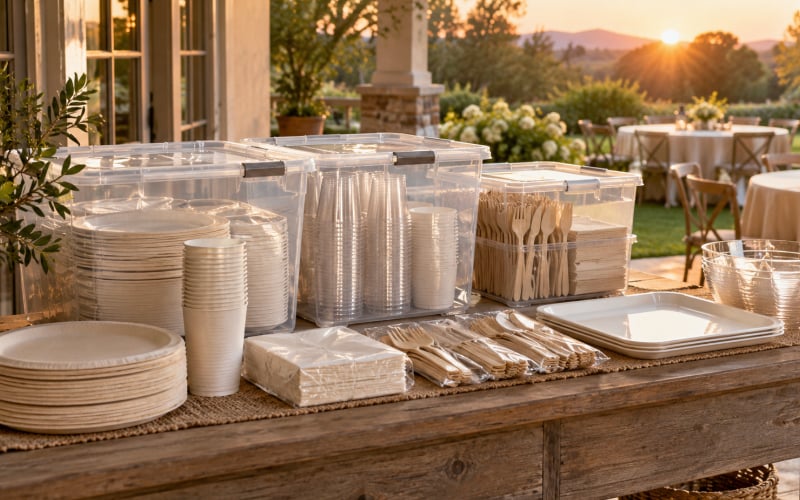
Collection points should be visible but kept away from serving lines, with a clear system for separating waste from unused stock.
Separate Clean and Unused Stock
Unopened sleeves can usually be saved when they remain clean, dry, and undamaged. Opened but untouched items should go into a clean, closed container. Anything exposed to soil, dirty water, pests, or waste should be removed. Saved boxes should be labeled with their contents and count.
Collect Food Waste and Used Tableware
Waste stations should suit the guest count and menu. Full bags need to be closed and moved before they overflow. Staff should not sort sharp or heavily soiled items by hand without suitable protection, and the cleanup plan should follow venue rules.
Follow Product Labels and Local Disposal Rules
Disposal options vary by material and location. A recycling mark does not guarantee local acceptance, especially when food residue remains. Compostable products also need an accepting waste service. Product information and venue rules should be checked before bins are labeled.
FAQs About Outdoor Event Disposable Tableware
Can Disposable Tableware Be Set Out Before Guests Arrive?
It can be set out early in a clean, sheltered, and calm area. At an exposed site, a shorter setup window is better. Covered stacks or pre-packed settings should replace open rows of plates, cups, and napkins when wind, dust, or rain is possible.
Are Pre-Packed Place Settings Better for Windy Events?
They can reduce loose pieces and speed up service. A napkin wrapped around the needed flatware is easier to manage than separate stacks. The bundle still needs to be kept covered, and it should not rely on decorative items that may contaminate food-contact surfaces.
How Should Unused Disposable Tableware Be Stored After the Event?
Clean pieces should be returned to their original sleeve when possible or placed in a sealed, food-safe storage container. The storage area should be dry, clean, and away from heat, strong odors, pests, and cleaning chemicals. Damaged or contaminated items should not be mixed with usable stock.
What Should Be Moved First When the Weather Changes?
Event safety comes first. Once guests and staff are following the venue’s weather plan, food and clean food-contact supplies should move to a covered area. Unopened reserve stock, open cup and plate stacks, napkins, and serving utensils are the main tableware priorities.
Pack Smarter for the Next Outdoor Event
The best outdoor order is not simply the largest one. It is the order that fits the menu, number of guests, service plan, venue, and likely weather. A clear count, protected reserve, and station-based packing system can prevent both shortages and unnecessary waste.
Wonderful Party offers coordinated disposable plates, cups, bowls, flatware, napkins, and serving pieces for events of different sizes and styles. With the practical details settled first, planners can build an outdoor table that looks polished and remains easier to manage from setup through cleanup.