

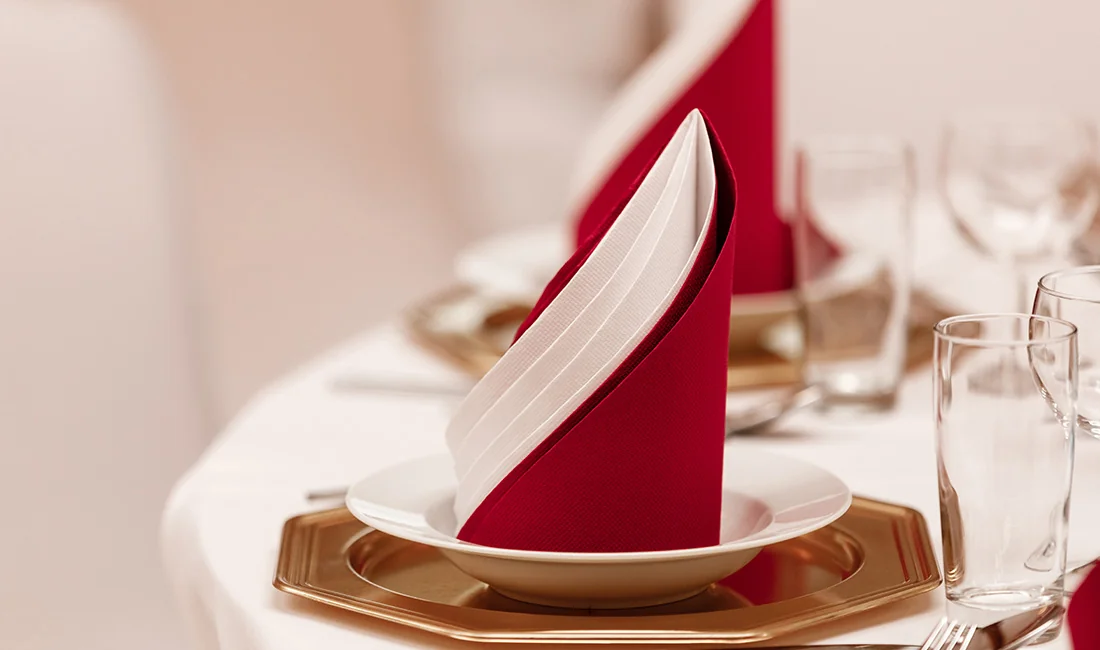
A cocktail napkin is a small, square, single-use napkin — typically 10×10 inches unfolded and 5×5 inches folded — designed for drinks and light bites at standing events. A dinner napkin is a larger napkin, ranging from 16 to 22 inches square unfolded, designed for seated meals where lap coverage, absorbency, and multi-course durability matter.
Choosing the wrong one creates a mismatch guests notice immediately. A tiny cocktail napkin at a plated dinner leaves guests unprotected during a saucy main course. An oversized dinner napkin at a cocktail bar feels clumsy in one hand while holding a glass in the other. The napkin that fits the occasion makes the table — or the bar — feel intentional rather than improvised.
This guide covers the specific dimensions, materials, and service scenarios where each napkin type belongs, along with per-guest planning quantities and cost considerations, so hosts can match the napkin to the event with confidence.
What Is the Difference Between Cocktail and Dinner Napkins?
The primary difference is size and intended use. A cocktail napkin measures 10×10 inches unfolded (5×5 folded) and serves drinks, hors d’oeuvres, and standing events. A dinner napkin measures 16–22 inches square unfolded and serves seated meals requiring lap coverage, utensil support, and higher absorbency across multiple courses.
Beyond size, the two napkin types differ in thickness, material, placement, and how long guests interact with them. A cocktail napkin sits under a glass or wraps around a small bite for a few minutes at a time. A dinner napkin stays on a guest’s lap for an entire meal — sometimes over an hour — and must absorb spills, protect clothing, and hold up through several courses without falling apart.
|
Feature |
Cocktail Napkin |
Dinner Napkin |
|
Unfolded size |
10×10 in |
16–22 in square |
|
Folded size |
5×5 in |
Varies by fold style |
|
Typical ply (paper) |
1-ply or 2-ply |
2-ply or 3-ply |
|
Primary function |
Drink coaster, small bite wrapper |
Lap coverage, spill protection |
|
Service style |
Standing, mingling, bar |
Seated, plated, multi-course |
|
Duration of use |
Minutes per napkin |
Full meal (30–90+ min) |
|
Cost per unit (paper) |
~0.02–0.02–0.02–0.04 |
~0.05–0.05–0.05–0.10 |
This size-function pairing is not interchangeable. Using cocktail napkins at a dinner table forces guests to grab multiples, which increases consumption and makes the table look understocked. Using dinner napkins at a cocktail bar wastes material and clutters a station designed for quick, one-handed service.
When Are Cocktail Napkins the Right Choice?
Cocktail napkins are the right choice at any event where guests stand, mingle, and hold drinks — cocktail parties, wedding cocktail hours, pre-dinner receptions, corporate networking bars, wine tastings, and passed hors d’oeuvres service. Their compact 5×5-inch folded size fits in one hand alongside a glass without interfering with conversation or movement.
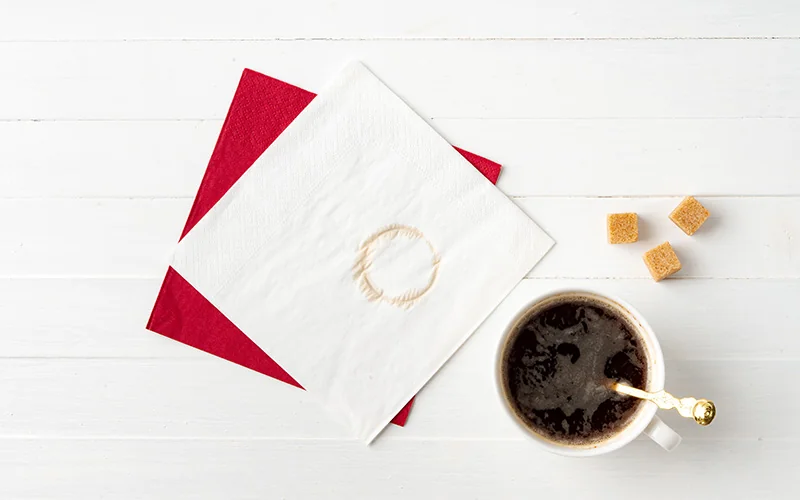
The functional purpose of a cocktail napkin at a drink station is threefold: it absorbs condensation that drips from cold glasses, it protects the surface beneath the drink from water rings, and it gives the guest a better grip on a slippery glass. At appetizer stations, the same napkin wraps around small bites like sliders, skewers, or mini desserts — enough coverage for finger food, not enough for a full meal.
Paper cocktail napkins in 1-ply work for high-volume casual events where cost efficiency matters most. 2-ply cocktail napkins offer better absorbency and a sturdier feel, making them the standard choice for weddings, upscale receptions, and any event where napkin quality reflects on the host.
How Do Cocktail Napkins Contribute to Event Design?
Cocktail napkins are one of the most visible branded elements at an event because guests carry them throughout the room. Color and print coordination turns a functional item into a design element — hosts who match napkin colors to the event palette, or who use monogrammed or custom-printed napkins, reinforce the theme every time a guest picks up a drink. Stacking napkins in a fan arrangement or placing them in a clear holder at the bar keeps the station looking organized. Since cocktail napkins are small and inexpensive, they offer one of the highest design-impact-per-dollar returns of any party accessory.
When Are Dinner Napkins the Right Choice?
Dinner napkins are the right choice at any seated meal — casual dinner parties, holiday meals, wedding receptions with plated service, corporate banquets, and multi-course formal dinners. The 16–22 inch unfolded size provides full lap coverage that protects clothing from spills throughout the entire meal.
Casual dinner napkins in the 16–18 inch range suit everyday dinners, relaxed parties, and buffets where guests carry plates to their seats. These napkins fold into simple rectangles or pockets for silverware and do not overwhelm a standard dinner plate.
Formal dinner napkins in the 20–22 inch range are reserved for weddings, galas, corporate dinners, and events with charger plates and multiple utensils. The extra fabric accommodates upright decorative folds — bishop hats, standing fans, fleur-de-lis — that add visual height and formality to the place setting.
How Does the Setting — Formal vs Casual — Change the Dinner Napkin Choice?
The level of formality determines fabric weight, color palette, and fold complexity. Formal events call for heavier linen napkins in classic neutral tones — white, ivory, charcoal — pressed into crisp folds that hold their shape throughout service. Casual events work well with cotton or cotton-blend napkins in patterns, seasonal colors, or earth tones, folded into simple rectangles or rolled around utensils. Paper dinner napkins (typically 15–17 inches unfolded) serve large casual gatherings and outdoor events where convenience and fast cleanup outweigh the visual refinement of cloth.
What Materials Work Best for Each Napkin Type?
Paper is the standard material for cocktail napkins at large events due to low cost and easy disposal, while cloth — particularly linen and cotton — is the standard for dinner napkins at seated meals where absorbency, texture, and reusability matter.
How Do Paper and Cloth Napkins Compare in Practice?
A paper napkin is a disposable sheet made from wood pulp fiber, available in 1-ply to 3-ply constructions. Paper napkins offer convenience, low per-unit cost, and zero laundering — making them the default for high-volume events, outdoor parties, and any setting where collecting used napkins is impractical.
A cloth napkin is a reusable fabric square — most commonly cotton or linen — that absorbs significantly more liquid per wipe than paper and survives repeated washing. Linen napkins hold the crispest folds and drape elegantly at formal tables. Cotton napkins feel softer and cost less, suiting casual dinners and everyday use.
|
Feature |
Paper Napkins |
Cloth Napkins |
|
Reusable |
No |
Yes |
|
Absorbency |
Moderate (depends on ply/GSM) |
High |
|
Upfront cost |
Low (~0.02–0.02–0.02–0.10/unit) |
Higher (~1–1–1–5/unit, reusable) |
|
Laundering |
None |
Required after each use |
|
Best for cocktail service |
1-ply or 2-ply paper |
Cloth at upscale bars only |
|
Best for dinner service |
2-ply or 3-ply paper at casual events |
Linen or cotton at seated dinners |
The environmental comparison between paper and cloth is not straightforward. Paper napkins generate solid waste but require no laundering. Cloth napkins eliminate disposal waste but consume water, energy, and detergent with each wash cycle. Recycled paper napkins — made from post-consumer fiber, often unbleached — offer a middle ground for hosts who want disposable convenience with a smaller environmental footprint.
For food safety, napkins that contact food or beverages should be made from materials meeting FDA food-contact standards in the United States. Printed napkins perform best when inks are food-safe and soy- or water-based rather than solvent-based.
How Many of Each Napkin Type Should a Host Plan Per Guest?
The standard planning formula is 3–4 cocktail napkins per guest for a 2–3 hour standing event, and 1 dinner napkin per guest per place setting for a seated meal. An additional 10–15% buffer covers drops, spills, and unexpected needs.
|
Event Type |
Napkin Type |
Per Guest |
Buffer |
|
Cocktail party (2–3 hrs) |
Cocktail (5×5 folded) |
3–4 |
+15% |
|
Wedding cocktail hour (1 hr) |
Cocktail |
2–3 |
+10% |
|
Seated casual dinner |
Dinner (16–18 in) |
1 |
+10% |
|
Formal multi-course dinner |
Dinner (20–22 in) |
1 |
+10% |
|
Mixed event (cocktails → dinner) |
Both types |
2–3 cocktail + 1 dinner |
+15% |
|
Kids’ party |
Cocktail or luncheon |
4–5 |
+20% |
Many events combine both napkin types in sequence. A wedding typically uses cocktail napkins during the cocktail hour, then switches to dinner napkins once guests move to the reception tables. Planning for both avoids the common mistake of using cocktail napkins at dinner tables — a substitution that forces guests to use three or four small napkins to do the job of one dinner napkin, increasing total consumption and making the table look understocked.
For cost planning, a 100-guest event with a 1-hour cocktail reception followed by a seated dinner requires approximately 350 cocktail napkins and 115 dinner napkins (with buffer). At typical bulk paper pricing, that totals roughly 10–10–10–18 for cocktail napkins and 6–6–6–12 for dinner napkins — a combined napkin budget of approximately 16–16–16–30 for the entire event.
Where Should Each Napkin Type Be Placed at an Event?
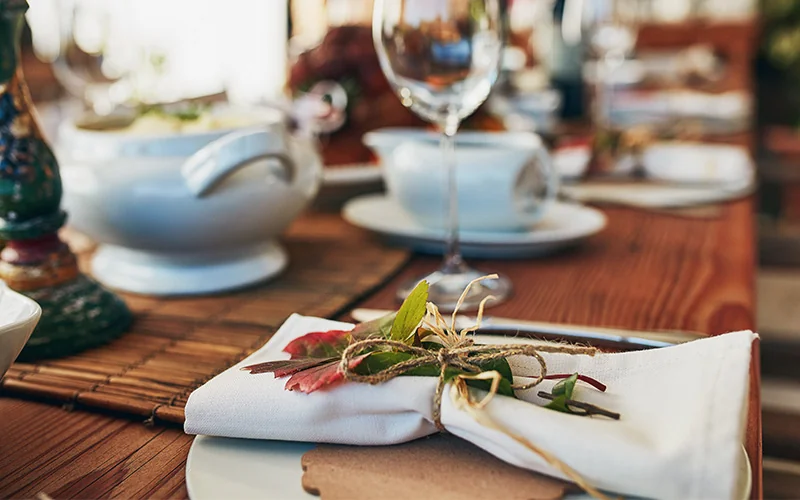
Cocktail napkins belong at every point where drinks are served — the bar, high-top tables, passed tray service, and appetizer stations. Dinner napkins belong at each place setting in the dining area — centered on the dinner plate, to the left of the forks, tucked under a charger, or set inside a napkin ring.
How Should Cocktail Napkins Be Arranged at a Bar or Drink Station?
Cocktail napkins at a bar station are placed in neat stacks or fanned arrangements within easy reach of every guest picking up a drink. Staff-served bars typically include a cocktail napkin with each drink as it is handed across the bar. Self-serve stations benefit from a visible napkin holder or acrylic display that keeps stacks organized and prevents wind scatter at outdoor events. Placing napkins next to — not underneath — the glassware keeps them dry and accessible.
Where Do Dinner Napkins Go in a Place Setting?
The four standard dinner napkin placements are centered on the dinner plate (formal), to the left of the forks (classic), tucked under a charger plate (layered), and set inside a wine glass (decorative). The choice depends on fold style and formality level. At formal events, an upright fold on the plate creates visual height at the center of the setting. At casual dinners, a flat rectangle to the left of the forks keeps things simple and functional. At buffets, dinner napkins are pre-rolled with utensils at the start of the service line so guests pick up everything in one grab.
How Should Napkin Color and Style Match the Rest of the Table?
Napkin color and style create the strongest visual impact when coordinated with the broader table setting — matching or complementing the plates, cups, glasses, and table coverings in the same color family. A napkin that echoes the event palette looks intentional; one that clashes looks like an afterthought.
Cocktail napkins offer the most design flexibility per dollar because they are small, inexpensive, and visually prominent in the guest’s hand. Custom printing — monograms, event dates, hashtags, or themed graphics — turns a functional item into a personalized detail at minimal cost. Bold colors and patterns work well at cocktail stations because the napkins are seen individually, carried throughout the room.
Dinner napkins make a subtler impact because they sit on the table as part of a larger composition. Solid neutral tones — white, ivory, charcoal, navy — integrate cleanly with formal tableware. Seasonal colors or patterns suit casual dinners and holiday gatherings. The key principle is consistency: a dinner napkin in the same color family as the plates, table runner, and centerpiece creates a cohesive setting, while a mismatched napkin breaks the visual flow.
The napkin is one of the few table elements guests physically pick up and hold — making it a tactile connection point between the setting and the person. Selecting napkins with the same care given to plates, cups, and glasses ensures that every element of the table works together, from the largest charger to the smallest cocktail square.