

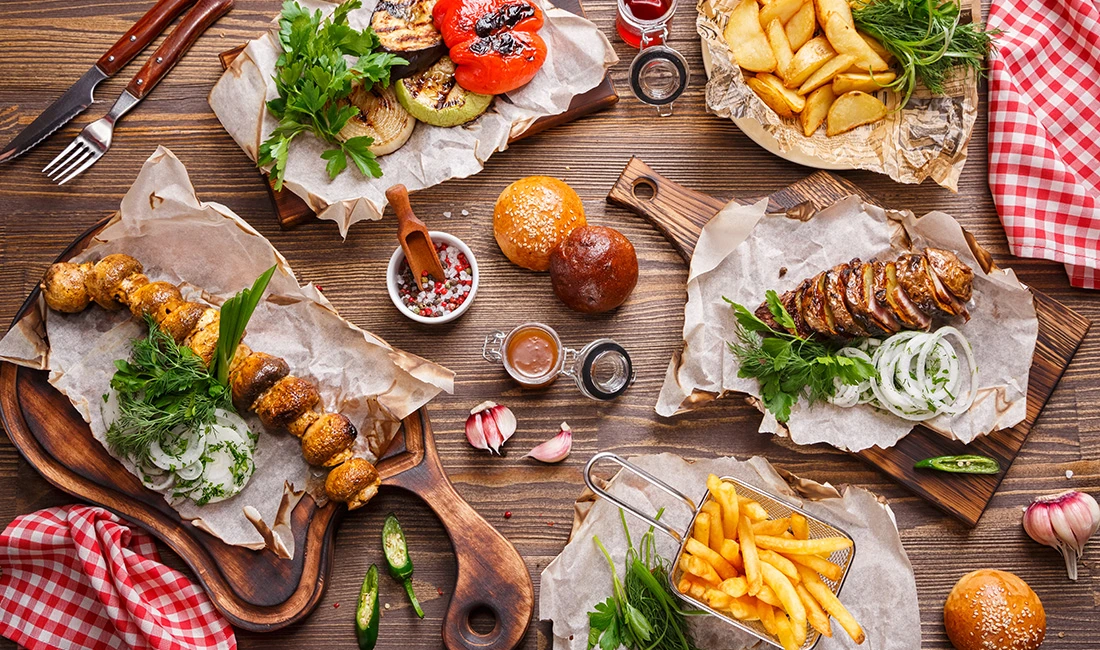
BBQ meals produce more grease, sauce, and mess than almost any other party menu. The napkin that works fine at a cocktail hour or dessert table will fall apart halfway through a plate of ribs — leaving guests with sticky hands, stained clothes, and shredded paper in their laps.
The difference between a napkin that handles BBQ and one that does not comes down to three measurable qualities: ply count, GSM (weight per square meter), and wet strength. These are not marketing terms — they are manufacturing specifications that directly predict how a napkin performs against oil, sauce, and moisture.
This guide covers what each specification means, which materials hold up best against greasy foods, what sizes fit BBQ service, and how many napkins a host should plan per guest — so the napkin choice matches the mess level of the menu.
What Makes a Napkin Good Enough for BBQ and Greasy Foods?
The three qualities that determine BBQ napkin performance are absorbency (how much grease and liquid the napkin can hold), wet strength (whether it stays intact after soaking), and ply construction (how many fiber layers are bonded together). A napkin that scores well on all three handles ribs, burgers, and saucy sides without tearing, shredding, or letting oil seep through to hands and clothing.
Absorbency is the ability of a napkin to pull in and retain liquid rather than pushing it around on the surface. BBQ sauces contain both oil and water, which means the napkin fiber must attract both types of liquid. Manufacturers increase absorbency through embossing — a process that presses textured patterns into the paper, creating small pockets that trap grease and expand the effective surface area.
Wet strength is the structural integrity a napkin maintains after absorbing liquid. A napkin with low wet strength disintegrates into fragments during use, leaving lint on hands and food. Manufacturers improve wet strength by bonding fibers more tightly during production and sometimes adding food-safe resins that resist breakdown when saturated. For BBQ service, wet strength matters as much as absorbency — a napkin that absorbs well but falls apart mid-wipe is not functional.
Ply count is the number of individual fiber layers bonded together to form a single napkin sheet. Higher ply means more material per napkin, which generally increases both absorbency and tear resistance. For BBQ, 2-ply is the practical minimum; 1-ply tears too easily under sauce and grease.
How Do 1-Ply, 2-Ply, and 3-Ply Napkins Perform with Greasy Foods?
A 1-ply napkin is a single layer of tissue fiber — lightweight and inexpensive but limited in absorbency and prone to tearing under wet, greasy conditions. A 2-ply napkin bonds two fiber layers together, roughly doubling absorbency and tear resistance at a modest cost increase. A 3-ply napkin uses three bonded layers, delivering the highest absorbency and durability but at a premium price point.
For most BBQ events, 2-ply napkins with adequate GSM (discussed in the next section) represent the best balance of performance and cost. They handle sauce, grease, and wet hands without the fragility of 1-ply or the expense of 3-ply.
|
Ply |
Strength |
Absorbency |
Best BBQ Use |
|
|
1-ply |
Low |
Low |
Dry snacks, basket liners, drink coasters |
|
|
2-ply |
Moderate–High |
High |
Burgers, pulled pork, wings, most BBQ menus |
|
|
3-ply |
High |
Very High |
Ribs, brisket, heavy-sauce menus, upscale BBQ events |
1-ply napkins have a role at BBQ events — they work as tray liners, under drinks, or alongside dry side dishes like chips and bread. But for the main course, a single layer cannot absorb enough sauce or survive a firm wipe across greasy fingers. Guests at a BBQ served with 1-ply napkins will instinctively grab three or four at a time, which often negates the per-unit cost savings.
3-ply napkins are appropriate when the menu is especially messy — full racks of ribs, heavily sauced brisket, or buttered corn on the cob — or when the event is upscale enough to justify a premium feel. The extra thickness keeps grease from seeping through to laps and clothing, and guests typically need only one napkin per course rather than a stack.
What Does GSM Mean and Why Does It Matter for BBQ Napkins?
GSM (grams per square meter) is a measurement of fiber density — how much material is packed into each square meter of paper. Higher GSM means a thicker, denser napkin that absorbs more liquid and resists tearing under pressure. GSM is independent of ply count, which means a high-GSM 2-ply napkin can outperform a low-GSM 3-ply napkin.
Typical foodservice napkin GSM ranges are 25–40 GSM per ply for 1-ply napkins, 30–35 GSM per ply (60–70 GSM total) for 2-ply napkins, and 25–30 GSM per ply (75–90 GSM total) for 3-ply napkins. For BBQ service, a 2-ply napkin at 30–35 GSM per ply — totaling 60–70 GSM — provides reliable performance against sauce and grease without excessive bulk or cost.
How Does GSM Affect Absorbency in Practice?
Higher GSM means more fiber per unit area, which creates more surface for liquid to bind to. A 2-ply napkin at 35 GSM per ply absorbs noticeably more sauce than one at 25 GSM per ply — the difference is visible when pressing the napkin against a greasy surface. Fiber quality also plays a role: virgin pulp with longer fibers absorbs faster and more completely than recycled fiber at the same GSM, because longer fibers create a more cohesive network that pulls liquid inward rather than letting it sit on the surface.
Embossing amplifies the effect of GSM by adding texture that traps grease in small pockets across the napkin surface. A napkin with moderate GSM and deep embossing can match or exceed the absorbency of a higher-GSM napkin with a flat surface. When evaluating napkins for BBQ service, both GSM and embossing pattern are worth checking — the combination determines real-world performance better than either specification alone.
What Napkin Materials Work Best for BBQ — Paper, Recycled, or Cloth?
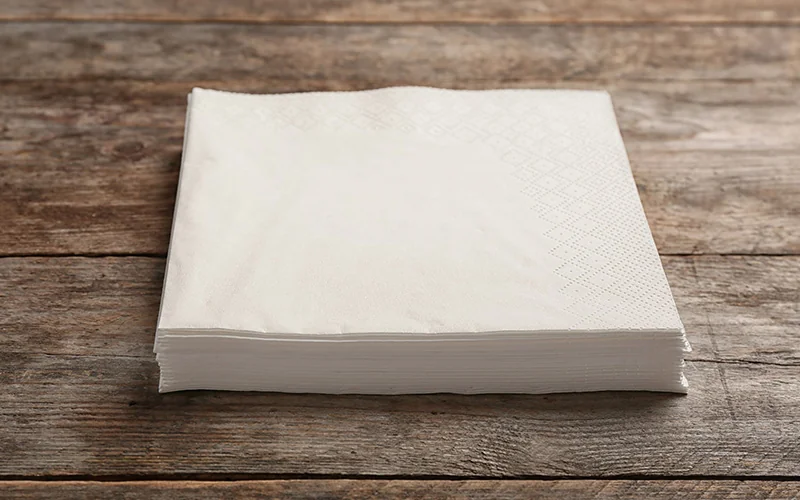
Paper napkins made from virgin wood pulp offer the strongest absorbency and tear resistance for BBQ due to their longer fiber length, which creates tighter bonding between layers. Recycled paper napkins use shorter fibers and are slightly less durable but reduce virgin pulp demand. Cloth napkins deliver the highest absorbency and unlimited reuse but require laundering after each event.
How Do Virgin Pulp and Recycled Paper Napkins Compare?
Virgin pulp napkins are made from freshly harvested wood fiber — typically softwood or hardwood — that has not been previously processed. The fibers are long, flexible, and bond tightly during manufacturing, producing napkins that feel soft, absorb quickly, and resist tearing even when saturated. These qualities make virgin pulp the default choice for heavy-duty BBQ service where performance is the top priority.
Recycled paper napkins are made from post-consumer fiber that has been reprocessed. Each recycling cycle shortens the fibers, which reduces tensile strength and absorbency compared to virgin pulp at the same GSM. To compensate, manufacturers often increase ply count or GSM in recycled napkins. A 3-ply recycled napkin can approach the performance of a 2-ply virgin pulp napkin — the trade-off is slightly higher bulk and cost per sheet.
Bamboo fiber napkins are an emerging alternative. Bamboo is a fast-growing grass that produces fibers competitive with hardwood pulp in strength and softness. Bamboo napkins perform well against grease when manufactured at adequate GSM and ply, though availability and pricing remain less consistent than conventional wood pulp products.
For hosts who prioritize sustainability, recycled napkins with a high percentage of post-consumer content — paired with adequate ply and GSM for the menu — balance environmental responsibility with practical performance. Certifications like FSC (Forest Stewardship Council) indicate that the fiber source, whether virgin or recycled, meets responsible sourcing standards.
When Do Cloth Napkins Make Sense at a BBQ?
Cloth napkins are reusable fabric squares — most commonly cotton or linen — that absorb significantly more liquid per wipe than paper and survive repeated washing. Thick cotton napkins handle multiple greasy wipes in a single meal without structural failure, making them functionally superior to any disposable option for heavy BBQ service.
The trade-off is logistics. Cloth napkins require collection, pre-treatment for grease stains, laundering with hot water and detergent, and storage between events. For hosts who grill frequently — weekly or monthly — reusable cloth napkins reduce long-term waste and per-event cost. For large one-time BBQ parties where collecting and washing dozens of greasy napkins is impractical, high-ply disposable paper napkins remain the easier choice.
What Size Napkins Does a BBQ Party Need?
Dinner napkins measuring 15–17 inches unfolded are the standard size for BBQ main courses — large enough to cover a lap, wipe hands and face, and survive multiple uses during a messy meal. Cocktail napkins (10×10 inches unfolded / 5×5 folded) serve a supporting role at drink stations and appetizer tables but are too small for sauce-heavy entrées.
Most BBQ events benefit from offering both sizes at different stations. Dinner-size napkins go at each place setting or stacked at the buffet line where guests pick up their main plate. Cocktail napkins go at the drink station, the dessert table, and alongside dry appetizers like chips, bread, or crudités.
For especially messy menus — ribs, brisket with heavy sauce, buttered corn — some hosts set out guest towels (approximately 8×4 inches folded, thicker and more absorbent than standard napkins) at a handwashing station near the dining area. Guest towels handle the level of cleanup that follows eating with bare hands, which standard dinner napkins may not fully cover.
|
Station |
Recommended Napkin Size |
Type |
|
Main course / buffet line |
15–17 in unfolded (dinner) |
2-ply or 3-ply paper |
|
Drink station |
10×10 in unfolded / 5×5 folded (cocktail) |
1-ply or 2-ply paper |
|
Appetizer table |
10×10 in (cocktail) or 13×13 in (luncheon) |
2-ply paper |
|
Handwashing / cleanup station |
Guest towels (~8×4 folded) |
Thick paper or cloth |
Luncheon napkins (13×13 inches unfolded) work as a middle option for lighter BBQ menus — hot dogs, sliders, or grilled chicken sandwiches that produce less drip and sauce than ribs or brisket.
How Many Napkins Should a Host Plan Per Guest at a BBQ?
The standard BBQ planning formula is 4–5 dinner napkins per guest for a 3–4 hour event with a full sauce-heavy menu, plus 2–3 cocktail napkins per guest for the drink and appetizer stations. An additional 15–20% buffer accounts for wind (outdoor events scatter napkins), spills, and children, who use napkins at roughly double the adult rate.
|
Event Type |
Dinner Napkins/Guest |
Cocktail Napkins/Guest |
Buffer |
|
Heavy BBQ (ribs, brisket, wings) |
4–5 |
2–3 |
+20% |
|
Medium BBQ (burgers, pulled pork) |
3–4 |
2–3 |
+15% |
|
Light BBQ (hot dogs, grilled chicken) |
2–3 |
2 |
+10% |
|
Kids’ BBQ party |
5–6 |
2–3 |
+25% |
For cost planning, a 50-guest BBQ with a heavy sauce menu requires approximately 250 dinner napkins and 150 cocktail napkins (before buffer). At typical bulk pricing of $0.04–$0.06 per 2-ply dinner napkin and $0.02–$0.03 per cocktail napkin, total napkin cost runs approximately $13–$20 for the event. 3-ply dinner napkins raise the per-unit cost to $0.06–$0.12 but reduce total consumption since guests need fewer napkins per course.
Placing napkin stacks at multiple points — the buffet line, each table, and the drink station — prevents bottlenecks and reduces the chance of guests grabbing excessive quantities from a single central stack.
How Do Pattern and Color Choices Affect BBQ Napkin Selection?
The most practical BBQ napkin colors and patterns are those that visually mask sauce and grease stains rather than highlighting them. Dark reds, deep blues, classic red-and-white gingham, and bandana prints all hide BBQ sauce marks better than white or pastel napkins, which show every drip.
Red gingham napkins are a BBQ staple because the pattern naturally camouflages red and brown sauce stains while reinforcing the casual outdoor aesthetic. Solid dark colors — burgundy, navy, forest green — serve the same practical function with a slightly more polished look suited to catered BBQ events or backyard dinner parties.
White napkins, while elegant at formal dinners, become visually messy within minutes at a BBQ. Hosts who prefer a cleaner look can use white napkins at the drink station (where staining is minimal) and darker napkins at the food stations — a simple split that keeps both areas looking intentional.
For themed events, printed napkins with grill motifs, flame designs, or western patterns set the mood at the table. Custom-printed napkins featuring a monogram, event date, or party slogan add a personal touch at the same price point as standard printed options when ordered in bulk.
The napkin pattern and color work best when coordinated with the rest of the table — plates, cups, and tablecloths in the same color family create a cohesive setup. A red gingham napkin next to a matching checkered tablecloth and solid red cups looks deliberate; the same napkin next to floral plates and striped cups looks scattered.
How Should BBQ Napkins Be Set Up and Disposed of at an Event?
BBQ napkin stations work best when placed at every point where guests interact with food — the buffet line, each dining table, the drink station, and the handwashing area. Pre-rolling dinner napkins around a set of utensils (fork, knife, and wet wipe) at the buffet line speeds up service and ensures every guest walks away with everything needed for a messy meal in one grab.
At outdoor BBQ events, weighted napkin holders or dispensers prevent wind from scattering napkin stacks. Open stacks on a windy patio disappear quickly, wasting inventory and creating litter.
What Is the Correct Way to Dispose of Greasy Paper Napkins?
Greasy paper napkins cannot go into paper recycling — the oil contamination makes them unprocessable in standard recycling streams. The two correct disposal routes are composting (if available) or general waste. Unbleached, undyed paper napkins with food-safe coatings break down well in both commercial and home composting systems. Napkins with heavy ink printing or synthetic coatings may not compost cleanly and are better directed to general waste.
For events with a sustainability focus, setting up a clearly labeled compost bin next to the trash bin at each station — with a brief note like “greasy napkins go here” — directs disposal correctly without requiring guests to think about it. Without clear signage, most guests default to the nearest trash can regardless of composting availability.
Cloth napkins used at BBQ events require prompt pre-treatment for grease stains — soaking in hot water with a grease-cutting detergent within a few hours of use prevents permanent staining. Hosts who wait until the next day to launder BBQ-stained cloth napkins often find the oil has set into the fiber permanently.
The napkin is the most-used single item at any BBQ party — guests reach for it more often than any plate, cup, or utensil. Choosing the right ply, GSM, size, and color for the menu means fewer napkins wasted, cleaner hands, and a table that still looks put together even after the messiest course. When the napkins are coordinated with the rest of the tableware — matching the plates, cups, and table coverings in color and quality level — the whole setup communicates that every detail was considered, right down to the last wipe.