


You do event tableware budgeting by planning costs for plates, cutlery, glassware, linens, and serving pieces before you order anything. You set clear goals, count guests, list every item, estimate tableware costs, add a 5–10% buffer, and track spending so you avoid shortages and overspending. This process keeps your event on budget because each choice ties back to real needs.
This guide shows how to define tableware budgeting, why it protects your budget, and how to build and adjust a plan from start to finish. You will learn how to estimate costs, allocate funds, track expenses during planning, and review results after the event so the next budget works even better.
What is Tableware Budgeting?
Tableware budgeting is the process of planning and controlling how much you spend on plates, glassware, flatware, linens, and serving pieces for an event. You define what items you need, how many units you require, and how much each item costs. This approach links guest count, menu, and service style to clear cost limits.
Common tableware budget categories include:
|
Category |
Examples |
|
Dining |
Dinner plates, salad plates, cutlery |
|
Bar |
Wine glasses, beer mugs, cocktail glasses |
|
Linens |
Tablecloths, napkins |
|
Service |
Platters, bowls, serving utensils |
Why Tableware Budgeting Matters?
Unplanned tableware costs rise fast because rental fees often charge per piece. Because you match quantities to guest count and meal format, accurate budgeting reduces shortages. Tableware budgeting also controls waste because over-ordering leads to unused rentals and higher handling fees. Clear tableware budgets support better vendor decisions. When you know your limits, you can choose items that fit your event needs without cutting into other budget areas.
Key impacts of tableware budgeting:
-
Predictable costs tied to guest count
-
Fewer service delays caused by missing items
-
Lower waste from unused rentals
-
Clear trade-offs between menu, service style, and cost
Step1: Start Your Event Tableware Budgeting with Clear Goals
Financial goals are specific money targets you set for your event, such as breaking even or earning a set profit. You start here because every tableware choice affects costs and results.
Define your financial objectives in clear numbers. For example, set a maximum tableware cost per guest, like $6 per place setting, based on your total budget and guest count. In practice, this limit guides choices on plates, glassware, and flatware without guesswork.
Match your tableware level to your revenue plan. If sponsorships cover premium rentals, you can allocate more per guest. If ticket sales drive most income, keep tableware costs tight to protect margins.
List all expected revenue sources before you set limits. This keeps goals realistic and tied to cash flow.
-
Ticket sales from event registration
-
Sponsorships or a single sponsorship package tied to branded table settings
-
Donations, if the event supports a cause
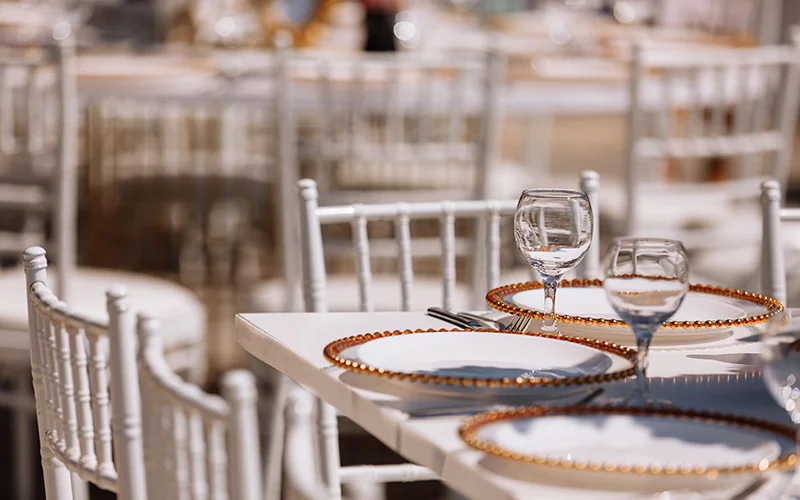
Step 2: List All Items in Your Event Tableware Budgeting
Event tableware items are the dishes, tools, and linens guests use to eat and drink. You list each item because clear counts prevent gaps that raise event expenses later.
Start with core place settings. These items drive most of your catering budget because every guest needs them.
-
Plates: dinner, salad, dessert
-
Flatware: forks, knives, spoons
-
Glassware: water, wine, bar
-
Napkins: paper or fabric
-
Table coverings: tablecloths or runners
Next, add service and shared items. These costs vary by menu and service style, which affects catering cost.
-
Serving trays and platters
-
Pitchers and carafes
-
Condiment holders
Include venue-linked needs. Venue costs often change what you must rent.
-
Venue-required rentals: specific glass types or brands
-
Venue fees: cleaning or handling tied to tableware use
Account for vendor-related charges. Vendor quotes should list base rates and vendor fees.
-
Delivery and pickup fees
-
Labor for setup and breakdown
-
Add-ons: specialty china, charger plates, custom colors
Plan for overflow and loss. Miscellaneous expenses protect your budget allocation.
-
Breakage allowance: 5–10% of item totals
-
Extras: 5% over guest count
Step3: Estimate Costs for Event Tableware Budgeting
Event tableware costs cover plates, cutlery, glassware, linens, and service items used during an event. Estimate these costs by matching quantities to guest count, service style, and venue rules, then compare vendor quotes by item and unit price. Check for venue restrictions, hidden fees, and add-ons like chargers or specialty glassware, and track each as a separate line item to keep your tableware budget under control.
Event Tableware Cost Checklist
-
Define tableware items and quantities
-
Match counts to guest numbers and service style
-
Collect and compare vendor quotes
-
Check unit prices and cleaning fees
-
Review venue-related tableware costs
-
Watch for hidden surcharges
-
List add-ons as separate line items
Step 4: Allocate Your Event Tableware Budget
Start by setting a clear budget limit for event tableware within your overall event budget. Use an event budget template to break costs into fixed expenses, such as delivery and setup, and variable costs tied to guest count, then add a 5–10% contingency to handle last-minute changes and avoid overspending on tableware.
Use this list to allocate your event tableware budget:
-
Set a tableware budget limit
-
Split fixed and per-guest costs
-
Add a 5–10% contingency
Step5: Add a Contingency to Your Event Tableware Budgeting
A contingency fund is a set amount of money reserved to cover unexpected expenses. Most planners set the contingency at 5–15% of projected costs. In event tableware budgeting, this includes broken plates, last-minute guest increases, or vendor price changes. You plan it in advance so these issues do not disrupt service.
Focus your contingency on high-risk items:
-
Glassware and china: breakage during setup and service
-
Flatware: shortages from last-minute place settings
-
Specialty items: rush fees for replacements
Step 6: Track and Adjust Event Tableware Budgeting
Track event tableware budgeting by comparing planned versus actual costs as invoices arrive, covering plates, glassware, flatware, linens, and service items. Use a live budget sheet to record changes in quantities or pricing so you can control spending and avoid surprises while the event is still in progress.
Before final confirmation, adjust costs by negotiating with vendors when quantities change, and clearly tag promotional tableware such as branded cups or printed napkins. After the event, review usage, breakage, and losses to refine future orders and improve budget accuracy.

Step7: Review and Optimize Event Tableware Budgeting After the Event
Post-event analysis compares actual tableware costs with the planned budget to identify overruns and accurate estimates. Review unit costs, quantities used, losses, and cleaning fees to see where breakage, extra linens, or last-minute additions increased spending.
Use these insights to negotiate better vendor terms, adjust buffer percentages, and refine future orders based on attendee data and marketing impact. Store the results in a shared budget file to improve cost control and accuracy for future events.
FAQs
What factors should be considered when setting a budget for event tableware?
You should consider guest count, menu courses, service style, material type, and breakage fees.
You need to base your tableware budget on guest count, menu courses, and service style. A plated dinner needs one plate and utensil set per course, while a buffet needs 10–15% extra plates because guests often return for seconds.
Material type affects cost because porcelain plates and glass stemware cost more to rent than melamine plates and polycarbonate cups. In practice, this means formal events raise your per-guest tableware cost, while casual events lower it.
You also need to account for breakage fees. Rental companies often charge replacement costs per item, which can range from a few dollars per plate to higher fees for specialty glassware.
What are cost-effective solutions for sourcing tableware for large events?
Cost-effective solutions for sourcing tableware for large events includes tableware rental, standardizing items and using disposable tableware.
Tableware rental is the most cost-effective option for large events because rental pricing spreads cleaning and storage costs across many clients. For you, this means you avoid buying, storing, and washing hundreds of items.
You can reduce costs by standardizing items. Using one plate size and one glass type lowers rental counts and handling fees because vendors charge per item, not per place setting.
Disposable tableware can control costs for outdoor or high-volume events. Heavyweight paper plates and compostable cutlery cost less per guest and remove return and damage charges.
How can unexpected costs in event tableware provisioning be mitigated?
You can add a 10–15% buffer to your tableware quantities, sign a clear contracts and prepare on-site spares to reduce unexpected fees.
You can mitigate unexpected costs by adding a 10–15% buffer to your tableware quantities. This buffer covers late RSVPs, dropped items, and last-minute menu changes.
Clear contracts reduce surprise fees. When you confirm per-item replacement costs and service charges in writing, you prevent post-event billing disputes.
On-site spares also limit losses. Keeping extra plates and utensils in a staging area allows quick swaps, which reduces rush rentals or premium delivery fees.