

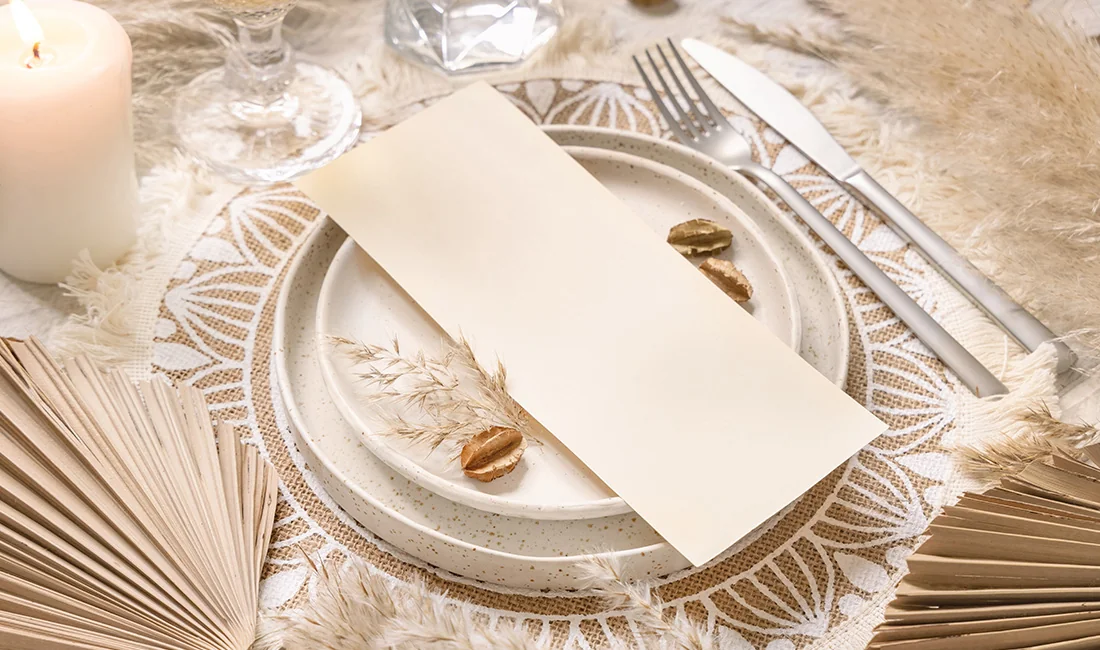
Wedding disposable tableware is single-use plates, cups, and utensils made for wedding meals and receptions. You can use wedding disposable tableware to serve guests with a clean, coordinated look while cutting cleanup time. This approach fits large guest counts and tight timelines.
This guide shows why disposable dinnerware works for weddings, which options fit your menu, and what to check before you buy. You will learn how to match styles to themes, plan counts, compare types of disposable tableware, and handle common questions with clear facts.
Why Use Disposable Tableware for Weddings?
Disposable wedding tableware is single-use plates, cups, and utensils made for event dining rather than daily meals. You choose it when you want planned counts, fast setup, and simple cleanup.
Common reasons couples choose disposable tableware:
-
Lower total cost than rentals
-
Faster setup and cleanup
-
Consistent table design
-
No dish return or breakage fees
-
Clear guest count planning
Cost control drives many decisions. Disposable sets often cost less than renting china because you avoid rental fees, deposits, and return logistics.
Cleanup stays simple because staff can clear tables without washing or packing dishes. Because many sets include matching plates, cups, and cutlery in one box, you reduce setup time.
Appearance matters, and design options support that goal. Many wedding sets use molded plastic with gold or silver rims and consistent color tones. Under venue lighting, these finishes reflect light evenly, which helps tables look uniform in photos.
Durability supports full meals. Heavier-weight plastic plates resist bending because they use thicker walls and reinforced rims. For you, this means guests can carry plated dinners without spills.
Safety and planning also improve. Most wedding-focused sets use BPA-free, food-grade plastic, which meets basic food contact standards. Clear guest counts on packaging help you order exact quantities and avoid last-minute shortages.
What Disposable Tableware Can We Use for Weddings?
You can use several types of disposable tableware for weddings, depending on your menu, guest count, and cleanup needs. Most sets include dinner plates, salad plates, disposable cups, and disposable cutlery, so you can serve a full meal without mixing styles.
disposable tablewares for weddings come in:
-
Dinner plates
-
Salad plates
-
Disposable cups and glassware
Dinner plates are the main serving plates for entrées. Many wedding sets use rigid plastic or palm leaf with a wide rim because the added thickness resists bending under hot or heavy food. For you, this means guests can carry plates confidently during buffet service.
Salad plates are smaller plates used for starters or desserts. They often match the dinner plates in color and finish, which keeps tables consistent in photos. In practice, this helps your place settings look planned without extra rentals.
Disposable cups and glassware include plastic tumblers, wine cups, and champagne flutes. Clear PET plastic is common because it keeps its shape with cold drinks and shows beverage color. For you, this means drinks look neat and spills stay manageable.
What are the Types of Disposable Tableware for Weddings?
Disposable wedding tableware covers plates, cutlery, drinkware, and serving pieces designed for single use at formal events. These options differ by material, finish, and disposal method, which affects table style, food safety, and cleanup speed.
Natural Palm Leaf Disposable Plates
Natural palm leaf disposable plates are made from fallen areca palm leaves that are heat-pressed into shape without chemicals. Each plate resists bending and holds hot or oily foods. The surface shows natural grain patterns, so no two plates look the same. This gives tables a simple, organic look suited for outdoor or eco-friendly tableware themes.
Pros:
-
compostable
-
heat-resistant
-
sturdy
Cons:
-
higher cost than paper
-
limited color control
Gold and White Biodegradable Plastic Cutlery Sets
Gold and white biodegradable plastic cutlery sets use plant-based plastics such as cornstarch-blended polymers instead of petroleum-only plastic. The gold coating usually comes from food-safe metallic pigments bonded during molding, not painted on later. This prevents flaking during use.
Pros:
-
formal look
-
uniform strength
-
compostable in facilities
Cons:
-
not home-compostable
-
higher price than standard plastic
Neutral Tone Bamboo Disposable Tableware
Neutral tone bamboo disposable tableware is made from bamboo pulp or thin bamboo fiber sheets pressed into plates and bowls. Bamboo grows quickly and regenerates without replanting, which lowers raw material impact. These items tolerate warm foods but not extended exposure to liquids.
Pros:
-
renewable source
-
clean neutral color
-
lightweight
Cons:
-
softens with wet foods
-
limited heat tolerance.
Clear Plastic Champagne Flutes with Gold Rim
Clear plastic champagne flutes with a gold rim are single-use drinkware molded from PET or PS plastic. The rigid stem and bowl shape keep sparkling wine stable and reduce spills during toasts.
Pros:
-
shatter-resistant
-
uniform size
-
formal appearance
Cons:
-
not compostable
-
limited reuse
Light Brown Wooden Disposable Cutlery
Light brown wooden disposable cutlery is typically made from birch or beech wood, cut and sanded into smooth shapes. Solid wood construction provides rigidity, which allows cutting through cooked meats and firm vegetables. The natural wood tone pairs well with rustic or outdoor weddings.
Pros:
-
compostable
-
strong
-
neutral look
Cons:
-
mild wood taste
-
less refined finish than metal-style cutlery
White and Beige Sugarcane Compostable Plates
White and beige sugarcane compostable plates use bagasse, a fibrous byproduct left after sugar extraction. Pressed fiber molding creates dense walls that resist grease and moisture. Bagasse plates tolerate temperatures up to about 200°F and work in microwaves for short reheating. These plates compost in commercial facilities.
Pros:
-
compostable
-
grease-resistant
-
consistent shape
Cons:
-
limited color range
-
softer edge than palm leaf
Clear and Black PLA Plastic Serving Trays
Clear and black PLA plastic serving trays are made from polylactic acid derived from fermented plant sugars. PLA softens above 120°F, so trays suit cold or room-temperature foods only. These trays compost in industrial systems.
Pros:
-
plant-based
-
clean lines, lightweight
Cons:
-
heat-sensitive
-
requires commercial composting
Ivory and Blush Pink Recycled Paper Napkins
Ivory and blush pink recycled paper napkins are produced from post-consumer paper pulp, dyed with water-based inks. Soft embossing adds grip and prevents slipping when folded. Napkins decompose easily after use.
Pros:
-
recyclable
-
color-coordinated
-
absorbent
Cons:
-
less durable than cloth
-
single-use only
How to Choose the Disposable Plates for Weddings?
Disposable plates for weddings affect how the table looks, how food holds up, and how smoothly cleanup goes. Your choice depends on plate material, visual style, size, environmental impact, and total cost per guest.
Choose Materials and Ensure Durability
Disposable plates for weddings usually use plastic, paper, or plant-based fiber. Each material behaves differently under real serving conditions.
Plastic plates often use polystyrene or polypropylene. These plastics resist bending because they have higher rigidity. In practice, this means the plate stays flat when you serve steak, pasta, or sauces.
Paper plates rely on compressed pulp with a coating. The coating slows liquid absorption. For the user, this means paper works best for cake and light meals, not heavy entrees.
Sugarcane (bagasse) plates come from plant fiber waste. The dense fiber structure holds heat and moisture better than paper, making them suitable for warm foods.
Coordinate Design and Color
Design defines how disposable plates support your wedding theme. Elegant disposable tableware often copies formal china through rim color, edge shape, and surface finish.
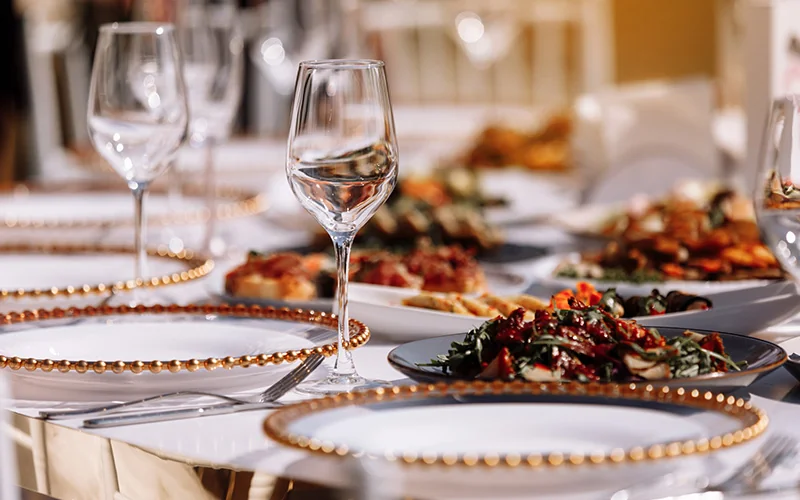
White plates with gold or silver rims reflect candlelight because the metallic coating catches light. This effect makes tables look brighter in evening receptions. Clear plates with metallic trim show table linens underneath, which helps when you use patterned or colored tablecloths.
To avoid visual clutter, match plate color to flatware tone and charger plates. Consistent finishes create a unified table without extra décor.
Consider Size and Shape
Plate size affects comfort and portion control. Most disposable plates for weddings range from 9 to 10.25 inches for dinner and 6 to 7 inches for dessert.
A larger dinner plate gives space for plated meals with sides. In practice, this reduces spills when guests carry food from buffet lines. Smaller plates work better for cocktail-style receptions because they fit easily in one hand.
Check rim height. A raised edge helps contain sauces, which keeps table linens cleaner during long dinners.
Prioritize Eco-Friendliness
Eco-friendliness depends on material source and disposal method, not just labels. Many best disposable plates for weddings claim recyclability.
Bagasse plates break down in commercial composting because they use plant fiber without plastic resin. For the user, this means less landfill waste if composting services are available.
Some plastic plates are labeled recyclable. In practice, metallic rims and food residue often prevent recycling acceptance. Reusable plastic plates offer another option. You can wash and store them for future events.
Plan Budget and Maximize Value
Value comes from cost per guest, not just box price. Count every item you need: dinner plates, dessert plates, and extras for seconds or accidents.
Larger sets reduce per-plate cost because they bundle matching pieces. For example, a 100-guest set often costs less per person than two 50-guest sets.
Set aside 5–10% extra plates. This small buffer covers drops and late additions without last-minute stress.
FAQs
How can one elegantly incorporate disposable tableware into a wedding theme?
You create a refined look by choosing items with defined features and align tableware colors with linens and florals.
Palm leaf plates add a natural texture because they press fallen leaves into rigid shapes. For you, this means each plate shows slight color and grain variation, which pairs well with outdoor or rustic themes.
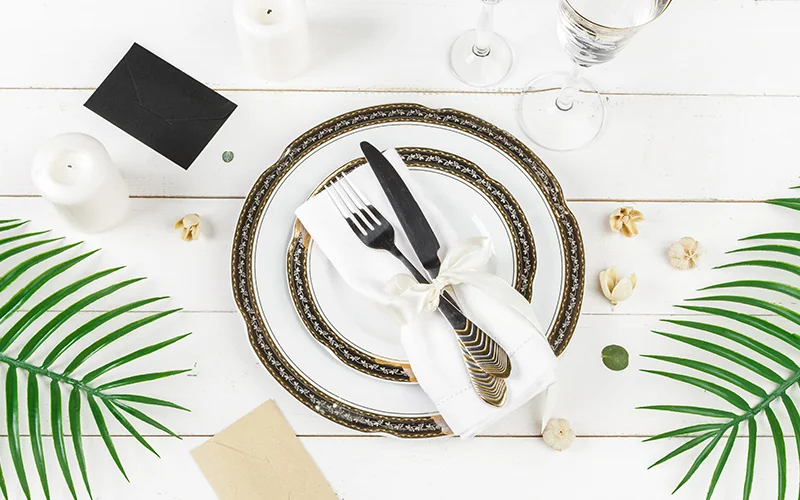
Matching matte white plates with neutral napkins keeps the table visually consistent and avoids contrast that draws attention to disposability.
How can the durability of disposable tableware be assessed for wedding use?
You assess this by checking material thickness and weight ratings listed by the seller.
Rigid plastic plates made from polystyrene or polypropylene resist bending because the polymer structure holds shape under heat and weight. In practice, this means the plate can support entrées with sauces without sagging.
Palm leaf and bamboo plates handle heat well because they form under high pressure. For you, this translates to safe use with hot foods like roasted meats or pasta.
Can disposable tableware be personalized for weddings?
You can order custom-printed napkins and cups using food-safe ink applied during manufacturing. You can also personalize place settings by pairing plain disposable plates with printed menus or name cards.
Some plastic plates accept adhesive decals because their smooth surfaces allow firm bonding. For you, this means the design stays in place through the meal if applied before the event. This approach adds detail without altering the tableware itself.