

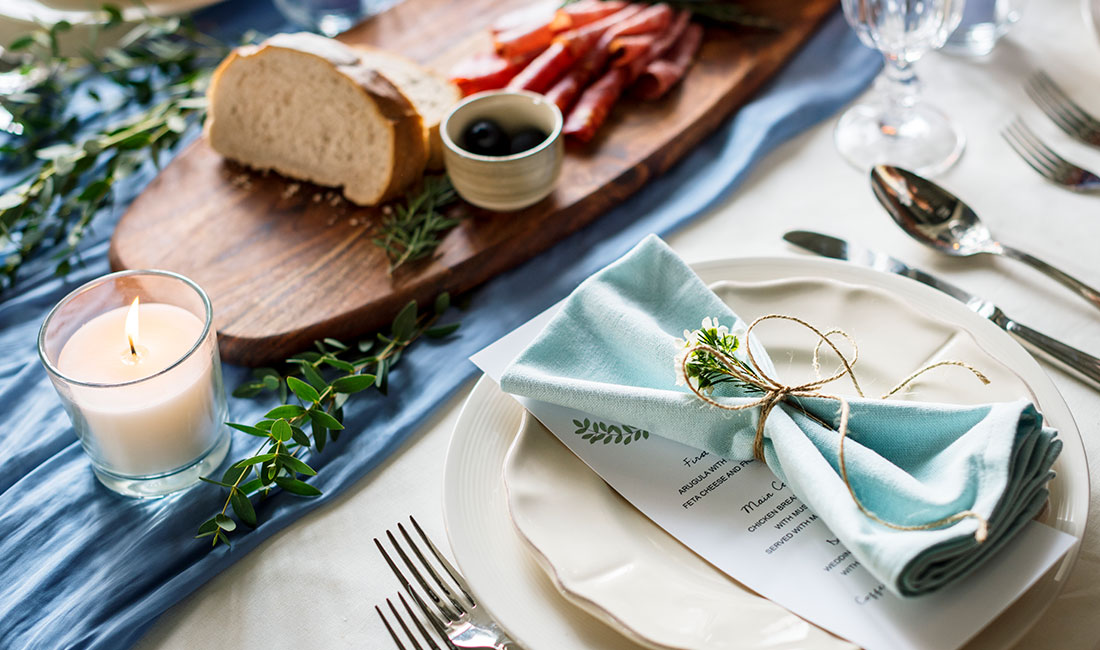
A wedding buffet might look simple, but tableware and layout really shape the whole meal. You want guests to move easily, see every option, and serve themselves without confusion.
Even small choices—like where plates go or how you label food—can make a big difference. These details improve comfort and keep things running on time.
This guide breaks down how to plan your buffet with intention. You’ll see how tableware supports flow, how presentation adds style, and how smart setup choices keep things stress-free.
Planning the Wedding Buffet Table Setup
A strong buffet setup needs clear guest flow, the right tableware, and smart placement. Every choice affects wait times, comfort, and how polished everything looks during the reception.
Assessing Space and Guest Count
Start by measuring open floor space—not just the whole room. You need clear paths for guests to get in line, move along the buffet, and return to their seats.
Guest count shapes the setup. For fewer than 75 guests, one straight buffet line usually works. With 75–150 guests, plan a double-sided buffet to cut down wait time.
Bigger events? You might need two buffet tables in different spots. Use this as a quick reference:
| Guest Count | Recommended Setup |
|---|---|
| Up to 75 | Single-sided buffet |
| 75–150 | Double-sided buffet |
| 150+ | Two buffet stations |
Leave at least 4–5 feet behind guests for passing space. Tight layouts slow things down and make the line feel crowded.
Aligning Tableware with Wedding Theme
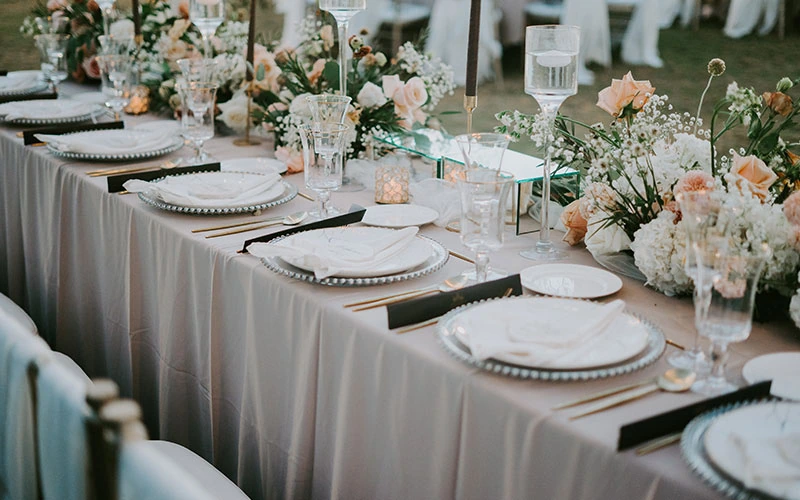
Tableware should match your reception style and support the food service. Formal weddings often use white china, metal flatware, and matching serving pieces.
For casual or outdoor weddings, stoneware, wood accents, or matte finishes work well. Keep finishes consistent. Too many colors or materials can make the buffet look thrown together.
Match tableware to linens, chargers, and signage for a clean look. Choose plates big enough for full meals and serving tools that are easy to grip.
Every dish needs its own utensil for hygiene and comfort. Clear, themed labels help guests move faster and make confident choices.
Selecting Buffet Table Locations
Put the buffet away from high-traffic zones like the bar, dance floor, or main entrances. Those spots already draw crowds and can block the line.
Set up so guests approach from one direction and exit toward their seats. This keeps things moving and avoids backtracking with full plates.
Skip tight corners or wall edges that limit movement. If you have the space, center the buffet along a long wall or open area.
For big rooms, split the buffet into two matching stations. That way, lines stay short and guests spread out naturally.
Optimizing Buffet Flow and Layout
Strong guest flow starts with clear direction, the right layout, and enough space for people carrying plates. Planning buffet flow early helps avoid long waits and crowding.
Establishing Guest Flow
You guide guest flow with clear, silent cues. Put plates at the start of the line so everyone knows where to begin.
Keep food order logical—salads and cold items first, then sides, then mains. Bread and sauces go at the end so people don’t stop early and block the line.
Leave at least 36–48 inches of walking space along the buffet. This gives guests room to step aside or read labels without slowing others. Simple food labels help keep things moving.
Choosing Buffet Layouts for Different Crowds
Match the layout to your guest count. Not every setup fits every wedding.
Here’s a quick guide:
| Guest Count | Recommended Buffet Layout |
|---|---|
| Up to 75 | Single straight line |
| 75–150 | Double-sided buffet |
| 150+ | Two separate buffet lines |
A double-sided buffet lets two lines move at once. Put identical dishes on both sides so guests don’t switch lines halfway through.
Keep the buffet away from bars or dance floors. Those areas already attract a crowd and can mess with dinner flow.
Managing Entry and Exit Points
Clear entry and exit points prevent backups. Guests should enter from one end and exit toward their seats.
Don’t make people turn around with full plates—it’s awkward and causes spills. Position the buffet so everyone moves forward in one direction.
Use staff or subtle signs to guide traffic during peak times. If needed, let tables go up in small groups. That keeps things calm, even with a big crowd.
Essential Tableware and Serving Pieces
The right tableware keeps things moving and the buffet looking polished. Smart choices help avoid spills and keep food safe and easy to serve.
Plates, Utensils, and Napkins Essentials
Start with plates at the head of the line. Use 10–11 inch dinner plates so guests have enough room for a full meal. Plan for two to three plates per guest so the line doesn’t stall while staff clears used ones.
Pick sturdy flatware that feels balanced. Put forks, knives, and spoons at either the start or end of the line—not both. That way, guests don’t backtrack.
Napkins should sit where guests naturally pause, usually near utensils or drinks. Cloth napkins feel formal, but high-quality paper is great for a casual vibe.
● Plates should stack easily and not slide everywhere
● Utensils should match your formality
● Napkins need to absorb well and keep their shape
Chafing Dishes and Hot Food Equipment
Chafing dishes are essential for hot food. Use them for proteins, pasta, or warm sides that need to stay above 140°F. Look for stable frames, tight lids, and even heat.
Limit hot dishes if you can. Many caterers use an 80/20 balance—most foods cold or room temp, a few hot. It’s just easier to manage.
Put chafing dishes toward the middle or end of the buffet. Guests move faster once they’ve already got some food on their plates.
● One serving utensil per dish
● Check fuel canisters before service
● Keep extra pans handy for quick swaps
Elegant Buffet Presentation Techniques
A polished buffet uses height, balance, and clear styling. You guide guests with layout while keeping the table easy to use and visually clean.
Using Tiered Stands and Risers
Tiered stands help you use space better and improve sightlines. Lift key dishes so guests spot options quickly and move with confidence.
Put main proteins or popular items on risers near the center. Use lower levels for sides and sauces. Make sure everything feels stable and isn’t at risk of tipping.
● Sturdy risers for heavy platters
● Keep heights within easy reach
● Leave clear space around raised dishes
Creative Buffet Table Styling
Styling should support function. Group similar foods to cut down on backtracking and confusion.
Stick with serving pieces that match in color or shape. Too many styles just make things look messy. Simple contrast—like white platters with wood—usually works best.
● One focal dish per section
● Repeat serving ware styles
● Clean labels at the front edge
These little touches keep the table looking neat and intentional. Guests appreciate the care, even if they don’t notice every detail.
Incorporating Table Linens and Decorative Accents
Linens set the tone. Pick fabrics that match the formality of your reception. Smooth tablecloths feel formal, while textured runners fit relaxed settings.
Secure linens so they don’t shift during service. Skip long overhangs near where guests walk. Function matters just as much as looks.
Add decor sparingly. Small florals, framed menus, or candles in glass holders can work wonders.
| Element | Purpose |
|---|---|
| Tablecloth | Visual base and color control |
| Runner | Texture and focus |
| Accent decor | Ties to wedding theme |
Logistics and Practical Tips for Smooth Service
Clear labels, planning for special diets, and steady restocking keep the buffet moving. These details cut down on questions and help staff work faster.
Efficient Food Labeling Practices
Use clear food labels at the front of each dish so guests can read them on the move. Place labels at eye level, close to the serving utensil.
Avoid tiny fonts or long names that slow things down. Include the full dish name and key ingredients. Short, direct wording is best—“Roasted Chicken with Herbs” beats just “Chicken”.
Keep the look consistent across the whole buffet. Match label cards, holders, and fonts to your tableware and decor.
Use simple icons or bold text for common needs, like Vegetarian, Spicy, or Contains Nuts. This speeds up choices and keeps the line moving.
Accommodating Dietary Restrictions
Plan for dietary needs before you lock in the menu and table layout. Ask your caterer for ingredient lists so labels stay accurate.
Group special-diet dishes at one end of the buffet. This makes it easier for guests to find safe options without weaving through the whole line.
● Gluten-Free
● Dairy-Free
● Vegan
● Nut-Free
Use separate serving utensils for each dish. Don’t share tongs or spoons between trays. That way, everyone feels cared for and safe.
Replenishment Strategies for Tableware
Keep extra plates, flatware, and napkins close by but out of sight. Side tables or skirted carts do the trick and keep the main table tidy.
Refill in small batches to keep food fresh and avoid lugging heavy trays during the rush. Assign someone to watch levels and restock early.
● Plates
● Flatware
● Napkins
Keep backups for high-use items like dinner plates and forks. Staying ahead with replenishment keeps the buffet line moving and avoids awkward pauses.
Distinctive Buffet Table Ideas and Stations
Distinct buffet stations help guests move smoothly and avoid long lines. They also let you control portions and highlight standout dishes.
Matching tableware to each food style keeps things looking tidy and organized.
Interactive Gourmet Food Bars
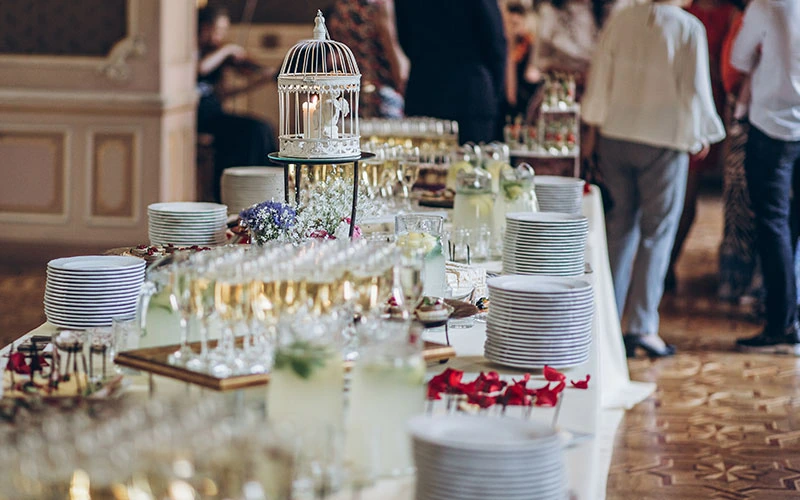
Interactive food bars keep guests engaged and make service easier. Put clear labels at each station, and have a staff member nearby to answer questions and keep things safe.
A gourmet taco bar is always a hit since people can build their plates fast. Place warm tortillas at the start, then proteins, then toppings.
Keep sauces at the end so things don’t get messy too soon.
Other solid options?
● Pasta bars with two types of noodles, a couple of sauces, and just a few toppings
● Carving stations offering one main protein and simple sides
● Salad bars with pre-mixed greens to keep the crowd moving
Use shallow bowls, small tongs, and sturdy plates. This setup makes serving faster and keeps mess to a minimum.
If you’re expecting more than 100 guests, set up the same station on both sides. That way, people don’t have to wait forever.
Themed Buffet Table Inspirations
Themed setups make your buffet feel intentional, not thrown together.
Pick one clear theme and back it up with food choices, tableware, and a bit of signage.
Popular wedding buffet table ideas include rustic, coastal, and modern looks.
Each theme really shines when you use the right materials.
| Theme | Tableware and Styling Focus |
|---|---|
| Rustic | Wood boards, enamel trays, kraft labels |
| Coastal | White platters, glass bowls, soft blue linens |
| Modern | Black or acrylic risers, clean signage |
Keep layouts simple.
Put the food out in the order guests will serve themselves—makes life easier for everyone.
These buffet table ideas help the line move and keep things tidy as guests go through.