

National Taco Day is an easy reason to gather friends, family, or coworkers around a shared meal. A taco bar works especially well because guests can choose their own shells, fillings, toppings, and sauces.
However, tacos can also be messy. Loaded shells may break, salsa can drip, and sides such as rice and beans need their own space. The right disposable tableware keeps the serving line organized and makes the meal easier to enjoy.
This guide covers the menu, disposable plates and bowls, buffet layout, quantities, and styling ideas needed for a practical National Taco Day taco bar.
Why a Taco Bar Works for National Taco Day
A taco bar turns the meal into a simple self-serve experience. Guests can build tacos around their own tastes instead of receiving one fixed plate.
This format also works for different group sizes. A small family table may need only one filling and a few toppings. A larger party can offer several proteins, sauces, sides, and drink choices.
Most items can be prepared before guests arrive. Once the food and tableware are arranged, the host only needs to watch temperatures, refill supplies, and keep the line tidy.
What to Serve at a National Taco Day Taco Bar
The menu determines which disposable tableware the event will need. A basic taco bar can stay compact, while a larger spread may require dinner plates, bowls, portion cups, serving bowls, flatware, and drinkware.
Choose Tortillas, Shells, and Taco Fillings
Most taco bars begin with soft tortillas, hard shells, or both. The filling may include seasoned beef, shredded chicken, pulled pork, beans, grilled vegetables, or another option that suits the guest list.
Two or three filling choices usually provide enough variety without making the buffet difficult to manage. A meat-free filling also gives guests more flexibility.
Add Fresh Toppings, Salsas, and Dips
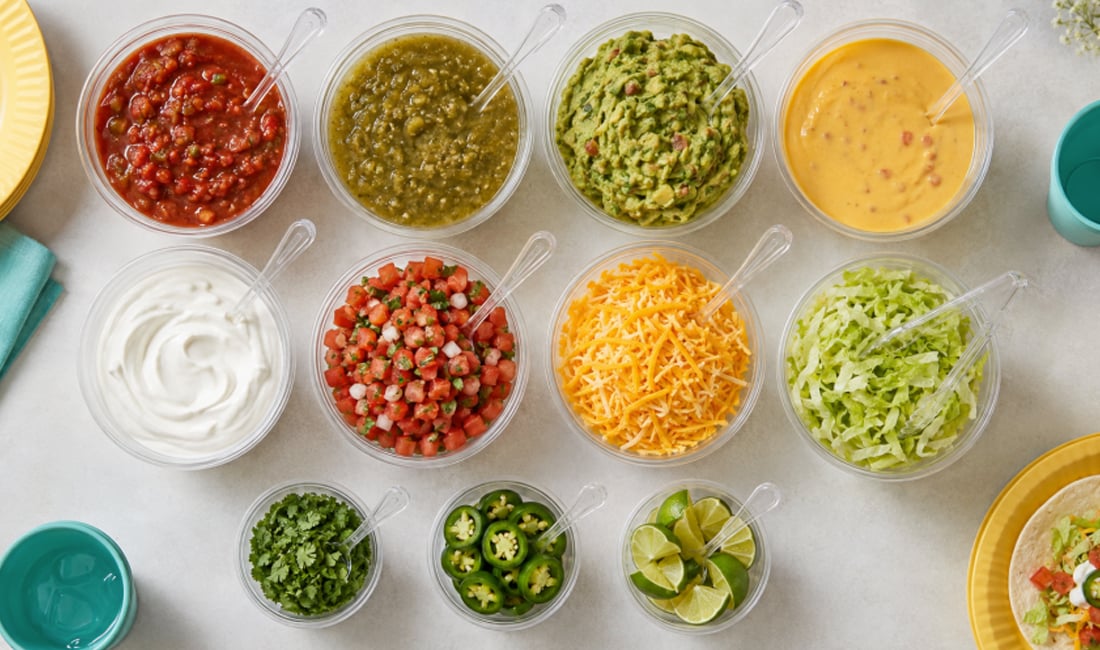
Common toppings include shredded lettuce, diced tomatoes, onions, cheese, cilantro, jalapeños, and lime wedges. Salsa, guacamole, sour cream, queso, and hot sauce can complete the bar.
Small bowls or portion cups keep wet toppings separate. They also help prevent several sauces from spreading across the same plate.
Complete the Bar with Sides and Drinks
Rice, beans, tortilla chips, corn, and simple salads can make the taco bar feel like a complete meal. These foods also explain why a plate alone may not be enough.
Cold drinks can be placed on a separate table. This keeps the main line clear and gives guests more room to build their tacos.
Disposable Tableware Essentials for a Taco Bar
Taco bar tableware should support both the food and the way guests move through the buffet. Each item needs a clear purpose.
Sturdy Disposable Plates for Loaded Tacos and Sides
A full-size dinner plate gives guests enough room for two or three tacos plus a small serving of rice or beans. A raised rim can help contain loose toppings and small drips.
Strength matters because tacos become heavier once fillings, sauces, and sides are added. Plates that bend easily may force guests to use two at once.
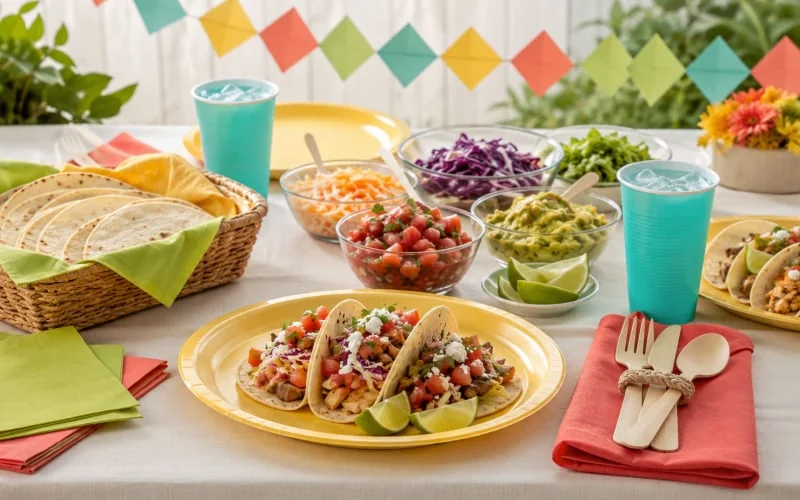
Bright colors also fit the relaxed mood of National Taco Day. A yellow disposable plastic plate set with dinner and smaller plate sizes can separate the main meal from appetizers or desserts.
Disposable Bowls for Taco Salads, Rice, Beans, and Chips
Bowls give the menu more flexibility. Guests may use them for taco salad, rice and beans, nachos, soup, or extra toppings.
Medium bowls work well for individual servings, while larger serving bowls can hold chips or shared ingredients. Clear bowls keep colorful toppings visible and make it easier to check when food needs to be refilled.
For small sides and snacks, 10-ounce clear plastic bowls offer a simple way to serve food without hiding its color.
Portion Cups for Salsa, Guacamole, Queso, and Sour Cream
Portion cups are useful when the event needs faster service or better control over sauces. They reduce shared handling and keep wet ingredients from covering the rest of the plate.
They can be filled before the party, covered when needed, and arranged by sauce type. Clear labels help guests tell mild salsa, hot salsa, crema, and queso apart.
Shared bowls may still suit a small gathering. Portion cups become more useful when the event is busy, when several sauces look similar, or when the host wants more consistent servings.
Disposable Flatware, Drinkware, and Absorbent Napkins
Tacos are usually eaten by hand, but flatware is still needed for rice, beans, taco salad, and loose fillings. A fork is the main item, although spoons may be useful for softer sides.
Drinkware should match the beverages being served. Water, soft drinks, and agua fresca can often use the same cup style.
Napkins deserve extra attention. Salsa, oil, and loose toppings can create messy hands, so more than one napkin per guest should be available. Extra stacks can be placed at the beginning and end of the serving line.
How to Choose Disposable Plates and Bowls for Taco Bar Foods
The best tableware choice depends on the menu, serving method, guest count, and party style. Instead of selecting one matching set without checking its function, hosts should match each item to a specific food.
Match Plate and Bowl Sizes to the Menu
A large dinner plate works best when guests will take tacos and several sides at once. Smaller plates are better for chips, appetizers, or desserts.
Bowls should match the type of food being served. Shallow bowls suit dry snacks, while deeper bowls provide better control for taco salads, beans, dips, and saucy sides.
Prioritize Strength for Saucy and Heavy Foods
The plate should remain stable when carried with one hand. This is especially important at standing events, backyard parties, and office gatherings where guests may not move directly from the buffet to a dining table.
Rigid plastic and heavy-duty paper products are common options. Performance can vary between products, so the finished product description is more useful than the material name alone.
Choose Enough Bowl Depth for Dips, Sides, and Taco Salads
Bowl depth helps reduce spills, but the deepest option is not always necessary. Small dips need compact cups, individual sides need medium bowls, and shared chips need wider serving bowls.
Using several sizes makes the taco bar easier to understand. Guests can quickly see which items are meant for individual use and which ones stay on the buffet.
Check Product Specifications for Hot and Cold Foods
Not every disposable plate or bowl has the same heat limit. A product that holds warm taco fillings may not be suitable for microwave reheating.
Hosts should check the product label or specification before using disposable tableware with hot food, microwaves, ovens, or warming equipment. When the information is unclear, the safer choice is to transfer food after heating rather than heat it in the disposable container.
Coordinate Colors and Shapes with the Party Theme
The food already brings red, green, yellow, and white tones to the table. Tableware can support these colors without using a complicated pattern.
Bright plates and napkins create a casual party look. Clear or neutral bowls allow salsa, guacamole, corn, and fresh toppings to provide most of the color. Keeping shapes and finishes consistent helps the table look planned rather than crowded.
How to Set Up a Smooth Taco Bar Buffet
A logical layout helps guests build tacos without turning around, reaching across hot dishes, or blocking the next person. The order should follow the way a taco is assembled.
Start with Plates, Bowls, Napkins, and Flatware
Place the main dinner plates at the beginning of the line. Bowls can sit beside them if taco salad, rice, beans, or nachos are part of the menu.
Napkins should be easy to reach. Flatware can be placed here or near the dining area so guests do not need to carry loose utensils while building tacos.
Arrange Shells, Fillings, Toppings, and Sauces in Order
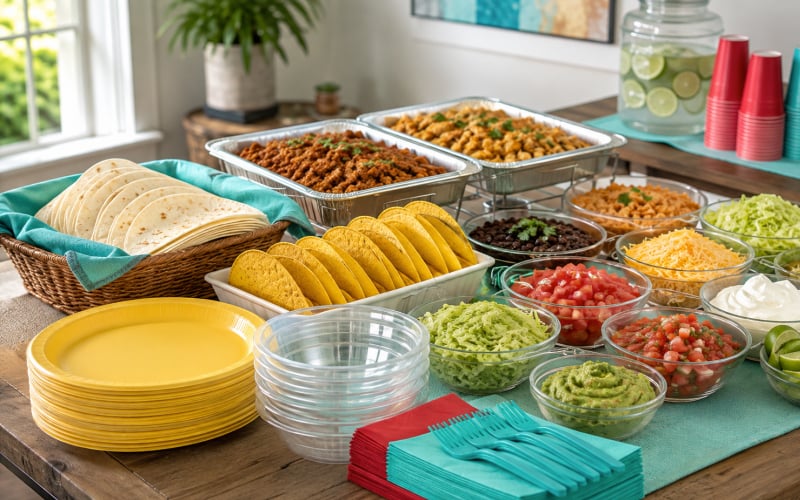
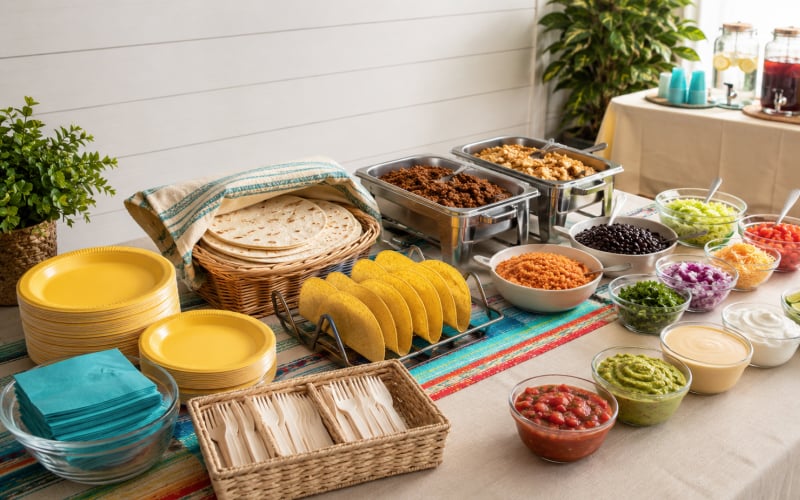
After the tableware, arrange the buffet in this order:
-
Tortillas and hard shells
-
Hot fillings
-
Rice, beans, and other sides
-
Fresh toppings
-
Salsa, guacamole, queso, and other sauces
-
Lime wedges and final garnishes
This order keeps guests moving in one direction and makes overfilled plates less likely.
Separate Hot Fillings from Cold Toppings
Hot fillings should stay in suitable warming equipment. Cold toppings should remain chilled and can be brought out in smaller batches.
Placing the two groups in separate zones also makes refilling easier. It prevents chilled bowls from sitting close to slow cookers, warmers, or other heat sources.
Move Drinks and Desserts to Another Table
Drinks often slow down a buffet because guests need time to add ice, pour beverages, and choose garnishes. A separate drink station removes this delay from the taco line.
Dessert can be placed with the drinks or brought out later. This also stops guests from carrying several plates and cups at the same time.
Label Foods and Give Every Dish Its Own Serving Utensil
Simple labels help guests identify fillings, sauces, spice levels, and common ingredients. Separate utensils should be provided for each bowl or tray.
Labels alone cannot prevent cross-contact. Guests with food allergies may need separately prepared food, clean utensils, and a dedicated serving area.
How Much Disposable Tableware Does a Taco Bar Need?
Tableware quantities should reflect how the meal will be served. A taco-only meal needs fewer pieces than a menu with appetizers, sides, dessert, and several drinks.
The following figures are practical starting points rather than fixed rules:
|
Item |
Starting quantity |
When to add more |
|---|---|---|
|
Dinner plates |
1–2 per guest |
When seconds are likely or clean plates are needed for return trips |
|
Small plates |
1 per guest |
When serving appetizers or dessert |
|
Individual bowls |
1 per guest |
When offering taco salad, beans, soup, or nachos |
|
Drink cups |
1–2 per guest |
For longer parties or several drink choices |
|
Flatware |
1 set per guest, plus a reserve |
When sides and desserts need different utensils |
|
Napkins |
2–3 per guest |
For saucy tacos, children, or standing service |
|
Portion cups |
Based on the number of pre-portioned sauces |
When each guest may choose several dips |
Start with the Guest Count and Serving Style
The confirmed guest count should come first. The host can then decide whether the meal includes several courses and whether guests will return for seconds.
A seated meal may use fewer pieces than an open buffet. A long event may require more cups, napkins, and clean plates.
Count Plates, Bowls, Cups, and Napkins by Use
Each tableware item should have a planned job. If bowls are only being used for shared toppings, there is no need to order one for every guest.
If every guest will receive a taco salad or side bowl, the quantity should match the guest count. The same method applies to dessert plates, portion cups, and specialty drinkware.
Add a Practical Buffer for Seconds and Spills
A small reserve protects the event from dropped plates, damaged pieces, unexpected guests, and second servings.
Backup supplies should remain in their packaging and be stored near the buffet. This keeps them clean while making refills quick.
National Taco Day Taco Bar Styling and Cleanup Ideas
A practical taco bar can still look colorful and well organized. The main goal is to support the food without filling the table with too many decorations.
Build Color with Napkins, Cups, and Table Covers
A simple color palette may include yellow, red, green, orange, or turquoise. Two or three main colors are usually enough.
Solid tableware is easier to coordinate than several competing patterns. Napkins and cups can provide contrast without making the food display feel busy.
Keep the Food Visible with Coordinated Plates and Bowls
Matching bowls create a cleaner serving line. Clear or neutral serving pieces also make fresh toppings easy to see.
Small stands or safe risers can add height to the back of the table. Heavier items should stay on the lower level, while light decorations can sit behind the food.
Stage Backup Supplies for Quick Refills
Extra plates, bowls, cups, napkins, and utensils should be grouped by type. Open packages can be kept in covered containers or under the buffet table.
A clear refill system helps the host replace supplies without leaving the party or opening several boxes in front of guests.
Set Up Cleanup Away from the Serving Line
The cleanup area should not sit beside the food. Used tableware, food waste, and unopened supplies need separate spaces.
Local disposal rules vary by material and location. Product labels and local waste guidance should determine whether an item belongs in trash, recycling, or an accepted composting program.
Frequently Asked Questions About Taco Bar Parties
How Far in Advance Can a Taco Bar Be Prepared?
Many cooked fillings and sauces can be prepared ahead when the recipe and storage instructions allow it. Fresh toppings are usually better when chopped closer to the event.
Hard shells, unopened tableware, labels, and decorations can be organized earlier. Perishable food should stay refrigerated until it is time to place it on the buffet.
How Can Hard Taco Shells Stay Crisp During the Party?
Hard shells should stay covered and away from steam, sauces, and chilled bowls that may create moisture. Only a small batch needs to be placed on the table at one time.
The remaining shells can stay in their package or a dry covered container. Refilling the basket in small batches helps protect their texture.
Can a Taco Bar Be Adapted for Children and Picky Eaters?
A child-friendly section can include soft tortillas, mild fillings, shredded cheese, lettuce, and simple sides. Spicy sauces and hot serving equipment should stay in a separate area.
Smaller plates and bowls also make portions easier to manage. Clear labels allow parents and children to identify mild and spicy choices quickly.
Build an Easy National Taco Day Taco Bar
A successful taco bar does not need a long menu or complicated decorations. It needs sturdy plates, suitable bowls, controlled portions, enough napkins, and a serving line that follows the order in which tacos are built.
Wonderful Party offers disposable plates, bowls, cups, cutlery, napkins, and coordinated dinnerware for casual gatherings and larger events. Matching each item to the menu can help hosts create a colorful National Taco Day table with less setup pressure and faster cleanup.