

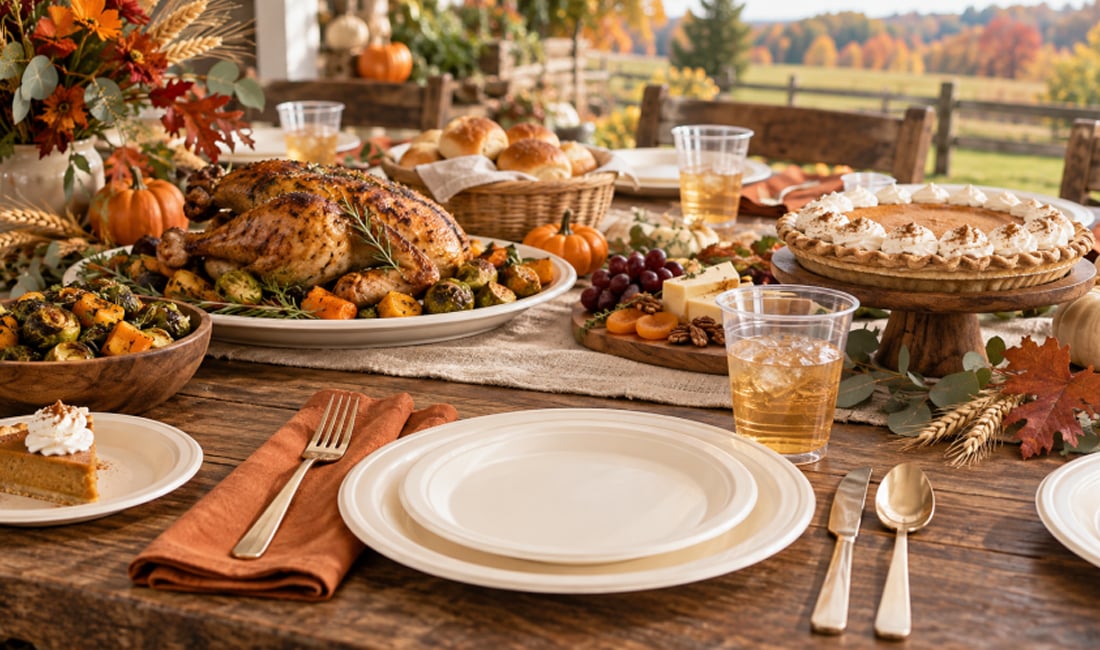
A fall harvest table does not need a pumpkin printed on every plate. Cream dinnerware, warm-colored napkins, and a few seasonal details can give the setting a rustic feel while leaving plenty of room for the food.
The practical choices matter just as much. Roast chicken, squash soup, and apple pie each call for different tableware. A well-planned selection covers those needs without filling the shopping cart with pieces that never get used.
This guide covers the essentials: which disposable tableware to prepare, how to build a rustic color scheme, what to check before buying, and how to plan quantities for seated meals or a harvest buffet.
Essential Disposable Tableware for a Fall Harvest Party
The menu is the best starting point for the tableware list. A full dinner needs a different setup from an afternoon gathering built around cider and desserts.
Dinner and Dessert Plates for Seasonal Dishes
Dinner plates should leave space for a main dish and several sides without forcing everything into a pile. For a menu with sliced roast meat, potatoes, and vegetables, a plate around 10 inches across is a useful starting point—not a guarantee of enough room.
Dessert deserves its own plate. A smaller plate keeps pie, cake, or cookies separate from gravy and salad dressing. For apple pie with ice cream, the serving area and rim shape matter more than a decorative edge alone.
Disposable Bowls for Soups and Sides
Bowls belong on the list when the menu includes butternut squash soup, chili, or a loose, saucy side. The choice should reflect both the portion and the serving temperature.
A small bowl may suit a starter, while a soup-centered meal needs more space. For easier carrying, portions should sit comfortably below the rim. Bowls can also keep cranberry sauce or dressed salads separate from the rest of the meal.
Disposable Cups for Cider and Cold Drinks
The drink list should separate chilled cider, water, and punch from hot cider or coffee. Cup sizes can then follow the planned serving size, with room left for ice where needed.
Hot drinks call for cups specifically intended for that use. Buyers should check the stated temperature limits rather than assume that a sturdy-looking party cup can handle both hot and cold drinks. Food-contact suitability depends on the conditions of use, including temperature.
Disposable Flatware, Napkins, and Serving Trays
Flatware should follow the food rather than a standard place-setting formula. Soup needs spoons; roast meat may need knives; pie calls for clean dessert forks.
Napkins belong at both the dining and drink areas. Serving trays can organize rolls, cookies, and other shared foods, but each dish also needs a suitable serving utensil. A tray without tongs or a serving spoon leaves a small but noticeable gap in the setup.
Rustic Color Ideas for Disposable Plates and Napkins
A simple approach is to choose one neutral base, one seasonal color, and a restrained accent. The plates can stay versatile while napkins and table linens carry most of the fall theme.
Cream and Burnt Orange
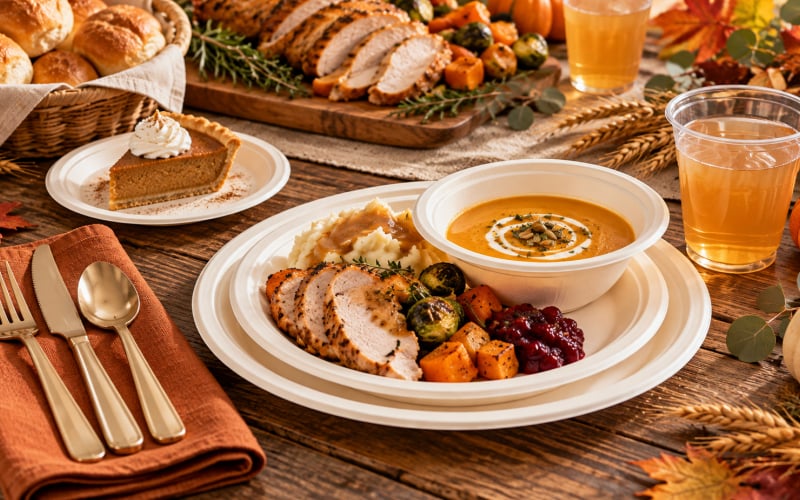
Cream and burnt orange offer a warm starting point for a harvest table. Ivory dinner plates, orange napkins, and a plain runner create the look without needing several competing patterns.
For a little detail, ivory and gold scalloped plastic plates provide a neutral base with a shaped edge. Burnt-orange napkins can supply the stronger color, while clear cups keep the setting from feeling crowded.
Sage Green and Warm Neutrals
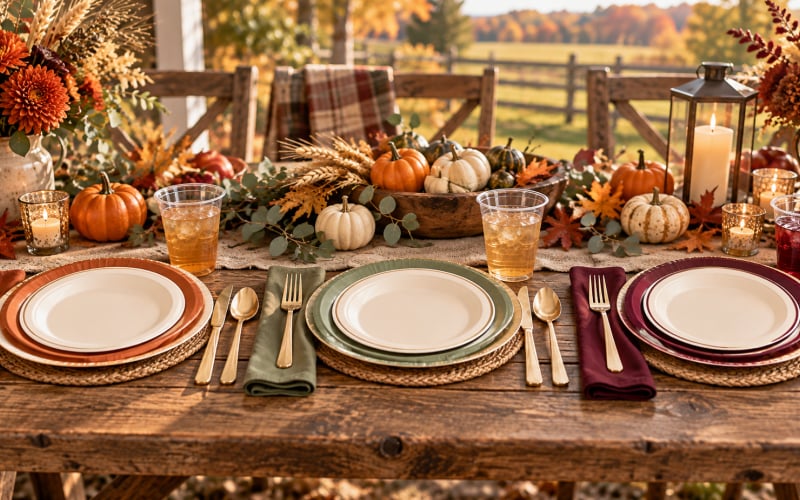
Sage green offers a quieter alternative to an orange-led table. One option is white or ivory plates paired with sage napkins and a tan runner.
The green does not have to appear on the dinnerware itself. Keeping it in the napkins makes it easier to coordinate the table around neutral plates already selected for the meal. A few small pumpkins can complete the harvest theme without covering the serving space.
Burgundy and Gold
Burgundy works well as the main accent for a deeper, richer-looking table. White plates with gold edging, burgundy napkins, and gold-tone disposable flatware make a clear combination.
For a rustic rather than formal finish, the rest of the setting can stay simple. A plain runner and low seasonal centerpiece give the metallic details room to stand out. Adding more gold decorations is not necessary.
How to Choose Disposable Tableware for a Harvest Menu
Once the style is settled, the next step is to check whether the selected pieces suit the meal. Color alone says little about a plate’s useful size, strength, or intended use.
Match Plate Size and Strength to the Food
A full harvest meal asks more of a plate than a few cookies. Buyers should compare the usable center, rim depth, and construction—not just the outside diameter. A broad decorative border leaves less space for food.
For a larger order, a sample check can help assess handling. A typical portion placed on the plate can reveal whether it feels awkward to carry or flexes too much under the meal. This checks practical performance; it does not replace the manufacturer’s food-contact or temperature guidance.
Flatware deserves the same attention. Cutting a slice of roast meat requires a different level of performance from lifting a piece of soft cake.
Check Material Suitability for Heat, Sauces, and Grease
The product description should match the intended food and serving conditions. Dry rolls, oily roasted vegetables, and hot soup are not the same use case. Food-contact guidance distinguishes between food types and temperature conditions, so a general “food-grade” description should not replace specific use instructions.
Microwave use is a separate question. A plate suitable for serving food should not automatically be used to reheat it. The FDA notes that some plastic containers can melt from the heat of food inside them. Microwave use should follow the product’s instructions.
The same practical distinction applies to serving trays: a tray chosen for the table should not be treated as cookware or placed on a warmer unless its instructions allow that use.
Compare Dinnerware Sets with Separate Packs
Coordinated disposable dinnerware sets are worth considering when their contents closely match the menu. Available configurations vary, so the item-by-item breakdown matters more than the headline piece count.
For example, a hypothetical 180-piece set with six pieces per guest covers 30 place settings, not 180 guests. Even then, a second dessert fork or soup bowl may need to be added.
Separate packs offer more control when the menu is uneven. A soup-and-bread gathering may need more bowls than plates, while a dessert party may need small plates and forks but few knives. The better purchase is the one with the right mix of usable pieces.
How Much Disposable Tableware Does a Harvest Party Need?
Head count is only part of the calculation. The number of courses, buffet returns, and drink servings also affects the order.
The following example assumes 30 guests having dinner, a soup course, pie, and cold drinks. These are planning estimates, not fixed requirements.
|
Tableware |
Planning basis |
Example quantity |
|---|---|---|
|
Dinner plates |
One for the meal, plus extras for planned buffet returns |
30–60 |
|
Dessert plates |
One for the dessert course |
30 |
|
Soup bowls |
One per guest having soup |
30 |
|
Cold-drink cups |
An initial allowance of two per guest |
60 |
|
Forks |
One for dinner and one for pie |
60 |
|
Knives and spoons |
One knife where needed; one spoon for soup |
30 of each |
|
Napkins |
Two to three per guest |
60–90 |
Hot cider or coffee requires a separate cup count based on expected servings. A pudding dessert would also change the spoon total.
A small reserve can cover dropped items and extra guests. For this example, adding 10% would turn a requirement of 30 bowls into 33 before rounding up to the available pack size. That buffer is a planning choice, not a reason to add the same large surplus to every item.
Keeping spare packs unopened until needed also makes it easier to see what remains.
How to Set a Rustic Harvest Table with Disposable Dinnerware
The layout should make the meal easy to serve and comfortable to eat. A good-looking table still needs clear places for full plates, drinks, and shared dishes.
Layer Plates and Napkins for Seated Dining
For a seated meal, one dinner plate, a folded napkin, and the required flatware can form the basic setting. A smaller plate can be layered on top when it serves an opening course. Dessert plates can stay aside until dessert.
Napkins offer an easy place for the accent color. A burnt-orange napkin across an ivory plate, for example, creates contrast without adding another decorative item.
Centerpieces should stay low and leave enough room for serving dishes. The table should look ready for dinner, not require rearranging when the food arrives.
Arrange Plates and Serveware for a Harvest Buffet
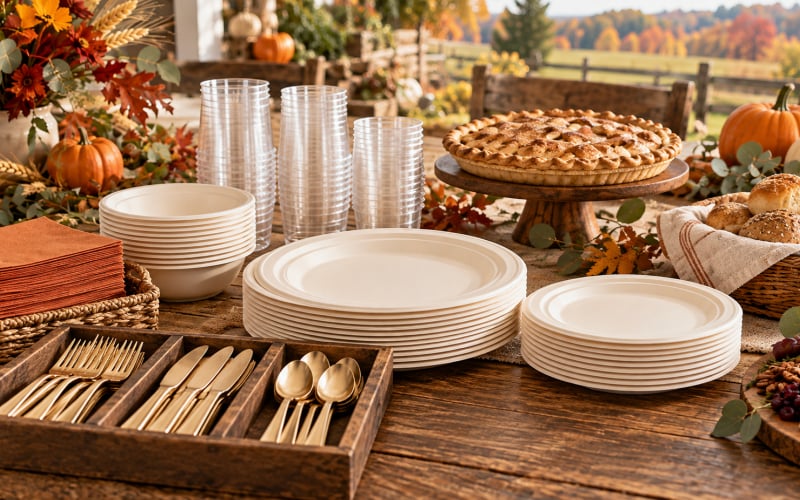
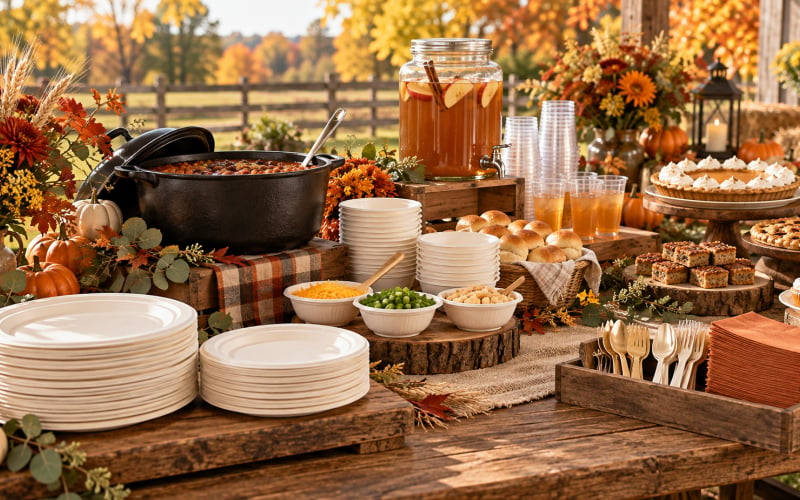
Dinner plates belong at the start of the buffet. Bowls can sit beside the soup, with flatware and napkins near the end so guests have fewer loose items to carry while serving themselves.
Dessert plates work best beside the desserts rather than mixed into the main plate stack. A separate drink area can also keep cup filling away from the food line.
For replenishment, smaller serving dishes are useful. The FDA recommends replacing nearly empty dishes with freshly filled ones rather than adding new food to food already on display. Spare serving trays should therefore be included in the setup, not just spare guest plates.
Keep Outdoor Tableware Covered and Easy to Refill
For an outdoor gathering, a practical setup uses small working stacks of plates and cups, with the remaining supplies stored in closed containers nearby.
Napkins can go in a holder rather than a loose pile. Flatware can sit handle-up in a clean organizer. The refill supplies should be close enough to reach without moving food or searching through several boxes.
A trial setup before the event helps reveal problems: an unstable cup position, an awkwardly tall plate stack, or a centerpiece that blocks access to the bread tray.
FAQs About Fall Harvest Party Tableware
Are Rustic-Looking Disposable Plates Always Compostable?
No. “Rustic” describes a style, not a disposal method. A cream color, wood-look finish, or leaf pattern does not establish compostability. The product needs appropriate labeling, and the local collection program must accept it. Compostable plastic is also not automatically suitable for a home compost pile.
Can Disposable Plates Be Used to Pack Leftovers?
A clean plate may suit a few dry cookies when properly covered, but lidded food-storage containers are a better choice for soup, sauces, and mixed meals. Small, shallow containers also help leftovers cool more quickly. Perishable food should be refrigerated within two hours outside safe hot or cold holding, or within one hour when the surrounding temperature exceeds 90°F.
How Should Unused Tableware Be Stored After the Party?
Unopened packs can stay in their original packaging, following any storage instructions. Opened but unused pieces can be placed in a clean, closed container in a dry cupboard, away from heat and cleaning products. Keeping the product label with them preserves the size, material, and use guidance for the next event.
Bring the Harvest Table Together
The strongest starting point is a plate that suits the meal. A warm napkin color and a few restrained details can then turn that practical choice into a harvest setting. There is no need for every piece to be seasonal.
For hosts putting that combination together, Wonderful Party offers plates, cups, flatware, bowls, and coordinated dinnerware sets. The next step is a focused comparison: plate size, pack contents, and intended use—then the finishing colors that make the table feel like fall.