


Napkin Sizes Explained: Cocktail vs Luncheon vs Dinner Napkins for Every Party Setup
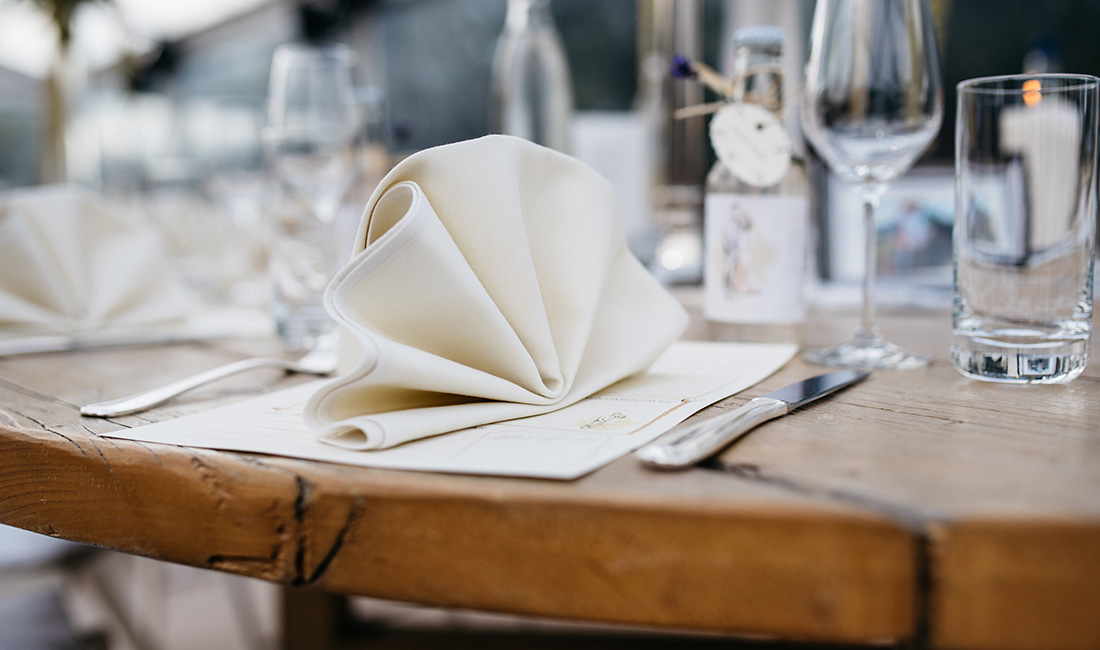
A party napkin is a disposable or reusable fabric square used to protect hands, laps, and surfaces during food and drink service at an event. Cocktail, luncheon, and dinner napkins each serve a different purpose depending on the food, the formality, and how guests interact with the table.
Getting the size wrong creates a mismatch that guests feel immediately — a tiny cocktail napkin at a plated steak dinner looks inadequate, while an oversized dinner napkin next to a drink glass feels clumsy. The right napkin completes the table setting the same way the right plate or glass does.
This guide covers standard napkin dimensions, the occasions each size fits, material trade-offs, per-guest planning quantities, and how napkin size affects folding and presentation — so every party table feels proportional and intentional.
What Are the Standard Napkin Sizes for Parties?
The three standard party napkin sizes are cocktail (10×10 inches unfolded / 5×5 folded), luncheon (13×13 inches unfolded / 6.5×6.5 folded), and dinner (16–22 inches square unfolded). Each size corresponds to a specific service style, from standing drink receptions to multi-course seated meals.
A cocktail napkin is a small, square, single-use napkin — typically 10×10 inches unfolded and 5×5 inches when folded in quarters — designed for drinks, hors d'oeuvres, and standing events. A luncheon napkin is a mid-size napkin, typically 13×13 inches unfolded and 6.5×6.5 inches folded, designed for casual seated meals and buffets. A dinner napkin is the largest standard napkin, ranging from 16 to 22 inches square unfolded, designed for full sit-down meals and formal place settings.
Most paper napkins arrive pre-folded in quarters. Cloth dinner napkins are typically sold flat and folded as part of the table setup. The listed "size" in product descriptions almost always refers to the fully unfolded measurement.
What Size Are Cocktail Napkins and When Should They Be Used?
A cocktail napkin is a 10×10-inch (5×5 folded) square designed for standing events where guests hold a drink in one hand and a small bite in the other. This compact size tucks under a glass to catch condensation and fits in one hand alongside a beverage without getting in the way.
Most cocktail napkins come in 1-ply or 2-ply paper. 1-ply napkins are sufficient for drink service at casual gatherings, while 2-ply napkins offer better absorbency for events with saucy appetizers or where a sturdier feel is preferred — weddings and upscale cocktail hours typically call for 2-ply.
Cocktail napkins are the right choice for cocktail parties, wedding cocktail hours, pre-dinner receptions, corporate event bars, and any occasion where food is limited to passed hors d'oeuvres or small bites. The standard planning quantity is 3–4 cocktail napkins per guest for a 2–3 hour event, accounting for multiple drinks and appetizer rounds.
The same product is sometimes labeled "beverage napkin" or "appetizer napkin" depending on the supplier — all three terms refer to the same 10×10-inch size. As a beverage napkin, it sits under a glass to absorb drips. As an appetizer napkin, it wraps around a small food item like a slider, skewer, or mini dessert.
How Do Cocktail Napkins Fit into Drink Station Design?
Cocktail napkins function as the connecting detail between the glass and the guest's hand, and they are often the most visible napkin at an event because guests carry them throughout the room. Color and print coordination matters here — hosts who match napkin colors to the event palette, or who use monogrammed or logo-printed napkins, turn a functional item into a branding and design element. Stacking napkins in a fan arrangement or placing them in a clear acrylic holder at the bar keeps the station looking organized and intentional.
How Big Are Luncheon Napkins and What Events Suit Them?
A luncheon napkin is a 13×13-inch square (6.5×6.5 folded) that provides enough coverage for a casual seated meal without the bulk of a full dinner napkin. This mid-size format works as the default napkin for any event where guests eat with utensils at a table but the occasion does not require formal place settings.
Luncheon napkins are the standard choice for brunches, baby showers, birthday parties, afternoon tea, dessert tables, and buffet-style gatherings. Paper versions (2-ply or 3-ply) make cleanup fast at large events, while cloth luncheon napkins — typically cotton — add a polished touch at smaller seated gatherings.
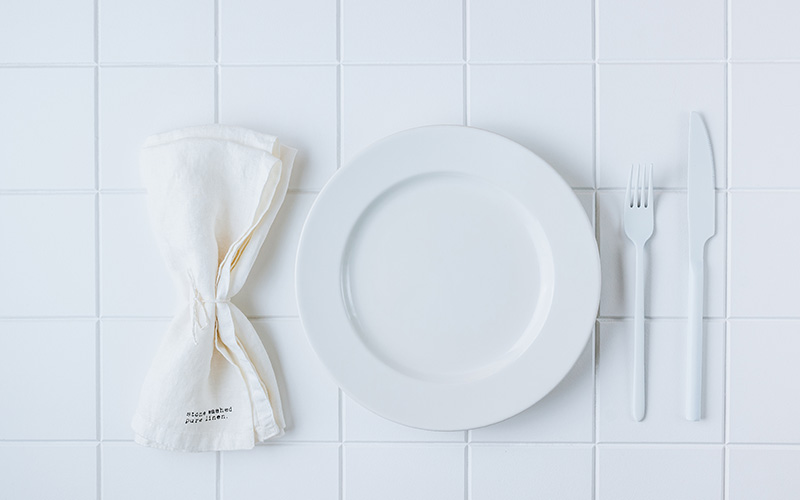
In a typical place setting, a luncheon napkin sits to the left of the fork, folded flat or as a simple rectangle. Some hosts center it on the plate for a cleaner look. The compact folded size (6.5×6.5 inches) fits easily on a salad plate or under silverware, which is useful when table space is limited.
When Is a Luncheon Napkin Too Small for the Menu?
A luncheon napkin becomes inadequate when the menu includes heavy entrées, multiple courses, or especially messy foods like barbecue or pasta with sauce. In those situations, a casual dinner napkin (16–18 inches) provides better lap coverage and more wiping surface. For events serving only desserts, finger sandwiches, or light salads, luncheon napkins are more than sufficient.
What Size Dinner Napkins Work for Casual vs Formal Events?
Casual dinner napkins measure 16–18 inches square unfolded, providing adequate lap coverage for everyday meals and relaxed dinner parties. Formal dinner napkins measure 20–22 inches square, offering the extra fabric needed for elaborate folds, full lap coverage during multi-course meals, and visual balance on tables set with charger plates and multiple utensils.
The 16–18 inch range suits small dinner parties, holiday meals, and buffets where guests carry plates to their seats. These napkins fold easily into simple rectangles or pockets for silverware and do not overwhelm a standard dinner plate.
The 20–22 inch range is reserved for weddings, galas, corporate dinners, and any event with formal place settings. Larger napkins anchor wider table settings and give event planners room for upright folds — bishop hats, fleur-de-lis, or layered fans — that add height and visual interest to the table.
How Do Cloth and Paper Dinner Napkins Compare?
A cloth dinner napkin is a reusable fabric square, most commonly cotton or linen, that holds its shape through folding and survives repeated washing. Cloth napkins range from 16 to 22 inches and are standard at seated dinners and formal events where texture and presentation matter. A paper dinner napkin is a disposable alternative, typically 15–17 inches unfolded, designed for events where convenience and fast cleanup outweigh the visual refinement of cloth.
Linen napkins hold the crispest folds and drape elegantly at formal settings. Cotton napkins feel softer and suit casual dinners. Heavier fabrics provide more structure; lighter fabrics create a relaxed look.
How Does Napkin Material Affect Performance and Sustainability?
Napkin material determines absorbency, durability, fold quality, and end-of-life environmental impact. Paper napkins offer convenience and low per-unit cost, while cloth napkins deliver superior absorbency, texture, and reusability at a higher upfront investment.
Paper napkins are made from wood pulp, typically in 1-ply to 3-ply constructions. Higher ply counts increase thickness and absorbency but also increase cost. Recycled paper napkins contain post-consumer fiber and reduce virgin pulp demand — they come in all standard sizes and are available in unbleached (brown or off-white) versions that skip chlorine processing, fitting rustic or eco-conscious event themes.
Cloth napkins made from organic cotton use fewer pesticides in cultivation, while linen (from flax fiber) generally requires less water than conventional cotton. Both materials are durable enough for years of reuse when properly laundered, which offsets the higher purchase price over time.
The environmental comparison between paper and cloth is not straightforward. Disposable paper napkins increase solid waste but require no laundering. Reusable cloth napkins eliminate disposal waste but consume water, energy, and detergent with each wash cycle. The more sustainable choice depends on event frequency, wash efficiency, and local waste infrastructure. For large one-time events, recycled paper napkins strike a practical balance between eco-consciousness and convenience.
For food safety, napkins that contact beverages or food should be made from materials that meet FDA food-contact standards in the United States. Hosts ordering printed napkins benefit from confirming that inks are food-safe and soy- or water-based rather than solvent-based.
How Many Napkins Should a Host Plan Per Guest?
The standard planning formula is 3–4 cocktail napkins per guest for a 2–3 hour drinks-and-appetizers event, 1–2 luncheon napkins per guest for a casual meal, and 1 dinner napkin per place setting for a seated dinner. An additional 10–15% buffer accounts for spills, drops, and unexpected needs.
Kids' parties and outdoor events require the highest buffer. Wind scatters napkins, children use them quickly, and spills are more frequent on uneven surfaces. Planning for 3–5 napkins per child with a 20% buffer avoids mid-event shortages.
For cost planning, paper cocktail napkins typically run $0.02–$0.04 per unit in bulk, luncheon napkins $0.03–$0.06, and paper dinner napkins $0.05–$0.10. A 100-guest cocktail party at 4 napkins per guest (with buffer) requires approximately 460 cocktail napkins, costing roughly $9–$18 in total napkin spend.
How Does Napkin Size Affect Folding and Table Presentation?
Napkin size determines which folds are possible and how the folded napkin fits within the place setting. Smaller napkins (10–13 inches) are limited to flat or simple layered folds, while larger napkins (18–22 inches) support upright and sculptural designs that add height and visual interest to the table.
A 10-inch cocktail napkin works for basic triangle folds, simple layered fans, or flat pocket folds at bar stations. A 13-inch luncheon napkin accommodates rectangle folds, basic pockets for utensils, and compact fans. An 18-inch or larger dinner napkin opens up the full range — bishop hats, fleur-de-lis, standing fans, and rosettes — because the extra fabric holds structure and creates proportion against large plates and chargers.
Paper napkins crease sharply, making geometric folds like stars and accordion fans easy to execute. Cloth napkins, especially when starched, hold upright designs at formal tables where visual height matters. The fold should match the formality of the event: a simple rectangle for a backyard BBQ, a standing fan for a wedding reception.
Where Should Napkins Be Placed in a Table Setting?
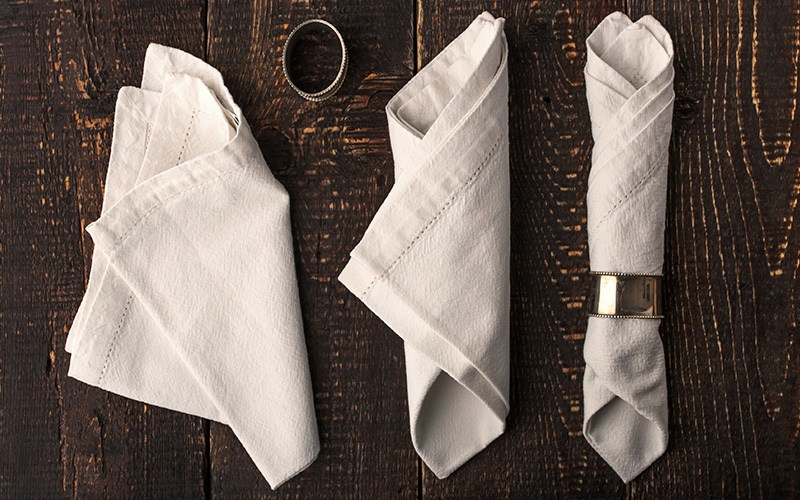
The four standard napkin placements are centered on the dinner plate (formal), to the left of the forks (classic), tucked under a charger plate (layered), and set inside a wine glass (decorative). The choice depends on the level of formality and whether the fold is designed to stand upright or lie flat. At buffets, napkins are stacked at the beginning of the service line so guests can pick one up alongside their plate — rolled napkins with silverware tucked inside speed up the line and reduce the number of items guests need to juggle.
Color coordination between napkins and the rest of the table — runners, plates, centerpieces — creates a cohesive setting. Napkins that echo the event's color palette, whether through solid tones or seasonal prints, look intentional rather than like an afterthought. The napkin is one of the few table elements guests physically pick up and hold, making it a tactile connection point between the setting and the person — a detail worth matching to the overall tableware with the same care given to plates, cups, and glasses.
Sign up for tips, new products and specials from wonderful.
Follow Us
Sign up for tips, new products and specials from wonderful.


